World History
Flag Day. Content Warning.
A Tapestry Woven Red, White, and Blue: A Exploration of Flag Day Flag Day, an apparently straightforward public recognition held every year on June fourteenth in the US, conveys a load far more prominent than its solitary day on the schedule. It's daily to spread out the public standard, the Stars and Stripes, a lively embroidery woven with strings of history, imagery, and public character. In any case, to really comprehend Flag Day, we should dive further, investigating the banner's starting points, its importance as a bringing together image, and the customs that have developed around this public occasion. A Birth Story Sewed in Stripes and Stars The American Flag, formally named the "Stars and Stripes" or the "Star-Radiant Flag," flaunts a rich history entwined with the country's own. Its story starts in the juvenile long stretches of the American Upheaval. In 1775, the Second Mainland Congress requested that a panel plan a banner to address the recently framed settlements. This panel, including George Washington himself, chose a plan highlighting thirteen exchanging red and white stripes, representing the thirteen unique settlements, and an association banner of Extraordinary England in the canton (upper left corner). This banner, known as the "Mainland Tones," filled in as the principal official banner of the US. Be that as it may, as the battle for freedom escalated, the longing for a particular public image developed. In 1777, the Second Mainland Congress passed the Flag Goal, authoritatively embracing the plan we perceive today. The goal indicated thirteen red and white stripes, a blue canton enhanced with thirteen white stars addressing the heavenly body of new states, and a changed extent of the actual Flag. This plan, brought into the world from the pot of upheaval, turned into the image of a country fashioning its own way. An Image of Solidarity Woven with Strings of Significance The American banner rises above simple texture. It goes about as a strong image, a visual portrayal of the country's fundamental beliefs and goals. The actual varieties are pervaded with importance. Red connotes boldness and penance, the blood spilled by the people who battled for opportunity. White addresses immaculateness, harmony, and the beliefs whereupon the country was established. Blue typifies carefulness, equity, and steadiness, the characteristics expected to keep a free republic. The thirteen stripes represent the first provinces, a consistent indication of the country's solidarity brought into the world from variety. The stars, once addressing the first thirteen states, have developed with the country, each new star connoting the expansion of another state to the association. Together, these components make a strong image of solidarity, helping Americans to remember their common history and normal fate. Flag Day is a chance to ponder these images and their importance. It's daily to commend the standards of freedom, equity, and equity revered in the American examination. The Flag turns into a mobilizing point, helping residents to remember their common objectives and obligations as a country. An Embroidery of Customs: Observing Banner Day The country over Banner Day is set apart by various practices across the US. Public structures gladly fly the banner, a noticeable presentation of public pride. Schools hold gatherings for understudies, showing them the banner's set of experiences and appropriate showcase decorum. Marches and local meetings frequently highlight the Stars and Stripes conspicuously, encouraging a feeling of shared personality. Numerous Americans decide to fly the banner external their homes, an individual articulation of nationalism and an image of welcome. Veterans' associations frequently hold banner commitment functions, respecting the people who have served and forfeited for the country. These customs, both excellent and cozy, wind around together an embroidery of public pride, helping Americans to remember the importance behind the image. **Past Nationalism: A Conversation on Developing Symbolism** The American banner is certainly not a static image. Its significance has developed after some time, mirroring the country's changing social and political scene. Conversations and discussions about the banner's portrayal and inclusivity have turned into a significant piece of Flag Day. As far as some might be concerned, the banner addresses a defective past, a sign of battles for racial correspondence and civil rights. These conversations empower a more profound comprehension of the country's set of experiences and the continuous journey to satisfy its goals. Flag Day gives a stage to open discourse about the beliefs the banner addresses. It's daily to recognize the country's blemishes while committing once again to the quest for a more wonderful association. Looking Forward: A Heritage Woven in the Stars and Stripes Flag Day, however a solitary day on the schedule, fills in as a strong sign of the American story. It's daily to commend the country's beliefs, consider its set of experiences, and recognize the continuous mission for a more wonderful association. The Stars and Stripes are not only a piece of material; they are a living image, continually developing close by the country it addresses. As the country pushes ahead, Flag Day gives an amazing chance to commit once again to the beliefs of freedom, equity, and correspondence. By grasping the Flag'
By Bikash Purkait2 years ago in History
Leonardo da Vinci: Beyond the Renaissance Genius
# Leonardo da Vinci: Genius, Time Traveler, or Extraterrestrial Envoy? The north Apennines of Italy, just outside Florence, served as a natural classroom for a young Leonardo da Vinci, who, despite being excluded from prestigious academies due to his illegitimate birth, immersed himself in the study of nature. While his contemporaries were confined to classrooms, Leonardo's self-directed exploration of the natural world laid the foundation for his unparalleled contributions to art and science.
By Benjie Maybuena2 years ago in History
Einstein's Theories: Bridging Time and Space
Albert Einstein's legacy, which includes over 300 scientific papers, continues to influence the world more than half a century since his death. While Einstein redefined our understanding of the universe, his theories may hold the key to another extraordinary possibility: time travel.
By Benjie Maybuena2 years ago in History
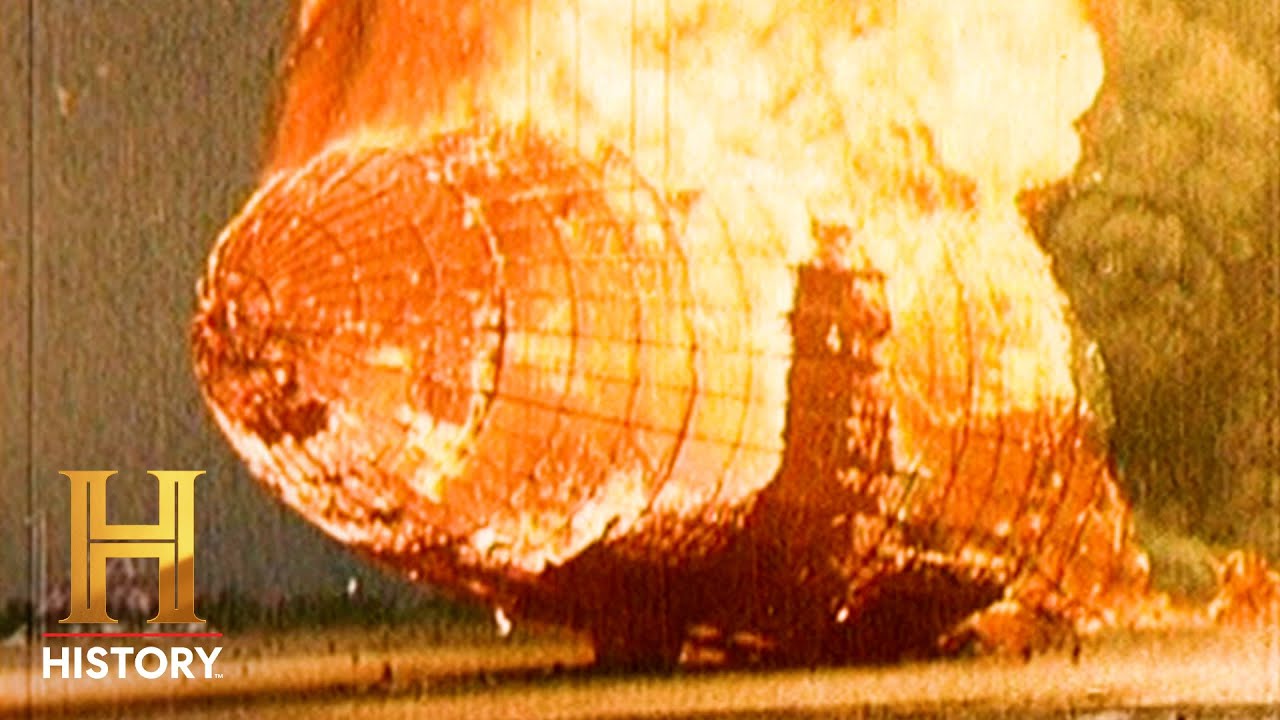
The Tragic Flight of the Hindenburg
On May 3, 1937, in Frankfurt, Germany, the Hindenburg, the world’s largest aircraft, prepared for its 11th transatlantic flight to New Jersey. Fueled by hydrogen and nitrogen, this dirigible offered a luxurious three-day passage across the Atlantic. The Hindenburg, notable for its immense size, rivaled the Titanic in grandeur and was built with a rigid metal frame filled with hydrogen cells, allowing it to float without wings. Its exterior was coated in aluminum powder varnish to reflect sunlight, preventing the hydrogen from overheating and ensuring the gas didn't inflate and burst.
By Benjie Maybuena2 years ago in History
HISTORICAL HISTORY . Content Warning. AI-Generated.
HISTORY ON ANCIENT & ANTIQUES Once upon a time, in a land far away, there existed a civilization that marveled at the beauty and intricacy of ancient artifacts and antiques. These objects held within them the stories of generations past, each one representing a piece of history that had been preserved and passed down through the ages. The people of this civilization were avid collectors of such relics, with each artifact holding a special significance and value to them. They would spend hours poring over ancient texts and scrolls, trying to decipher the mysteries hidden within these precious items.
By FinPetrol7772 years ago in History
The Most Unusual Planets in the Universe
On the planet t-r-e-s-2b, the night never ends. This isn't your typical Knight, where stars shine in lovely skies; instead, it's utterly dark and sweltering. In the star system of 55 Cancri, there are five planets, four of which are gas giants similar to Jupiter and Saturn, but the fifth planet, or rather the first because it's closest to the star, is different in a horrifying way. High Tres 2B is a gas giant that is about 1.5 times more massive than Jupiter. Its surface absorbs light better than charcoal and it may also have a faint dark red glow due to its burning air, which is as hot as fresh lava. 55 Cancrie is very near its
By Kingsley Egeke2 years ago in History
The Curse of the Pharaohs' Tombs. AI-Generated.
The discovery of ancient Egyptian tombs has long fascinated the world, but none more so than the tales of curses said to plague those who dare to disturb the eternal rest of the pharaohs. The most famous of these legends centers around the tomb of Tutankhamun, often referred to as King Tut, whose final resting place was unearthed in 1922 by British archaeologist Howard Carter. This discovery, while monumental in the field of Egyptology, quickly became shrouded in mystery and fear due to a series of unexplained deaths and misfortunes attributed to the so-called "Curse of the Pharaohs."
By Julio Javier2 years ago in History
The Largest Animals To Ever Exist On Earth
overseas [Music] From towering herbivores to fierce predators, the planet Earth has been home to some of the largest and most impressive creatures in existence. These enormous creatures have left their mark on the planet, from lush forests to oceans. In this video, we'll look at some of the largest animals that have ever lived on Earth and what the largest is currently. From the largest sauropod dinosaur to the enormous creatures that prowled in the oceans, prepare to be astounded by the sheer size that these magnificent creatures possessed. [Music] The enormous herbivorous dinosaur Argentinosaurus lived in the late Cretaceous Period, roughly
By Kingsley Egeke2 years ago in History
These Ancient Animals Scarier Than Dinosaurs
The first thought would be that there is hardly anyone on Earth who has never heard of dinosaurs; in fact, we learn about them as children from cartoons, toys, drawings, movies, videos, articles, and even everyday advertisements. Because ancient lizards are frequently shown in unexpected places, the average city dweller knows more about dinosaurs than about a bird perched on a branch outside their window. Are there many people who are knowledgeable about what existed before the dinosaurs? What animals lived 100 million years before them? What terrifying beasts lived 50 million years after them? We bet there are far fewer experts here, but there must have been
By Kingsley Egeke2 years ago in History
Origin Of The Great Flood: The Lost Cities
While there are many tales of ancient cataclysm, Noah's flood is just one of them. But what if it could be linked to an actual event that occurred thousands of years ago in an unexpected place—Bulgaria and the Black Sea Coast— I'm tracing the history of the most famous flood tales on [Music] with the use of cutting edge technology. Earth I will never forget that sound as I travel across continents in pursuit of extinct ancient cities to learn what it takes to transform a calamity into a legend. With a surface area of more than 170,000 square miles, the Black Sea is larger than any other inland sea in the world and is a place of legend.
By Kingsley Egeke2 years ago in History