World History
Mysteries of Punt
Every civilization has its origin story, a tale of where it all began. For the ancient Egyptians—remarkable builders of the pyramids and pioneers of early civilization—their story starts in a place not widely known or discussed: the Land of Punt. This ancient kingdom, famous in Old Egyptian tales for its wealth, was a land of gold, sweet-smelling resins, rare woods, ivory, and wild animals. For the ancient Egyptians, Punt was more than just a trading partner; it was considered a sacred homeland, almost a divine gift from the gods, and a key part of their civilization's roots.
By Horace Wasmore2 years ago in History
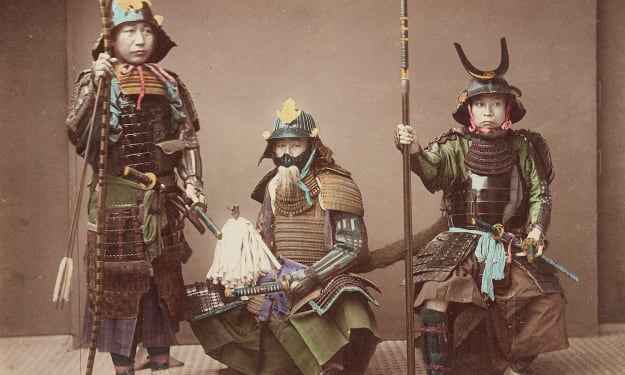
The Samurai
When most people think of samurai, they envision stoic warriors epitomizing honor, integrity, and martial prowess. While this image is captivating, it oversimplifies the complex reality of the samurai’s role in Japanese society. To understand the samurai’s true legacy, we must explore their origins, rise to power, and evolution through different historical periods.
By Horace Wasmore2 years ago in History
The Mongol Invasions of the West (1240-1288)
The Mongols established the largest contiguous land Empire in the 13th century. Genghis Khan brought together seven Mongol tribes and deployed armies in various directions. Mongol forces advanced into Western Asia and Europe, encountering Latin Christendom and the Muslim World. Mongol coordination and raids in Poland were carried out by Baidar and Orda, who worked alongside Subotai and Batu for Mongol operations. Baidar and Orda divided their forces into smaller raiding parties to sow chaos and led the Vanguard to Krakov. The Mongols emerged victorious over the Polish and their allies at the Battle of Legnica. The intense fighting resulted in heavy losses for the Christian Knights, and the Mongols utilized their swift cavalry to target the disorganized Polish infantry, leading to a devastating defeat. The Mongols claimed trophies from the battle, such as cutting off the ears of the fallen and sending them to their leaders. The Mongols displayed no mercy, capturing and executing Duke Henry, and showcasing his head on a lance as a frightening demonstration of their power, which struck fear into the citizens of Legnica. The Polish forces suffered significant losses, including the Duke's headless body, which was only identifiable by the extra toe on his left foot. The Mongol invasion of Hungary and Poland resulted in the devastation and depopulation of Silesian and Moravian towns. Despite Mongol losses in Hungary and Poland, the enduring legend of the Battle of Legnica highlights the remarkable coordination and securing of the Southern flank by Mongol forces.
By Isaac Ekow Anyidoho2 years ago in History
The World Warships
Warships have undergone significant transformations over the course of 400 years, adapting to the advancements in technology. From the era of galleys to the era of aircraft carriers, warships have played vital roles in military strategies. The aircraft carrier Charles de Gaulle stands as the largest vessel in the French Navy, capable of carrying approximately 30 aircraft such as the Rafale and Hawkeye, as well as helicopters for logistical and defensive purposes. With a nuclear propulsion system, this carrier has the ability to project military force across the globe and target any location. In contrast, galleys relied on oars for propulsion and had limited navigational capabilities. Despite this, galleys boasted exceptional hydrodynamic performance due to their sleek hull design and low profile in the water. Each galley required a crew of 255 men, utilizing their body weight and wooden "palomon" structures for rowing. The evolution of warships from galleys to modern frigates marked a significant shift in firepower, with galleys being phased out in 1680 due to their lack of cannons.
By Isaac Ekow Anyidoho2 years ago in History
The History and Evolution of the Long Pearl Necklace
The long pearl necklace is a classic accessory that has adorned the necks of royalty, celebrities, and fashion enthusiasts for centuries. Its timeless elegance and versatile design have made it a staple in many wardrobes. Here’s a journey through the history and evolution of the long pearl necklace:
By BTK COLLECTION2 years ago in History
An Imaginary Journey into a World Without Humans: What Would Have Happened If Our Ancestors Had Disappeared?
Today, with over 8 billion people on Earth, it's hard to believe that around 900,000 years ago, humanity was on the brink of extinction. Our ancestors faced such a severe crisis that only 1,280 individuals remained—a number equivalent to a small village. During this critical period, nearly 98% of the human population disappeared, and this demographic bottleneck lasted for over 100,000 years. The exact reasons for this crisis remain unclear, but drastic climate changes were likely the main cause.
By Nathan Talek2 years ago in History
Breakdancing at the 2024 Olympics: A Cultural Revolution on the World Stage
Breakdancing at the 2024 Olympics: A Cultural Revolution on the World Stage As the world gears up for the Paris 2024 Summer Olympics, excitement is building not only for the traditional sports but also for the introduction of breakdancing, officially known as “breaking.” This dynamic and expressive art form will make its Olympic debut, offering a unique blend of athleticism, creativity, and cultural significance that is sure to captivate audiences worldwide. In this article, we’ll explore why breakdancing’s inclusion in the Olympics is not just a sporting event, but a cultural milestone that highlights the evolution of the Games.
By Francis C Okoro2 years ago in History
Exploring Myanmar
Myanmar's shift from seclusion to accessibility has been a swift one since 2011, with the country embracing reforms and opening up to the world. The IW River serves as a vital artery for transportation in Myanmar, linking significant historical sites. Living in a Buddhist nation along the river brings a unique perspective. The river's constantly shifting navigable channel is due to the large amounts of sediment it carries from the mountains. In a riverside village, the tradition of domesticated elephants with personal trainers is deeply rooted. Women spend long hours working barefoot in the cold water, amidst the deafening noise of pumps. Gold is transported on ramps with flowing water. The influence of British writer George Orwell can be seen in Qatar, particularly in his novel 'Burmese Days,' which highlights the British elite's elitism and arrogance. Tin Andai's business relies heavily on the river and the famous Napier fish found in Qatar. Mr. U Tin Tang, a fisherman, shares a house with his extended family of 28 people. The presence of dolphins in the river uniquely aids fishermen. Bamboo is a crucial commodity transported widely on the river, with families journeying downstream on rafts. Mandalay, the former royal capital of the Burmese Kingdom, now presents a modern facade. British troops dethroned Mandalay in 1885, and the city, with a population of 1.6 million, remains deeply influenced by Buddhism. Monasteries in Mandalay offer free education and internet access to young monks and orphans, with the Fang Dau monastic school being renowned for its dedication to providing education to those in need.
By Isaac Ekow Anyidoho2 years ago in History
Innovator or Overachiever
Steve Jobs, the legendary co-founder of Apple Inc., is remembered for his remarkable ability to turn visionary ideas into groundbreaking products. His last words, "Oh wow, oh wow, oh wow," symbolized a life lived in awe of the wonders he created. Yet, this brilliance propelling him to global acclaim may have also contributed to his early death.
By Horace Wasmore2 years ago in History