World History
How the Atomic Bomb Destroyed the Life of its Creator
As J. Robert Oppenheimer witnessed the successful detonation of the world's first nuclear weapon, he was haunted by its devastating implications. Recalling a line from the Hindu scripture, the Bhagavad Gita, he said, "Now I am become Death, the destroyer of worlds." Oppenheimer, a man of remarkable intellect and talents, spoke eight languages and wrote poetry, but he would forever be remembered as the "father of the atomic bomb" - the man who gave humanity the power to destroy itself.
By Gilbert Ay-ayen. Jr2 years ago in History
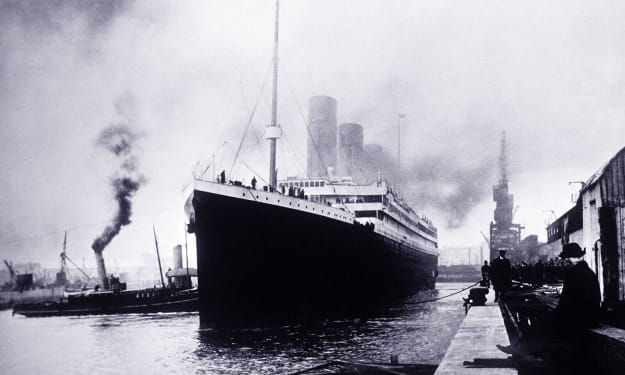
The Truth About What Really Happened to the Titanic
Researchers have finally uncovered the facts surrounding the Titanic disaster. At 11:40 p.m. on April 14, 1912, the RMS Titanic experienced a disastrous event, causing it to sink at 2:20 a.m. three hours later.
By Cynthia Enhers2 years ago in History
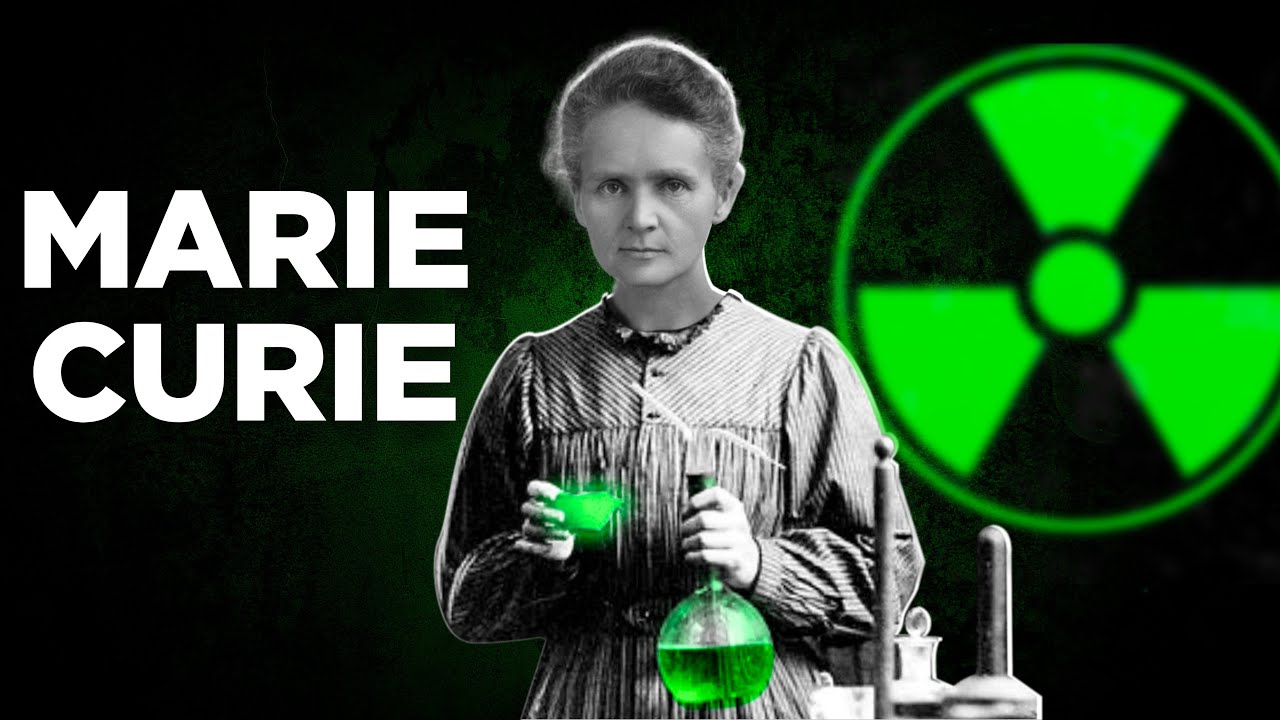
How the Genius of Marie Curie Killed Her
In 1927, 29 of the world's leading physicists gathered at the prestigious Solvay Conference in Brussels. The sole female attendee was Marie Curie, a pioneering scientist with numerous groundbreaking achievements. She was the first woman to win a Nobel Prize, the first person to win the Nobel Prize twice, and the first to win in two different fields. Curie's work on radioactivity would save countless lives during World War I, though it ultimately contributed to her own demise.
By Gilbert Ay-ayen. Jr2 years ago in History
African Slave Trade
The African slave trade, a dark chapter in human history, refers to the systematic capture, transport, and enslavement of African people by European, Arab, and African slave traders between the 15th and 19th centuries. This trade involved millions of Africans who were forcibly removed from their homeland, transported across the Atlantic, and sold into lifelong servitude. The transatlantic slave trade, as it is commonly referred to, had a profound and devastating impact on Africa, its people, and the entire world.
By Obo Nature2 years ago in History
Understanding the Bible: A Journey Through Time, Faith, and Culture
Understanding the Bible: A Journey Through Time, Faith, and Culture The Bible stands as one of the most influential books in human history. Its reach spans across centuries, cultures, and continents. Yet, beyond its teachings and influence, questions often arise regarding its origins, meanings, and the religious contexts surrounding it. Delving into these aspects will not only shed light on the b i b l e meaning of letters, but also help answer deeper questions such as what is the original meaning of bible and what religion compiled the bible.
By umn ministry Chennai2 years ago in History
5 inhuman humans
Desmond Doss (1919–2006) Desmond Doss (1919–2006) was an American World War II soldier whose unwavering faith, courage, and selflessness made him a living legend. Born in Lynchburg, Virginia, Doss grew up in a devout Seventh-day Adventist family, which instilled in him strong religious convictions, particularly a commitment to nonviolence and Sabbath-keeping. His adherence to these beliefs profoundly shaped his life and wartime service.
By davide avenia2 years ago in History
A Brief Overview of Human History
**A Brief Overview of Human History** Human history is a vast and complex journey that traces the evolution of Homo sapiens from primitive hunter-gatherers to modern, technologically advanced societies. This narrative begins millions of years ago when early human ancestors first appeared in Africa. Over time, these hominins developed the ability to walk upright, use tools, and communicate, paving the way for the emergence of modern humans around 200,000 years ago. **Prehistoric Period** For most of human history, people lived as nomadic hunter-gatherers. Early humans roamed the landscape in search of food, relying on hunting wild animals and gathering edible plants. This way of life persisted until the development of agriculture, which marked the beginning of the Neolithic Revolution around 10,000 BCE. Farming allowed humans to settle in one place, leading to the growth of permanent communities. With agriculture came surplus food, population growth, and the rise of complex societies. **The Rise of Civilizations** The first known civilizations emerged in Mesopotamia (modern-day Iraq) around 3,500 BCE, in the fertile land between the Tigris and Euphrates rivers. The Sumerians, credited with creating one of the world’s earliest writing systems, built advanced cities and established trade networks. Around the same time, other civilizations arose along major rivers like the Nile in Egypt, the Indus in South Asia, and the Yellow River in China. These early civilizations developed systems of governance, law, religion, and monumental architecture. Over the next few millennia, empires rose and fell. In the Mediterranean region, the Greeks and Romans laid the foundations for Western culture, contributing to philosophy, science, politics, and law. In Asia, powerful dynasties such as the Qin and Han in China unified vast territories, creating lasting cultural and political systems. Meanwhile, great empires like the Persians and Mauryans in India influenced the region through military conquests, trade, and religious diffusion. **The Middle Ages and the Renaissance** Following the fall of the Roman Empire in 476 CE, Europe entered a period known as the Middle Ages, characterized by feudalism, the rise of the Catholic Church, and frequent warfare. This era also witnessed the spread of Islam from the Arabian Peninsula, resulting in a golden age of science, art, and culture in the Islamic world. By the late Middle Ages, Europe began to emerge from its relative isolation, thanks to trade, exploration, and contact with other cultures. The Renaissance, which began in Italy in the 14th century, marked a period of intellectual and artistic revival. Thinkers like Leonardo da Vinci and Michelangelo pushed the boundaries of art and science, while explorers like Christopher Columbus expanded Europe’s understanding of the world. The invention of the printing press in the 15th century by Johannes Gutenberg revolutionized the spread of information, contributing to the Protestant Reformation and the Age of Enlightenment. **Modern History** The modern era began with significant political and industrial revolutions. In the 18th and 19th centuries, the American and French revolutions promoted ideals of democracy, liberty, and equality. The Industrial Revolution, which started in Britain, transformed economies through mechanization, leading to urbanization and changes in social structures. The 20th century was marked by two world wars, the rise and fall of empires, and the Cold War, which shaped global politics. In the second half of the century, decolonization saw the emergence of new nations in Africa and Asia. Technological advancements in communication, transportation, and medicine dramatically transformed human life, leading to globalization. Today, humanity faces unprecedented challenges and opportunities. Rapid advancements in technology, climate change, and social inequalities continue to shape the course of history. The story of human history is one of survival, innovation, and adaptation—a testament to the resilience and creativity of the human spirit.
By Parth Iataliya2 years ago in History