World History
Indira Gandhi and the National Emergency: A Turning Point in Indian Democracy. Content Warning.
The Civic Emergency of 1975 Declared by Indira Gandhi: Reasons, Advantages, and Consequences The acknowledgment of a civic emergency in India by Prime Minister Indira Gandhi on June 25, 1975, charcoal one of the best arguable and debated capacity in Indian history. This period, abiding until March 21, 1977, greatly impacted the nation’s autonomous framework and governance. Let us analyze the reasons, advantages, disadvantages, causes, and furnishings of this cogent event. Reasons for the Civic Emergency Political Unrest: The 1970s witnessed boundless political agitation in India, primarily led by action leaders like Jayaprakash Narayan (JP). Corruption, bread-and-butter instability, and poor babyminding led to all-embracing protests and strikes, creating anarchy in assorted sectors. Judicial Adjudication Adjoin Indira Gandhi: In 1975, the Allahabad High Court declared Indira Gandhi’s acclamation to Parliament invalid due to balloter malpractices. This adjudication challenged her angary as Prime Minister, accumulative political instability. Economic Crisis: The country was grappling with an bread-and-butter downturn, ascent inflation, aliment shortages, and unemployment. These issues affronted accessible discontent. Call for Revolution: Leaders like JP aboveboard alleged for civilian defiance and a “Total Revolution,” advancement citizens to abolish the government, which Gandhi perceived as a absolute blackmail to capitalism and civic security. External Threats: India faced alien challenges from Pakistan, and there were apropos about civic security. Indira Gandhi argued that the emergency was all-important to aegis the nation. Advantages of the Civic Emergency Restoration of Order: The emergency finer concise the boundless strikes, protests, and riots, bringing actual law and adjustment to the nation. Economic Reforms: The government alien measures to ascendancy aggrandizement and advance agronomical production. Projects like the 20-Point Affairs aimed at abjection advancement and bread-and-butter development. Discipline: Industrial and authoritative sectors accomplished added discipline, with bargain disruptions and added adeptness in government operations. Infrastructure Development: The government focused on developing basement and acclamation basal needs, which saw abstinent advance during the emergency period. Disadvantages and Criticism Suppression of Civilian Liberties: The axiological rights of citizens, including abandon of accent and expression, were acutely restricted. The columnist was heavily censored, and bone was suppressed. Arrests and Detentions: Thousands of action leaders, activists, and critics of the government were arrested beneath the Maintenance of Internal Aegis Act (MISA), generally after trial. Forced Sterilization: One of the best criticized behavior was the affected sterilization affairs accomplished during this aeon as a agency of citizenry control. It led to boundless abhorrence and resentment. Political Manipulation: The Constitution was adapted to favor the cardinal government. The 42nd Amendment, anesthetized during the emergency, concise administrative analysis and adequate the executive's power. Erosion of Democracy: The emergency debilitated autonomous institutions and set a alarming antecedent for absolute governance. Consequences and Aftermath Electoral Defeat of Indira Gandhi: The emergency concluded in 1977, and in the consecutive accepted elections, the Congress Party suffered a massive defeat. The Janata Party, a affiliation of action parties, formed the government, appearance the aboriginal non-Congress administering in India. Strengthening of Autonomous Institutions: The backfire adjoin the emergency led to reforms aimed at attention autonomous institutions and preventing approaching abusage of emergency powers. Public Awareness: The aeon served as a admonition of the accent of civilian liberties and the charge for acuity in attention autonomous values. Indira Gandhi’s Comeback: Despite her defeat, Indira Gandhi alternate to adeptness in 1980, showcasing her animation and the continuing abutment she allowable amid a area of the populace. Cause and Effect Cause: The emergency was primarily a acknowledgment to political instability, bread-and-butter crises, and challenges to Indira Gandhi’s leadership. It additionally reflected her absolute tendencies and assurance to absorb power. Effect: While it briefly adequate adjustment and discipline, the emergency acutely damaged India’s autonomous appearance and larboard a abiding blister on the nation’s political and amusing fabric. It additionally fabricated citizens added acquainted of their rights and the accent of attention democracy. Lessons Learned The civic emergency of 1975-77 was a axis point in Indian history. It accent the aerial antithesis amid babyminding and civilian liberties and underscored the accent of accountability and accuracy in a democracy. While it showcased the government's adeptness to act actually in times of crisis, it additionally served as a abrupt admonition of the after-effects of absolved power. Indira Gandhi’s accommodation to appoint an emergency charcoal a accountable of acute debate. For some, it was a all-important footfall to restore order; for others, it was an absolute move that betrayed the attempt of democracy. The aeon continues to affect discussions about the animation of India’s autonomous institutions and the acuity appropriate to bottle them.
By Say the truth 2 years ago in History
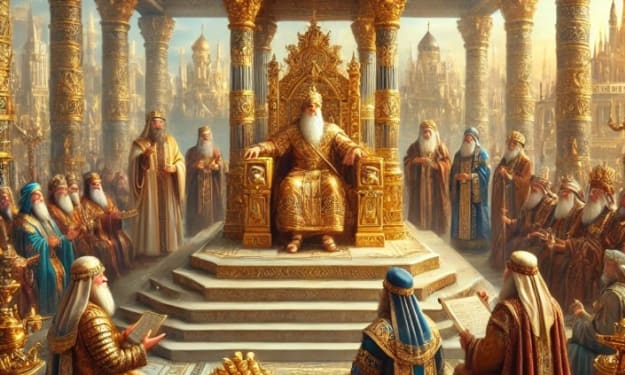
The Golden Court of King Solomon . AI-Generated.
"King Solomon’s Abundance in Today’s Terms: A Avant-garde Evaluation" Introduction King Solomon, the allegorical adjudicator of age-old Israel, is acclaimed for his immense wealth, wisdom, and architectural achievements. Known as the wealthiest autocrat in history, his treasures and assets accept been a antecedent of allure for centuries. From gold mines and accolade payments to barter networks, Solomon's abundance are declared abundantly in biblical texts and actual records. But how would his abundance analyze to today’s standards? This commodity explores the net account of King Solomon if he were animate today, application avant-garde metrics to quantify his allegorical fortune. 1. Sources of Solomon’s Wealth Solomon’s abundance came from several key sources, which collectively created a banking authority that would battling today’s billionaires:
By Say the truth 2 years ago in History
Weather
Weather affects everyone, every day. Whether it’s sunny, rainy, or snowy, weather impacts what we wear, how we travel, and even how we feel. This article explains weather in simple and easy words, helping you understand what it is, how it works, and why it changes.
By Farhan Sayed2 years ago in History
The Most Beautiful Ancient Temples in the World
Temples are not just places of worship; they are monumental testaments to the ingenuity, creativity, and spirituality of ancient civilizations. These structures, often designed to align with celestial events or to evoke a sense of divinity, stand as reminders of humanity's enduring quest for meaning and connection with the divine. In this article, we’ll journey across the globe to discover the most beautiful ancient temples in the world, each telling its own story of culture, religion, and artistry.
By Zinnat ara Begum2 years ago in History
Top 10 tech scientists of the history
Top Technology Scientists in History: Visionaries Who Changed the World Throughout human history, our progress as a civilization has been closely tied to the work of visionary thinkers. These individuals—scientists, inventors, and engineers—have revolutionized the world through their groundbreaking contributions to technology. Let’s embark on a journey to explore the lives, achievements, and legacies of some of the most influential technology scientists in history.
By Valuable Knowledge2 years ago in History
Ravana: The King of Wisdom and Power
"Ravana: The Hidden Story of Sri Lanka’s Legendary King" Introduction King Ravana, a central figure in the Indian epic Ramayana, is often portrayed as the antagonist in the tale of Lord Rama. However, beyond his depiction as a demon king, Ravana is revered in many traditions for his unparalleled knowledge, wisdom, devotion, and governance. In Sri Lanka, Ravana is celebrated as a learned ruler, a master of arts and sciences, and a devoted follower of Lord Shiva. This article explores the hidden facets of Ravana's life, shedding light on his multifaceted personality and contributions. Ravana’s Origins and Wisdom Ravana was born to the sage Vishrava and the Rakshasa princess Kaikesi. His lineage combined the divine wisdom of sages and the physical might of Rakshasas, making him a unique figure in mythology. Named "Dashanana" for his ten heads, Ravana’s heads symbolized his vast intellect and mastery over the six shastras (scriptures) and four Vedas. He was a polymath, excelling in fields such as Ayurveda, astrology, music, and architecture. Ravana is credited with authoring the Ravana Samhita, a treatise on astrology, and is believed to have advanced medical knowledge that he used to create life-saving potions and remedies. The Rule of Lanka Ravana ascended to the throne of Lanka, transforming it into a land of unparalleled prosperity. Under his rule, Lanka was a thriving kingdom with advanced architecture and infrastructure. The golden city of Lanka, described in the Ramayana, was a testament to his vision and leadership. It was said to be adorned with gold, jewels, and structures that defied the imagination. Ravana was a just ruler who cared deeply for his people. He ensured that his subjects lived in harmony and that the kingdom flourished economically and culturally. His governance was marked by discipline and innovation, setting a standard for other rulers of his time. Ravana’s Devotion to Lord Shiva One of Ravana’s most defining characteristics was his unwavering devotion to Lord Shiva. Ravana is often depicted as a devout Shiva bhakta (devotee), and his acts of devotion are legendary. According to mythology, Ravana composed the Shiva Tandava Stotram, a hymn that praises the glory of Lord Shiva. This composition reflects his deep spiritual understanding and poetic genius. In one tale, Ravana attempted to lift Mount Kailash, the abode of Shiva, to demonstrate his strength and devotion. When Shiva pressed the mountain down with his toe, pinning Ravana beneath it, the king played his veena (a stringed instrument) and sang praises to Shiva. Pleased by his devotion, Shiva granted him the Chandrahas, a celestial sword, as a boon. Ravana’s Love and Relationships Ravana’s personal life was marked by love and complexity. He was a devoted family man, deeply caring for his siblings and children. His brother, Vibhishana, and sister, Surpanakha, played crucial roles in the events of the Ramayana. Ravana’s love for his wife, Mandodari, was profound. Mandodari, known for her wisdom and virtue, often advised Ravana to avoid unnecessary conflict and adhere to dharma. Despite his flaws, Ravana’s respect and admiration for Mandodari highlight his human side, showing that he was not merely a tyrant but a man capable of great love and devotion. The Abduction of Sita The most controversial act associated with Ravana is the abduction of Sita, Lord Rama’s wife. While this act is central to his portrayal as the antagonist in the Ramayana, alternative interpretations suggest that Ravana’s actions were driven by complex motives, including familial loyalty and perceived injustice. Ravana never harmed Sita during her captivity in Ashok Vatika, a gesture that some interpret as a sign of respect and adherence to a code of conduct. His treatment of Sita reflects the complexity of his character—a balance between arrogance and a sense of honor. Ravana’s Downfall and Redemption Ravana’s downfall was ultimately a result of his ego and refusal to heed wise counsel. Despite warnings from Mandodari, Vibhishana, and others, Ravana’s pride prevented him from releasing Sita and avoiding war with Lord Rama. The epic battle between Rama and Ravana is one of the most celebrated episodes in the Ramayana. Despite his defeat, Ravana’s death is portrayed as a moment of redemption. Rama, recognizing Ravana’s greatness, instructed Lakshmana to learn statecraft and governance from the dying king. This act underscores the respect Ravana commanded, even from his adversaries. Ravana’s Legacy in Sri Lanka In Sri Lanka, Ravana is celebrated as a cultural hero. Folklore and traditions honor him as a symbol of knowledge, strength, and devotion. The Ravana Ella Falls, Ravana Cave, and other landmarks are associated with his legacy, attracting tourists and devotees alike. Sri Lankan versions of the Ramayana often depict Ravana in a more sympathetic light, emphasizing his achievements and human qualities rather than his flaws. This perspective highlights the cultural significance of Ravana beyond the traditional narrative. Lessons from Ravana’s Life Ravana’s story is a tapestry of contradictions—wisdom and arrogance, devotion and ego, love and ambition. His life serves as a reminder of the complexities of human nature and the consequences of unchecked pride. While Ravana is often remembered as a villain, his intellectual achievements, devotion to Shiva, and contributions to his kingdom offer a more nuanced perspective. His story encourages us to seek balance in life, value knowledge and wisdom, and recognize the power of humility. Conclusion King Ravana of Lanka is more than a character in mythology; he is a symbol of human potential and fallibility. His story, rich with lessons on governance, devotion, and the pitfalls of hubris, continues to inspire and intrigue. As a ruler, scholar, and devotee, Ravana’s legacy transcends the Ramayana, leaving an enduring mark on history and culture.
By Say the truth 2 years ago in History
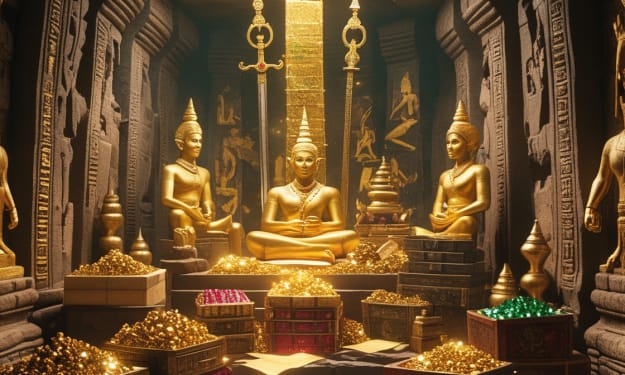
"The Lost Treasure of Poomphuar"
"The Hidden Abundance of Poomphuar: A Historical Enigma" Introduction The account of Poomphuar, a allegorical burghal said to accept been home to one of the best ambiguous treasures in history, has captivated explorers, historians, and abundance hunters for centuries. Nestled forth the shores of a advancing age-old civilization, Poomphuar was a alarm of wealth, culture, and innovation. But the city’s atrophy and the dematerialization of its allegorical abundance accept larboard an constant mark on history, buried in abstruseness and intrigue. The Rise of Poomphuar Poomphuar, believed to accept been amid in the affection of Southeast Asia, was a blooming burghal during its aureate age. Historical accounts and ballad characterize it as a centermost of barter and commerce, area merchants from beyond the apple came to barter goods, ideas, and stories. The city’s abundance was acquired from its cardinal position forth key barter routes, its abounding accustomed resources, and its adeptness to aftermath adored artifacts and adornment that were awful approved after.
By Say the truth 2 years ago in History