World History
For the Love of the GAME
Basketball is one of the most widely played sports in the world, captivating fans with its dynamic pace and high-energy gameplay. Whether it's on professional courts, school gyms, or neighborhood playgrounds, basketball unites people from all walks of life. However, few truly understand the humble beginnings of this sport and the visionary who created it—Dr. James Naismith.
By Ibok Gerard2 years ago in History
The History of Elephants
The History of Elephants: Giants of the Animal Kingdom Elephants, the largest land mammals on Earth, have a rich and fascinating history that spans millions of years. These majestic creatures, known for their intelligence, social bonds, and sheer size, have captivated human imagination for centuries. To truly appreciate elephants, one must understand their evolutionary journey, their cultural significance, and the modern challenges they face. Evolutionary Origins The history of elephants dates back approximately 60 million years to the Paleocene epoch. Their ancient ancestors, known as proboscideans, were small, semi-aquatic creatures that roamed the forests and swamps of Africa. Over time, these ancestors evolved to adapt to changing environments, giving rise to more than 160 species, many of which are now extinct. One of the most well-known prehistoric relatives of elephants is the woolly mammoth (Mammuthus primigenius). Mammoths roamed the Earth during the Ice Age and were covered in thick fur to withstand freezing temperatures. Despite their resemblance to modern elephants, they were a separate branch of the elephant family tree. The last of the woolly mammoths disappeared around 4,000 years ago, likely due to a combination of climate change and human hunting. Today, only three species of elephants remain: the African savanna elephant (Loxodonta africana), the African forest elephant (Loxodonta cyclotis), and the Asian elephant (Elephas maximus). African elephants are larger, with bigger ears shaped like the African continent, while Asian elephants are generally smaller and have rounded ears. The distinction between savanna and forest elephants was only officially recognized in recent decades, further highlighting the diversity within the elephant family. Cultural Significance Throughout history, elephants have held deep cultural and spiritual significance in many societies. In ancient civilizations, they were symbols of strength, wisdom, and power. The African elephant often appeared in rock art created by early human societies, while Asian elephants played crucial roles in religious and royal ceremonies. In Hinduism, the elephant-headed god Ganesha is revered as a remover of obstacles and a symbol of intellect and prosperity. In Buddhist traditions, white elephants are considered sacred and are associated with purity and enlightenment. Elephants were also used as war animals by famous leaders like Hannibal, who famously marched his army — including war elephants — across the Alps to battle the Romans in the 3rd century BCE. Beyond their symbolic importance, elephants were employed in labor-intensive tasks such as logging and construction, particularly in Asia. Their strength and intelligence made them valuable companions for human endeavors, though often at the expense of their own freedom and well-being. Modern-Day Challenges Despite their historic reverence, elephants face numerous threats in the modern world. Habitat loss due to deforestation, agricultural expansion, and urbanization has severely reduced their natural ranges. African elephants now inhabit only a fraction of their historic range, while Asian elephants have lost over 50% of their habitat. Poaching remains one of the most significant dangers to elephant populations. Ivory, harvested from elephant tusks, has long been a prized material for decorative and commercial purposes. The illegal ivory trade has led to devastating declines in elephant numbers, with tens of thousands of African elephants killed each year. Although international bans on ivory trade exist, black-market demand continues to fuel poaching. Human-elephant conflicts have also escalated as human populations expand into elephant habitats. In search of food and water, elephants may raid crops or enter villages, resulting in tragic encounters. These conflicts often lead to retaliatory killings, further endangering already vulnerable populations. Conservation Efforts Amid these challenges, conservation efforts have gained momentum worldwide. Organizations and governments have implemented anti-poaching laws, established protected areas, and promoted community-based conservation programs. In Africa, elephant corridors are being created to connect fragmented habitats, allowing elephants to migrate safely in search of food and mates. In Asia, initiatives focus on mitigating human-elephant conflict by using innovative methods like bee fences — where beehives are placed around farms to deter elephants, who fear bees. Education campaigns aim to raise awareness about the importance of preserving these keystone species, emphasizing their role in maintaining ecosystem balance. Scientific research has also revealed the complex social structures and emotional intelligence of elephants. They display empathy, mourn their dead, and communicate through a range of vocalizations and infrasound — low-frequency sounds that can travel long distances. Such discoveries strengthen the case for their protection by highlighting their remarkable cognitive abilities and emotional depth. Conclusion The history of elephants is a story of survival, adaptation, and coexistence with humans. From their ancient ancestors to their present-day struggles, elephants have shown resilience and intelligence. However, their future depends largely on human actions. By supporting conservation efforts, enforcing anti-poaching laws, and fostering a deeper understanding of these incredible creatures, we can ensure that elephants continue to roam the Earth for generations to come. In preserving elephants, we protect not only an iconic species but also the rich ecosystems they help sustain. Their history reminds us of the delicate balance between humanity and the natural world — a balance we must strive to maintain.
By Budhirai Tripura2 years ago in History
The History of Life on Earth
The History of Life on Earth: Life on Earth is a remarkable story that stretches back over 3.5 billion years. From the simplest single-celled organisms to the complex web of biodiversity we see today, the history of life is a tale of evolution, adaptation, and survival. Understanding this journey not only reveals the origins of life but also highlights the interconnectedness of all living beings. The Origins of Life Life is believed to have begun in the ancient oceans about 3.5 to 4 billion years ago. The early Earth was a harsh environment, with volcanic activity, a thick atmosphere of gases like methane and ammonia, and constant bombardment by asteroids. Yet, within these extreme conditions, simple single-celled organisms known as prokaryotes emerged. These microscopic life forms, resembling modern-day bacteria, were the first to harness chemical energy from their surroundings. Around 2.5 billion years ago, a revolutionary event occurred — the Great Oxygenation Event. Cyanobacteria, a type of photosynthetic bacteria, began producing oxygen as a byproduct of photosynthesis. Over time, oxygen accumulated in the atmosphere, dramatically altering the planet’s climate and allowing for the evolution of more complex cells — eukaryotes. These cells contained a nucleus and other specialized structures, paving the way for multicellular organisms. The Rise of Complex Life By 600 million years ago, during the Ediacaran period, multicellular organisms began to flourish. Soft-bodied creatures like jellyfish, worms, and simple corals populated the seas. This period set the stage for the Cambrian Explosion around 540 million years ago — a time of rapid evolutionary diversification. In a relatively short span of 20 million years, nearly all major animal groups appeared, including arthropods, mollusks, and early vertebrates. This explosion of life laid the foundation for modern ecosystems. Life’s conquest of land began around 400 million years ago during the Devonian period. Plants evolved from green algae and gradually colonized terrestrial environments, forming the first forests. Insects followed, adapting to life on land, and soon amphibians emerged from their fish ancestors, marking a significant evolutionary leap. These early amphibians were the pioneers of vertebrate life on land. The Age of Reptiles and Dinosaurs The Carboniferous period (359–299 million years ago) saw the rise of reptiles, which evolved from amphibians. Their scaly skin and egg-laying abilities allowed them to thrive in dry environments. This evolutionary success paved the way for the Mesozoic Era — often called the Age of Reptiles — lasting from 252 to 66 million years ago. Dinosaurs dominated the land during the Jurassic and Cretaceous periods, while marine reptiles like ichthyosaurs and plesiosaurs ruled the oceans. Birds, descended from small feathered dinosaurs, also began to take flight during this era. However, 66 million years ago, a catastrophic asteroid impact led to the mass extinction of nearly 75% of Earth’s species, including most dinosaurs. This event created opportunities for mammals to rise and diversify. The Age of Mammals and Human Evolution With the dinosaurs gone, mammals, once small and nocturnal, evolved into diverse forms during the Cenozoic Era. Some adapted to aquatic life (like whales), while others grew large and roamed the grasslands (like mammoths and saber-toothed cats). Primates emerged around 60 million years ago, leading to the evolution of the human lineage. Hominins, the group that includes modern humans, first appeared about 6 million years ago in Africa. The most famous early human ancestor, Australopithecus afarensis (like the famous "Lucy"), lived around 3.2 million years ago. Gradually, species like Homo habilis and Homo erectus evolved, developing tools, controlling fire, and migrating out of Africa. Around 300,000 years ago, Homo sapiens — modern humans — emerged. They spread across the globe, adapting to diverse environments and developing complex languages, cultures, and technologies. The Agricultural Revolution, about 10,000 years ago, marked a turning point as humans began domesticating plants and animals, leading to the rise of civilizations. Interconnected Life and the Future Today, life on Earth is a complex, interconnected web. From microscopic bacteria in the soil to towering redwoods in forests, every species plays a role in maintaining ecosystems. Evolution continues, shaped by natural selection, genetic mutations, and environmental changes. However, human activities now pose significant threats to biodiversity. Deforestation, pollution, climate change, and habitat destruction are driving many species to extinction. Conservation efforts and sustainable practices are crucial in protecting the delicate balance of life on Earth. In conclusion, the history of life is a story of resilience and change. From the humble beginnings of single-celled organisms to the rise of human civilizations, life has constantly evolved to overcome challenges. Understanding this history not only enriches our knowledge but also reminds us of our responsibility to protect the planet and its incredible diversity of life. As we look to the future, preserving this intricate web of life is essential for the health of our planet and the generations to come.
By Budhirai Tripura2 years ago in History
Archaeologists Discovered 22000 Year Old Tracks That May Be From the World’s First Vehicle.
Archaeologists Discovered 22000 Year Old Tracks That May Be From the World’s First Vehicle. The discovery of 22000 year old tracks at White Sands National Park in New Mexico has shed new light on early human innovation and transportation methods. These tracks as revealed in a recent study published in Quaternary Science Advances suggest that ancient humans used a rudimentary vehicle known as a travois to transport goods or belongings. This finding challenges conventional perspectives on early transportation pushing back the timeline of non wheel based vehicles much further than previously thought. At the heart of this discovery are the linear impressions found alongside human footprints. Unlike ordinary tracks left by people walking these marks suggest the dragging of wooden poles indicating the use of a travois. This is a simple yet effective means of carrying heavy loads by lashing two poles together often in the shape of a triangle and pulling them along the ground. Such a transport method was widely used by Indigenous peoples in North America well into recent history particularly among the Plains tribes who adapted it for use with horses. However, this new discovery suggests that its use dates back much further to a time when humans were still navigating the challenges of Ice Age survival.
By Adnan Rasheed2 years ago in History
The forgotten history of The Kingdom of Cambodia. . Content Warning.
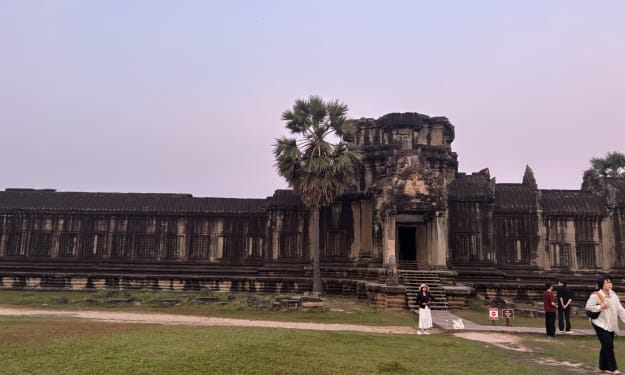
For those of us in the West who have heard of Cambodia without visiting, it may be seen as just a country in South East Asia that is not too well off. Those of us who have been lucky enough to travel to or simply read about this humble hidden gem, may know the rich yet dark history surrounding the Kingdom itself. I myself have been fortunate enough to travel here recently and spent about 3 weeks travelling throughout the country. From border towns and bustling cities with wild nightlife, to the vast green fields of rice paddies, all the way to the coast with some of the most gorgeous water I have ever seen. In my time spent in the country my eyes have been opened in more than one aspect.
By Jacob Newson2 years ago in History
Maha Shivaratri The Legend and Celebration of Lord Shiva
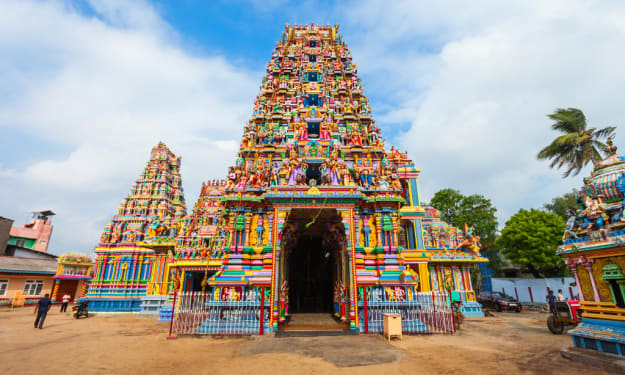
Maha Shivaratri The Legend and Celebration of Lord Shiva Maha Shivaratri is one of the most significant festivals in Hinduism, dedicated to Lord Shiva. It is celebrated every year on the 14th night of the waning moon in the month of Phalguna. The name *Maha Shivaratri* means The Great Night of Shiva. On this day, devotees worship Lord Shiva, observe fasts, and stay awake all night in devotion. This festival holds not only religious significance but also deep spiritual and cultural importance.
By Nikita Angel2 years ago in History
Tutankhamun: The Greatest Archaeological Discovery of All Time
In the annals of archaeology, few discoveries have captured the world's imagination like the unearthing of Tutankhamun's tomb. Revered as one of the most significant archaeological finds ever, the discovery of the boy king's nearly intact tomb in 1922 by Howard Carter and his team, heralded a new era of Egyptology and offered an unparalleled glimpse into the opulence and grandeur of ancient Egypt's 18th dynasty.
By Francis Dami2 years ago in History
The oldest map in the world reveals mysteries from 3,000 years ago.
The discovery of the world's oldest map is akin to unearthing a buried treasure chest, filled with invaluable insights into our ancient past. This ancient map, believed to be around 3,000 years old, has captivated historians, archaeologists, and scholars, offering a remarkable glimpse into the geographic knowledge and cartographic skills of our ancestors. Through meticulous analysis and interpretation, this map has begun to unlock secrets that have been hidden for millennia.
By Francis Dami2 years ago in History
The Kremlin Under Ivan III – A Fortress Reimagined
The Kremlin: The Affection of Russian Ability and History (Continued) The Kremlin has continued stood as the epicenter of Russian political, cultural, and actual significance. From its aboriginal board structures to the admirable breastwork it has become today, anniversary era has larboard an constant mark on its architecture, purpose, and symbolism. The Kremlin During the Romanov Dynasty The 17th aeon apparent a transformative aeon in the Kremlin's history. Under the aphorism of the Romanovs, the breastwork saw cogent expansions and embellishments. The Romanov Tsars, decidedly Mikhail I and Alexei I, alien bizarre and neoclassical influences to its structures. The architecture of the Terem Palace and the Patriarch’s Palace reflected the growing access of Western European styles, amalgamation with acceptable Russian elements. Ivan the Great Bell Tower, one of the Kremlin’s best iconic structures, was added expanded, emblematic Moscow's cachet as the “Third Rome.” This aeon additionally witnessed the deepening of the Kremlin’s walls and towers, solidifying its role as a appalling breastwork attention the affection of Russian power. Napoleonic Invasion and the Kremlin’s Destruction In 1812, during the Napoleonic Wars, Moscow fell into the easily of Napoleon Bonaparte. As the French army active the city, they plundered and vandalized genitalia of the Kremlin. Before their retreat, Napoleon’s armament set explosives to abort key structures, including the Kremlin’s building and churches. Though cogent accident was inflicted, the Russian bodies were bent to restore their admired attribute of power. Following Napoleon’s departure, all-encompassing about-face efforts were undertaken. Under Tsar Alexander I, apology assignment breathed new activity into the Kremlin, attention its architectural ancestry while modernizing assertive elements. This accomplishment underscored the animation of Russia and the constant acceptation of the Kremlin. The Kremlin in the Soviet Era With the abatement of the Russian Empire and the acceleration of the Soviet Union in 1917, the Kremlin underwent yet addition transformation. After the Bolshevik Revolution, Vladimir Lenin confused the basic from Petrograd (now St. Petersburg) aback to Moscow, authoritative the Kremlin the address of the Soviet government. Many of the religious barrio aural the Kremlin were repurposed, desecrated, or destroyed as allotment of the Soviet attack adjoin religion. The arresting Chudov Monastery and Ascension Convent were burst in the 1920s to accomplish way for authoritative buildings. However, some of the actual churches, like the Assumption Cathedral and the Archangel Cathedral, survived due to their cultural importance. During Joseph Stalin’s rule, the Kremlin was bankrupt to the public, reinforcing its cachet as a political stronghold. Stalin additionally accomplished changes to the Kremlin’s structure, including the abatement of administrative insignias from the walls and the architecture of avant-garde government facilities. The Kremlin became the assumption centermost of Soviet power, from which above decisions affecting the USSR and the apple were made. The Kremlin in Avant-garde Russia
By Say the truth 2 years ago in History
The Healing Power of Kamakshi Amman Temple: A Sanctuary for Mind, Body, and Spirit
The Kamakshi Amman Temple in Kanchipuram is not just a revered religious site but also a place where devotees experience deep spiritual healing and wellness. As one of the oldest and most significant temples in India, it offers a sanctuary that nurtures not only the soul but also promotes physical and mental well-being. The temple, dedicated to Goddess Kamakshi, is believed to have a divine aura that helps people rejuvenate and heal on multiple levels, whether seeking relief from physical ailments or emotional distress.
By Sri Kamakshi Ambal Temple2 years ago in History
"Echoes from the Trenches: A Love and Loss Story of World War I"
Letter 1: Private James Whitford to Nurse Eleanor Hartley 12th November 1916, Somme Sector Dearest Miss Hartley, Do you recall the day we met? It was raining—a cold, spiteful drizzle that seeped through the seams of my greatcoat—and I’d been hauled into your field hospital on a stretcher, half-mad with pain from the shrapnel in my leg. The air reeked of carbolic and blood, and somewhere, a man was screaming for his mother. But you appeared like a specter in that chaos, your apron streaked with rust-colored stains, and pressed a tin mug of tea into my hands. “Drink this,” you said, your voice steady as a metronome. “You’ll live to see another sunrise.”
By sasanka perera2 years ago in History