World History
The Struggle of Gaza: A Glimpse into the Heart of Palestine
The Gaza Strip, a small densely populated region along the eastern seaboard of the Mediterranean Sea, is now one of the most symbolically loaded and geopolitically loaded spaces in the world. Part of the State of Palestine, Gaza is home to over 2 million individuals, most of them children, conditions of living as physically as emotionally challenging.
By Arafat Hossain about a year ago in History
The Legacy of Longevity: A Lesson from Japan
The Legacy of Longevity: A Lesson from Japan The Mystery Begins In the year 2045, Aarav, a passionate journalist from Kolkata, India, stood on the breezy coastline of Okinawa. Unlike most reporters who chased headlines, Aarav pursued meaning. He had one mission: to uncover the hidden truths behind Japan’s extraordinary longevity and share it with a restless world drowning in stress, poor health, and fast living.
By MystiTech Hubabout a year ago in History
Israel-Palestine Conflict: A War of History, Identity, and Hope for Peace . AI-Generated.
One of the longest-running and most complicated political and territorial disputes in modern history is the Israel-Palestine conflict. For over seven decades, it has shaped the geopolitics of the Middle East, ignited global debates, and caused immense human suffering on both sides. Rooted in history, religion, and competing claims to the same land, the conflict remains unresolved despite numerous attempts at peace.
By Mr.Mushfikabout a year ago in History
2,400 Years Before Refrigerators: How Persians Made Ice in the Desert. AI-Generated.
More than 2,400 years ago, in the arid and sun-scorched landscapes of ancient Persia—modern-day Iran—a civilization mastered one of nature’s most elusive elements: ice. At a time when electricity was millennia away from invention and refrigeration was an unknown concept, the Persians engineered an astonishing method to produce, store, and use ice in the heart of the desert. Their creation, the Yakhchal, which literally translates to "ice pit" in Persian, was not just a functional device—it was a marvel of ancient sustainable architecture and climate-responsive design.
By The Thought Questabout a year ago in History
The Golden Palace of Nero: Rome’s Lost Empire of Wealth and Wonder . AI-Generated.
The Golden Palace of Nero: History’s Most Opulent Imperial Fantasy Envision a palace so expansive that it extended over 300 acres, adorned with gold, pearls, and gemstones, featuring rotating dining spaces, artificial lakes, and towering sculptures. This was not merely a figment of imagination but a reality in antiquity's Rome. Known as the Domus Aurea, or "Golden House," it served as the architectural manifestation of Emperor Nero's aspirations, extravagance, and imperial authority. Constructed following the Great Fire of Rome in 64 AD, the Golden Palace stood as a marvel of engineering, luxury, and design. While much of it has been lost or entombed beneath the contemporary city, its legacy endures as one of history’s most sumptuous edifices. In this article, we will examine its history, design, and lasting significanceboth cultural and economicestimating the remarkable wealth it signified. 1. The Ascendancy of a Palace Emanating from Embers In 64 AD, a monumental fire consumed Rome for over six days, obliterating vast sections of the metropolis. Controversy surrounds the blazemany asserted that Nero may have ignited it to clear space for his palace. Whether truth or myth, what ensued was the erection of one of the most splendid palatial complexes the world had ever witnessed. The Domus Aurea encompassed parts of three of Rome's seven hillsthe Palatine, Esquiline, and Caelian. It was not a solitary palace but an extensive estate consisting of gardens, vineyards, pavilions, baths, colonnades, banquet halls, and lakes. 2. An Architectural Marvel of Gold and Glory The Domus Aurea was crafted by architects Severus and Celer, adorned by the painter Fabullus. Its attributes included: Gold-leafed ceilings and inlaid mother-of-pearl A rotating circular dining area powered by water to emulate the heavens An artificial lake and gardens replicating the countryside Lavish frescoes, mosaics, and sculptures Rooms featuring vaulted ceilings and innovative natural lighting The centerpiece was the massive bronze statue of Nero, referred to as the Colossus of Nero, towering approximately 35 meters (115 feet) high. It later inspired the nomenclature of the Colosseum, constructed on the site after the palace was dismantled. 3. A Palace Too Opulent for Rome Nero's Domus Aurea was a paragon of excessbut it also evolved into a symbol of his despotism and indulgence. During an era when most Romans lived simply, Nero’s golden dominion infuriated the Senate and the citizenry. Nero reportedly declared upon its completion: “At last, I can commence living like a human being. ” Following his suicide in 68 AD, the succeeding emperorsparticularly Vespasian, Titus, and Trajanendeavored to obliterate Nero’s legacy. The palace was stripped of its opulence, buried, and repurposed for public edifices such as: The Baths of Titus The Flavian Amphitheater (Colosseum) The Baths of Trajan Ironically, its interment preserved portions of it below ground, which would be rediscovered centuries later. 4. Rediscovery and Renaissance Influence During the Renaissance in the late 15th century, segments of the Domus Aurea were inadvertently rediscovered by a young Roman who fell through an opening and encountered a chamber adorned with ancient frescoes. This discovery motivated creators such as Raphael, Michelangelo, and Giovanni da Udine, who explored the concealed chambers and replicated the designs. The grotesque style observed in Renaissance ceilings and embellishments is directly derived from the Domus Aurea. Since that time, it has been partially unearthed and made accessible to the public, with continuous restoration efforts aimed at conserving what remains of this once-magnificent golden palace. 5. Assessing the Net Worth of Nero’s Golden Vision Although it is unattainable to specify an exact contemporary dollar value, historians and economists have provided some educated approximations based on: Materials utilized: Gold leaf, marble, gemstones, ivory Labor expenses: Thousands of enslaved individuals and artisans Land valuation: Prime property in central Rome Here is a general approximation: Category Estimated Contemporary Value Gold and ornamental materials $1–2 billion Real estate (300 acres in Rome) $10–15 billion Artistic and cultural assets $5–8 billion Architectural distinctiveness Priceless but conservatively $5 billion Total Estimated Net Worth $20–30+ billion While this represents a cautious estimate, the symbolic significance of the Domus Aurea renders it one of the wealthiest residences ever constructed. Conclusion The Golden Palace of Nero transcended being merely an extravagant abodeit stood as a tribute to the extent of imperial ambition, the brilliance of Roman engineering, and the legacy of a ruler who bequeathed both marvel and controversy. Although its gold has tarnished and its corridors buried, the Domus Aurea endures as a radiant recollection in the narrative of ancient Romea palace that was once too magnificent for the world in which it existed.
By Say the truth about a year ago in History
The Nile River: Africa’s Timeless Treasure Worth Trillions. AI-Generated.
The Nile River: The Enduring Riches of Africa’s Lifeline The Nile River, extending over 6,650 kilometers (4,130 miles), is recognized as the longest river worldwide, traversing 11 nations and acting as a lifeline for more than 300 million inhabitants. From the ancient pyramids of Egypt to contemporary irrigation systems in Sudan, the Nile has been the vital center of civilizations for millennia. However, beyond its historical significance lies a river of considerable economic worth. In this article, we analyze the economic value of the Nile Riverassessing its impact on agriculture, energy, transportation, ecology, and cultural heritage. Although assigning a specific monetary figure to such a dynamic natural system is intricate, existing data and projections enable us to illustrate a persuasive narrative of the Nile's unmatched value. 1. Agricultural Prosperity: Sustaining a Continent The Nile nourishes millions of acres of farmland throughout East Africa and the Middle East. In nations such as Egypt and Sudan, over 90% of agricultural activities rely entirely on Nile water. Crops like wheat, sugarcane, cotton, fruits, and vegetables are cultivated utilizing its irrigation networks. Estimated Economic Value: Egypt's agricultural GDP alone: $50 billion annually (70% linked to the Nile) Sudan and Ethiopia: Approximately $20 billion combined in Nile-dependent agriculture Total Agricultural Value Across the Basin: Approximately $100 billion per year, conservatively assessed Over a 50-year period, this amounts to $5 trillion in agricultural wealth. 2. Hydroelectric Power: Producing Africa’s Energy The Nile also serves as a source of renewable energy, with numerous hydroelectric dams harnessing its flow. Key facilities include: Aswan High Dam (Egypt) – Produces over 2. 1 GW Grand Ethiopian Renaissance Dam (GERD) – Anticipated output: 6. 45 GW Roseires and Merowe Dams (Sudan) – Significant power sources The energy generated from these facilities supports: National grids Industrial operations Rural electrification Estimated annual value of hydroelectric power across the Nile Basin: $10–15 billion, increasing with the GERD and forthcoming infrastructure. 3. Transportation and Trade Corridor For centuries, the Nile has functioned as a natural thoroughfare, conveying goods, people, and ideas. Currently, the Nile continues to: Facilitate commercial shipping and trade Support tourism vessels and cruises Provide vital domestic transport in Egypt and Sudan With a resurgence in Nile-centric infrastructure projects and tourism, its logistical and tourism revenue is estimated at: Tourism (Egypt, Uganda, etc. ): $5–7 billion annually River transport and logistics: $1–2 billion annually Combined Value (tourism + transport): $8–10 billion/year, with long-term potential surpassing $500 billion 4. Freshwater Resource Valuation Despite being situated in one of the most water-scarce areas on Earth, the Nile supplies essential water to cities, farms, and ecosystems throughout Africa. Economically valuing freshwater: Cairo alone utilizes over 7 billion cubic meters per year If assessed at a global market rate of $0. 50 per cubic meter, this equates to $3. 5 billion annually for just one city Calculating for basin-wide usage: Total annual freshwater value: $10–15 billion, potentially more during drought conditions Over several decades, the value of water alone may surpass $1 trillion. 5. Cultural and Historical Importance The Nile gave rise to one of humanity's earliest and most impactful civilizations: Ancient Egypt. The pyramids, hieroglyphics, and temples located along its shores have not only influenced human history but also contribute significantly to a thriving global tourism sector. Cultural Net Worth Assessment: Historical tourism (Egypt, Sudan): Approximately $20 billion annually Archaeological significance & preservation funding: Incalculable, but conservatively assessed at $100–200 billion 6. Environmental and Ecosystem Services In addition to supporting human life, the Nile River sustains: Wetlands and marshlands (e. g. , the Sudd in South Sudan) Bird habitats and migratory pathways Fish diversity, notably in Lake Victoria and the Blue Nile tributaries These ecosystems provide benefits for: Fisheries Flood management Climate equilibrium Biodiversity protection Long-term valuation of environmental services: $500 billion – $1 trillion Total Estimated Net Worth of the Nile River Category Estimated Value Agriculture $5 trillion (long-term) Hydroelectric energy $500–800 billion Transportation & Tourism $500 billion – $1 trillion Freshwater reserves $1 trillion+ Cultural & Historical value $100–200 billion Environmental ecosystem services $500 billion – $1 trillion Total Estimated Net Worth $8–10 trillion+ Conclusion The Nile River transcends being merely the world's longest riverit represents one of the most valuable natural resources on the planet. It sustains the livelihoods of millions, energizes nations, nourishes continents, and motivates humanity with its enduring legacy. However, in spite of its significance, the Nile faces dangers from climate change, political turmoil, and unsustainable exploitation. Recognizing its economic and ecological value is crucial for its conservation. The Nile is not simply a riverit is an indispensable foundation of life, prosperity, and history.
By Say the truth about a year ago in History
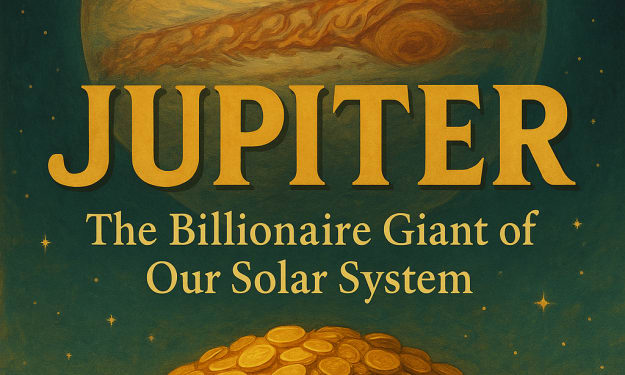
Jupiter: The Billionaire Giant of Our Solar System. AI-Generated.
Jupiter: The Billionaire Titan of Our Solar System In the vastness of the cosmos, few celestial entities attract attention like Jupiter, the most massive planet in our solar system. A tumultuous giant of gas, storms, and enigmatic magnetic fields, Jupiter represents not only a cosmic marvel but also a topic of intrigue for scientists, futurists, and speculative economists alike. But what if we evaluated Jupiter in the same manner we assess Earth’s resources? What if we endeavored to estimate its net worth? Although it may appear abstract to assign a monetary value to a gas giant, examining Jupiter’s "worth" aids us in understanding not only the planet itself but also the future of space economics, resource extraction, and cosmic colonization. 1. The Physical Scale of Jupiter Jupiter is a titan. With a diameter of approximately 139,820 kilometers, it is over 11 times broader than Earth and has a volume capable of accommodating more than 1,300 Earths. Its mass is 318 times that of Earth, containing over 70% of the planetary mass in the solar system (excluding the Sun). Unlike Earth, Jupiter is predominantly composed of hydrogen and helium, the fundamental components of stars. Its swirling atmosphere houses the renowned Great Red Spot, a storm larger than Earth that has persisted for centuries. 2. What’s Within Jupiter? Elements, Gases, and Potential Assets While Jupiter lacks a solid surface, it is not devoid of value: Hydrogen and Helium: The most prevalent elements in the universe. Liquid metallic hydrogen deep within Jupiter may one day be utilized for advanced propulsion technologies or quantum superconductors. Ammonia and Methane: Present in its upper atmosphere, these compounds could serve as potential components in synthetic fuels or bio-processors. Possible Metallic Core: Although unverified, some hypotheses propose a rocky or metallic core, which might encompass rare elements. Magnetosphere: Jupiter boasts the strongest magnetic field of any planetapproximately 20,000 times more powerful than Earth’sforming valuable radiation belts that could be leveraged for advanced research or energy acquisition. While not extractable in a traditional sense, Jupiter’s resources could be tapped through atmospheric scooping, fusion-based extraction, or future megastructures. 3. The Economics of Space: Appraising Jupiter in Tangible Terms Assessing a planet that is uninhabitable and predominantly gaseous presents challenges, yet speculative models can inspire our imagination: a. Hydrogen Valuation: Hydrogen serves as a fuel source for nuclear fusion, often regarded as the holy grail of clean energy. The value of hydrogen fluctuates based on purity and form, but liquid hydrogen is approximately $6 per kilogram on Earth. Jupiter’s hydrogen mass is estimated at around 1. 3 x 10²⁷ kilograms. Even if we value just 1% of this (accessible mass) at Earth prices, it would result in: 1. 3 x 10²⁵ kg × $6/kg = $78,000,000,000,000,000,000 That equates to $78 quintillionand that is a conservative estimate. b. Helium-3 Potential: Helium-3 is exceedingly rare on Earth but holds significant value for future nuclear fusion reactors. On the Moon, it is appraised at $3 billion per ton. Jupiter may possess millions of tons of helium-3. If even 1 million tons were feasibly extractable: 1,000,000 tons × $3 billion = $3 quadrillion 4. Jupiter’s Moons: Billion-Dollar Properties Jupiter possesses 95 verified moons, including Europa, Ganymede, and Callisto, which are regarded as leading candidates for prospective colonization. Europa may contain a subsurface ocean, potentially supporting life. Ganymede is the most substantial moon in the solar system and may be abundant in water ice. Callisto has minimal radiation, rendering it suitable for possible human settlements. If celestial objects were real estate, Jupiter’s moons would be valued in the multi-trillion-dollar range. A future extraterrestrial economy could appraise these moons similarly to how land is valued today, with advantageous locations, resources, and life-support capabilities increasing their worth. Strategic and Scientific Importance Even without direct resource extraction, Jupiter possesses significant strategic importance: A gravitational slingshot for spacecraft trajectories. A natural laboratory for examining planetary formation. A vast magnetosphere for scientific investigation. In the realm of space exploration economics, such characteristics hold immense intellectual and technological significance, potentially saving billions in propulsion and research expenditures. Risks and Limitations Jupiter is not devoid of obstacles: Its atmosphere is lethal. Radiation levels are extreme. The gravitational force is substantial, complicating both entry and exit. Extracting resources from Jupiter would demand centuries of technological progression, AI automation, and potentially interstellar-level infrastructure. Total Estimated Net Worth While conjectural, here is a conservative assessment: Hydrogen reserves (1%): $78 quintillion Helium-3 (1 million tons): $3 quadrillion Moons (strategic value): $2–5 quadrillion Scientific worth, gravitational utility: Incapable of calculation Total Estimated Net Worth: $80–90 quintillion (and increasing with technology) Conclusion Jupiter may be unwelcoming, yet it symbolizes a cosmic treasure trove for future civilizations. Its gases, gravitational capabilities, and diverse moon system establish it as the most affluent celestial body in our solar system by potential worth. As we explore deeper into space, Jupiter may ultimately be recognized not merely as the monarch of planets but as the billionaire magnate of the cosmos.
By Say the truth about a year ago in History
The Eternal Green: Tracing the Glorious History and Value of the Emerald Stone
The Eternal Green: The Radiant Legacy and Financial Worth of the Emerald Stone Among the gemstones valued throughout history, few equal the emerald in intrigue, sophistication, and worth. With its rich green shades, emblematic significance, and storied allure to royalty and mystics alike, the emerald has captivated societies for millennia. From ancient Egyptian burial sites to Colombian quarries, from Incan shrines to European regalia, the narrative of the emerald is a worldwide saga of affluence, conquest, and fascination. However, beyond its aesthetic allure lies significant worth. With some solitary stones commanding tens of millions of dollars, and the global emerald industry expanding rapidly, the stone's net worth in both cultural and financial dimensions is substantial. 1. Ancient Origins: A Jewel Suitable for the Deities The earliest documented emeralds were extracted in Egypt circa 330 BCE, although there are assertions of utilization dating back to 1500 BCE. Cleopatra herself was famously infatuated with emeralds and claimed dominion over all Egyptian emerald quarries. These mines, located in the Eastern Desert, would become known as "Cleopatra’s Mines," supplying gemstones for both the queen and her entourage. The ancient Romans also esteemed emeralds for their brilliant green hue. Pliny the Elder, a Roman naturalist, wrote extensively about emeralds, noting their ability to solace the eyes and spirit. Roman emperors frequently employed emeralds in rings, necklaces, and ceremonial attire. In India, emeralds were regarded as sacred stones. Maharajas donned them in elaborate adornments, and they were often inscribed with prayers and utilized in spiritual ceremonies. 2. The Incan Link and Spanish Conquest The indigenous populations of South America, particularly the Incas and Muzo community of Colombia, esteemed emeralds immensely. For them, emeralds were divine gifts, employed in religious rituals and royal embellishments. These stones were mined from sites that remained concealed from outsiders for centuries. The situation transformed in the 16th century with the arrival of Spanish conquistadors. Upon uncovering the affluent emerald mines in what is presently Colombia, they ruthlessly extracted not only the stones but also the knowledge of the indigenous peoples. Spanish vessels commenced transporting emeralds across the Atlantic, satisfying the unquenchable desires of European monarchies. Colombia’s emeralds were larger, clearer, and more vibrant than any previously encountered, swiftly becoming the most desired gemstones globally. 3. The Emergence of Global Trade and Emerald Kingdoms During the Age of Exploration, emeralds evolved into one of the most precious trade commodities alongside gold, silver, and spices. European royaltyparticularly in Spain, Portugal, France, and Englandutilized emeralds to embellish crowns, brooches, and even swords. The Mughal Empire in India, already fond of emeralds, became a principal purchaser of Colombian gems, often inscribing them with sacred Islamic writings and employing them as imperial gifts. In the 19th and 20th centuries, emerald extraction expanded to Brazil, Zambia, Pakistan, and Afghanistan. Nonetheless, Colombian emeralds remain the benchmark due to their clarity and rich green hue. 4. Symbolism and Cultural Influence Throughout time, emeralds have represented rejuvenation, affection, fertility, and wisdom. In astrology, they are linked to Venus, embodying beauty and balance. Additionally, they are regarded as the birthstone for May. Emeralds were thought to possess mystical abilities: Ancient Egyptians believed emeralds could confer everlasting youth. The Incas regarded them as sacred gemstones. Medieval European mystics believed emeralds could guard against malevolent spells and enhance clairvoyance. Even in contemporary times, emeralds are utilized in feng shui, crystal healing, and modern astrology for their purported soothing and restorative properties. 5. The Contemporary Emerald Market and Estimated Net Worth The global emerald market has evolved into a multibillion-dollar sector. The most prized emeralds originate from Colombia, Zambia, and Brazil, with Colombian emeralds constituting over 70% of the world’s premium supply. Emeralds are assessed based on hue, clarity, carat weight, and cut. Unlike diamonds, emeralds are nearly always included (featuring internal imperfections), thus making high-clarity stones exceptionally rare and precious. Noteworthy instances: The Rockefeller Emerald, an 18. 04-carat Colombian emerald, fetched $5. 5 million in 2017. The Bahia Emerald, weighing over 800 pounds and containing hundreds of thousands of carats, is valued (controversially) at up to $400 million. Global market valuation: As of the mid-2020s, the emerald gemstone market is estimated to exceed $8 billion annually. With sustained demand from collectors, luxury sectors, and countries such as China, India, and the U. S. , this value is projected to escalate by 6–8% each year. Estimated total value of known emerald reserves and markets: $100–120 billion. 6. Challenges and Sustainability Contemporary emerald mining confronts challenges including: Illegal mining and trafficking, particularly in conflict-affected regions. Labor exploitation and inadequate safety measures for miners. Ecological harm, especially from unregulated extraction. However, organizations like the Responsible Jewellery Council and initiatives towards ethically sourced gemstones are transforming industry standards. Conclusion From the sacred ceremonies of the Incas to the treasure chests of Spanish galleons and the showcase windows of modern jewelry boutiques, emeralds have persisted as emblems of power, luxury, and allure. With a rich heritage spanning over 4,000 years and a valuation surpassing $100 billion, the emerald is not merely a stoneit is a vibrant connection between history, beauty, and worth.
By Say the truth about a year ago in History
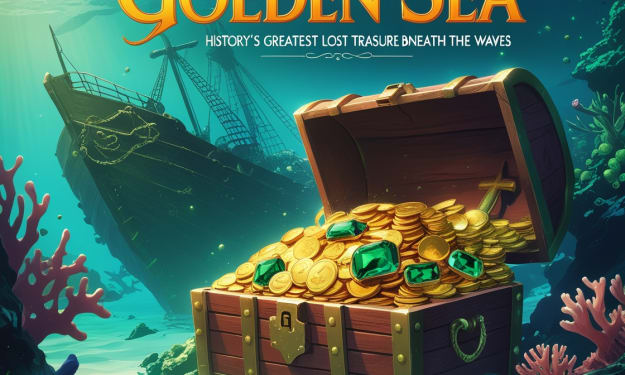
The Golden Sea: History’s Greatest Lost Treasure Beneath the Waves
The Golden Sea: Unraveling the History of the World’s Greatest Ocean Treasure For centuries, the planet’s oceans have concealed unimaginable riches beneath their waves. Among the tales of submerged galleons, pirate caches, and lost civilizations, one myth prevails above the others: the legendary Golden Sea. Allegedly possessing the most significant treasure ever lost to the depths, the Golden Sea has captivated treasure seekers, historians, and explorers alike. But is this renowned treasure a fabricationor a recollection obscured by centuries of saltwater? In this article, we delve into the origins of the Golden Sea legend, the actual shipwrecks that may have inspired it, and the potential value of this treasure in contemporary society. 1. The Legend of the Golden Sea The legend of the Golden Sea likely traces its origins to 16th to 18th-century maritime exploration, an era when European empires vied to dominate international trade. According to narratives relayed by sailors and chroniclers, a massive treasure convoyoften characterized as a “fleet of gold-laden vessels”disappeared somewhere in the Atlantic or Pacific Ocean during a ferocious storm, pirate attack, or mutiny. Some accounts assert that the treasure was en route from the New World to Spain, laden with Aztec and Inca gold seized by conquistadors. Others suggest it belonged to Chinese emperors, transported aboard enormous treasure junks that succumbed to monsoon gales or foreign naval forces. The most enduring version situates the Golden Sea in the Caribbean, where the Spanish treasure fleet was lost to hurricanes or enemy artillery. Over the years, the legend evolved into a mythical narrative. It became known not merely as a submerged vessel, but a “Golden Sea”a metaphor for the vastness and enigma of the treasure concealed beneath the ocean. 2. Historical Roots: Authentic Shipwrecks That Sustained the Myth While the Golden Sea may exist as a collective fable, it is grounded in actual occurrences. Several historic shipwrecks resonate with the magnitude and splendor of the myth: The 1715 Spanish Treasure Fleet: One of the most renowned treasure losses, this fleet of 11 ships departed Havana for Spain, transporting gold, silver, and gemstones valued at billions today. All but one vessel sank off the coast of Florida during a hurricane. Only a small fraction of the treasure has ever been retrieved. The Nuestra Señora de Atocha (1622): This Spanish galleon sank in a hurricane near the Florida Keys while carrying emeralds, gold, and silver from Colombia and Peru. Modern treasure hunter Mel Fisher discovered the wreck in 1985, recovering artifacts valued at over $450 million. The San José (1708): A Spanish galleon sunk by British forces near Cartagena, Colombia. It is believed to contain over $17 billion in treasure. The shipwreck was rediscovered in 2015, but legal disputes have hindered recovery efforts. The Flor de la Mar (1511): A Portuguese vessel that sank in the Strait of Malacca with treasure plundered from the Malacca Sultanate. Its cargoreportedly worth over $2. 5 billionhas never been located. Each of these wrecks contributes to the mythology of the Golden Seawhether through magnitude, secrecy, or sheer historical drama. 3. What Was Included in the Treasure? Historical documentation indicates that the Golden Sea’s treasure, whether tangible or fictitious, likely comprised: Gold ingots and coins extracted from mines in Peru, Colombia, and Mexico. Silver bars and plates, utilized as currency and regal gifts. Emeralds, rubies, and pearls, many of which remain uncut and invaluable. Religious relics, such as gold crucifixes, chalices, and artifacts pillaged from temples and cathedrals. Exotic trade commodities, encompassing Chinese porcelain, silk, and spices. In contemporary valuation, such a treasure could effortlessly surpass $25 billion, excluding its historical and cultural significance. 4. Contemporary Searches and Technological Advances Due to innovations in deep-sea scanning, underwater robotics, and satellite imagery, treasure seekers are nearer than ever to uncovering the remnants of these legendary hoards. Firms like Odyssey Marine Exploration and private investors have allocated millions toward search endeavors throughout the Atlantic and Caribbean. Governments have commenced collaboration with archaeologists to safeguard national heritage and avert looting. AI-enhanced mapping technologies can now examine thousands of square miles of ocean floor for anomalies within weeks. Nevertheless, the vastness of the ocean, legal complexities, and natural degradation imply that even if the Golden Sea treasure is real, it may never be entirely recovered. 5. The True Worth of the Golden Sea If we envision the Golden Sea not merely as a singular wreck but as a metaphorical collection of the world’s most priceless lost treasures, its overall net worth may encompass: $25–30 billion in gold and silver $5–10 billion in gemstones and artifacts $15 billion in historical, archaeological, and tourism value Total estimated net worth: $50–60 billion Yet this remains a conservative estimation. The allure of the Golden Sea lies not solely in its physical components but in what it symbolizesthe enduring human aspiration to explore, to dream, and to seize the unattainable. Conclusion The Golden Sea may remain undiscovered, but it persists in the imaginations of adventurers, scholars, and treasure seekers globally. Whether dispersed across the Caribbean, concealed in Southeast Asia, or awaiting silently in the depths of the Pacific, it stands as the ultimate emblem of lost magnificence and uncounted wealth. Pursuing the Golden Sea is to pursue a dream as immense as the ocean itself.
By Say the truth about a year ago in History