World History
Emma
Emma is a delightful and witty novel written by Jane Austen, one of the most beloved authors in English literature. First published in 1815, this story is filled with humor, romance, and clever observations about society and relationships. It follows the life of a young woman named Emma Woodhouse, who thinks she knows everything about love but ends up learning some very important lessons.
By Muhammad Hayatabout a year ago in History
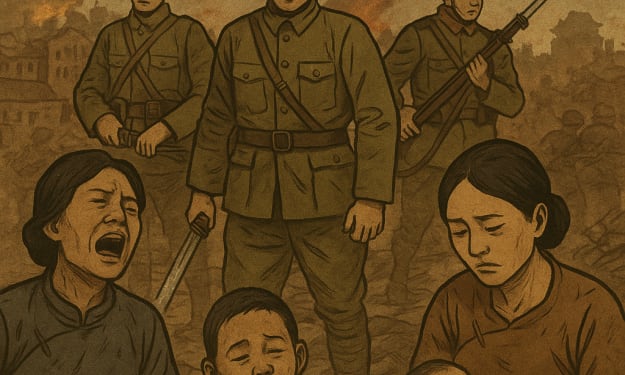
“Resonances of Terror: The Catastrophe of the Nanjing Massacre”. Content Warning. AI-Generated.
apanese forces entered Nanjing on December 13, 1937, it signified the onset of one of history’s bleakest and most savage massacres. Over the course of approximately six weeks, the ancient Chinese city endured incomprehensible violence, leaving a legacy of terror that continues to resonate in the hearts of millions today. The Collapse of the Capital Nanjing, once the capital of the Ming Dynasty and a symbol of Chinese culture, had transformed into the capital of the Republic of China in the early 20th century. As Japan initiated its aggressive campaign against China in 1937, Nanjing evolved into a primary military and symbolic target. The Battle of Shanghai had already exhausted Chinese resources, and by the time Japanese forces advanced toward Nanjing, resistance was fragmented. On December 12, the Chinese military formally retreated. The following day, Japanese troops invaded the citywhat ensued was not a typical occupation, but a methodical massacre. A City in Misery Eyewitness testimonies depict the plunge into despair. Japanese soldiers initiated a terror campaign directed not only at the remaining Chinese troops but at the entire populace of the city. Civilians were rounded up by the thousands, executed en masse, and buried in shallow graves or discarded into the Yangtze River. Many were subjected to brutal torture before their demise. Historical assessments indicate that between 200,000 and 300,000 individuals were killed, although the precise number may never be ascertained due to the obliteration of records and the vast expanse of the atrocity. Atrocities Against Humanity The Rape of Nanjing is not solely denoted for the killings. During the massacre, an estimated 20,000 to 80,000 women were assaultedsome as young as 8 years old, others were elderly. Numerous victims were mutilated, tortured, and subsequently murdered. Pregnant women were also among those targeted. Entire families were executed while being compelled to witness the suffering of one another. Children were not exempt from the brutality. Infants were hurled into the air and impaled on bayonets as a form of amusement. Historical photographs and survivor accounts reveal a reality of unfathomable cruelty. The World Observes Westerners residing in Nanjing at the timemissionaries, businesspersons, and diplomatssought to intervene. A German businessman and member of the Nazi party, John Rabe, played a crucial role in establishing the Nanjing Safety Zone, which offered refuge to thousands of civilians. While these initiatives salvaged numerous lives, the atrocities persisted just beyond the confines of the safety zone. News of the slaughter ultimately reached the globe through reports by correspondents and correspondence dispatched by observers. Despite the accumulating proof, international reaction was tepid due to the escalating global tensions that would shortly ignite into World War II. Justice Delayed Following World War II, the International Military Tribunal for the Far East and the Nanjing War Crimes Tribunal prosecuted and sentenced several Japanese officials for war offenses, including those perpetrated in Nanjing. General Iwane Matsui, who directed the forces during the massacre, was convicted and executed. Nevertheless, numerous offenders were never held accountable. To this day, Japan’s formal recognition of the massacre persists as a subject of political discord. While certain Japanese leaders have rendered apologies, others refute or minimize the event, creating ongoing friction in Sino-Japanese relations. The Legacy of Suffering The Nanjing Massacre is not solely a Chinese catastrophe but a universal one. It stands as a stark reminder of the depths to which humanity can descend when unchecked militarism, racism, and imperial ambition converge. For China, Nanjing evolved into a symbol of resilience, remembrance, and the significance of historical accuracy. Memorials, such as the Nanjing Massacre Memorial Hall, have been established to ensure that the voices of the victims are forever honored. Each year, December 13 is designated as National Memorial Day in China, observed with silence, contemplation, and a call for peace. Conclusion The Nanjing Massacre was not an incidental consequence of warfare, but a calculated campaign of terror. It remains one of the largest and most savage massacres in contemporary history. Its legacy continues to influence international relations, historical consciousness, and the ongoing effort to ensure that such atrocities are never repeated. History must not only be remembered but also addressed. In witnessing tragedies like Nanjing, we are reminded of our collective responsibility to protect humanity from itself.
By Say the truth about a year ago in History
The Enigmatic Saga of the Menai Strait Shipwrecks
Nestled between the rugged coastline of North Wales and the island of Anglesey, the Menai Strait is a narrow ribbon of water that belies its tranquil appearance. Beneath its shimmering surface lies a history steeped in mystery, marked by one of the most extraordinary coincidences in maritime lore. Over nearly two centuries, three ships met their doom in these waters, each on the same fateful date, each leaving a single survivor-astonishingly, all named Hugh Williams. This haunting tale, spanning generations, weaves a narrative so improbable it seems plucked from the pages of a novel, yet it is rooted in historical record.
By KWAO LEARNER WINFREDabout a year ago in History
Alexander Pushkin: The Soul of Russian Literature
In the heart of Russia, one name resonates above all others in the world of letters: Alexander Pushkin. Known as the Shakespeare of Russia, this enigmatic poet and novelist reshaped the nation’s literary landscape with a voice that was clear, vibrant, and deeply human. His life was a whirlwind of passion, rebellion, and tragedy, and his masterpiece, Eugene Onegin, captures the restless spirit of a people caught between tradition and change. Let’s dive into Pushkin’s world, explore the essence of his most celebrated work, and uncover why his words continue to echo through generations.
By KWAO LEARNER WINFREDabout a year ago in History
The Life and Works of Theopompus
Theopompus of Chios stands as a significant historian from ancient Greece, yet his legacy is frequently eclipsed by renowned figures such as Herodotus and Thucydides. Born in the 4th century BCE, he was more than a mere recorder of historical events; he was a keen critic of the political landscape, ethical standards, and notable individuals of his era. Although much of his work has been lost to time, it was once acclaimed for its vivid storytelling, sharp humor, and careful attention to detail. This essay delves into Theopompus’ life, his principal writings, his historical methodologies, and his enduring influence on the field of historiography.
By A Históriaabout a year ago in History
The Dark Origins of Modern Gynecology: J. Marion Sims and the Forgotten Victims
A Surgeon’s Legacy Cast in Shadows The name J. Marion Sims holds a prominent place in the annals of medical history. Often revered as the “Father of Modern Gynecology,” Sims is credited with groundbreaking surgical innovations that laid the foundation for women’s reproductive healthcare. His work, especially in treating vesicovaginal fistulas, a devastating childbirth injury, has saved countless lives and changed the course of medicine. But beneath this celebrated legacy lies a haunting truth: many of Sims’ most important advancements were made through painful and unethical experiments conducted on enslaved Black women.
By The Secret History Of The Worldabout a year ago in History
The Gateway to Hell Still Breathes in Bohemia
Where the Earth Opens and the Sky Holds Its Breath In the heart of the Czech Republic, nestled in the forested wilderness of Bohemia, far from trade routes, away from rivers, detached from any known strategic or royal interest, stands a castle built not to keep enemies out, but something far more ancient in.
By The Secret History Of The Worldabout a year ago in History
The Fall of Constantinople (1453)
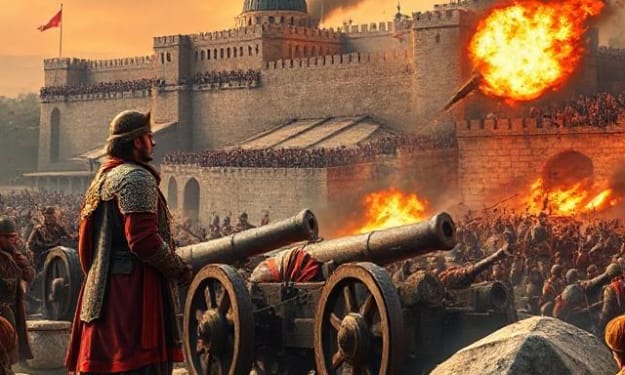
The year is 1453, and the mighty Byzantine Empire, once a powerful force in the Mediterranean, stands on the verge of collapse. The city of Constantinople, its capital, has weathered countless invasions and sieges over the centuries, earning its reputation as one of the most formidable fortresses in the world. For over a thousand years, it has stood as a beacon of Christian power, the last remnant of the great Roman Empire, and a symbol of unyielding strength. Yet, by the mid-15th century, the empire is in decline. Its once vast territories are now a shadow of their former selves, and its economy is in shambles. Most of its lands are now occupied by foreign powers, leaving Constantinople isolated and vulnerable.
By Sadiq Muhammadabout a year ago in History