World History
The Deadly Legacy of German U-Boats From World War I to World War II
The Deadly Legacy of German U-Boats From World War I to World War II The First World War marked the beginning of a new era in naval warfare. Traditional battleships and fleets still played crucial roles but lurking beneath the waves was a new and terrifying threat the German U-boat. Short for Unterseeboot meaning undersea boat these submarines wreaked havoc on Allied shipping lines and changed maritime conflict forever. By the end of World War I the numbers told a chilling story. A total of 274 German U boats were responsible for sinking 6,394 merchant ships and approximately a hundred warships. This was not just a disruption of military logistics it was an assault on civilian supply chains crucial for sustaining Britain and its allies. Food arms fuel everything needed to sustain a war effort and civilian life was at constant risk. The U-boat campaign pushed Britain to the brink of starvation and remains one of the key examples of the effectiveness of unrestricted submarine warfare. However despite their success Germany's U-boat campaign in the First World War ultimately failed to secure victory. The Allies countered with convoy systems improved anti submarine tactics and technological innovations like sonar limiting the submarines' effectiveness in the later stages of the war. Still the psychological and strategic lessons were clear submarines had the power to tilt the scales of war.
By Adnan Rasheedabout a year ago in History
What is Facebook?
Facebook is the most popular social media in the world. It is also the most popular social media in Bangladesh. From the history of Facebook, it is known that it is an American organization. Anyone can open an account or ID on Facebook for free.
By Arfan Raihenabout a year ago in History
5 Advanced Ancient Inventions We Still Can't Figure Out
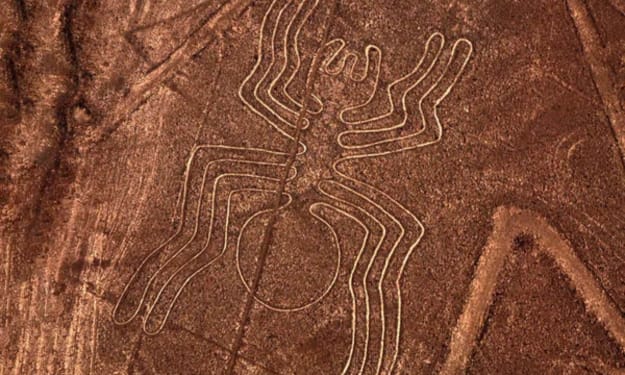
When we think of our ancestors most of us probably picture them living in societies where technological advancements were limited and people lived fairly simple life. Well, some people consider a life without Wi-Fi and smartphones simple so they lived really simple lives and a lot of people would probably think that anything they invented back then we can not only easily replicate but we can improve upon it. Here are some ancient inventions that we are still struggling to understand today.
By Kevin's Home Aloneabout a year ago in History
Orion Comes Alive: NASA Capsule Throws Off Its Cover in Major Test. AI-Generated.
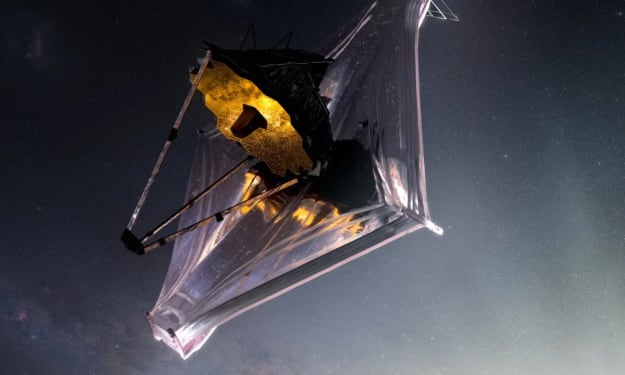
Orion Comes Alive: NASA Capsule Throws Off Its Cover in Major Test NASA has achieved a major breakthrough in its ambitious Artemis program with a successful and critical test of the Orion spacecraft's forward bay cover (FBC) separation system. This achievement marks an essential milestone toward the goal of returning humans to the Moon, and eventually venturing further into deep space, including Mars.
By Adnan Rasheedabout a year ago in History
Mysterious Sea
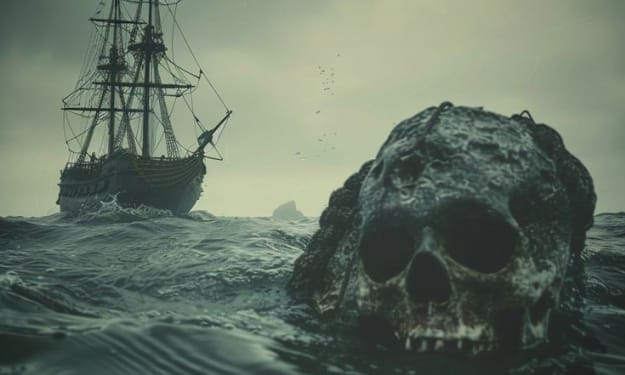
Under a sky of bruised violet, the Death Sea spread out, its black waters still as clear as glass, and it swallowed both hope and light. It had no surface movement, and no gulls screamed above. Sailors called it cursed, a place where compasses spun wild and stars vanished. In a weathered tavern perched on a crumbling cliff, old Mara told a different story—not of a sea that killed, but one that clung to what it loved, fierce and unyielding.Centuries ago, the Death Sea was no death at all. Its shores were thick with olive groves and wildflowers, and its blue waters were full of fish. A fishing village thrived there, its nets heavy, its hearths warm. Among the villagers was Lira, a girl with eyes like storm clouds and a heart tethered to the sea. She would burst into bubbles of laughter as she swam into its depths, searching for silver fish. The elders warned against swimming at night, whispering of a hunger in the dark water, a presence that craved more than flesh. Lira, bold and restless, dismissed their tales as old fear.One moonless night, when the village slept, Lira crept to the shore. The quiet sea was reflecting the starless sky on its surface. Her strokes were muted as she slipped into the cool water. But as she dove deeper, the sea changed. It grew thick, heavy, like it was holding its breath. Her lungs burned, yet she pushed on, drawn to a faint glow below. There, in the depths, she saw it—a figure, pale as bone, drifting just beyond reach. Though it spoke softly and clearly, its form was neither man nor beast, and its eyes were hollow. It said to stay. The sea keeps what it loves.Panic seized her. She kicked upward, heart pounding, but the water clung like chains, dragging at her limbs. The figure reached out, its touch cold yet gentle, like a mother’s hand on a fevered brow. As dawn broke, the village discovered Lira's boat adrift, empty, with her vision blurring and her strength waning. The last thing she felt was the sea's eternal embrace. Her nets lay untouched, her shawl tangled in the oars. They searched for days, calling her name across the waves, but the sea gave nothing back. Weeks later, the fish vanished. The groves withered, their leaves curling black. The water turned dark, its blue heart gone, and the village began to die. As their homes crumbled into salt and dust, families fled. Those who stayed spoke of a curse, and the Death Sea earned its name.Mara, her voice rough as the cliffs, told the tale differently. While sipping bitter ale, she would say, "The sea didn't kill Lira." “It loved her too much to let her go.” She swore that on still nights, if you stood on the shore and listened, you’d hear Lira’s voice, woven into the silence of the waves, singing a song no mortal throat could hold. She spoke, but few dared to test it. The Death Sea brooked no trespassers, its black expanse a warning to the world.Years passed, and the village became a memory, its bones buried in sand. Yet stories of Lira lingered, whispered in ports and taverns. Some said she’d become part of the sea, her soul bound to its depths. Others claimed she was the hunger the elders feared, luring sailors to their doom. Mara, now bent and gray, held to her truth. One night, too old to care for fear, she hobbled to the shore alone. The sea lay still, its surface gleaming like obsidian. She stood there and took a shallow breath as she listened. Then, faint as a sigh, she heard it—Lira’s song, rising from the deep, mournful and beautiful.Mara smiled, her eyes wet. “You’re still here,” she whispered. She sat on the cold sand, letting the song fill her, until the tide crept close and the sky paled. When morning came, Mara was gone, her footprints trailing to the water’s edge. The Death Sea kept its silence, vast and unyielding, keeping its secrets close. The villagers who discovered her shawl claimed that that day, the sea looked different—less black and almost alive. But those who passed its shores sometimes paused, listening for a song they couldn’t quite hear, wondering what the sea had claimed—and what it loved too much to lose.
By Josh Smith about a year ago in History
Turkey
Turkey: Bridging Continents, Cultures, and Civilizations Nestled at the crossroads of Europe and Asia, Turkey is a nation rich in history, culture, and natural beauty. Straddling two continents, it has served as a bridge between East and West for millennia. From the ancient ruins of Troy to the bustling streets of Istanbul, Turkey offers a fascinating blend of the old and the new, making it one of the most unique countries in the world.
By Arafat Rahman MUNabout a year ago in History
Biography of Aubert Einstein the greatest scientist ever
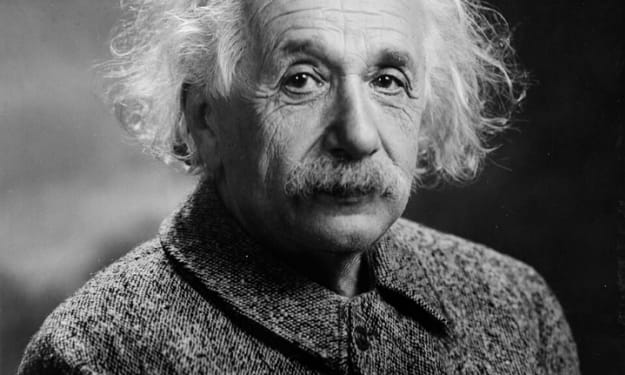
Albert Einstein (14 March 1879 – 18 April 1955) was a German-born theoretical physicist who is best known for developing the theory of relativity. Einstein also made important contributions to quantum mechanics. His mass–energy equivalence formula E = mc2, which arises from special relativity, has been called "the world's most famous equation". He received the 1921 Nobel Prize in Physics for his services to theoretical physics, and especially for his discovery of the law of the photoelectric effect.
By Favour Nyimbiliabout a year ago in History
Artificial Intelligence Solves One of Archaeology’s Greatest Puzzles.
Artificial Intelligence Solves One of Archaeology’s Greatest Puzzles. For centuries archaeology has been a discipline built on patience careful excavation and painstaking analysis. Every shard of pottery ancient inscription and ruined structure tells a story but understanding these fragments often requires years if not decades of study. Today however a new player has entered the field Artificial Intelligence (AI). In a groundbreaking development AI has recently helped solve one of archaeology’s greatest puzzles revolutionizing the way we uncover humanity’s ancient past. One of the most elusive challenges in archaeology has been the deciphering of ancient scripts. Languages like Egyptian hieroglyphs were famously decoded with the help of the Rosetta Stone but many others such as Linear A the Indus Valley script and early Mesoamerican glyphs have remained stubbornly mysterious. Traditional methods of decipherment often rely on finding bilingual inscriptions or large amounts of contextual material luxuries that are not always available.
By Adnan Rasheedabout a year ago in History
The Whisper of Giza
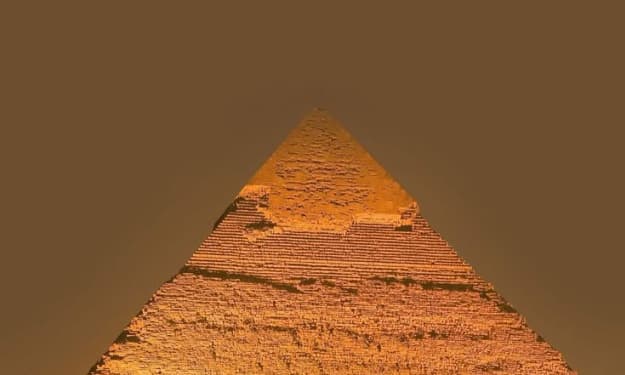
The Great Pyramid of Giza served as a mute watchman in the middle of the Egyptian desert, where the sun cast shadows into the sand. It had witnessed empires rise and fall for millennia, and despite being weathered by time, its limestone blocks remained unmoving. It was a tomb for Pharaoh Khufu that was a work of ancient engineering that was shown to the world. But to a select few, it was something more—a keeper of secrets, a vault of forgotten truths.Amira, a young archaeologist from Cairo, had spent her life captivated by Giza’s enigma. When she was young, her grandfather, a scholar of ancient texts, had told her stories about the pyramid's secret chambers, which were meant for the eternal rather than the dead. He would fervently whisper, "The pyramid speaks, but only to those who listen with their soul," and his eyes would light up. Now, with his journals in her satchel and a grant to explore the pyramid’s lesser-known passages, Amira stood before its towering entrance, the air thick with anticipation.The year was 2025, and new imaging technology had revealed anomalies beneath the pyramid’s base—voids that defied explanation. Amira’s team, a mix of scientists and historians, descended into the cool, stone-lined corridors. Their lights flickered across hieroglyphs, each symbol a whisper from a civilization long gone. Amira felt the weight of history as she moved her fingers over the carvings. Her grandfather’s journal had hinted at a chamber called the Hall of Stars, a place where the ancients communed with the cosmos. She was determined to find it.Days turned into weeks. In the pitch-black, the team's instruments hummed as they mapped tunnels. Amira noticed one evening, as the desert above began to cool, a faint seam in a wall that the scanners couldn't see. Her pulse quickened. She pressed her palm against the stone, her instinct and her grandfather's cryptic notes guiding her. She alone followed a dark spiral staircase after hearing a low rumble and seeing the wall slide open. She didn't know what energy caused the air to become heavy and charged. She discovered a unique chamber at the bottom. Its ceiling shimmered with inlaid lapis lazuli, mimicking a star-filled sky. A stone plinth with constellations that were unfamiliar to modern astronomy stood in the middle. Amira’s breath caught. It wasn't a tomb here. As she looked at the plinth, a faint hum filled the room. It was a map, a record of a universe that the ancients had either known or had visited. The stars above pulsed, and a voice—not heard, but felt—spoke in her mind. It was neither human nor divine, but vast, like the desert itself. It described a time when the pyramid served as a beacon, aligning with other worlds and serving as a link between Earth and the infinite. The builders, it said, were guided by travelers from the stars, who shared knowledge of mathematics, stone, and time. The pyramid was their legacy, a reminder that humanity was never alone.Amira’s hands trembled as she sketched the chamber. Despite the voice's caution, she wanted to tell the world about this. “Truth is a flame,” it said. "It burns as well as warms." She understood. Humanity, divided and restless, might not be ready for such a revelation. She claimed that the passageway led to a dead end when she returned to her team, as the chamber's secrets could cause wonder or chaos. The lie weighed on her, but she vowed to protect the Hall of Stars until the world was ready. Each night, she pored over her grandfather’s journals, piecing together the voice’s message. The pyramid wasn’t just a monument; it was a promise, a signal that one day, the stars would call again.Years later, Amira stood before the pyramid, now a grandmother herself. She told her granddaughter stories of Giza, just as her grandfather had done. “Listen,” she said, pointing to the ancient stones. “It speaks.” The girl smiled, unaware of the chamber beneath, but Amira knew the truth would endure. The Great Pyramid, everlasting and patient, would wait for the day when people would look up and hear the stars' whispers.
By Josh Smith about a year ago in History