World History
Bam Citadel: Persia’s Enduring Desert Fortress
Bam Citadel – Iran’s Desert Fortress of History Nestled on the edge of Iran’s Lut Desert lies one of the most awe-inspiring architectural feats of the ancient world — the Bam Citadel, also known as Arg-e Bam. This massive fortified structure, made entirely from mud bricks, is not only a testament to ancient Persian ingenuity but also a symbol of resilience and heritage. For centuries, it stood as a thriving hub of trade, culture, and defense. Today, despite natural disasters and the ravages of time, Bam Citadel remains a significant historical monument, drawing scholars and visitors from around the globe.
By Mukhtiar Ahmadabout a year ago in History
The Evolution of Earth:
Formation and Early History Around 4.6 billion years ago, Earth was born from a cloud of gas and dust surrounding our young Sun. This cloud, known as the solar nebula, gradually condensed due to gravity, forming the Sun at its center and the planets, including Earth, in the outer regions. Earth began as a molten ball of rock, constantly bombarded by asteroids and other celestial debris. The heat from these impacts, as well as from radioactive decay and gravitational compression, kept the planet in a liquid state for millions of years.
By Hasnain khanabout a year ago in History
Taiwan, Ukraine, or the Middle East: Which Flashpoint Led to World War III?
Taiwan, Ukraine, or the Middle East: Which Flashpoint Led to World War III? For years, global leaders warned of the possibility of a third world war. Tensions were rising, alliances shifting, and technology advancing at a pace far faster than diplomacy. But no one could predict exactly where the first spark would ignite the flames of a global conflict. In the end, three major flashpoints—Taiwan, Ukraine, and the Middle East—stood on the edge. Each had the potential to trigger a war unlike anything the world had seen before. But which one actually did?
By Ali Asad Ullahabout a year ago in History
The Wolf of the Storm: An Oath in the Dark
The wind howled across the snow-covered plains of Anatolia, slicing through tents like knives. The Kayi tribe, warriors of proud Turkic blood, huddled around faint fires, cloaks drawn tight, eyes searching the sky for hope. But there was none—not in the sky, nor in the mountains, nor in the starving bellies of children who had not eaten for days.
By Sana Ullahabout a year ago in History
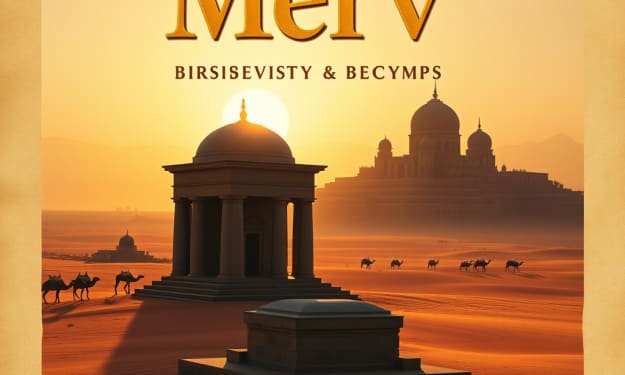
Merv Silk Road's Lost Jewel
The Ancient City of Merv – A Forgotten Jewel of Turkmenistan Hidden in the arid landscape of modern-day Turkmenistan lies the once-magnificent city of Merv, an ancient metropolis that was, at its peak, one of the largest and most important cities in the world. Known as the "Pearl of the East," Merv's strategic location along the Silk Road made it a center of culture, commerce, religion, and science for over two millennia. Today, its crumbling walls and ruins tell a story of power, prosperity, and tragic downfall.
By Mukhtiar Ahmadabout a year ago in History
Hazrat Umar Farooq (RA): The Just Ruler Who Changed the Course of Islamic History. AI-Generated.
In the vast landscape of Islamic history, few names shine as brightly as that of Hazrat Umar Farooq (RA). He was not just the second Caliph of Islam, but a visionary leader, a symbol of justice, and a role model whose influence continues to inspire people over 1,400 years later. Born in Makkah in 583 CE, Umar ibn al-Khattab (RA) belonged to the respected Quraysh tribe. Before accepting Islam, he was known for his strong personality, eloquence, and firm stance against the new religion. In fact, he once set out with the intention to kill Prophet Muhammad (PBUH). But in a dramatic and miraculous turn of events, he accepted Islam after reading verses from Surah Taha. His conversion marked a turning point for the Muslim community, who until then had been practicing their faith in secrecy and fear. With Hazrat Umar's acceptance of Islam, Muslims began praying publicly in the Haram. His presence gave strength and courage to the believers. The Prophet (PBUH) once prayed, "O Allah, strengthen Islam with either Abu Jahl or Umar ibn al-Khattab." That prayer was answered through Umar. His Role During the Prophet’s Lifetime Hazrat Umar (RA) was among the closest companions of the Prophet (PBUH). His opinions were often aligned with divine revelation. On many occasions, verses of the Qur’an were revealed confirming his suggestions, such as the commandment about hijab and the treatment of prisoners after the Battle of Badr. He participated in all major battles alongside the Prophet, including Badr, Uhud, and Khandaq. His wisdom, discipline, and boldness were respected by both friends and enemies alike. Becoming the Second Caliph After the death of Abu Bakr Siddiq (RA), Hazrat Umar was chosen as the second Caliph. His leadership marked a golden era in Islamic governance. He ruled from 634 CE to 644 CE, and during this time, the Islamic empire expanded rapidly, reaching vast territories including Persia, Egypt, Palestine, and parts of the Byzantine Empire. But it was not just expansion that marked his rule—it was his governance. Hazrat Umar established a system of justice, public welfare, and accountability that was far ahead of his time. He introduced a welfare state where food, clothing, and shelter were the responsibility of the government. He created a system of salaries for soldiers and civil servants, initiated regular population censuses, and formed the Diwan system to manage administrative records. A Leader of Simplicity and Accountability Despite ruling over an empire, Hazrat Umar (RA) lived with astonishing simplicity. He wore patched clothes, lived in a modest house, and often ate dates and bread. He did not allow his family to enjoy any special privilege and held himself accountable before Allah and the people. He would walk the streets of Madinah at night to check on the well-being of his people, often helping widows and orphans himself. He once said, "If a dog were to die hungry on the banks of the Euphrates, Umar would be responsible for it." His Martyrdom In 644 CE (23 AH), Hazrat Umar was attacked by a Persian slave named Abu Lulu while leading the Fajr prayer in Masjid al-Nabawi. He was critically injured and passed away three days later. Before his death, he appointed a council of six companions to choose the next Caliph. He was buried next to the Prophet Muhammad (PBUH) and Abu Bakr (RA) in the sacred chamber in Madinah. --- Legacy Hazrat Umar Farooq (RA) left behind a legacy of justice, discipline, humility, and fear of Allah. Non-Muslim historians and scholars have praised his governance model, comparing him to the greatest rulers in world history. His contributions to law, governance, and social justice are studied and admired even today. His life reminds us that true leadership is not about power or wealth—it’s about serving people with sincerity, holding oneself accountable, and standing firm for truth and justice.
By Waseem Ahmad about a year ago in History
Whispers Between Worlds: The Letter That Crossed Time
The storm had just passed when Laila unlocked the creaking door of her grandmother's abandoned countryside house. It had been ten years since anyone lived there. Dust settled like ancient memories on every surface, and silence wrapped the rooms in a blanket of forgotten time. She had come not to mourn, but to understand. Her grandmother had been a woman of few words, always speaking in riddles about “hidden truths” and “shadows of the past.” Everyone brushed it off as old age. But now that Laila had inherited the house, she couldn’t ignore the nagging pull that something wasn’t right. It was on the second night, while cleaning the attic, that she found it — a faded envelope sealed with wax, hidden behind a loose wooden panel of the mirror frame. Her name wasn’t on it. Instead, it simply read: “To the one who sees beyond time.” Chills ran down her spine. The date on the back was unmistakable — August 2, 1923. Thinking it a prank, Laila carefully opened it. The handwriting was elegant but in a language she didn’t recognize. She took a photo and sent it to her university friend, Farah, who specialized in old languages. An hour later, Farah called, her voice trembling with awe. “This is old Pashto, written in a dialect no one uses anymore. But I translated it. Laila… it’s from your great-grandmother.” Laila sat down, heart pounding. “What does it say?” “It’s… a warning. She says she fell in love with a British officer during colonial times. Their love was secret and forbidden. But when his betrayal surfaced, a curse was placed — one that affects every daughter born to her bloodline.” Laila’s hands trembled. “What curse?” “She wrote: ‘Every daughter will search for the truth and pay a price for knowing it. But the one who finds this letter may break it — only if she trusts her dreams.’” That night, Laila dreamed of a garden under a blood-red moon. In it stood a woman in white, holding a key, whispering: "Not everything is what it seems." She woke up breathless, the sound of rustling leaves still echoing in her ears. The next few days, things started to change. She found old photographs in drawers — some with faces scratched out. The mirror where she found the letter occasionally reflected a different room, one with candles and shadows of people dancing in old-fashioned clothes. Following her instincts, Laila visited the old well behind the house, the one her grandmother had always said was “not for water.” Beneath some loose stones, she uncovered a rusted box. Inside was a diary, wrapped in a silk cloth. The diary confirmed the affair. Her great-grandmother, Zareena, had loved the officer, who promised marriage. But when the time came, he handed her over to the British authorities after she discovered secret documents in his possession. Zareena was tortured, left childless — but miraculously gave birth later to one daughter: Laila’s grandmother. Laila cried as she read Zareena’s final lines: "If the reader is of my blood, then you carry not just pain but power. Break the chain. Speak the truth. Burn this diary under a full moon, and the curse will end." The next full moon, Laila stood by the garden with the diary in hand. As the fire consumed the pages, a strange peace settled over the house. The wind died down. The mirror stopped flickering. And in her final dream, Zareena stood smiling, no longer in pain, whispering: "Thank you for hearing me. Now live free." --- From that day on, the house no longer felt haunted. Laila stayed, made it her home, and began writing her own stories — not of pain, but of strength passed down through women who dared to uncover the truth.
By Movies Channelabout a year ago in History
Pakistan: A Land of Diversity, Resilience, and Untapped Potential
Introduction Pakistan, officially known as the Islamic Republic of Pakistan, is a country that embodies a rich tapestry of history, culture, and resilience. Located in South Asia, bordered by India, Afghanistan, Iran, and China, with a coastline along the Arabian Sea, Pakistan stands as a unique nation carved out of the Indian subcontinent in 1947. Despite facing political, economic, and social challenges since its inception, Pakistan has remained a nation of immense strength, spirit, and potential.
By NIAZ Muhammadabout a year ago in History
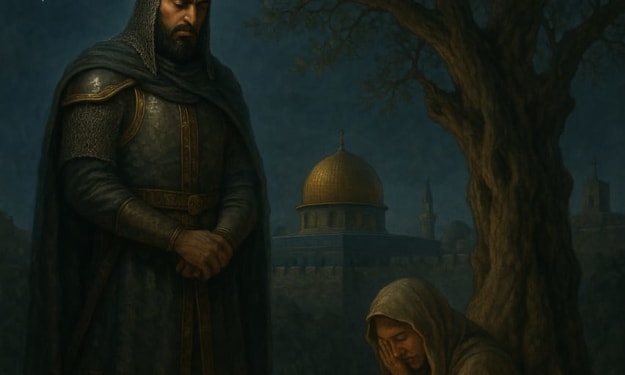
The Olive Tree of Jerusalem
The night air hung heavy over Jerusalem. The moon hovered above the ancient city like a silent witness to centuries of bloodshed and prayers. After months of siege, the city had fallen—not with the brutality that had marked its past, but with mercy. The people whispered in disbelief: “Salahuddin Ayyubi is not like the others.”
By Sana Ullahabout a year ago in History
The Beauty of New York: A City of Timeless Wonders and Endless Change
The Beauty of New York: A City of Timeless Wonders and Endless Change By Ali Asad Ullah I still remember the first time I stepped onto the streets of New York City. The air buzzed with a strange energy — a mix of hope, chaos, and possibility that you could feel pulsing beneath every footstep. Coming from a quieter place, it was overwhelming at first. The towering skyscrapers seemed to touch the clouds, the cacophony of voices, horns, and footsteps merged into a strange kind of music, and every corner seemed to whisper a story.
By Ali Asad Ullahabout a year ago in History