World History
Alhambra: Jewel of Moorish Spain’s Legacy
The Alhambra, perched majestically on a hill overlooking the city of Granada in southern Spain, is one of the world’s most celebrated monuments of Islamic architecture. Its name, derived from the Arabic Al-Qal‘a al-Hamra meaning “The Red Fortress,” reflects the reddish hue of its walls that glow brilliantly in the setting sun. Built over centuries, the Alhambra stands as a dazzling fusion of artistry, engineering, and history, a masterpiece that tells the story of both the splendor and the decline of Muslim rule in the Iberian Peninsula.
By Mukhtiar Ahmadabout a year ago in History
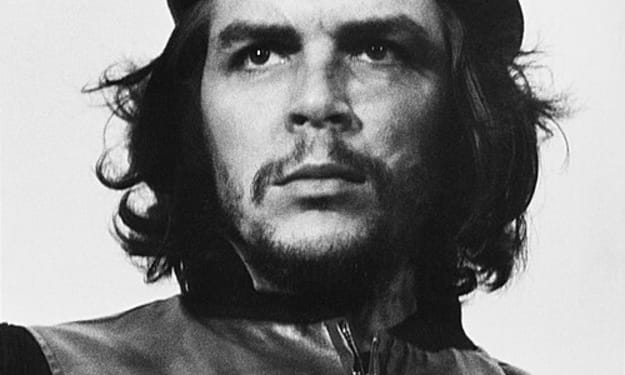
The Enigma of Che Guevara
Few names evoke as much fascination, controversy, and myth as **Che Guevara**. A revolutionary icon, a guerrilla warrior, a medical doctor, and a face immortalized on countless posters—Che’s life is both well-documented and shrouded in legend. Yet, despite his fame, many aspects of his existence remain debated. Was he a hero, a martyr, or a radical whose legacy is more complex than the world acknowledges? This is the story of **Ernesto "Che" Guevara**, pieced together from history, myth, and the enduring whispers of revolution.
By Danyal Hashmiabout a year ago in History
The Great War: Flames Across the World (1914–1918)
The summer of 1914 was unlike any other. Across Europe, the skies were clear, markets bustled with life, and soldiers in their pristine uniforms marched in peacetime drills. But beneath the calm surface, political tensions boiled. The assassination of Archduke Franz Ferdinand of Austria in Sarajevo was the spark that set the world ablaze.
By Wings of Time about a year ago in History
: The Man Behind the Icon: Che Guevara’s Unfinished Revolution
On a warm June morning in 1928, in the city of Rosario, Argentina, a boy named Ernesto Guevara de la Serna was born. No one could have guessed that this boy — later known simply as “Che” — would grow into one of the most recognizable figures of the 20th century. His life would become a tapestry woven from threads of idealism, armed struggle, and an unyielding quest to challenge the world’s injustices. Che’s early years were marked by severe asthma attacks. His parents, free-thinking and politically aware, refused to let the illness define his future. They surrounded him with books, debates, and a sense that the world could — and should — be changed. The young Ernesto grew into a thoughtful, stubborn, and adventurous spirit. He enrolled in medical school at the University of Buenos Aires, determined to become a doctor. But something else began to stir in him — a restlessness that no classroom could quiet. The Motorcycle That Changed Everything In 1952, Che and his friend Alberto Granado embarked on a motorcycle journey across South America. They called their bike “La Poderosa” — The Mighty One. It sputtered and broke down often, but the journey was about more than miles traveled. In dusty towns, mining camps, and leper colonies, Che saw a continent divided between wealth and crushing poverty. The faces of the poor, the exploited, and the voiceless began to haunt him. Medicine could heal bodies, he realized, but to heal societies required something far greater. When Che returned from his journey, he was no longer simply a medical student. He was a man searching for a way to challenge the deep inequalities he had witnessed. From Guatemala to Cuba In 1953, Guevara traveled through Latin America again, this time reaching Guatemala. The country was in the midst of a bold social reform program under President Jacobo Árbenz, who sought to redistribute land from large corporations like the United Fruit Company to the poor farmers. But the reforms were crushed in a CIA-backed coup. Che narrowly escaped with his life, but he carried with him an even deeper hatred of imperialism. By 1955, fate introduced him to a young Cuban revolutionary named Fidel Castro in Mexico. The two men, along with Fidel’s brother Raúl, were plotting to overthrow Cuban dictator Fulgencio Batista. Guevara joined their cause, not as a doctor but as a fighter. He quickly earned respect for his discipline, courage, and belief in the cause. Victory in Cuba In December 1956, Che landed with 81 fighters on the shores of Cuba aboard the yacht Granma. The landing was a disaster — most of the men were killed or captured — but Che and a handful of survivors retreated into the Sierra Maestra mountains. Over the next two years, they waged a guerrilla war that grew from small skirmishes into a nationwide uprising. Che wasn’t just a fighter; he became a leader. He trained recruits, planned attacks, and wrote extensively about guerrilla warfare. His belief was unwavering: revolutions had to be built by the people, for the people. By January 1959, Batista fled Cuba, and the revolutionaries marched into Havana victorious. The Revolutionary in Power In the new Cuba, Che took on multiple roles — head of the National Bank, Minister of Industry, and key architect of land reform and education programs. He pushed for Cuba to become economically independent from the United States, advocating industrialization and self-reliance. His speeches were fiery, his policies uncompromising. But Guevara was never content with victory in one country. He believed that true liberation required a global revolution against imperialism and capitalism. To him, Cuba was only the first step. Beyond Cuba — The Final Battles By 1965, Che vanished from public view. He had left Cuba to ignite revolutions abroad. First, he went to the Congo, attempting to support rebels fighting against a pro-Western government. The mission failed due to lack of unity among the rebels. Undeterred, he turned his eyes to Bolivia, where he hoped to spark an uprising that would sweep across Latin America. But Bolivia was different from Cuba. The local population did not rally to his side, the terrain was unforgiving, and the Bolivian army — with the help of the CIA — hunted him relentlessly. On October 8, 1967, Guevara was captured in the village of La Higuera. The next day, he was executed. His last reported words to his executioner were calm and defiant: "Shoot, coward, you are only going to kill a man." The Making of a Legend After his death, Che’s image spread across the world — not as a corpse in the Bolivian jungle, but as the striking, beret-wearing revolutionary captured in Alberto Korda’s famous photograph. His face became a symbol of resistance for students, rebels, and dreamers from Paris to Palestine. Yet the meaning of that symbol remains fiercely debated. To some, Che is a hero who stood against oppression at all costs. To others, he was a dangerous ideologue whose methods were violent and authoritarian. What cannot be denied is that Che Guevara lived — and died — with unwavering commitment to his ideals. He was a man who could have lived a comfortable life as a doctor in Argentina, but instead chose a path of hardship, danger, and sacrifice in pursuit of a vision he believed in. Legacy of the Unfinished Revolution Today, more than half a century after his death, Che Guevara’s name still sparks arguments, inspiration, and controversy. His story is a reminder that revolutions are not neat, nor are they ever truly finished. The questions he raised — about inequality, power, and justice — are as relevant now as they were in the 1950s. Whether one agrees with his methods or not, Che’s life invites reflection: How far would we go for our beliefs? What are we willing to sacrifice for the sake of others? And when we look at his face on a poster or a T-shirt, do we see a man, a myth, or a mirror of our own longing for change? In the end, Ernesto “Che” Guevara remains both a man and a mystery — a revolutionary whose battle did not end with him, but continues in the hearts of those still dreaming of a better world.
By Ismail khan about a year ago in History
Sagrada Família: Gaudí’s Unfinished Masterpiece
The Basílica de la Sagrada Família, located in the heart of Barcelona, Spain, is one of the most unique and recognizable buildings in the world. Its towering spires, intricate facades, and breathtaking interior make it an enduring symbol of Catalonia’s artistic and cultural heritage. Designed by the visionary architect Antoni Gaudí, this monumental church remains unfinished more than 140 years after construction began, yet it continues to inspire millions of visitors each year.
By Mukhtiar Ahmadabout a year ago in History
Empowering Tomorrow: The Rise of Modern Technology
In a small village in rural Kenya, a young girl named Amina finishes her schoolwork on a solar-powered tablet, guided by an AI tutor that speaks her native language. Half a world away in Tokyo, a robotic assistant helps an elderly man with daily chores, ensuring he can live independently. Meanwhile, in Silicon Valley, engineers collaborate in real-time with colleagues in Brazil using immersive virtual reality headsets. These snapshots of life across the globe may seem like scenes from a science fiction movie, but they are real, and they are happening now. We are living through one of the most transformative periods in human history — an era where modern technology is not just a convenience, but a catalyst for progress. A Smarter Way to Learn Education is one of the most profoundly impacted sectors. The rise of digital learning platforms, AI tutors, and virtual classrooms has made quality education more accessible than ever. During the COVID-19 pandemic, these tools became essential. But even beyond the crisis, they’ve continued to thrive. Children in underserved communities now have access to lessons once out of reach. AI-powered learning platforms can adapt to each student’s needs, helping them learn at their own pace. For students with disabilities, assistive technology like speech-to-text and interactive software levels the playing field. Modern technology is not replacing teachers—it’s enhancing them, giving them the tools to reach every student more effectively. A Revolution in Healthcare Modern healthcare is undergoing a quiet revolution. Wearable devices can now monitor heart rate, blood oxygen levels, and even detect early signs of illness. AI algorithms help doctors analyze X-rays, identify potential diagnoses, and predict patient outcomes with greater accuracy. Telemedicine has made it easier for people in remote areas to access quality healthcare without traveling for hours. In some cases, doctors can even perform surgeries remotely using robotic instruments. These innovations are saving lives, improving outcomes, and making healthcare more personalized and proactive. Green Tech for a Greener Planet Technology is also helping us tackle one of the greatest challenges of our time—climate change. Renewable energy sources like solar, wind, and hydroelectric power are becoming more efficient and widespread thanks to smart grid systems and AI-driven energy management. Electric vehicles are replacing gas-powered ones on roads around the world, and smart buildings are reducing energy waste with automated heating, cooling, and lighting systems. Scientists are even using machine learning to analyze climate data and predict natural disasters, helping communities prepare and respond more effectively. Connecting the World Perhaps the most visible change technology has brought is the way we connect. In just a few decades, the internet has evolved from a luxury to a lifeline. Social media, video conferencing, and instant messaging have made the world feel smaller and more connected. For businesses, this means global collaboration is easier than ever. Startups in small towns can compete on the world stage. Artists and creators can share their work with a global audience. And families separated by thousands of miles can stay in touch as if they were next door. Access to high-speed internet is still uneven, but initiatives like Starlink and other satellite internet services aim to bring connectivity to even the most remote corners of the Earth. The Ethical Frontier As exciting as these developments are, they come with responsibility. The rise of AI and automation raises important ethical questions about privacy, job displacement, and data security. It's crucial that technology is developed and deployed with human values in mind. Governments, companies, and communities must work together to create policies that protect individual rights while encouraging innovation. Technology must be inclusive, ethical, and sustainable to truly empower everyone. Looking Ahead The pace of technological advancement shows no signs of slowing down. From quantum computing to biotechnology, the next frontier of innovation promises even greater possibilities. But what makes this era so remarkable isn't just the technology itself—it's how it brings us closer to solving problems we once thought insurmountable. It's how it connects people across cultures and continents. And it's how it gives us all the tools to shape a better future. As we look ahead, one thing is clear: Modern technology, when guided by compassion and responsibility, holds the power not just to change the world—but to improve it for generations to come.
By Muhammad Saad about a year ago in History