Trivia
Hidden Histories: Unearthing the British Museum's Looted Artifacts
Welcome to the captivating world of the British Museum, a place that stands as a testament to the ebb and flow of human history. As you step through its grand entrance, you are greeted by a treasure trove of knowledge spanning an impressive two million years. This colossal repository of culture and heritage draws in countless visitors, earning its title as the world's largest museum dedicated to world history. Behold, within these hallowed halls, an awe-inspiring collection of over eight million artifacts from lands near and far, each whispering tales of civilizations long past. Among the stars of this illustrious museum are the time-honored relics that beckon from the museum's must-see list. Imagine gazing upon the enigmatic Easter Island sculpture, a venerable thousand-year-old artifact, or marveling at the intricate bronze sculpture depicting the Hindu deity Shiva. These treasures are only the beginning of an enchanting journey that lies ahead. However, as you traverse the museum's labyrinthine corridors, a shadow of contention emerges. A conundrum comes to light, epitomized by the pathway you tread. A stark revelation emerges—almost half of the dozen exhibited pieces along this route are mired in disputed ownership. The British Museum, in its earnest pursuit to showcase the diversity of humanity's heritage, finds itself entangled in a web of controversy. Indeed, a poignant debate has risen, casting a spotlight on the question of whether cultural artifacts should remain ensconced within the halls of Western museums or return to the embrace of their home countries. The discourse surrounding the rightful ownership of these treasures has ignited a fervent discussion, where perspectives clash and passions run deep. To better understand this narrative, let us delve into the historical tapestry of the British Empire, which, in the late 1600s, embarked on an unprecedented expansion across continents. It soared to majestic heights, becoming the unparalleled dominion that spanned a quarter of the globe's landmass and population. As the empire extended its reach, it harvested not only resources and wealth but also cultural heirlooms from lands far and wide. In 1753, the British Museum was founded, a sanctuary to house these marvels, a true embodiment of human endeavor. The collection flourished with each passing decade, embracing new acquisitions, legal and undisputed, like the venerable two-thousand-year-old Roman base, a relic of ancient grandeur bequeathed to the museum by a noble duke in the year 1945. Yet, the heart of the matter resides in the pieces shrouded in ambiguity and dispute. As you step through the museum's entrance, your gaze falls upon the Rosetta Stone, a relic entwined with intrigue. Acquired by British troops from the French in Egypt, this ancient slab serves as a bridge to deciphering the enigmatic script of the past. A few paces onward, the Parthenon sculptures beckon, extracted from the Acropolis in Athens by a British lord and carried across continents to their present abode. Venture further, and you encounter the enigmatic Benin bronzes, captivating in their diversity. These treasures, hailing from the Kingdom of Benin in present-day Nigeria, encompass a spectrum of artistic expression, from engraved ivory tusks to resplendent brass sculptures and intricate plaques. This once-thriving kingdom thrived in the 1500s, its artistry a mirror reflecting its political and social narrative. Professor Chika Okekeyagulu, an art historian hailing from Nigeria and a professor at Princeton University, unravels the story of these bronzes, attesting to their role as visual chronicles of a society that lacked a conventional written script. However, a somber chapter unfurled in 1897. European colonial powers, fueled by a feverish quest for dominion, cast their gaze upon Africa. The "Scramble for Africa" saw these powers partition the continent into spheres of influence, with Benin falling under the British domain. A tragic turn of events led to the "Benin Disaster," a collision of cultures and interests that claimed lives and loyalties. In response, a punitive expedition ensued, leading to the pillaging of Benin's treasures, a calculated endeavor that saw the British soldiers claim thousands of artifacts as their spoils. Photographs from that epoch capture the systematic dismantling of palace plaques, a chilling testament to a civilization erased. The aftermath bore witness to a once-thriving kingdom reduced to ruins, as the echoes of a colonial conquest reverberated through time. The indomitable spirit of the Benin people endured, culminating in Nigeria's eventual independence in 1960. Yet, the echoes of the past endured, as the artifacts that bore testament to Benin's legacy remained dispersed across the globe, locked within the vaults of Western institutions. Flash forward to the year 1995, a poignant moment where firsthand encounters with these artifacts evoke a sense of pride and longing. Dr. Chika Okeke-Agulu reminisces about his inaugural visit to the British Museum, a journey that spanned continents and emotions. The magnificence of these artifacts is juxtaposed against the bittersweet reality—while a privileged few traverse oceans to bear witness, countless others are denied this privilege, forever distanced from their heritage. March of 2000 marked a pivotal juncture as Benin's royal family voiced their plea for the return of unlawfully taken cultural property. A symbolic gesture, an olive branch extended across time, and yet the response remained incomplete. The British Museum, restrained by a governmental act, stood steadfast in its stance, refusing to relinquish its hold. The essence of their commitment reverberated in their words—"We don't restitute, but we are absolutely committed to lending as widely as possible." A glimmer of change emerged in the form of a grandson's noble gesture, as artifacts from the 1897 expedition were returned to the Benin royal family. The year 2007 bore witness to the birth of the Benin Dialogue Group, a consortium embarking on a complex journey toward reconciliation. Western museums that housed the bronzes and representatives from the Nigerian government engaged in earnest conversations, seeking a resolution that remains elusive to this day. But this narrative extends beyond the walls of the British Museum. It is a tale interwoven with threads of colonial power that stretch across epochs and continents. These contested artifacts symbolize more than just physical objects; they represent the intangible essence of cultural and historical identity. The quest for restitution is a testament to the enduring spirit of nations, demanding recognition, and a reclaiming of what was lost. In the words of Dr. Chika Okeke-Agulu, this endeavor is a long-term project, a pursuit that stretches beyond individual lifetimes. The time has come to embark on the arduous journey of cultural reconstitution, a journey that commences in the present, with an unwavering commitment to forging a path toward reconciliation. As we contemplate the stories encapsulated within these artifacts, let us collectively embrace the responsibility to honor their origins and the vibrant legacies they encapsulate. In conclusion, the British Museum stands as a microcosm of a global narrative, a place where history converges, and voices echo through time. Its vast halls hold not only artifacts but also echoes of debates, passion, and the longing for justice.
By Shubham Bajaj3 years ago in History
The Nigerien Military Junta And The Impact On France
The West African nation of Niger is currently facing a coup, and the situation has caught the attention of the international community. The coup leaders are still in power, refusing to step down despite an ultimatum issued by a block of West African countries. These countries have demanded that Niger's military junta restore the presidency of the ousted leader, Muhammad Bazum, or face the risk of a military intervention. The deadline for compliance has been set for Sunday, but it appears that the junta has no intention of relinquishing its hold on power. In fact, they have already started issuing decrees and scrapping decade-old agreements, indicating their determination to stay in control. What makes this coup even more complex is the outpouring of anger against France, the former colonial power that once ruled Niger. Supporters of the coup have blamed France for the poor conditions in their country, and they have been vocal in their opposition to the nation. The anti-French sentiment has been on the rise, with the military junta also ramping up its rhetoric against Paris. The National Council for Safeguarding the Homeland, the ruling body established by the coup leaders, has even decided to denounce France's security and defense cooperation agreements. They have revoked five military deals signed between 1977 and 2020, further escalating tensions between the two nations. The roots of this animosity towards France can be traced back to Niger's history as a French colony until its independence in 1960. Like many other West African nations, Niger was part of French West Africa, and the legacy of colonization still reverberates in the region. Critics argue that colonization led to the exploitation of the colonies, resulting in an unequal power dynamic between France and its former colonies. This neocolonial relationship has left many of these nations economically disadvantaged, despite being rich in natural resources such as uranium, gold, and oil. Niger, in particular, is one of the world's largest suppliers of uranium, which is used to fuel French nuclear power plants. France relies on nuclear power for 70 percent of its electricity production, making Niger's uranium crucial to its energy needs. However, while France benefits economically from the uranium supply, Niger remains one of the poorest nations in the world. The uranium trade has not translated into significant improvements in the lives of the Nigerien people, leading to growing frustration and resentment towards France. The coup in Niger has provided an opportunity for the military junta to tap into this anti-French sentiment and gain public support. The protesters on the streets of the capital, Niamey, have expressed their dissatisfaction with France's role in their country's affairs, demanding that French troops stationed in Niger leave immediately. They blame France's authorities for the harm they perceive to have been done to their nation, calling for an end to neocolonial practices. While the coup leaders and their supporters may believe that severing ties with France and taking control of their country's resources will lead to a better future, the situation is far more complex. Niger's uranium supply is critical to France's energy needs, and any disruption could have significant consequences for the European nation's electricity production. It is a delicate balance between asserting sovereignty and ensuring economic stability. On the other hand, France needs to acknowledge its historical failures in West Africa and adopt a more equitable approach in its relations with its former colonies. The exploitative practices of the past have created deep wounds, and addressing these injustices is crucial to building a more balanced and respectful partnership. Finding a sustainable solution that benefits both Niger and France is essential. It requires open dialogue, empathy, and a willingness to learn from the past. The international community also has a role to play in supporting the establishment of fair trade practices and economic cooperation that empowers nations like Niger to thrive on their own terms. In conclusion, the coup in Niger and the growing anti-French sentiment highlight the complexities of post-colonial relationships. The history of colonization and its impact on economic disparities and exploitation cannot be ignored. To move forward, both Niger and France need to engage in constructive dialogue and work towards a mutually beneficial partnership that respects the sovereignty and aspirations of the Nigerien people. Only through genuine understanding and collaboration can a lasting solution be found for the challenges faced by the West African nation.
By Olusola Bodunrin3 years ago in History
The Guardian of Forgotten Stories
Frank had always been a curious and adventurous soul. He loved exploring old and abandoned places, seeking the untold stories hidden within their walls. One sunny afternoon, Frank found himself in an unfamiliar part of town. As he wandered down a narrow alley, he noticed a crumbling building with an aura of mystery surrounding it. The peeling paint and broken windows beckoned him to venture inside.
By Fredion W.3 years ago in History
Millenium Age
The new millennium began on January 1, 2000, marking the start of a new era in human history full of promise and excitement. The world stood at the threshold of a transformative age, one that would be characterized by technological advancements, cultural shifts, and global changes. Looking back on the past 21 years, it is evident that the millennium age has been a time of significant transformation and evolution.
By İrem Arıcıoğlu3 years ago in History
Brewing Up the Past
Coffee has been around for centuries, with evidence of its use dating back to the 15th century in the Middle East. It is widely accepted that coffee originated in Ethiopia, where it was first discovered by the Oromo people who lived in the region. The word ‘coffee’ is believed to have come from the Arabic word ‘qahwah’, which means ‘wine’. Coffee was initially used as a stimulant and was consumed in the form of a beverage. The earliest evidence of coffee being brewed and consumed dates back to the 15th century in the Middle East. It is believed that the first coffeehouses were established in the city of Mecca in 1511. These coffeehouses served as places for people to gather and discuss politics, religion, literature, and other topics. Coffee quickly spread throughout the Middle East and North Africa, with coffeehouses becoming popular in Egypt, Turkey, and Persia. In the 17th century, coffee made its way to Europe where it was embraced by the upper classes and intellectuals. Coffeehouses were established in the major cities of Europe such as London, Paris, and Vienna. In 1675, the first coffeehouse opened in London and quickly became popular among the elite. Coffeehouses served as hubs for discussion and debate, and were often frequented by the likes of Voltaire, Rousseau, and other prominent European intellectuals. In the 18th century, coffee began to spread to the New World. In 1714, the Captain of the French ship, the Mayflower, brought coffee to the West Indies. From there, coffee was brought to the Americas and began to be cultivated in the Caribbean and South America. Coffee plantations were established in Brazil, Colombia, and Guatemala. Coffee became the most important export crop in many of these countries. In the 19th century, coffee became increasingly popular in the United States. Coffee was first brought to the U.S. by the Dutch in the 17th century. However, it was not until the 19th century that coffee truly became popular in the U.S. Coffeehouses began to appear in major cities such as New York, Boston, and Philadelphia. Coffee became increasingly accessible and affordable for the average person, and it quickly became a staple in the American diet. Today, coffee is one of the most popular drinks in the world. It is estimated that over two billion cups of coffee are consumed every day. Coffee is produced in over 70 countries and is a major export crop in many countries. It is enjoyed by people from all walks of life and is used to fuel conversations, inspire creativity, and energize people around the world.
By Ziain Morales3 years ago in History
The Rise and Fall of Lawrence Anini: Nigeria's Most Notorious Robber
In the annals of Nigerian criminal history, few names evoke as much fear and infamy as Lawrence Nomanyagbon Anini. Born in 1960, Anini grew up in a village near Benin City, Nigeria. As he came of age, he migrated to the city and learned to drive, eventually becoming a skilled taxi driver. Little did anyone know that this seemingly ordinary man would go on to become one of Nigeria's most notorious armed robbers.
By X One Media 3 years ago in History
RISE AND EVOLUTION OF THE CHINESE MILITARY
Title: "The Rise and Evolution of the Chinese Military: A Historical Perspective" Introduction (200 words): The Chinese military has a rich and complex history that spans millennia, shaped by var7ious dynasties, ideologies, and technological advancements. From ancient times to the modern era, the Chinese military has played a crucial role in shaping the nation's destiny and exerting influence over the region and beyond. This article provides an overview of the evolution of the Chinese military, from its early origins to its present form, focusing on key milestones, strategies, and significant developments.
By Angelito Canopin3 years ago in History
The Philippines and South Korea: Allies in a Time of War
Title: The Philippines and South Korea: Allies in a Time of War Introduction: In a world where geopolitical tensions often drive international relations, alliances play a critical role in shaping the global landscape. The Philippines and South Korea, two nations with distinct histories and cultures, have forged a remarkable partnership in the face of adversity. As the world grapples with security challenges, economic fluctuations, and regional conflicts, the bond between these two countries has grown stronger. This article explores the historical context and evolving dynamics of the Philippines and South Korea alliance in the midst of a global war scenario.
By Angelito Canopin3 years ago in History
Is It OK
There exists a ubiquitous two-letter term that is commonly heard in various contexts. It is often expressed as "OK" or "okay". For instance, it is frequently used to inquire about someone's well-being, as in "Are you okay, Annie?" or to address a group of women, as in "Okay ladies...". It is widely recognized as one of the most familiar words worldwide. Its usage is also commonly expressed through the exclamation "OK!" or simply "OK".
By Hanif Salahudin3 years ago in History
Yo-Yo
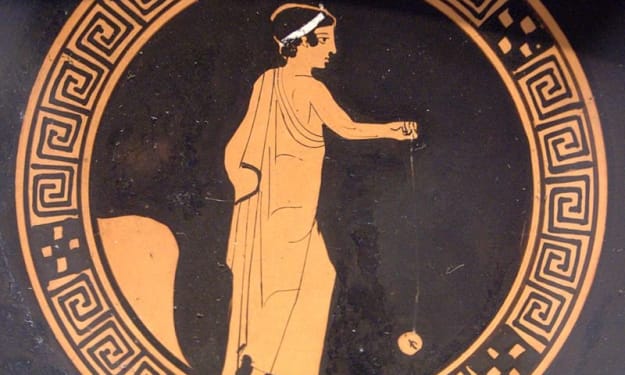
The yoyo has been around for centuries, and it is a pastime that has been enjoyed by people of all ages. From young children to experienced adults, the yoyo can be a fun and challenging toy to master. With simple tricks and complex maneuvers, the yoyo is a classic toy that has been enjoyed for generations. Whether you are just starting out or an experienced pro, there is something for everyone when it comes to yoyo.
By Ziain Morales3 years ago in History
The Revolutionary Legacy of Dr. Jose Rizal
This article will explore the life and legacy of Dr. Jose Rizal, a renowned Filipino nationalist, writer, and philosopher who is widely considered the national hero of the Philippines. Dr. Rizal was a key figure in the Philippine Revolution, a nationwide uprising to end Spanish colonial rule in the late 19th century. His writings, which helped to galvanize the Filipino people in pursuit of independence, have been translated into numerous languages and are still widely studied and discussed today. In addition to his writings, Dr. Rizal was also a medical doctor, a polymath, and a passionate advocate for human rights. This article will explore the life of Dr. Rizal and his impact on the Philippine nation.
By Ziain Morales3 years ago in History