Trivia
🏮 Strange but Fascinating: Bizarre Japanese Customs From History . AI-Generated.
Japan is known for its blend of ancient tradition and futuristic innovation. But beneath the cherry blossoms and neon lights lies a cultural history full of surprising, sometimes bizarre customs. These aren’t just old-fashioned quirks—they reveal deep beliefs about beauty, honor, shame, and even the supernatural.
By Takashi Nagayaabout a year ago in History
Tree Time Travel
Imagine trees not just as parts of a landscape, but as living, breathing time capsules. Some trees have been around for thousands of years, quietly watching history unfold, enduring shifts in climate, and witnessing the rise and fall of human civilizations. These ancient giants are truly natural wonders, each with its own incredible story etched into its rings and bark. Let's explore five of the world's oldest trees, understand the secrets to their astonishing longevity, and discover why they're so vital to our planet. Methuselah: The Ancient Survivor Age: Over 4,850 years old Location: California, USA (Inyo National Forest) High in California's White Mountains lives Methuselah, a Great Basin bristlecone pine that's one of the oldest known living trees on Earth. This tree began its life around 2830 BCE, even before the famous pyramids of Egypt were built! To protect it from harm, its exact location is kept a secret. Methuselah has faced incredible challenges: brutal winds, severe droughts, and freezing temperatures. Its twisted, gnarled trunk is a testament to a harsh but unbelievably resilient life. It stands as a silent witness to nearly five millennia of change.
By Hamad Javedabout a year ago in History
Photos of Macron’s U.K. State Visit, From a Carriage Ride to a Polite Kiss
French President Emmanuel Macron and his wife, Brigitte, commenced a three-day state visit to the United Kingdom, marked by ceremonial elegance, political symbolism, and moments of personal charm. The grand diplomatic event that was to follow began with their arrival at RAF Northolt. Greeted by the Prince and Princess of Wales, Macron's gallant gesture of gently air-kissing Princess Kate's hand drew both admiration and curiosity, as such gestures are rarely seen in royal protocol but not expressly prohibited.
By GLOBAL NEWSabout a year ago in History
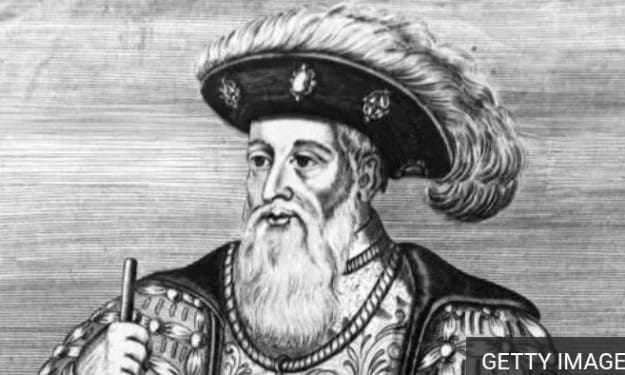
Vasco da Gama: Explorer, Conqueror, or Villain?
When Vasco da Gama Set Fire to a Ship Filled with Women and Children Heading to Mecca The character Kelu, raised under Portuguese rule, had only one thought in mind: to eliminate Vasco. This is the dialogue introducing the main character Chirakkal Kelu in the famous Malayalam film Urumi, even before he appears on screen. The life of the film's protagonist, Kelu, revolves solely around the mission of killing the Portuguese sailor Vasco da Gama. To achieve this goal, he faces numerous obstacles, builds a revolutionary army, and clashes with the Portuguese forces. In this battle, he loses his closest friend. But in the end, not only does he fail to achieve his goal, but he also loses his life. Chirakkal Kelu, who desires to assassinate Vasco da Gama, is a fictional character. But Prithviraj’s portrayal of this role in Urumi became a great cinematic experience and gained immense popularity in Kerala. Viewers praised the film highly. Although Vasco da Gama is celebrated in European history for discovering the sea route to India, in Malayalam films, folklore, and songs, he is portrayed as a villain. On March 25, 1497, Vasco da Gama set out from Lisbon, the capital of Portugal, for India. He had the backing of the Portuguese king for this voyage. After months of travel, he became the first European to reach India by sea. This journey earned him the title of a “hero” in European history. Even in our school textbooks, Vasco da Gama is credited for opening trade routes and playing a significant role in the spice trade. Europe’s Dream of Reaching India American historian Charles E. Nowell, in his book The Great Discoveries, writes about Vasco da Gama: > “Vasco da Gama, who established direct contact with India, was a man of strong physique and strong character. Although he was illiterate, cruel, and violent, he was also loyal and fearless.” He was given the responsibility of leading the voyage to India, a task not meant for the soft-hearted. In January 1497, King Manuel I of Portugal tasked Vasco da Gama with fulfilling “Europe's dream of reaching India.” For centuries, many European nations tried to be the first to reach India. Even a small country like Portugal was competing in this race. However, Arab and Persian traders had already reached India and established trade networks. They were importing spices, particularly from the Malabar region (present-day Kerala), through Muslim merchants. Historian John F. Richards writes in The Mughal Empire: > “Before the Portuguese arrived, Muslims and their ships dominated Gujarat, Malabar, and Arabian Sea ports.” In 1492, Columbus arrived in the Americas. Until his death, he believed that the land he had discovered was part of Asia and that India was nearby. George M. Tully writes in his book The Voyages and Adventures of Vasco da Gama: > “This is why he called the inhabitants of that land ‘Indians.’” For Europeans, India was envisioned as a wealthy land filled with gold, diamonds, precious stones, and expensive spices like pepper. Asia—especially India—was viewed as a land of immense riches and allure. William Logan writes in Malabar Manual that Vasco da Gama's fleet consisted of three ships: > São Rafael, São Gabriel, and São Miguel. Each ship was staffed with officers, sailors, and other crew members. When Vasco da Gama first came to India, his fleet was quite small. Historical sources differ on exactly how many people accompanied him. But one thing is certain: some of them were convicts. The book M. Nomed Deus: The Journal of the First Voyage of Vasco da Gama to India, 1497–1499 mentions that during the voyage, ten convicts were pardoned and sent along. The Portuguese king pardoned their crimes and sent them to assist on this mission. Some historians suggest another reason behind this decision—perhaps the king thought it better for these convicts to risk dying at sea rather than waste away in Portuguese prisons. One of the most important of these criminals was a "New Christian" named João Nunes, a recently converted Jew who could speak some Arabic and Hebrew. The same journal states: > "João Nunes was intelligent and understood the Muslims' language." Was He the First European to Set Foot in India? When Vasco da Gama’s ship reached Kerala on May 20, 1498, food was arranged on board while anchored just off the coast. It is recorded that Vasco first landed at Kappad village in the Kozhikode district of Kerala. However, according to historian and scholar M.G.S. Narayanan, Vasco first visited the Pantalayani region near the Kollam district. Small Malabar boats approached Vasco's ships and questioned his origins, asking, “Which country are you from?” It is quite possible that the first European to set foot on Indian soil was not Vasco da Gama himself, but one of his crew members—a convict. According to Vasco da Gama and the Sea Route to India: > “Before Vasco set foot on land, he sent someone who could speak Arabic and Hebrew to the shore.” Thus, the first European to reach the Malabar coast may have been João Nunes, a recent convert who spoke Arabic and Hebrew. But there is no concrete documentation to confirm this. A Disappointing First Visit to India When Vasco da Gama's translator met two Arab traders onshore, they suspected him to be an enemy. They shouted, “May the devil take you!” They then asked, “Why have you come here?” The translator replied, “We are Christians and have come in search of spices.” This exchange between the first European visitors and the Arab traders is mentioned in many historical accounts. Later, Vasco da Gama, along with a few selected men, went ashore, leaving the rest of the crew on the ships with instructions to remain alert. Historical accounts suggest that he was received with courtesy and respect. However, Vasco’s first visit to India was not as successful as he had hoped. The Hindu king of Kozhikode (called the Zamorin by the Portuguese) considered Vasco’s gifts simple and unimpressive and mocked them. The Arab Muslim traders, who dominated the spice trade, strongly opposed the arrival of the Portuguese. Historian M.G.S. Narayanan, in an interview with The Hindu, said: > “The Portuguese demanded a monopoly on the pepper trade, but the Zamorin refused because the trade was already under Muslim control.” After this, the Portuguese allied with the Kingdom of Cochin and established trading centers there. Later, they turned toward Goa, near the Vijayanagara Empire. Vasco da Gama returned to Europe in 1499 with a small quantity of spices. Nevertheless, he was given a grand welcome in Portugal. K.M. Panikkar writes in Asia and Western Dominance: > “The spices brought back from India during Vasco's first voyage were sold at a huge profit, many times more than the cost of the entire expedition.” It was then that the Portuguese realized the wealth of India. Vasco’s Second Voyage to India Vasco da Gama’s first voyage (1497–1499) established a sea route between Europe and India but failed to secure a strong trade agreement with the Zamorin of Kerala. Arab Muslim traders, long dominant in the Indian Ocean spice trade, condemned and resisted the Portuguese. Historian Sanjay Subrahmanyam writes in The Career and Legend of Vasco da Gama: > “For Vasco, the Muslim traders of Kozhikode were not only economic rivals but religious and cultural enemies.” > “Their strong position at the Zamorin’s court was a major obstacle to Portuguese ambitions.” To counter this threat, the Portuguese government planned a second expedition. This time, the goal was clear: establish Portuguese dominance in India, take revenge for earlier failures, and monopolize the spice trade. In February 1502, Vasco da Gama set out from Lisbon with 20 warships and about 1,500 soldiers. The fleet was equipped with cannons and other weapons, ready for battle. On September 11 of the same year, his fleet arrived at the coast of Kannur in Kerala. One of Vasco's crew members documented in The Journal of the First Voyage of Vasco da Gama to India: > “There we saw ships returning from Mecca. These ships were transporting spices to our country (Portugal). We captured them so that only the king of Portugal could directly trade spices from India.” > “We then captured a ship bound for Mecca, carrying 380 men, many women, and children.” > “We looted at least 12,000 ducats (gold coins) and other valuables from the ship. Then, on October 1, we set the ship and everyone on board ablaze.” The ship referred to here as the "Mecca ship" was a large vessel named Miri. According to historian K.M. Panikkar, this ship belonged to the brother of Khoja Qasim, a wealthy merchant from Kozhikode. The ship, seized by Vasco’s forces, was carrying many women, children, and elderly pilgrims bound for Hajj. It was also filled with valuable trade goods. > “Vasco ordered the ship to be burned. Women begged for mercy for their children. Portuguese soldiers watched from their ships as every soul aboard was burned alive, their screams echoing across the sea.” Gaspar Correia writes in Lendas da Índia: > “No one survived. The cries of those on the brink of death echoed across the ocean. Vasco remained unmoved, as calm as if nothing had happened.” This incident deeply disturbed even some Portuguese of the time and became a key reason why Vasco da Gama is remembered in Kerala’s history as a villain.
By Ikram Ullahabout a year ago in History
Why some see the dollar's drop as a sign America is losing its financial might
**The Dollar’s Decline: A Sign of America’s Waning Financial Might? ** In recent months, the U.S. dollar has seen a notable decline against major global currencies, sparking widespread debate among economists, investors, and policymakers. This depreciation is seen by some as a warning sign that America may be losing its long-standing financial dominance, rather than just a market fluctuation. While others see it as part of a natural economic cycle, the perception that the dollar’s weakening reflects a deeper erosion of U.S. financial influence is gaining traction.
By GLOBAL NEWSabout a year ago in History
Breaking political developments — like Elon Musk’s new party announcement.
Elon Musk Launches the “America Party”: A Bold Challenge to the Two‑Party System Tesla and SpaceX CEO Elon Musk has officially announced the formation of a new political entity, naming it the America Party, marking a significant break from his once-close alliance with former President Donald Trump. The move, triggered by Musk's strong objection to the recently passed “One Big Beautiful Bill” (BBB), signals his intent to fundamentally alter the American political landscape .
By Waseem Khan about a year ago in History
Dow futures fall as Trump officials signal limited breathing room before tariffs ‘boomerang back’
**Dow Futures Fall as Trump Officials Warn of Tariff Repercussions** U.S. stock index futures fell early Monday morning after key Trump administration officials signaled that there may be limited time before escalating tariffs on China and other trade partners start to backfire on the American economy. Dow futures dropped more than 150 points as markets digested growing signs that trade tensions are not just here to stay—but may intensify in ways that hurt domestic industries.
By GLOBAL NEWSabout a year ago in History
the lost map of santorini
It was the summer of 2022 when Maya Kapoor, a 27-year-old travel blogger from Mumbai, arrived on the sparkling Greek island of Santorini. Known for her Instagram page filled with exotic destinations and beautifully edited vlogs, this trip wasn’t meant to be about content. This time, Maya was tired — of algorithms, of online expectations, and most of all, of pretending to be “living the dream.” She needed something real. Something raw.
By haider aliabout a year ago in History
The Civilization of the Ottoman Turks: A Legacy of Courtesy, Wisdom, and Deep Spiritual Values
Throughout history, few civilizations have preserved a legacy as refined and spiritually grounded as that of the Ottoman Turks. Emerging from modest beginnings and growing into one of the most powerful empires the world has ever seen, the Ottomans left behind not just tales of conquest, but also rich traditions rooted in manners, respect, and subtle intelligence. Their daily lives, community practices, and hospitality customs paint a portrait of a people who lived with purpose, imbued with values of dignity, humility, and emotional intelligence. Let us journey into the cultural soul of the Ottomans—a civilization where every gesture had meaning, and every action reflected wisdom. --- Hospitality: A Silent Language of the Heart Hospitality in Ottoman culture wasn’t merely about offering food or drink—it was a deeply symbolic interaction, a respectful dialogue between host and guest without words. When a guest arrived at an Ottoman home, they were offered two simple things: a cup of Turkish coffee (qahwa) and a glass of plain water. If the guest reached for the water, the host would immediately understand that the visitor might be hungry, and without asking or embarrassing the guest, they would begin preparing a meal—often their finest, even if they had little themselves. However, if the guest chose coffee, it was understood they were there just for conversation and did not wish to eat, allowing the host to continue the visit in a lighter, more social tone. This silent understanding showcased not only hospitality but also respect for the dignity and unspoken needs of others. --- Floral Symbols: Messages Without Words Ottomans used flowers as a subtle language outside their homes, offering passersby unspoken but powerful messages. A yellow flower placed outside the home signaled that someone in the house was ill. This gentle indicator advised visitors to speak softly, avoid noise, and, if appropriate, come in to inquire about the patient's health. A red flower suggested that there was a young woman of marriageable age in the home. It was a community-based warning to avoid inappropriate or vulgar language near the house. It was also a welcome signal for those who intended to propose marriage—an invitation to knock respectfully. These flower signs reflect the social responsibility and moral boundaries that governed Ottoman neighborhoods. There was no need for confrontation, no boards or notices—civility was coded into aesthetics. --- The Double Door Hammer: Gender Sensitivity Another beautiful and thoughtful tradition was the use of two hammers or knockers on the doors of Ottoman homes: One was larger and heavier, meant to be used by men. The other was smaller and lighter, designated for women. When a man knocked using the large hammer, a male member of the household would come to answer. If the smaller hammer was used, it signaled a female visitor, prompting a woman from the household to attend the door. Such practices weren’t just cultural quirks—they showed a profound respect for modesty, boundaries, and gender ethics in the public and private spheres of life. --- Charity with Dignity: Anonymous Giving Perhaps one of the most awe-inspiring aspects of Ottoman culture was the way they handled charity. Giving was not for show, recognition, or public praise—it was quiet, respectful, and anonymous. Wealthy individuals would go to local vendors—such as vegetable sellers or grocers—and open anonymous tabs (accounts). These tabs were meant to cover the costs of food or supplies for any poor person who came in need. When a poor person arrived to buy something, the shopkeeper would provide the items free of charge, telling them nothing of the benefactor. The giver never met the receiver. The dignity of the poor was preserved, and the reward was left entirely to Allah. Later, the wealthy individual would return quietly and clear the tab, expecting nothing but the satisfaction of helping a fellow human being. This practice is a testament to the Ottoman spirit of silent service—a value deeply embedded in Islamic teachings. --- Adab with the Prophet (PBUH): A Unique Expression of Love The Ottomans were not just polite—they were spiritually refined. One such example is how they treated the age of the Prophet Muhammad ﷺ. The Prophet (peace be upon him) passed away at the age of 63. Among devout Ottoman Turks, if an elderly person had surpassed this age and was asked how old they were, they would not say “I am 65 or 70.” Instead, they would reply: > “Son, I have crossed the limit.” This was not out of superstition but out of deep reverence and spiritual love for the Prophet ﷺ. They felt it inappropriate or audacious to say they had lived longer than the Messenger of Allah. Such subtleties reveal the depth of Ottoman adab (etiquette)—a love that shaped their language, actions, and worldview. --- The Reason Behind Ottoman Decline: A Loss of Values For centuries, the Ottoman Empire stood as a beacon of Islamic civilization, a model of balanced power, religious freedom, intellectual progress, and moral living. So what led to its fall? According to many historians and cultural observers, the empire did not collapse due to lack of might but due to internal betrayal, loss of spiritual values, and Western conspiracies that targeted the Ottoman identity. As their traditions of generosity, modesty, and spiritual discipline eroded, so did the strength of their unity. Greed, political manipulation, and abandonment of their own cultural wisdom opened the doors for the empire’s eventual fragmentation. --- What We Can Learn Today The lessons from Ottoman civilization are not confined to history books. They remain relevant today in a world that is often rushing, indifferent, and transactional. When we offer a guest water or tea, we can remember their method of listening with the heart, not the ears. When we give in charity, let us give with dignity, not display. When we speak of modesty and social respect, we can adopt symbolic, gentle ways rather than aggressive or legalistic ones. When we reflect on our Prophet ﷺ, we can ask whether we love him with such sensitivity and manners as the Ottomans did. --- Conclusion: A Civilization Built on Wisdom The Ottoman Turks left behind a civilizational blueprint where values were lived, not just preached. Their culture reminds us that true greatness lies not only in power or architecture, but in the way a society treats its guests, respects its women, protects its poor, and honors its prophets. In an age where modern life often celebrates speed, fame, and self-promotion, the Ottoman legacy calls us back to simplicity, meaning, and sincerity—a beautiful tale of literature, love, and light that the world should never forget.
By Ikram Ullahabout a year ago in History
Why the US Dollar Is Falling by Record Levels in 2025
Why the value of the US dollar is falling at an unprecedented rate in 2025 During the first half of 2025, the value of the US dollar experienced one of its most significant declines in modern financial history. The dollar has experienced its worst first-half performance in more than five decades, falling more than 10% since January. Investors, economists, and policymakers around the world are concerned due to the steep decline. Understanding the causes of this unprecedented depreciation requires examining a combination of political, economic, and structural factors reshaping global markets.
By GLOBAL NEWSabout a year ago in History