Trivia
Rising U.S.–Iran Tensions: Power, Warnings, and the Risk of a Wider Conflict
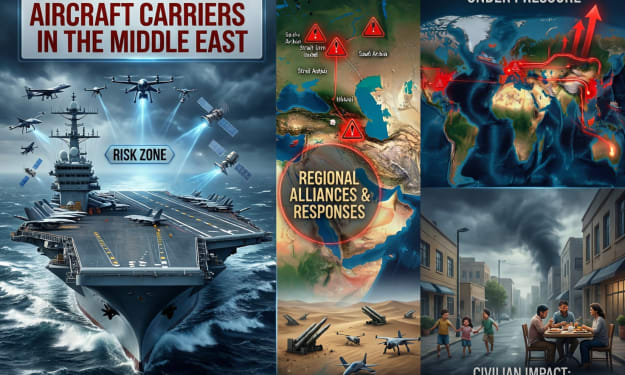
Rising U.S.–Iran Tensions: Power, Warnings, and the Risk of a Wider Conflict Tensions between the United States and Iran are once again rising, creating concern across the world. Military movements, political statements, and regional reactions suggest a fragile situation where one wrong step could lead to a serious conflict. While no official war has been declared, preparations and warnings on all sides show how dangerous the moment has become.
By Wings of Time 9 months ago in History
The Greatest Lost Treasures of History: A Deeper Exploration
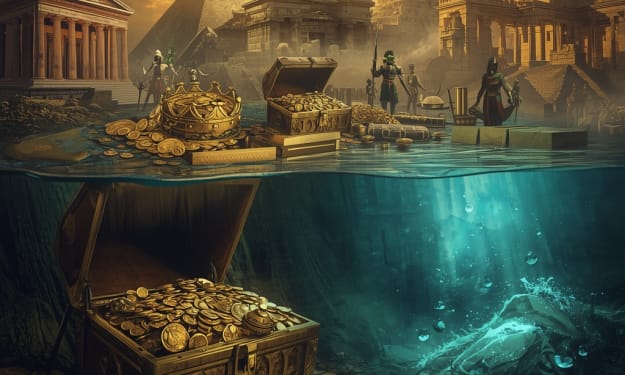
1. The Gold of the Inca Empire The Inca Empire, which flourished in South America from the 13th to the 16th century, was one of the richest civilizations in the ancient world. For the Incas, gold was not merely wealth—it was sacred. They believed gold to be the “sweat of the Sun God Inti”, while silver was the “tears of the Moon.” Sacred Gold and Royal Wealth Inca temples, especially the Coricancha (Temple of the Sun) in Cusco, were covered in gold sheets. Statues of animals, plants, and even life-sized human figures made of solid gold decorated sacred spaces. The royal palace stored ceremonial objects, crowns, discs, and ornaments made of precious metals. The Vanishing Treasure When Spanish conquistadors, led by Francisco Pizarro, captured the Inca emperor Atahualpa in 1532, they demanded a ransom room filled with gold and silver. Although the ransom was paid, Atahualpa was executed. According to legend, a massive convoy of gold meant for the ransom was hidden in the Andes when news of his death reached the carriers. This hidden treasure—possibly buried in caves, lakes, or mountain tunnels—has never been recovered. Lake Guatavita, the Llanganates Mountains, and secret Inca tunnels remain prime locations of speculation. 2. The Treasure of Alexander the Great Alexander the Great conquered vast territories from Greece to India, looting the treasuries of Persia, Egypt, and Babylon. He seized the unimaginable wealth of Persian kings like Darius III, including gold bars, jeweled thrones, ceremonial weapons, and rare artifacts. Where Did Alexander’s Treasure Go? After Alexander’s sudden death in 323 BCE, his empire fractured. His generals fought brutal wars, and many treasure convoys disappeared during transport. Some historians believe vast quantities of gold were hidden in Egypt, Mesopotamia, or Asia Minor to prevent enemy capture. Even Alexander’s tomb remains undiscovered, adding to the mystery. If found, it may hold artifacts of immense historical and monetary value. 3. The Lost Treasure of the Chola Empire The Chola Empire of South India (9th–13th century CE) was a maritime superpower with immense wealth generated through trade, agriculture, and conquest. Their greatest treasures were not just gold but masterpieces of art. Bronze Masterpieces and Temple Wealth The Cholas created legendary bronze idols, especially the iconic Nataraja (Shiva as the Cosmic Dancer). Temples acted as banks, storing gold coins, gemstones, land records, and ritual objects donated by kings and merchants.
By Say the truth 9 months ago in History
Drones, Artificial Intelligence, and the Future of War
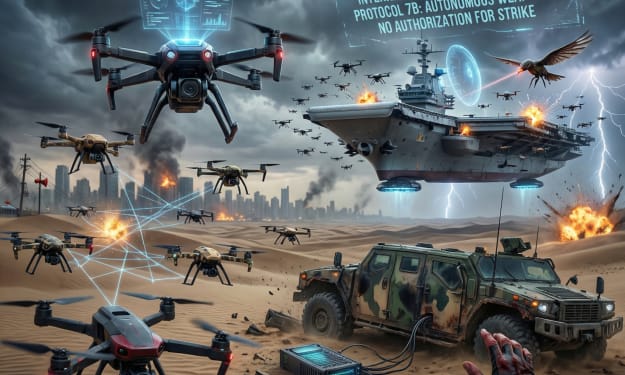
Drones, Artificial Intelligence, and the Future of War War is no longer fought only with soldiers, tanks, and fighter jets. Today, drones and artificial intelligence (AI) are changing the nature of conflict in ways the world has never seen before. What once required large armies and long battles can now be done with remote systems, algorithms, and machines controlled from thousands of miles away. This shift is redefining power, security, and the risks of future wars.
By Wings of Time 9 months ago in History
Why Countries Are Preparing for Future Wars
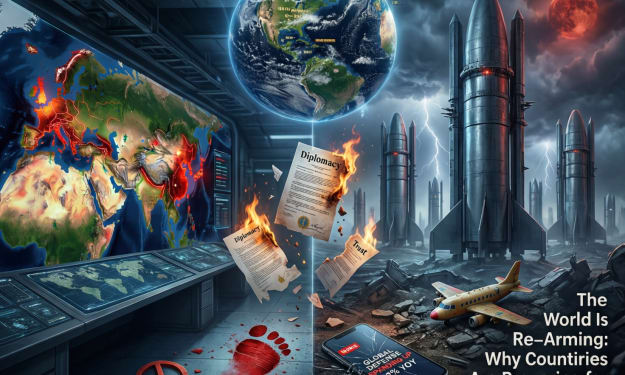
The World Is Re-Arming: Why Countries Are Preparing for Future Wars Across the world, countries are increasing their military spending at a speed not seen in decades. Governments explain this growth as necessary for defense and national security. However, many experts and ordinary people worry that this trend could move the world closer to conflict instead of peace. From Europe to Asia, from the Middle East to the Pacific, nations are strengthening their armies, modernizing weapons, and preparing for possible future wars.
By Wings of Time 9 months ago in History
Tensions, Transitions, and a Fragile Global Balance
Today’s World Affairs: Tensions, Change, and an Unstable Balance Today’s world affairs show a global system under great pressure. Many countries are facing political tension, economic uncertainty, and security challenges at the same time. The world is changing quickly, and no single event explains everything. Instead, a mix of conflicts, power struggles, and new technology is shaping how nations deal with each other.
By Wings of Time 9 months ago in History
Chandragupta Maurya vs the Greek Empire: The Clash That Reshaped Ancient India
Background: Alexander’s Invasion and Its Aftermath The roots of the conflict trace back to Alexander the Great’s invasion of India in 326 BCE. Although Alexander defeated King Porus at the Battle of Hydaspes, his army refused to advance further east. Upon his return westward and his death in 323 BCE, Alexander’s vast empire fractured among his generals, known as the Diadochi. In northwestern India, Greek governors and satraps were left behind to maintain control over regions such as Punjab, Gandhara, Arachosia, and parts of present-day Afghanistan. These territories were unstable, and Greek authority was weak, creating an opportunity for a rising Indian leader. Rise of Chandragupta Maurya Chandragupta Maurya, guided by his brilliant strategist Chanakya (Kautilya), overthrew the unpopular Nanda Dynasty around 321 BCE and established the Mauryan Empire with its capital at Pataliputra (modern Patna). Unlike previous Indian rulers, Chandragupta aimed to unify the entire subcontinent under a centralized administration. Recognizing the vulnerability of the Greek-held territories in the northwest, Chandragupta moved swiftly to reclaim them. His ambition brought him into direct conflict with Seleucus I Nicator, one of Alexander’s most powerful successors and founder of the Seleucid Empire. The Greek Empire Under Seleucus I Nicator Seleucus I controlled vast lands stretching from Asia Minor to Persia and parts of Central Asia. However, his eastern territories were distant, difficult to govern, and constantly threatened by local uprisings. When Chandragupta began advancing into Greek-controlled regions, Seleucus was forced to personally lead an expedition to reassert control. This led to a full-scale war between the Mauryan Empire and the Greek Empire around 305 BCE. The War: Strategy and Military Strength
By Say the truth 9 months ago in History
Can World War III Be Prevented?
Can World War III Be Prevented? The idea of World War III is no longer limited to history books or fictional movies. Rising global tensions, regional wars, arms buildups, and political rivalries have made many people wonder whether another world war is possible—and more importantly, whether it can still be prevented. While the risks are real, global conflict is not inevitable. Prevention depends on choices made by leaders, institutions, and societies today.
By Wings of Time 9 months ago in History
What Would World War III Look Like Today?
What Would World War III Look Like Today? When people imagine World War III, many still picture massive armies, tanks rolling across borders, and cities reduced to rubble by bombs. While traditional warfare would still play a role, a modern world war would look very different from the conflicts of the 20th century. Advances in technology, global interdependence, and new forms of power have changed how wars are fought—and how they affect the world.
By Wings of Time 9 months ago in History
UAE and India Sign a Major Defense Agreement
UAE and India Sign a Major Defense Agreement The United Arab Emirates (UAE) and India have taken another important step in their growing relationship by signing a new defense cooperation agreement. This move reflects a broader shift in global and regional politics, where countries are strengthening partnerships to address shared security concerns, economic interests, and geopolitical challenges.
By Wings of Time 9 months ago in History
Reform or Replace? The Future of Global Governance
Reform or Replace? The Future of Global Governance Global governance stands at a critical crossroads. Institutions created after World War II—especially the United Nations—were designed to prevent another global catastrophe. For decades, they provided platforms for dialogue, coordination, and conflict management. But today, many people question whether these institutions still work as intended. The growing debate is no longer just about reform. It is about whether global governance should be repaired or replaced entirely.
By Wings of Time 9 months ago in History
Can Global Peace Exist Without a Global Authority?
Can Global Peace Exist Without a Global Authority? The idea of global peace without a global authority sounds appealing to some people. In theory, nations could manage their own affairs, respect each other’s borders, and resolve disputes peacefully without an overarching institution telling them what to do. Supporters of this view argue that global bodies are slow, biased, and often ineffective. But history and current events raise a difficult question: can lasting global peace truly exist without a central authority to guide it?
By Wings of Time 9 months ago in History