Research
Russian Ukraine Conflicts
The Russian invasion of Ukraine is a complex and ongoing conflict that began in 2014 and has had far-reaching consequences for both countries and the international community. In order to summarize this significant event in just 1000 words, we must focus on key aspects and events that have shaped the conflict. The roots of the conflict can be traced back to Ukraine's decision to pursue closer ties with the European Union in 2013, which was met with opposition from Russia. This move by Ukraine was seen as a threat to Russia's influence in the region, particularly in Crimea, a strategically important peninsula that had been under Ukrainian control since the breakup of the Soviet Union. In February 2014, protests erupted in Ukraine's capital, Kiev, demanding closer integration with Europe and the removal of then-President Viktor Yanukovych, who had strong ties to Russia. The protests escalated into violence, resulting in Yanukovych fleeing the country. This power vacuum led to a political crisis, with Russia viewing the situation as an opportunity to exert its influence. In late February 2014, Russian military forces, without official insignia, occupied key infrastructure and government buildings in Crimea. A controversial referendum was hastily organized, which resulted in an overwhelming majority of Crimean residents voting in favor of joining Russia. The international community widely condemned the referendum as illegitimate, considering it a violation of Ukraine's sovereignty and international law. Following the annexation of Crimea, pro-Russian separatist movements emerged in eastern Ukraine, particularly in the Donetsk and Luhansk regions. These separatists, backed by Russia, sought autonomy from the Ukrainian government, citing concerns over language rights and cultural identity. The Ukrainian government, viewing the separatists as a threat to its territorial integrity, launched a military operation to regain control of the region. The conflict quickly escalated into a full-scale war, characterized by intense fighting between Ukrainian armed forces and pro-Russian separatists, with Russia providing support in the form of weapons, military equipment, and even troops. The war has resulted in thousands of casualties and displaced millions of people, creating a humanitarian crisis. Numerous ceasefires and peace agreements have been brokered, including the Minsk Protocol and Minsk II, aimed at de-escalating the conflict and establishing a lasting peace. However, these agreements have been repeatedly violated, with sporadic outbreaks of violence continuing to this day. The international response to the conflict has been varied. The United States and the European Union imposed economic sanctions on Russia in response to its actions in Crimea and Eastern Ukraine. These sanctions have had a significant impact on Russia's economy, but they have not been enough to deter its aggressive behavior. The conflict has strained relations between Russia and the West, with accusations of territorial expansion and violations of international law. NATO has increased its military presence in Eastern Europe as a deterrent against further Russian aggression, while Russia accuses NATO of encroaching on its borders. The conflict in Ukraine has also had geopolitical implications beyond the region. It has highlighted the fragility of post-Cold War international norms and the challenges faced by sovereign nations in the face of aggression from more powerful neighbors. It has raised questions about the role and effectiveness of international organizations, such as the United Nations, in resolving such conflicts. In conclusion, the Russian invasion of Ukraine and the subsequent conflict in Crimea and Eastern Ukraine have had profound consequences for both countries and the international community. The conflict has resulted in loss of life, displacement of people, and a deepening divide between Russia and the West. Achieving a lasting and peaceful resolution remains a significant challenge, and the situation continues to evolve with far-reaching implications.
By Agbasonu Honesta3 years ago in History
A History of Violence: Unveiling the Depths of Human Conflict. Content Warning.
Introduction Welcome to our comprehensive guide to the fascinating and fascinating subject of the history of torture. In this article, we delve deep into the history of human civilization, uncovering the origins, causes, and manifestations of violence in each era. Our goal is to provide you with a rich and detailed understanding of this complex phenomenon, highlighting its impact on societies and individuals alike. Join us on this enlightening journey as we explore the depths of humanity's dark side.
By Ahshik official3 years ago in History
Mythical Journeys-Part 1. Content Warning.
Once upon a time, in the small town of Quirktown, there lived a young and ambitious dreamer named Timmy. Timmy had always been fascinated by myths, legends, and fantastical creatures. He would spend hours reading about faraway lands and the incredible adventures that unfolded within them. However, Timmy had a problem. He lived in the real world, where mythical journeys were nothing more than stories on paper.
By Praful Patil3 years ago in History
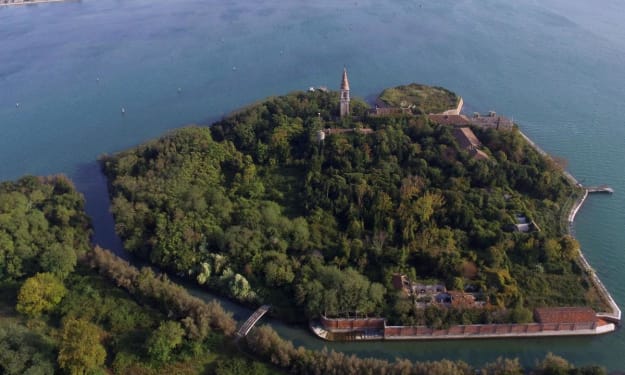
Plague Island: 5 Eerie Places Abandoned to the Sea
Exploring abandoned places can send chills down your spine, but when these eerie locations are swallowed by the sea, the sense of mystery and intrigue deepens. From haunted lighthouses to grim prisons and Nazi torpedo bases, these five eerie places tell tales of tragedy, despair, and the enduring presence of the supernatural. Join us as we delve into the stories of these fascinating places, now lost to the waves.
By Ngakoma Mystery3 years ago in History
The Rise and Fall of the Mayans: A Fascinating and Tragic History
The Mayan civilization, one of the most advanced and sophisticated civilizations of the ancient world, flourished for over two thousand years in Mesoamerica, covering modern-day Mexico and Central America. The Mayans are renowned for their remarkable achievements in science, mathematics, art, architecture, and culture. However, the sudden and mysterious collapse of the Mayan empire around the 10th century CE remains a fascinating and tragic mystery that has captivated scholars and laypeople alike for centuries. In this article, we will explore the rise and fall of the Mayans, examining the factors that contributed to their collapse and their enduring legacy in modern society.
By Krishna raj3 years ago in History
Scientists baffled by game-changing discovery in Africa!
Africa is situated on an extraordinary slope of mind-boggling, staggering, suspicious revelations that have actually stunned researchers right up until now. These disclosures are amazing, and in the event that they were not referenced, they could never be accepted, so in this article I will impart to you things researchers found in Africa that stunned the world.
By Shari Gailla3 years ago in History
The Hunt for Cleopatras Secret Burial Chamber
For more than two millennia, the burial site of Cleopatra, the last queen of Egypt, has remained one of the greatest mysteries in the field of archaeology. Despite numerous efforts in the past to find her tomb, the location of her final resting place has remained elusive. However, recent advances in technology and new evidence have rekindled hope that her tomb might be found. This article will explore the hunt for Cleopatra's secret burial chamber, review the latest theories and discoveries, and assess the potential implications of finding her long-lost tomb.
By Krishna raj3 years ago in History
If you want to know more about Allien read this
As Aliens, also known as extraterrestrial life, refer to hypothetical intelligent beings or organisms that originate from outside Earth. As an AI language model, my knowledge is based on information available up until September 2021. At that time, there was no conclusive scientific evidence confirming the existence of intelligent extraterrestrial life. However, the possibility of life beyond Earth has long fascinated scientists and the general public alike.
By REAL MOBNEY3 years ago in History