Research
The countries that have Love symbols
A love that transcends culture, time, and borders cannot be contained. Every country has its unique way of representing love through symbols, landmarks, and traditions celebrating affection and connection. Whether it’s a romantic monument or a cultural icon, these symbols carry deep significance for people worldwide. Let’s explore some countries where symbols of love are celebrated.
By Zinnat ara Begum2 years ago in History
"WW2 Uncovered: Secrets & Shocking Truths You Never Knew About the Greatest Conflict!"
World War II: A Global Conflict and its Enduring Legacy World War II was one of the deadliest conflicts in history, with an estimated total of over 70 million people losing their lives. This staggering number represents roughly 3% of the world’s population at the time. The war left nations shattered and plunged the world into a new era marked by unprecedented change. Its influence is felt even today, as we analyze its causes, key events, and lasting effects. The Road to War: Causes and Tensions The Treaty of Versailles and its Consequences The Treaty of Versailles, signed in 1919, imposed heavy reparations on Germany, amounting to about $132 billion. This led to deep resentment among Germans, who felt humiliated and economically strained. The loss of territories like Alsace-Lorraine and significant military restrictions only added to the instability in Europe, setting the stage for future conflict. The Rise of Fascism and Nazism Amidst the economic turmoil, totalitarian regimes began to gain power. In Italy, Benito Mussolini promoted fascism, while Adolf Hitler's Nazi Party rose in Germany. These regimes shared expansionist desires, aiming for military conquest. Early acts of aggression included Germany’s remilitarization of the Rhineland in 1936 and Italy’s invasion of Ethiopia in 1935, which showcased their ambitions. Appeasement and the Failure of Diplomacy Britain and France adopted a policy of appeasement, hoping to avoid war by conceding to some of Hitler's demands. A key example is the Munich Agreement of 1938, where they allowed the annexation of Sudetenland. This approach ultimately failed, as it only emboldened Hitler to further aggression. The Major Players and Theaters of War The Axis Powers The Axis powers consisted of Germany, Italy, and Japan. Germany, with over 4 million soldiers, led groundbreaking military strategies like Blitzkrieg, focusing on speed and surprise. Casualties for the Axis were staggering, with millions perishing by war’s end. The Allied Powers The Allies, including Britain, the United States, and the Soviet Union, fought bravely against the Axis. For example, by 1943, the U.S. had amassed over 12 million soldiers. The Allies suffered immense losses, with Soviet casualties alone estimated at around 27 million, showcasing the brutal nature of warfare. Major Battles and Turning Points Significant battles marked crucial shifts in the war. The Battle of Stalingrad (1942–1943) saw the USSR defeat Germany, turning the tide on the Eastern Front. In 1944, the D-Day invasion at Normandy involved over 156,000 Allied troops landing on the beaches of France, demonstrating remarkable strategy. General Dwight D. Eisenhower famously stated, "The eyes of the world are upon you," emphasizing the operation's importance. The Holocaust and War Crimes The Systematic Persecution of Jews and Other Groups The Holocaust stands as one of the most horrific chapters of WWII. Approximately 6 million Jews, alongside millions of others including Romani, disabled individuals, and political dissidents, fell victim to Nazi policies. Propaganda depicted these groups as threats, justifying their persecution. War Crimes and Atrocities Alongside the Holocaust, numerous war crimes occurred. The brutal occupation of Poland saw widespread executions and forced labor. The Rape of Nanking in 1937 involved horrific atrocities committed by Japanese troops against Chinese civilians, highlighting the cruelty of war. The Nuremberg Trials Following the war, the Nuremberg Trials were held to prosecute Nazi war criminals. These landmark trials established the principle of accountability, with figures like Justice Robert H. Jackson stating, "The wrongs which we seek to condemn and punish have been so calculated and so malignant." They laid the groundwork for modern international law. The End of the War and its Aftermath The Atomic Bombings of Hiroshima and Nagasaki In August 1945, the United States dropped atomic bombs on Hiroshima and Nagasaki, resulting in over 200,000 deaths. The decision to use these weapons was aimed at hastening Japan's surrender but sparked ongoing debates about morality and necessity. The Surrender of Japan and Germany Germany surrendered unconditionally on May 8, 1945, after relentless Allied pressure. Japan followed suit on September 2, 1945, with Emperor Hirohito stating, "The war situation has developed not necessarily to Japan's advantage,” marking the end of the conflict. The Beginning of the Cold War The aftermath of WWII led to the emergence of the Cold War. Tensions rose between the United States and the Soviet Union, as each sought to expand its influence. This divide resulted in decades of political conflict and military preparedness. The Enduring Legacy of World War II Geopolitical Shifts and the Formation of the UN WWII resulted in significant geopolitical changes. The formation of the United Nations aimed to prevent future conflicts. The new organization emphasized international cooperation and diplomacy, reflecting lessons learned from the war. Technological Advancements and Their Impact The war accelerated technological advances, including radar, jets, and medical innovations like antibiotics. Many inventions continued to shape industries and everyday life in the decades following the war. Remembering and Learning from the Past To truly grasp the impact of WWII, engaging with history is vital. Resources for deeper understanding include: Books: "The Second World War" by Antony Beevor Documentaries: "The World at War" Museums: United States Holocaust Memorial Museum Conclusion World War II reshaped the world in countless ways. By examining its causes, major events, and aftermath, we gain vital insights into our past. Understanding this conflict helps us navigate today's complex global landscape, reminding us of the importance of peace and diplomacy. Reflecting on these lessons allows for meaningful actions toward preventing future conflicts.
By Story silver book 2 years ago in History
Paul Ehrlich: A Pioneer in Medicine and Immunology
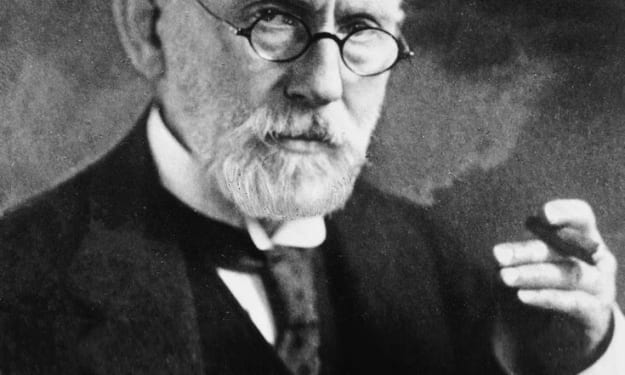
Paul Ehrlich: A Pioneer in Medicine and Immunology Paul Ehrlich (1854–1915) was a German physician and scientist whose groundbreaking work in immunology, hematology, and chemotherapy revolutionized modern medicine. Widely regarded as a pioneer, his discoveries laid the foundation for many therapeutic advancements and scientific methodologies. Below is an overview of his life, career, and significant contributions to science.
By Mahalakshmi2 years ago in History
Elephant Man’s’ Grave Found in Notorious London Cemetery. Content Warning.
When Joseph Merrick kicked the bucket at age 27, his body didn’t go into the ground in one piece. Instep, the bones of the so-called “Elephant Man” were faded and put on show at Ruler Mary College of London’s restorative school, and a few of his tissue was spared for restorative ponder. However for over a century, no one knew where the rest of him was buried, or indeed if those remains were buried at all.
By Shams Says2 years ago in History
Why Is My Furnace Leaking Water? A Homeowner’s Tale
It was a chilly October morning when Sarah first noticed something strange. As she walked into her basement to check on her furnace, she spotted a small puddle of water forming beneath the unit. At first, she thought it was just a spill, maybe from a leaky pipe or the furnace humidifier. But as she got closer, she realized the water wasn’t stopping—it was slowly spreading, and it was coming from the furnace itself.
By ProTec Inspection Services2 years ago in History
Ivan Pavlov: The Pioneer of Classical Conditioning
Ivan Pavlov: The Pioneer of Classical Conditioning Introduction Ivan Petrovich Pavlov (1849–1936) was a Russian physiologist renowned for his groundbreaking research on conditioned reflexes. His experiments with dogs not only transformed our understanding of behavior but also laid the foundation for modern psychology, neuroscience, and education. Pavlov's work transcends disciplinary boundaries, influencing areas like psychiatry, learning theory, and behavioral therapy.
By Mahalakshmi2 years ago in History
Top 10 Most Mysterious Historical Discoveries: That Leave Experts Aghast
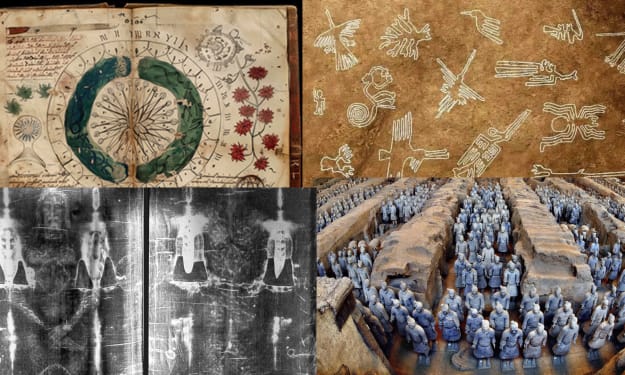
History is replete with mysteries of discovery. From the outset, archaeologists and historians have unearthed things that would not be explained even by the simplest logic: artifacts, monuments, and sites prompting endless debate, theory, and curiosity right up to this day. Here are the top 10 most baffling historical discoveries that still confound experts and fuel imaginations.
By soman Goswami2 years ago in History
The Significance of Christmas in December. AI-Generated.
The Significance of Christmas on December The celebration of Christmas on December 25th is a rich tradition steeped in history, cultural influences, and theological significance. To fully understand the reasons behind this specific date, we must explore the conjunction of various events, beliefs, and practices that have evolved over centuries.
By ♿ V+ Marie381Uk 2 years ago in History
Through Tears, We Rise
At the starting of the 1830s, about 125,000 Local Americans lived on millions of sections of land of arrive in Georgia, Tennessee, Alabama, North Carolina and Florida–land their precursors had possessed and developed for eras. But by the conclusion of the decade, exceptionally few locals remained anyplace in the southeastern Joined together States. Working on sake of white pilgrims who needed to develop cotton on the Indians’ arrive, the government government constrained them to take off their countries and walk hundreds of miles to a extraordinarily assigned “Indian Territory” over the Mississippi Stream. This troublesome and oftentimes dangerous travel is known as the Path of Tears.
By Shams Says2 years ago in History
Indian Astronomers Make Major Discovery in Triple-Star System
Indian astronomers from Odisha's National Institute of Science Education and Research (NISER) have bagged a proud moment with the discovery of finer details in the GG Tau A system, a rare kind of triple-star configuration located close to 489 light-years of Earth from the Taurus constellation. Their findings carry crucial importance in the field of understanding the complexities of multi-star planetary formation, rather than single-star planetary evolution like that of our Solar System.
By soman Goswami2 years ago in History