Research
The Forgotten Majesty – A Crumbling Palace Lost in Time
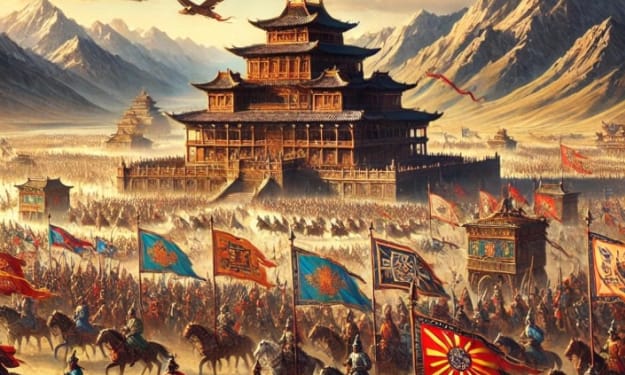
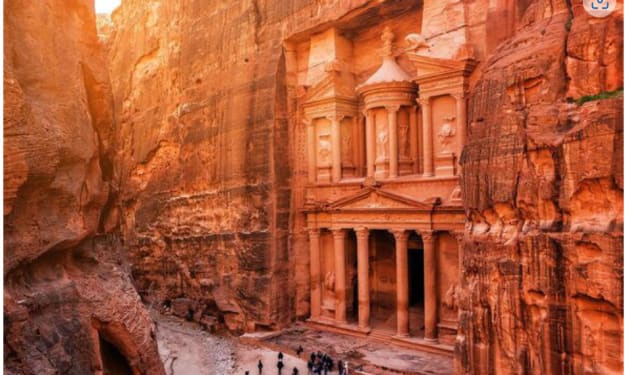
The Crumbling Palace: A Forgotten Relic of Time (Part 2) The grandeur of ancient palaces has long captured the imagination of historians and travelers alike. These architectural marvels, once the epicenters of power and culture, now stand as haunting ruins, whispering stories of their glorious past. The passage of time, coupled with natural and human-inflicted damages, has left these structures in a state of slow decay. In this continuation of our exploration into the crumbling palace, we delve into its deteriorating walls, the mysteries hidden within, and the efforts (or lack thereof) to preserve its legacy.
By Say the truth 2 years ago in History
Pilot Last Words Before Plane Crash 😔
Pilot Last Words Before Plane Crash Air travel is considered one of the safest modes of transportation but when an aircraft crashes it turns into a massive tragedy. After a crash the most important question is What happened. The answer to this question is often found in the black box a device installed in every aircraft that records the pilots' final conversations and flight data. Many times the recordings in the black box contain words that reflect fear surprise helplessness or even courage. Some words send chills down the spine while others become immortal last messages to the world. Here we take a detailed look at five unfortunate flights their final words and the stories behind them.
By Adnan Rasheed2 years ago in History
The Untold Story of Major Mohit Sharma: India’s Most Undercover Agent
Introduction In the annals of Indian military history, there are countless stories of valor and sacrifice. But some stories remain hidden in the shadows, known only to a select few. One such story is that of Major Mohit Sharma, an elite Para Special Forces officer of the Indian Army. Operating under the alias Iqbal Hussain, he infiltrated terrorist networks in Jammu and Kashmir, gathering intelligence and eliminating threats from within. His extraordinary bravery and selfless sacrifice make him one of India's most revered undercover operatives.
By Ramesh Mahato 2 years ago in History
The Mongol Empire at Its Peak: Power and Legacy
The Authority Afterwards Genghis Khan: The Rise of His Heirs Genghis Khan, the allegorical Mongol leader, larboard abaft an authority that connected above Asia and into Europe. However, his afterlife in 1227 did not mark the abatement of the Mongols; rather, it set the date for an alike greater expansion. His heirs, accomplished in warfare and governance, agitated advanced his vision, transforming the Mongol Authority into the better abutting authority in history. The Immediate Aftermath of Genghis Khan’s Death When Genghis Khan anesthetized away, his afterlife was initially kept abstruse to advance stability. His anatomy was taken aback to Mongolia, area it was active in an alien location. Meanwhile, his generals and sons aggregate to adjudge the approaching of the empire. According to Mongol tradition, the authority was disconnected amid his four sons—Jochi, Chagatai, Ögedei, and Tolui—each accepting a allocation of the all-inclusive territory. Ögedei Khan, the third son, was called as his successor, as per Genghis Khan’s wishes. The Mongol Authority was disconnected into four above Khanates: The Golden Horde (Jochi’s lineage) – accoutrement Russia and Eastern Europe. The Chagatai Khanate – spanning Central Asia. The Ilkhanate – administering Persia and genitalia of the Middle East. The Yuan Dynasty (Great Khanate) – centered in China and Mongolia. Ögedei Khan: Amplification and Consolidation Ögedei Khan (r. 1229–1241) was a able and able adjudicator who congenital aloft his father’s foundations. He connected the aggressive campaigns, arch Mongol armament added into China, acquisition the Jin Dynasty in 1234. His generals additionally led adverse invasions into Europe, extensive as far as Hungary and Poland in the 1240s. Under Ögedei’s rule, the Mongols adequate their administration, creating a postal arrangement (Yam) that accustomed accelerated advice above the empire. He additionally encouraged barter forth the Silk Road, adopting bread-and-butter advance and cultural exchange. Mongke Khan: The Push into the Middle East After Ögedei’s death, administration struggles emerged. Ultimately, Mongke Khan, a grandson of Genghis Khan, ascended the head in 1251. He connected amplification into the Middle East, arch to the acquisition of the Abbasid Caliphate in 1258. The Mongols sacked Baghdad, a above centermost of Islamic civilization, appearance the end of the Caliphate’s dominance. Mongke’s aphorism additionally saw the assiduity of campaigns in China, area his adolescent brother, Kublai Khan, played a acute role. Kublai Khan and the Founding of the Yuan Dynasty Perhaps the best acclaimed of Genghis Khan’s descendants, Kublai Khan, clearly accustomed the Yuan Dynasty in 1271, authoritative China the centermost of Mongol rule. By 1279, he had completed the acquisition of the Song Dynasty, chain all of China beneath Mongol control. Unlike his predecessors, Kublai adopted abounding Chinese customs, aggregate Mongol and Chinese governance. Kublai’s cloister became a hub for scholars, merchants, and explorers, including Marco Polo, who declared the abundance and amplitude of the Mongol Authority to the Western world. The Abatement of the Mongol Empire Despite its strength, the Mongol Authority eventually burst due to centralized affray and alien pressures. Successors afterwards Kublai Khan struggled to advance unity. The Ilkhanate burst in the 14th century, the Chagatai Khanate splintered, and the Golden Horde faced accretion attrition from Russian principalities. The Yuan Dynasty fell in 1368 aback the Ming Dynasty rose in China, blame the Mongols aback to the steppes. By the 15th century, the once-mighty Mongol Authority had dissolved, admitting its bequest endured in the cultures it influenced. Legacy of Genghis Khan’s Heirs Genghis Khan’s sons and grandsons broadcast his authority above what he could accept imagined. They accustomed barter networks, facilitated cultural exchange, and afflicted the political landscapes of Asia and Europe. The Mongol conquests adapted history, paving the way for all-around access that would ascertain approaching centuries. Though the Mongol Authority no best exists, its appulse is still acquainted today. From the advance of technologies and account to the access on avant-garde babyminding and aggressive tactics, the bequest of Genghis Khan and his brood charcoal undeniable.
By Say the truth 2 years ago in History
Can India beat China in future?
China and India are the largest population countries in the world and the economy of both is growing rapidly. But China has taken a lot of lead from India in many regions. In this article, we will compare China and India on the basis of infrastructure, education, technical sector, global trade and military power and will try to understand whether India can defeat China in the future.
By Neeraj Tiwari2 years ago in History
Hidden in the clay clues to Harappa’s diet.
Hidden in the clay clues to Harappa’s diet. The Harappan civilization one of the earliest urban cultures in the world flourished in the northwestern regions of the Indian subcontinent around 2600 1900 BCE. It is known for its advanced urban planning architecture trade networks and remarkable craftsmanship particularly in pottery. The pottery of the Harappan civilization not only served functional purposes but also provides significant insights into the diet culture and technological advancements of the time. Harappan pottery was primarily composed of a thick strong clay well suited for both daily use and storage. Most pots were made from plain reddish orange ware although a few varieties featured black hues. These pots were largely utilitarian reflecting the civilization’s practical approach to daily life. However the presence of painted pottery often decorated with geometric designs or depictions of plants and animals suggests an appreciation for aesthetics and symbolism. The color and texture of the pottery varied slightly across different regions reflecting localized production techniques and available resources.
By Adnan Rasheed2 years ago in History
An ancient human bridge that dates back 6,000 years was found in a hidden underwater cave.
In an astonishing discovery, archaeologists have unearthed a 6,000-year-old bridge, believed to have been constructed by ancient humans, in a secret underwater cave. This remarkable find has provided new insights into the engineering prowess of early civilizations and their ability to adapt to challenging environments.
By Francis Dami2 years ago in History
A 4,200,000,000-year-old rock validates a question we had regarding the moon.
In a groundbreaking discovery, scientists have unearthed a rock dating back 4.2 billion years that has provided new insights into the moon's geological history. This ancient rock, brought back to Earth by China's Chang'e-6 spacecraft, has confirmed long-held suspicions about volcanic activity on the moon's far side, a region that has remained largely unexplored until now.
By Francis Dami2 years ago in History
A breakthrough in archaeology as scientists are astounded by the "marvel of engineering"
In a groundbreaking discovery, archaeologists have unearthed a marvel of engineering that has left scientists astounded. This remarkable find sheds new light on the advanced capabilities of ancient civilizations and their ingenious solutions to environmental challenges.
By Francis Dami2 years ago in History
Archaeologists may have found pharaoh's second tomb.
Archaeologists may have found pharaoh's second tomb. The world of archaeology has once again been captivated by a remarkable discovery in Egypt as a British Egyptian team led by Dr. Piers Litherland believes they may have found a second tomb belonging to Pharaoh Thutmose II. This potential find comes shortly after Dr. Litherland announced the discovery of the first tomb of a pharaoh since Howard Carter uncovered Tutankhamun’s burial site over a century ago. Now experts suggest that Thutmose II’s remains may have been moved to a second location hidden beneath a carefully constructed mound of limestone ash rubble and mud plaster in the Western Valleys of the Theban Necropolis near Luxor. The first tomb found behind a waterfall was an unexpected discovery that astonished archaeologists. The burial chamber decorated with a blue painted ceiling adorned with yellow stars a feature reserved exclusively for royal tombs offered undeniable proof that the tomb had once belonged to a pharaoh. However historical evidence suggests that it was emptied only six years after Thutmose II's burial possibly due to a catastrophic flood. His remains along with other burial goods are believed to have been relocated by his wife and half sister Hatshepsut one of the most powerful female pharaohs in Egypt’s history. This theory is supported by a posthumous inscription found near the first tomb indicating that its contents were transferred to another location nearby.
By Adnan Rasheed2 years ago in History