Research
From Misunderstanding to Modern Understanding of Women's Health
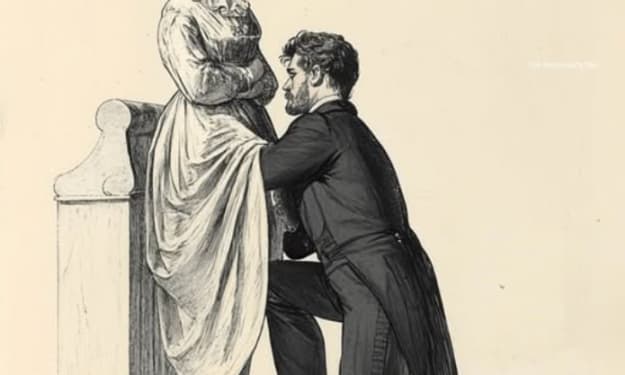
The Evolution of Hysteria A term once so ubiquitous in both medical and societal discourse regarding women, serves as a potent example of the misconceptions and biases that have plagued the history of women's health.
By Rohitha Lanka2 years ago in History
It took 73 years to find the wreck of the Titanic.. AI-Generated.
Titanic Found After 73 Years: The Untold Story of Discovery The Titanic. Its name conjures images of luxury, tragedy, and mystery. For over seven decades, the "unsinkable" ship lay hidden in the icy depths of the Atlantic. Many tried, but all failed to locate it. What finally led to the discovery of the Titanic's final resting place after so long? The Titanic Disaster and Initial Search Efforts The sinking of the Titanic was a global catastrophe. Initial search efforts faced impossible odds. Let's explore the timeline of events. The Night of the Sinking: A Catastrophic Loss On April 14, 1912, the Titanic struck an iceberg. Around 2,200 passengers and crew were aboard. Sadly, there were only enough lifeboats for about half. Over 1,500 people perished in the frigid waters. It remains one of history's deadliest maritime disasters. Early Search Attempts: Obstacles and Failures In the early 20th century, finding the Titanic was like searching for a needle in a haystack. Technology was limited. The search area was vast. Precise coordinates of the wreck were not available. These factors made early attempts futile. Shifting Focus: Technological Advancements and New Motivations As time passed, new technologies emerged. Interest in the Titanic never faded. These factors played a significant role in renewing the search. The Rise of Sonar and Deep-Sea Exploration Sonar technology sends sound waves to detect objects underwater. Advances in underwater vehicles allowed for deeper exploration. Mapping techniques became more accurate. These advancements greatly improved search abilities. Renewed Interest: The Titanic Historical Society and Others Organizations like the Titanic Historical Society kept the memory of the disaster alive. Individuals dedicated their time and resources to find the wreck. Their motivation stemmed from a desire to solve the mystery. They also wanted to honor those who perished. The Pivotal Role of Robert Ballard and Jean-Louis Michel Robert Ballard and Jean-Louis Michel were key figures in the successful expedition. Their combined expertise and strategic approach proved crucial. Robert Ballard: A Naval Officer with a Vision Ballard, a U.S. Naval officer, had a passion for underwater exploration. He proposed a secret mission to the Navy: locate two sunken submarines. This mission would also provide cover for his search for the Titanic. A clever plan, right? Jean-Louis Michel and French Collaboration Ballard partnered with Jean-Louis Michel, a French oceanographer. Michel brought the "SAR" sonar system. This device helped scan the ocean floor more effectively. Teamwork makes the dream work. The Discovery: Unveiling the Wreckage In 1985, the team finally found the Titanic. It was a moment of profound historical significance. The First Images: A Glimpse of History The first images of the wreckage were haunting. They showed a ship broken in two. Artifacts lay scattered across the ocean floor. It was a somber reminder of the tragedy. Confirming the Identity: Key Artifacts and Details The team confirmed the wreck was indeed the Titanic. They saw the ship's hull number. Distinct features of the ship remained. Recovered artifacts provided further proof. The Aftermath: Understanding the Wreck and Honoring the Lost The discovery had a lasting impact. It shed new light on the Titanic's story. It also sparked important discussions about preservation. Scientific Analysis and Historical Significance Scientists studied the wreckage. This helped understand the sinking better. The condition of the ship revealed the forces at play. It provided invaluable insight into the disaster. Preservation Efforts and Ethical Considerations There are debates about preserving the wreck site. Some want to leave it undisturbed. Others support retrieving artifacts. Ethical considerations are paramount. After all, it is a maritime grave. Lessons Learned and Future of Deep-Sea Exploration The Titanic discovery offers valuable lessons. It also inspires future underwater exploration. The Importance of Perseverance and Innovation Finding the Titanic required perseverance. It also needed innovative technology. Collaboration was essential. It shows what can be achieved with dedication. The Future of Underwater Exploration Underwater technology continues to advance. We can explore even deeper. New discoveries await us in the deep sea. Who knows what we will find next? Conclusion The discovery of the Titanic after 73 years was a remarkable achievement. It combined technological advancements, unwavering determination, and international collaboration. The story of the Titanic continues to fascinate. It serves as a reminder of human tragedy and the power of exploration. Its legacy endures, urging us to remember those lost and to explore the mysteries that lie beneath the waves.
By Story silver book 2 years ago in History
Camille Monfort
History abounds with mysterious characters whose lives make reality and myth seem interchangeable. Among them is Camille Monfort, one of France's great opera singers whose name is eternally associated with Belém, Brazil's Amazonian city. Legendary for her looks, otherworldly voice, and unconventional life, Camille became the subject of a chilling tale one that speaks of vampirism and immortality.
By Dumpling Pumpkin2 years ago in History
Japan's Greatest Swordsman and the Fight That Killed Him
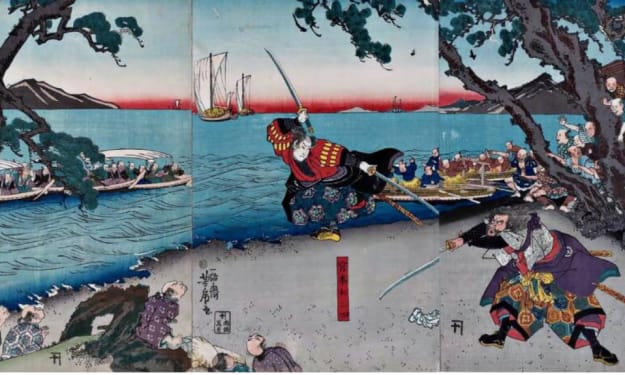
The Epic Rivlry That Helped Define Jananese Martial Arts History Though Japanese history boasts colorful accounts of warriors whose martial prowess and bravery can transcend the ages, few tales are as legendary as that of Sasaki Kojiro.
By Rohitha Lanka2 years ago in History
10 Things You Use Daily That Were Invented for a Completely Different Purpose
10 Things You Use Daily That Were Invented for a Completely Different Purpose Introduction The most iconic inventions often begin as accidents. Take the microwave oven—burn from melted candy in a WWII engineer’s pocket—or Play-Doh, a failed wallpaper cleaner turned childhood staple. These everyday items hide origin stories so bizarre, they feel like plot twists in a sci-fi novel.
By Dinesh Maurya2 years ago in History
The Hola Massacre
Hola Exile Camp was in an arid, mosquito-infested area in the East of the colony near Garissa. By March 1959, it held about 1000 hardcore detainees some of whom had been brought in from Mageta Island where they had participated in a major riot. On March 3rd 1959, 88 of the Hola detainees were marched outdoors for the day’s labour which they refused to do. They politely stated that they were liberation detainees and not prisoners meaning they did not have to work. While this was true in the years prior, the ‘Cowan Plan’ was now in effect empowering the guards to compel them to work if need be.
By HINGES OF TIME2 years ago in History
An Ancient World Through the Eyes of Wonderfully Preserved Mummies
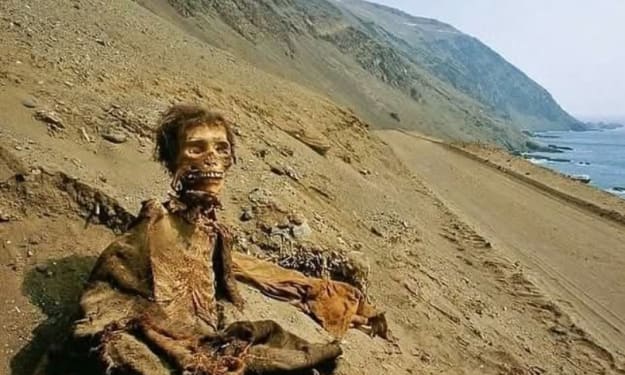
Such stories are usually the work of journalists or scientists working on their own remits. Leave it to Science on the BBC Radio to examine how they came to be by introducing the mysterious Chinchorro mummies of the Atacama Desert.
By Rohitha Lanka2 years ago in History
The Consequences of Black Magic
Black magic, often associated with malevolent supernatural practices, has been a subject of fear, intrigue, and superstition for centuries. Rooted in ancient traditions, folklore, and religious beliefs, black magic is thought to manipulate spiritual or supernatural forces for personal gain, revenge, or harm to others. Despite differing interpretations across cultures, the consequences of engaging in black magic are often portrayed as negative and far-reaching. Whether one believes in its supernatural power or considers it a psychological phenomenon, the effects of black magic can manifest in various ways—emotionally, socially, physically, and even legally. This essay explores the potential consequences of practicing black magic, its impact on individuals and communities, and the dangers associated with it.
By Masaddeque al Shishir2 years ago in History
The Power of Self-Editing: A Writer's Epiphany
What is Self-Editing? At its core, self-editing is the process of revising your own work to improve clarity, coherence, style, and accuracy. Unlike initial drafts that are often raw and filled with imperfections, self-editing is about refining and polishing those ideas. It involves analyzing everything from sentence structure to word choice, pacing, and overall flow.
By Malik Kashif2 years ago in History
Historic Study Finds Signs of Soul Departing Body at Death
New Scientific Discoveries have come up with surprising new evidence that can provide more insight about what happens to us after death. Experts believe that brain activity in the last moments near death has shown that something intangible could leave the body perhaps the 'soul' in the final moments of life. A rare study on the very nature of consciousness and brain waves among dying patients reveals this radical conclusion.
By Rohitha Lanka2 years ago in History
Florida's Elusive Bigfoot and the Mystery Behind its Existence
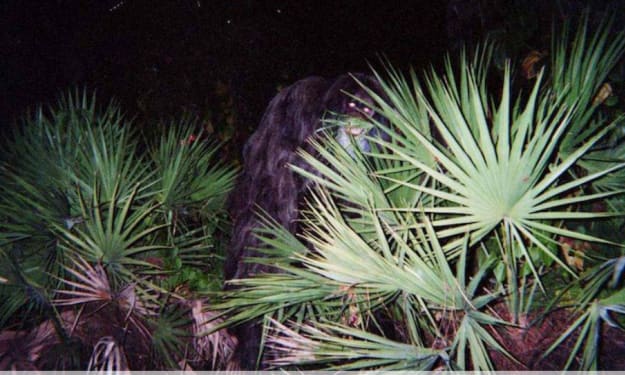
The Skunk Ape is little known but is a creature strange enough to be known as the Bigfoot of Florida, as sightings have been reported for decades. Described as an enormous, hairy beast, standing seven feet tall and tipping the scales at up to 500 pounds, it has captured the imagination of residents and visitors alike.
By Rohitha Lanka2 years ago in History