Research
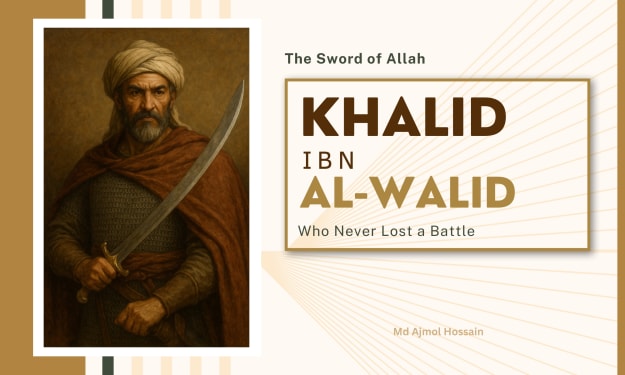
Khalid ibn al-Walid: The Sword of Allah That Never Lost a Battle
Imagine a warrior, so fearless, so effective and so loyal - that even the Prophet Muhammad (peace is on him) gave him the title: "The sword of Allah." The man was Khalid Ibn al-Walid-A Common who fought more than 100 matches and never lost a single. His name echoes through the Arab deserts, the Persian mountains and rivers in Rome.
By Md Ajmol Hossainabout a year ago in History
Nineteen Eighty-Four
1984 (also written as Nineteen Eighty-Four) is a powerful and chilling novel written by George Orwell. It was published in 1949, just after World War II, but it talks about a future world that feels cold, controlling, and scary. This book is not only a story—it’s a warning about what could happen if governments gain too much power and people lose their freedom.
By Muhammad Hayatabout a year ago in History
Temüjin to Genghis Khan: The Rise of a Conqueror and the Making of an Empire
From Temüjin to Genghis Khan: The Rise of an Empire and Conqueror Few historical figures have evoked such reverence and controversy as Genghis Khan. His early life was a crucible of hardship and betrayal; he was born Temüjin around 1162 in the harsh landscapes near the border of Siberia and Mongolia. However, a leader with unmatched ambition and military prowess emerged from these turbulent beginnings and would build the world's largest contiguous empire. Adversity marked Temüjin's path to power. He suffered from poverty, enslavement, and a constant struggle for survival after being orphaned at a young age and having his family leave him. He did, however, emerge from these trials with a strong resolve and a thorough comprehension of the Mongolian plateau's tribal dynamics. Through a series of strategic alliances and military victories, he began to consolidate his authority, and his charisma and unwavering determination gradually attracted a loyal following. In 1206, a pivotal moment occurred. Recognizing his growing influence and military prowess, a council of Mongol tribes declared Temüjin "Genghis Khan," meaning "universal ruler." This marked the beginning of a Mongol nation that had grown from a collection of feuding nomadic tribes into a powerful military power. The traditional clan structures were torn down under Genghis Khan's radical reforms, and he established a meritocratic system that placed loyalty and skill ahead of lineage. The Yassa, his unified legal code, helped to maintain order and stability in his growing state. Genghis Khan turned his gaze outward now that he had secured his base of power. He had a reputation for both brutal efficiency and strategic brilliance during his military campaigns, which were marked by meticulous planning and exceptional cavalry tactics. As they swept across Asia, the Mongol armies, known for their speed, discipline, and horsemanship, left an indelible mark on the world. The Mongols conquered a significant portion of China in the early 13th century, including the formidable Jin Dynasty. They clashed with the Khwarazmian Empire in Central Asia as a result of their westward expansion, launching devastating campaigns that extended into Persia. Instilling fear and reshaping the political map, Mongol armies under Genghis Khan's command or those of capable generals like Jebe and Subutai pushed as far west as the edges of Europe. Even though the Mongol conquests were frequently accompanied by a great deal of destruction and death, they also accidentally sparked a time of unprecedented interconnectedness throughout Eurasia. Following their initial conquests, the Pax Mongolica, or "Mongol Peace," facilitated trade and cultural exchange along the Silk Road, establishing new and significant connections between East and West. The vast empire was filled with ideas, technologies, and artistic influences that contributed to a time of relative stability and prosperity in many places. In 1227, Genghis Khan was killed while fighting the Western Xia dynasty. The fact that the location of his final resting place is kept a closely guarded secret is evidence of the enduring mystery surrounding his life. He left behind an enormous empire and a legacy that is still up for debate and interpretation. Genghis Khan continues to be an undeniable force in the history of the world, despite being remembered in some regions as a vicious barbarian and in others as a national hero who brought people together. A testament to his extraordinary leadership, military acumen, and unwavering vision, he rose from humble beginnings to become the founder of one of history's largest empires. His impact, which was both destructive and transformative, changed the course of civilizations and has stayed with us today.
By Tafsirul Talukdar luvdoabout a year ago in History
The Woman in the Darkness: The Haunting Story of Blanche Monnier. Content Warning.
A Whisper from the Shadows In the heart of 19th-century France, amid cobbled streets and aristocratic elegance, a secret festered behind shuttered windows and thick stone walls. A secret so harrowing, so drenched in silence, that the very air around it seemed to throb with mystery. This is not a tale born from gothic fiction, though it reads like one. This is a true story.
By The Secret History Of The Worldabout a year ago in History
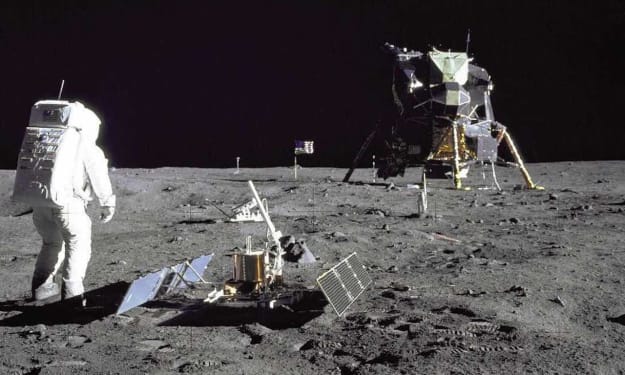
Apollo 11: The Mission That Almost Crashed the Moon Party (And the Wild Details They Never Taught You)
July 20, 1969: 650 million people watched a man step onto the moon, while 400,000 others held their breath, praying a computer glitch wouldn’t kill him live on TV. This is the story of how duct tape, a stolen sandwich, and a 26-year-old saved humanity’s greatest adventure… and why we’re still obsessed 55 years later.
By ChronoCuratorabout a year ago in History
Illuminated Gleam
Hinata was describing the inside of the to everyone. ... There was a couple in the city of Tofko. The girl worked in microbiology and the boy worked in the army. The girl's name was Hinata and the boy's name was Alex. Everything was going on normally. One day, the news came on TV that a meteorite had fallen at the end of the city of Tofko. From where an intense light was coming out. Scientists named the place "Illuminated Gleam". They started their research. All the people were evacuated from the area. The army was given a mission. At first, everyone treated it normally. One day, a group went there. After 1 week, 2 weeks, became one month, but they did not return. After entering there, no contact could be made with them. Another search team went to find the previous group. They also did not return. After that, people started to fear that place. Some people tried to show courage and some people entered the place with self-confidence. But they never came back. One day, Hinata's husband went inside that place. Basically, those who have nothing to lose, no life, go there. Hinata's husband also goes there like everyone else and never comes back. Hinata started missing her husband a lot. Today, Alex has not come home for about 11 months. During this time, Hinata fell in love with one of her colleagues. Then she realized that she was cheating on her husband. Later, she got out of that relationship. After about 1 month, that is, after a long year, Alex came home. Hinata was very happy and hugged Alex and cried, but Alex did not react and did not say anything. Then many people from the army came and took Alex and Hinata away. When Hinata regained consciousness and saw that there was a doctor in front of her. When she asked about her husband, the doctor asked her about Alex. Then Hinata said that Alex had not spoken to her even once since he came home. Then the doctor took her to Alex. He sees that even with all this modern treatment, Alex cannot be cured. Later, the doctor tells him everything. The doctor says that only those who have no hope of life go there. Later, Hinata realizes that Alex knew about her relationship. That's why she was there in anger and pain. Feeling guilty, Hinata decides to go there too. The doctor and 3 girls go with her. Hinata asked doctor why are you going? Then the doctor says that she had cancer. Then everyone leaves. After they enter that place, everything goes dark for them. Suddenly, their senses return. They realize that they have been here for almost 3 days. The surprising thing is that they were in the tent there. They leave all this and go to the place where the meteorite fell. On the road, they are very surprised. Because everything there is genetically changed. When they go further, a crocodile attacks them. But the crocodile could fly and the crocodile's teeth were like sharks. Since Hinata was working on microbiology, she could understand that the crocodile had been mixed with bird and shark DNA. One girl died in the crocodile attack. The others killed the crocodile with great difficulty. They continued to move forward. When they got closer to the sea, they were even more surprised because the trees near the sea had turned into water crytals. When they went further, they saw that instead of deer horns, there were tree branches. They could understand anything normal here. Because the DNA of any plant cannot be changed with animals. They also saw that the flowers of one tree were the flowers of another tree. They got scared. Suddenly, a bear came and ate another girl from their team. Then they could not believe what they saw. They saw that the bear could talk like the girl. They quickly ran away. After going some distance, they saw that their DNA was also changing. A little further ahead, they saw many trees shaped like humans. They realized that almost all those who came here had become trees. Except for the doctor and Hinata, the other 1 girl also turned into a tree in front of them. Then the doctor told Hinata to find a way out and she went to the meteorite. Hinata also followed him. After she went there, she found a camera. After turning on the camera video, she couldn't believe what she saw. Hinata saw her husband turned into a tree in the video. So who is the person from the outside world? She entered the meteorite with a thousand questions in her mind. She saw a hole was pulling her towards him and the doctor going to the hole. She held herself back with great difficulty. But1 drop of blood from her body went into that hole. And from there, a clone of Hinata came out. That clone did the same thing as Hinata. Later, Hinata gave a bomb to the clone and moved away. Later, the bomb exploded and the meteorite along with the clone was destroyed and with it, the effect of this also healed.So,Alex get healthy too. Later, Hinata came to earth and told everyone everything. Finally, she went to her husband and said, "Are you really Alex?" and hugged him.
By Crystal Light about a year ago in History
Three myths in one perfume
“What do you wear to bed? Why, Chanel N° 5, of course.” This iconic phrase, spoken by Marilyn Monroe during a 1952 interview, has forever linked the famous actress to the world’s most famous perfume: Chanel N° 5. Instantly, every time we think of this fragrance, Marilyn’s image comes to mind. Monroe is not only one of the most celebrated women in film history but also the person who, indirectly, helped make this perfume an eternal icon. Her simple response, which seemed almost like a lighthearted joke, had an impact that transcended time, connecting her figure to that of Coco Chanel and her famous perfume, creating a bond that would last for decades.
By Halina Piekarska (UltraBeauty Blog)about a year ago in History
What hapening between Pelestain and Isreal.. Content Warning. AI-Generated.
Conflicts involving historical grievances, competing claims to land, and a series of wars and uprisings are just a few of the many facets that make up the conflict that exists between Israel and Palestine. In order to comprehend this complicated circumstance, one must investigate its beginnings and follow its development over time. The rise of Zionism, a movement for the establishment of a Jewish homeland in Palestine, the historical and ancestral homeland of the Jewish people, occurred in the late 19th and early 20th centuries. Arab nationalism developed simultaneously within the Ottoman Empire, which at the time ruled Palestine. Tensions with the Palestinian Arab population began to rise as Jewish immigration to Palestine increased. Under a mandate from the League of Nations, Britain took control of Palestine following World War I and the fall of the Ottoman Empire. Arab hostility and conflict escalated as a result of Britain's support for "the establishment in Palestine of a national home for the Jewish people" in the Balfour Declaration of 1917. During the British Mandate, the conflict between Jews and Arabs escalated. In 1937, the Peel Commission made the idea of dividing Palestine into separate Arab and Jewish states, which Arab leaders rejected. The demand for a Jewish state increased as World War II loomed and the plight of European Jews became increasingly dire. Resolution 181, which called for the division of Palestine into an Arab state and a Jewish state with international control over Jerusalem, was approved by the United Nations General Assembly in 1947. The plan was accepted by Jewish leaders, but Arab leaders rejected it, which led to the Arab-Israeli War in 1948. The Nakba (catastrophe) occurred when hundreds of thousands of Palestinians were forced to flee their homes after Israel won the war in 1948. On a significant portion of the former mandate territory, the war also resulted in the establishment of the State of Israel. The Six-Day War of 1967, which saw Israel occupy the West Bank, Gaza Strip, East Jerusalem, and the Golan Heights, was one of many subsequent conflicts. The establishment of Israeli settlements and the ongoing occupation of these areas have remained significant points of contention. A complex web of political, social, and economic factors characterizes the Israeli-Palestinian conflict. The conflict has been centered on issues like the status of Jerusalem, the right of Palestinian refugees to return home, security concerns, and the creation of a viable Palestinian state. Over the years, a lot of peace talks have been tried, but nothing has worked out that will last. Both Israelis and Palestinians have experienced cycles of violence, displacement, and a profound sense of injustice as a result of the conflict, which has had a significant impact on their lives. This long and complicated history continues in the current situation in Israel and Palestine. The ongoing humanitarian crisis in Gaza and the recent escalation of violence highlight the pressing requirement for a peaceful and just resolution that addresses the legitimate aspirations and security concerns of both peoples. It is essential to comprehend the historical context in order to comprehend the current difficulties and work toward a future of peace and coexistence in the region.
By Tafsirul Talukdar luvdoabout a year ago in History
Trends and Issues in Nursing
The advancements in healthcare, societal shifts, and challenges facing the world all have an impact on the profession of nursing, which is dynamic and constantly changing. The following are some important current nursing issues and trends: 1. Problems with the Workforce and Nursing Shortage There is a worldwide shortage of nurses as a result of retirements, burnout, and a lack of new graduates. Patient-to-nurse ratios that are too high cause stress and lower the quality of care. Better working conditions, incentives for retention, and increased funding for nursing education are the solutions. 2. Problems with mental health and burnout After the pandemic, many nurses experience compassion fatigue, post-traumatic stress disorder, and emotional exhaustion. Stress in the workplace as a result of long shifts, a lack of staff, and high patient acuity. Support for mental health, training in resilience, and improved policies regarding work-life balance are the solutions. 3. Nursing Technological Developments Predictive analytics for patient care and chatbots for triage are examples of AI and machine learning. Telehealth expansion includes virtual nursing and remote patient monitoring. Electronic health records, or EHRs, can simplify documentation, but they can also lead to "click fatigue." 4. Nursing's DEI (diversity, equity, and inclusion) Diversity in leadership roles is lacking. Training in cultural competency to enhance diverse population patient care. addressing minority nurses' discrimination. 5. Range of Practice and Nurse Independence Advocacy for NPs to practice independently in some states (in the United States) known as Full Practice Authority (FPA). Restrictions imposed by regulations and opposition from physician groups are barriers. 6. Management of Chronic Diseases and an Aging Population There are more elderly patients who require specialized care. An increase in chronic diseases requiring long-term nursing interventions (such as diabetes and heart disease). 7. Nursing Education & Faculty Shortage There aren't enough nurses teaching the program, so there aren't many seats. Move toward simulation training and education that is based on competencies. 8. Safety and Violence in the Workplace Patients and visitors are increasingly attacking nurses. Training in security and de-escalation needs to be improved. 9. International Nursing and Globalization Migration of nurses from developing to developed nations, causing brain drain need for uniform licensing (such as the NCLEX for international nurses). 10. Nursing and Public Health and Climate Change The role of nurses in responding to disasters (natural disasters, pandemics). promoting methods of healthcare that are long-lasting.
By Nurul Huda about a year ago in History
Lalbagh Fort
Lalbagh Fort or Fort Aurangabad, an incomplete Mughal palace fortress at Dhaka on the river Buriganga in the southwestern part of the old city. The river now flows quite a ways from the fort because it has moved further south. D'Oily's painting (1809-11) shows that more than half of this east-west oblong fortress touched the water of the river on its south and southwestern sides.
By Md. Mohorom Aliabout a year ago in History
Synology tightens restrictions devices
Synology that the company is preparing to implement new restrictions on third-party hard drives in its upcoming network-attached storage (NAS) devices later this year. As a result of the changes, it might be much more difficult to use third-party drives in Synology devices for common applications like backing up computers at home or serving as local media servers. The good news is that the change won't affect you if you already own a Synology NAS, according to the company. "Starting with Plus Series models released in 2025, Synology brand and that the company has certified to meet its specifications.
By Md. Mohorom Aliabout a year ago in History
The Mysteries of the Bermuda Triangle: Fact, Fiction, and Fascination. AI-Generated.
The Bermuda Triangle, also referred to as the Devil's Triangle, is one of the most fascinating and enigmatic places on Earth. Spanning a loosely defined area in the Atlantic Ocean between Bermuda, Florida, and Puerto Rico, it has captivated the imagination of adventurers, scientists, and conspiracy theorists alike. Stories of mysterious disappearances, strange phenomena, and legends have built an aura of intrigue around this triangular stretch of ocean. While the Bermuda Triangle's reputation is partially based on myths, it continues to inspire curiosity and debate.
By Noob Hackerabout a year ago in History