Places
What Happened to American Soldiers After the End of World War II. AI-Generated.
What Happened to American Soldiers After the End of World War II When World War II ended in 1945, millions of American soldiers, sailors, and airmen were scattered across Europe, the Pacific, and other parts of the world. Bringing them home and transitioning them back into civilian life was a massive challenge for the U.S. government. Yet, the process of demobilization, although complex and sometimes frustrating, is remembered largely as a great success. It changed countless lives and shaped the postwar world.
By Adnan Rasheedabout a year ago in History
The Deadly Legacy of German U-Boats From World War I to World War II
The Deadly Legacy of German U-Boats From World War I to World War II The First World War marked the beginning of a new era in naval warfare. Traditional battleships and fleets still played crucial roles but lurking beneath the waves was a new and terrifying threat the German U-boat. Short for Unterseeboot meaning undersea boat these submarines wreaked havoc on Allied shipping lines and changed maritime conflict forever. By the end of World War I the numbers told a chilling story. A total of 274 German U boats were responsible for sinking 6,394 merchant ships and approximately a hundred warships. This was not just a disruption of military logistics it was an assault on civilian supply chains crucial for sustaining Britain and its allies. Food arms fuel everything needed to sustain a war effort and civilian life was at constant risk. The U-boat campaign pushed Britain to the brink of starvation and remains one of the key examples of the effectiveness of unrestricted submarine warfare. However despite their success Germany's U-boat campaign in the First World War ultimately failed to secure victory. The Allies countered with convoy systems improved anti submarine tactics and technological innovations like sonar limiting the submarines' effectiveness in the later stages of the war. Still the psychological and strategic lessons were clear submarines had the power to tilt the scales of war.
By Adnan Rasheedabout a year ago in History
Orion Comes Alive: NASA Capsule Throws Off Its Cover in Major Test. AI-Generated.
Orion Comes Alive: NASA Capsule Throws Off Its Cover in Major Test NASA has achieved a major breakthrough in its ambitious Artemis program with a successful and critical test of the Orion spacecraft's forward bay cover (FBC) separation system. This achievement marks an essential milestone toward the goal of returning humans to the Moon, and eventually venturing further into deep space, including Mars.
By Adnan Rasheedabout a year ago in History
Biography of Aubert Einstein the greatest scientist ever
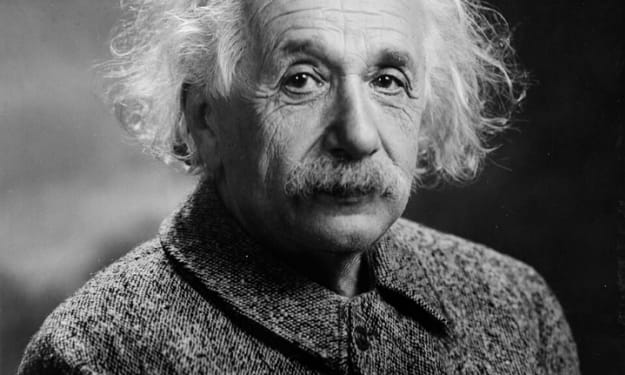
Albert Einstein (14 March 1879 – 18 April 1955) was a German-born theoretical physicist who is best known for developing the theory of relativity. Einstein also made important contributions to quantum mechanics. His mass–energy equivalence formula E = mc2, which arises from special relativity, has been called "the world's most famous equation". He received the 1921 Nobel Prize in Physics for his services to theoretical physics, and especially for his discovery of the law of the photoelectric effect.
By Favour Nyimbiliabout a year ago in History
Artificial Intelligence Solves One of Archaeology’s Greatest Puzzles.
Artificial Intelligence Solves One of Archaeology’s Greatest Puzzles. For centuries archaeology has been a discipline built on patience careful excavation and painstaking analysis. Every shard of pottery ancient inscription and ruined structure tells a story but understanding these fragments often requires years if not decades of study. Today however a new player has entered the field Artificial Intelligence (AI). In a groundbreaking development AI has recently helped solve one of archaeology’s greatest puzzles revolutionizing the way we uncover humanity’s ancient past. One of the most elusive challenges in archaeology has been the deciphering of ancient scripts. Languages like Egyptian hieroglyphs were famously decoded with the help of the Rosetta Stone but many others such as Linear A the Indus Valley script and early Mesoamerican glyphs have remained stubbornly mysterious. Traditional methods of decipherment often rely on finding bilingual inscriptions or large amounts of contextual material luxuries that are not always available.
By Adnan Rasheedabout a year ago in History
El Dorado: The Golden Legend — Chasing the Myth Across History
El Dorado: The Gilded Legend Historical Context and the Potential Reality Behind the Myth Few legends have captivated human fascination as intensely as the narrative of El Dorado, the legendary cityor individualof gold. For centuries, explorers, adventurers, and visionaries jeopardized everything to seek it, venturing into the perilous jungles of South America. Although no one ever conclusively discovered El Dorado, the myth has profoundly influenced history, geography, and culture. But was there ever any veracity to the legend? Could El Dorado have existed in some capacity? This article investigates the inception, transformation, and plausible reality behind one of history's most renowned legends. The Inception of the Legend The story of El Dorado originated in the early 16th century when Spanish explorers reached South America. They encountered murmurs among indigenous populations regarding a monarch who adorned himself in gold dust and subsequently washed it off in a sacred lake as part of a ceremonial rite. This golden figure, El Hombre Dorado ("The Gilded Man"), was said to govern a realm abundant with unimaginable wealth. The legend was first documented when conquistadors learned of a tribe known as the Muisca, who inhabited the highlands of present-day Colombia. The Muisca performed a ceremony at Lake Guatavita, where a new chief would be embellished with gold dust and plunge into the waters as a tribute to their deities, while treasures of gold and precious gems were cast into the lake. Over time, the notion of the ritual evolved from a singular ceremony to the idea of an entire city of gold, and eventually, a vast empire of gold concealed somewhere deep within the uncharted jungles. The Era of Exploration and Fixation The allure of vast wealth ignited a period of frantic exploration. Countless expeditions, motivated by greed and aspirations for glory, embarked into the expansive unknown territories of South America. Francisco de Orellana was among the initial Europeans to navigate the Amazon River in 1541, partly motivated by the ambition of discovering El Dorado. Gonzalo Pizarro, brother of the notorious conqueror Francisco Pizarro, also led disastrous ventures in pursuit of the golden city. Other explorers, such as Sir Walter Raleigh in the late 1500s, carried the obsession into the English-speaking realm. Raleigh set out on voyages to the Orinoco River (in present-day Venezuela), convinced that El Dorado resided somewhere along its path. He even disseminated embellished accounts of the riches he allegedly glimpsed, fueling additional expeditions. The quest for El Dorado claimed countless lives, exhausted treasuries, and devastated indigenous cultures, all without a single shred of evidence. Yet the legend endured, becoming progressively more intricate and richer with each succeeding generation. Lake Guatavita and the Spark of Reality One of the most alluring hints regarding El Dorado's existence was Lake Guatavita itself. In the late 16th century, the Spanish endeavored to drain the lake to retrieve the treasures from its depths. They managed to lower the water level slightly and retrieved some gold artifacts, but the endeavor was largely futile. Subsequently, in the early 20th century, another initiative was undertaken utilizing contemporary technology, which once more produced a limited number of exquisite gold artifacts but significantly failed to substantiate the existence of a golden empire. These discoveries implied that while the Muisca ritual was authentic, it entailed offerings from an affluent society rather than the reality of a city entirely composed of gold. Reality or Pure Fallacy? Currently, historians predominantly concur that El Dorado as a literal city of gold never materialized. Nonetheless, the likelihood that it was inspired by genuine and affluent indigenous culturessuch as the Muiscapersists strongly. The Muisca civilization possessed advanced metallurgy techniques and created complex gold items, including tunjos (small votive offerings), adornments, and religious relics. Other civilizations, like the Inca Empire to the south, also accumulated remarkable wealth that was exploited by the Spanish. Thus, while the notion of a city wholly constructed of gold was a myth, the existence of opulent, advanced civilizations in pre-Columbian South America was indeed factual. In various interpretations, El Dorado embodies a fusion of numerous stories, aspirations, and misconceptions that European explorers projected onto the New Worldan "golden" land abundant in wealth and marvel. El Dorado in Contemporary Culture The tale of El Dorado endures in the present day, celebrated in literature, cinema, video games, and even popular music. It signifies not only affluence but the persistent human yearning for exploration, adventure, and the chase of the unattainable. In Colombia, Lake Guatavita is a safeguarded heritage site, and a replica of the renowned "Muisca raft" (a golden representation of the ritual) can be viewed at the Gold Museum (Museo del Oro) in Bogotá. Simultaneously, the concept of lost cities and concealed treasures continues to motivate modern explorers and archaeologists, some of whom have uncovered genuine "lost cities" in the Amazon rainforest, constructed by ancient civilizations previously deemed impossible. Conclusion El Dorado may not have constituted the golden city of lore, but it embodies a deeper truth about human nature: our everlasting craving for discovery, wealth, and significance. It also serves as a reminder of the cultural treasures that existed long before European engagement, and the intricate, advanced societies that resided across the Americas. Ultimately, El Dorado was never merely a locationit was a vision. And in numerous ways, that vision continues to radiate vibrantly in our collective imagination.
By Say the truth about a year ago in History
900 Year Old Crusader Sword Discovered Off Israel’s Coast A Glimpse Into the Medieval Past
900 Year Old Crusader Sword Discovered Off Israel’s Coast A Glimpse Into the Medieval Past In October 2021 an extraordinary archaeological discovery was made off the northern coast of Israel a 900 year old Crusader sword lying on the seabed encrusted with marine life and remarkably well preserved after centuries underwater. This iron sword measuring just under four feet in length is believed to have belonged to a Crusader knight who was journeying to the Holy Land around 1100 AD during the early years of the Crusades. The find has captivated historians and the public alike offering a tangible link to a pivotal era in medieval history. The sword was found by Shlomi Katzin a recreational diver from the town of Atlit. While exploring a popular diving site near Haifa he came across ancient stone and metal anchors pottery fragments, and finally a sword covered in marine organisms. Understanding the significance of the object and the risk of it being buried again by sand or taken by looters Katzin retrieved the artifact and immediately contacted Israel's Antiquities Authority (IAA). Upon examination the IAA confirmed the sword to be approximately 900 years old. It was discovered in a natural anchorage used by ships since ancient times. The site had been monitored by the IAA due to its archaeological richness but the sword had only recently become visible due to shifting sands.
By Adnan Rasheedabout a year ago in History