Places
The Dragon's Ascent
China's rapid rise has greatly shaped the twenty-first century. Once a country plagued by widespread poverty only decades ago, it has developed into a worldwide economic, technological, and geopolitical powerhouse. Apart from notable achievements, major internal strife, and far-reaching international effects, this multifarious event has produced unmatched economic development and a reaffirmation of its world status. Understanding this change, which goes beyond simple stories of uncritical adoration or total condemnation, calls for a fair and thorough viewpoint.
By Anish Bhattacharyyaabout a year ago in History
India and Pakistan Escalate Military Attacks on Bases Amid Rising Tensions
In a significant escalation of hostilities, India and Pakistan have launched reciprocal attacks on each other's military bases, marking one of the most severe confrontations between the nuclear-armed neighbors in recent years.
By Abjol Hussain Laskarabout a year ago in History
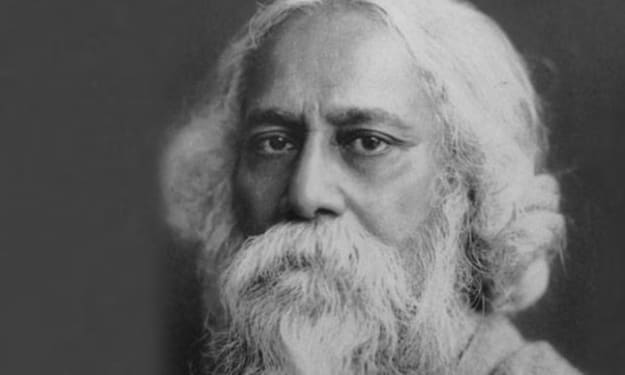
Rabindranath Tagore Jayanti 2025: 25+ Wishes, Messages, and Inspirational Quotes to Share
On May 9, 2025, we commemorate the 164th birth anniversary of Rabindranath Tagore—India’s Nobel laureate poet, philosopher, and cultural icon. Known as Gurudev, Kabiguru, and the Bard of Bengal, Tagore’s legacy transcends literature, music, and art, leaving an indelible mark on the world. His timeless words continue to inspire generations, making Rabindra Jayanti a day of reflection and celebration.
By Abjol Hussain Laskarabout a year ago in History
Delhi Traffic Advisory: Vehicle Restrictions and Alternate Routes Announced Amid Saket Bar Council Elections
The Delhi Traffic Police have issued a comprehensive traffic advisory in light of the ongoing Bar Council elections at the Saket Court Complex. The elections, scheduled from 8:00 AM to 8:00 PM on May 9, 2025, are expected to cause significant traffic congestion in the surrounding areas. To ensure smooth vehicular movement and minimize inconvenience to commuters, specific restrictions and alternative routes have been outlined.
By Abjol Hussain Laskarabout a year ago in History
The Byzantine Queen Who Changed Viking History Forever
Prologue: A Marriage Proposal So Wild It Actually Worked The year is 988 AD. In the golden halls of Constantinople, Emperor Basil II—the Byzantine ruler who made his enemies beg for mercy by literally blinding them—is staring at an envoy from Kievan Rus’ like he’s just been handed a ransom note written in crayon.
By The Buried Bookshelfabout a year ago in History
The Mongol Postal Service: How Genghis Khan Invented the Internet (But With Horses)
Part I: A Mongol Messenger Outruns Your Wi-Fi It’s 1220 AD, and somewhere on the vast Mongolian steppe, a lone rider is galloping at breakneck speed, his horse’s hooves kicking up dust like a toddler throwing a tantrum in a sandbox. Strapped to his back? A sack of letters and the entire future of communication.
By The Buried Bookshelfabout a year ago in History
visited a hostorical place in Taj Mahal
**A Visit to the Taj Mahal** Visiting the Taj Mahal was a dream come true. As one of the most iconic historical monuments in the world, the Taj Mahal stands as a symbol of love, beauty, and architectural brilliance. Located in Agra, India, this magnificent white marble mausoleum attracts millions of tourists every year. I had read about it in history books and seen countless photographs, but nothing could compare to the awe of seeing it in person.
By matuyagarga mandalabout a year ago in History
Cosmic Catastrophe Captured: NASA Reveals Breathtaking Image of Black Hole Swallowing a Star 600 Million Light-Years Away
NASA Uncovers Black Hole That Consumed a Star 600 Million Light-Years In The Past – Breathtaking Image Revealed NASA Unveils Breathtaking Image of a Black Hole That Devoured a Star 600 Million Light-Years Distant
By Ehsan Tanvirabout a year ago in History
Retro Jeans | From Workwear to Cultural Icon.
The Story Behind the Fabric That Never Fades. A Stitched Legacy: The Birth of Denim The story of jeans began in 1873 when Levi Strauss, a Bavarian immigrant in San Francisco, partnered with tailor Jacob Davis to patent a new kind of durable pants made from denim fabric, reinforced with copper rivets. These were designed specifically for miners and workers during the California Gold Rush.
By Sayed Zewayedabout a year ago in History
1945: The Syrian Crisis That Nearly Sparked War Between Britain and France
I. The Decline of French Colonial Power World War II inflicted a severe blow to French colonial authority. After decades of expanding its empire, France faced a humiliating defeat by Nazi Germany in 1940, leading to the establishment of the Vichy regime. Although Free French forces, led by Charles de Gaulle, continued to fight alongside the Allies, France's global influence was significantly diminished. In the Levant, France maintained control over Syria and Lebanon under a League of Nations mandate established after World War I. Despite earlier promises of independence, France was reluctant to relinquish its hold on these territories. This resistance to decolonization set the stage for the 1945 crisis. --- II. Rising Nationalism and Tensions in the Levant As World War II drew to a close, nationalist sentiments surged across the Middle East. In Syria and Lebanon, demands for independence intensified. The presence of French troops and administrators became increasingly unpopular, leading to widespread protests and civil unrest. In May 1945, demonstrations erupted in Damascus and other Syrian cities. These protests were met with violent suppression by French forces, resulting in numerous casualties. The situation escalated rapidly, with reports of French troops firing on civilians and using heavy artillery against populated areas. --- III. The French Military Response On May 29, 1945, French forces launched a brutal assault on Damascus. They shelled the city, targeting government buildings and residential neighborhoods. The Syrian parliament was bombarded, and attempts were made to arrest President Shukri al-Quwatli, who narrowly escaped. The French also cut off electricity and communication lines, effectively isolating the city. The French military actions resulted in significant destruction and loss of life. Estimates suggest that hundreds of Syrians were killed, and many more were injured. The use of Senegalese colonial troops by the French further inflamed tensions, as these forces were accused of committing atrocities against civilians. --- IV. British Intervention and the Brink of War The British government, under Prime Minister Winston Churchill, was alarmed by the French actions in Syria. Concerned about regional stability and its own interests in the Middle East, Britain decided to intervene. Churchill authorized General Bernard Paget to deploy British forces from Transjordan into Syria to halt the French offensive. On May 31, 1945, British troops entered Damascus and confronted the French forces. They demanded an immediate ceasefire and the withdrawal of French troops to their barracks. The British intervention effectively ended the French assault and prevented further bloodshed. The crisis brought Britain and France to the brink of war. Diplomatic relations between the two nations were severely strained, with accusations and recriminations exchanged. However, the British action was widely supported by the international community, which viewed the French response as excessive and unjustified. --- V. The Path to Syrian Independence Following the crisis, international pressure mounted on France to relinquish its control over Syria and Lebanon. The newly formed United Nations and the Arab League both advocated for the independence of the Levantine states. Facing isolation and condemnation, France agreed to negotiate a withdrawal. By April 1946, the last French troops had left Syria, marking the end of the French mandate. Syria declared its independence on April 17, 1946, and was subsequently recognized by the international community. Lebanon also achieved full independence during this period. --- VI. Legacy and Historical Significance The 1945 Syrian crisis highlighted the declining power of European colonial empires and the rise of nationalist movements in the post-war era. It underscored the importance of international diplomacy and the role of emerging global institutions in resolving conflicts. The events also strained Franco-British relations and influenced future decolonization efforts across the Middle East and beyond. The crisis serves as a reminder of the complexities of colonial legacies and the struggles faced by nations seeking self-determination. It remains a pivotal moment in Syrian history and a significant episode in the broader narrative of decolonization. --- Written by: Ikram Ullah
By Ikram Ullahabout a year ago in History