Places
The Original Owners of South Africa: Are the Boers Aboriginal South Africans?
The Boers, also known as Afrikaners, are one of the white ethnic groups in South Africa and Namibia. They are mainly Dutch immigrants from the 17th to the 19th century, and are formed by the integration of French and German immigrants. They communicate in Afrikaans, which is also referred to as Afrikaans. Naturally, there are some who do. The key point is that the religious convictions of the Boers are predominantly Protestant, with a minority being Catholic. According to statistics in 2022, the total number of Boers is currently about 3.5 to 4 million.
By Uchenna Cosmas Nwokafor about a year ago in History
Smith Mountain Lake has beauty, folklore, tragedy, a ghost town, and ghost sightings
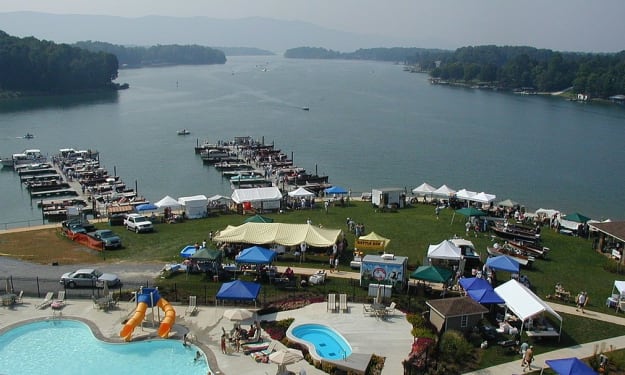
Smith Mountain Lake continues to claim victims Smith Mountain Lake, nestled between Bedford and Franklin Counties in Virginia, is a breathtaking vacation spot. This artificial marvel, born when the Appalachian Power Company acquired the town of Monroe to build a dam, is a sight to behold. The townspeople's relocation led to the submergence of churches and buildings, adding an intriguing layer to the lake's history.
By Cheryl E Prestonabout a year ago in History
The Fisherman. Runner-Up in History Would’ve Burned This Page Challenge.
Un, Deux, Trois, Quatre, Cinq… The Fisherman felt the cold water of the channel still clinging to his catch’s smooth scales. It was healthy, meaty—a good day's catch. His little woven carrying basket sat full when the Fisherman carved his path back to his humble home through the sandy beaches of the Norman shore like he did every day when the sea lay calm.
By Matthew J. Frommabout a year ago in History
Who are the Aborigines of United States and the North America?
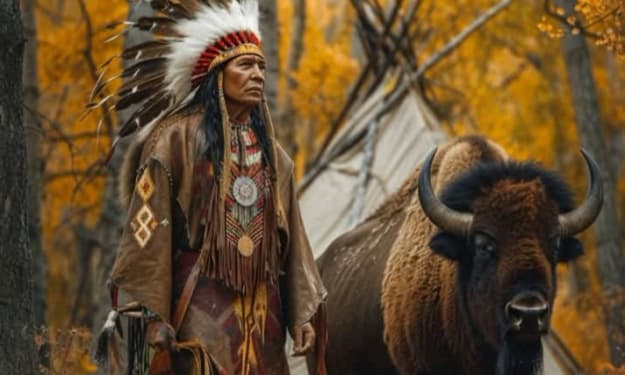
The narrative of the North American continent does not commence with Columbus's discovery of America. An integral and important part of this history are the tribes and peoples who lived here before the arrival of Europeans and long before the emergence of the United States. The relationship between the natives and the representatives of European civilization who settled on the continent was complex, often dramatic, but over time they were humanized. • American Quarter and Native Memory In the United States of America, there used to be a 25-cent coin, but since 1838 it has received a new denomination – the quarter dollar. Like all coins worth more than 10 cents, it was minted from silver until 1964, then from a copper-nickel alloy. But the quarter dollar coins in question are covered with 999-carat gold and are distinguished by the high quality of minting “proof-like”! The series of 50 coins is dedicated to the indigenous people of America – the Indians. • Indians of North America: History… The people who lived on the American continent, whom Columbus and his followers took for the inhabitants of India (which explains the name that stuck to them), are classified by modern science as an Americanoid race. Genetic research indicates that the forebears of the Indigenous peoples of the Americas migrated from Eurasia, most probably from the Altai region, traversing the isthmus that once occupied the area of the Bering Strait. This happened in the Stone Age. For many millennia, the tribes of the true discoverers of America developed the continent. By the time the Europeans arrived here, the various tribes and peoples of America were at different stages of development, but for all of them, the clash with European civilization was tragic: epidemics of unfamiliar diseases, loss of ancestral lands, cruel persecution by the authorities... The American authorities did not immediately admit their mistakes and began to take measures to correct the situation. • Modernity Today, there are about five million Indians in the United States (a little more than one and a half percent of the population) and 565 Indian tribes are officially registered, that is, recognized by the federal authorities. The largest of them are the Cherokee, Navajo, Sioux and Chippewa. However, sociologists note that fewer and fewer Indians speak their native language: according to statistics, four fifths of them speak mainly English even within their families. Two-thirds of Americans of Indian descent have assimilated and lead the same way of life as the rest of their compatriots. This process began a long time ago, as evidenced by the term "five civilized tribes", which appeared in the early 19th century - the Cherokee, Chickasaw, Choctaw, Creek and Seminole had already adopted many of the customs and achievements of their white neighbors. About a third of Indians still prefer to preserve their ancestral way of life whenever possible, and therefore live on reservations. Modern Indian reservations are a kind of protected Indian territory. Suffice it to say that they have almost the same rights as individual states. The government recognizes the rights of these tribes to self-government and self-determination, and supports their sovereignty. Tribal courts and law enforcement agencies operate on reservations, and local authorities have the right to impose taxes. • Interaction of Peoples and Cultures The further we go, the more the cultures of two peoples who have lived side by side for a long time – the descendants of the indigenous inhabitants of the continent and the heirs of the colonizers – interpenetrate. Historically, helicopters by Americans have derived their names from Indian tribes of the ancient past: Sioux, Lakota, Apache. The tactics of helicopter combat use – a sudden attack on the enemy from the flank and a quick disappearance – are similar to those used by Indian warriors. Purely human, friendly and especially family ties also mean a lot. It should be noted that among the ancestors of such famous figures of American culture as Johnny Depp, Quentin Tarantino, Kevin Costner, Cameron Diaz, there were Indians. • Indian Coins All 50 coins in the collection were issued under the auspices of the Mesa Grande Tribe. The Mesa Grande Band of Diegueño Mission Indians is a tribe residing in an area situated in the northern part of San Diego County, roughly 75 miles northeast of San Diego, California. The territory is located at an elevation of 3,500 feet above Black Canyon, on a plateau adjacent to the Cleveland National Forest. The Mesa Grande Tribe is recognized by the U.S. government as a sovereign nation that has the right to issue its own coins. Each coin in the series depicts an Indian from one of the tribes living in each of the fifty states. The depicted characters are shown in traditional costumes or engaged in traditional crafts. • Preserving Traditions An essential element of the traditional Indian costume is a headdress made of feathers. In the United States, a separate federal law is devoted to these feathers. Or rather, not to the feathers themselves, but to the right of Indians to freely practice their religious cults, which require eagle feathers. Since eagle hunting is prohibited in the United States, the law makes an exception for Indians: tribal members can purchase eagle feathers, but they are prohibited from selling or transferring them to non-Indians.
By Uchenna Cosmas Nwokafor about a year ago in History
The Untold Story of Gian Lorenzo Bernini: Baroque Genius, Ruthless Rival, Master Manipulator
In the winter of 1680, Gian Lorenzo Bernini lay in state. The Eternal City mourned the death of its most celebrated artist, the sculptor of angels, the architect of St. Peter’s, the genius who had reshaped the face of Baroque Rome. Princes, cardinals, and crowds of admirers gathered to honor a man history would remember as the shining star of an era. But beneath the marble and myth, other stories lay buried. Pages had been torn out, voices silenced, truths rewritten to fit the comfortable narrative of Bernini as the flawless master. What Rome chose to remember was spectacle. What it chose to forget was rivalry, cruelty, and the calculated power that helped Bernini ascend, while pushing others into the shadows. This is the page they never wanted us to read.
By Strategy Hubabout a year ago in History
35,000 years ago, archaeologists found a highly developed civilisation spread across the Philippine islands.
According to recent studies, the Philippine archipelago was the epicentre of early Southeast Asian human movement. Working with multinational teams, Ateneo de Manila University archaeologists have gathered 15 years of data that has changed the way researchers think about prehistoric tool use, maritime navigation, and cultural interchange in the area.
By Francis Damiabout a year ago in History
The Mystery of Aramu Muru: The Stone Gate to the Gods
A Door in the Rock High in the rugged mountains of southern Peru, where Lake Titicaca kisses the clouds and ancient myths still linger in the wind, there is a doorway carved into solid rock. It leads nowhere, or so it seems. For centuries, legends have claimed it is much more than a dead end. They call it Aramu Muru, the Gate of the Gods.
By The Secret History Of The Worldabout a year ago in History
The Most Charming Mountain Towns in America
The Most Charming Mountain Towns in America: 800 Hidden Gems and Beloved Escapes America's mountain towns are some of the most breathtaking and idyllic getaways in the country. They are tucked away among towering peaks, surrounded by lush forests, and full of small-town charm. These charming locations offer the ideal combination of natural beauty and welcoming communities, whether you're looking for outdoor adventure, cozy cabins, or a tranquil getaway from city life. From the rugged Rockies to the serene Smokies, here are some of the most enchanting mountain towns across the United States that deserve a spot on your travel bucket list.
By parves mosharafabout a year ago in History