Places
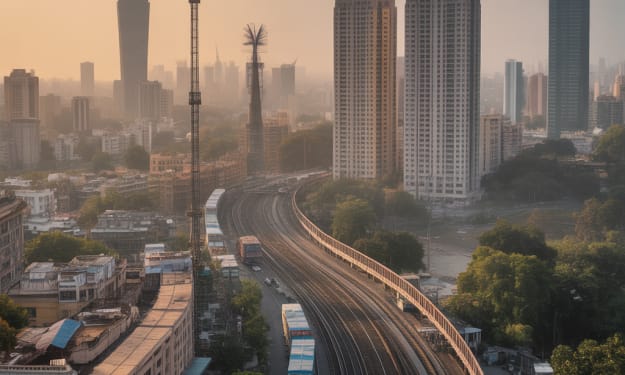
A Day in the Life of a Karachi Commuter
Karachi — the city of lights, chaos, and resilience. For millions, it’s more than a city; it’s a battlefield where every day starts with a challenge, especially for those who commute through its bustling roads. This is the story of a typical commuter in Karachi, told from the eyes of someone who lives it every single day. 6:30 AM – The Wake-Up Call The alarm buzzes. Electricity is out — again. The fan stopped sometime during the night, and the room feels like a pressure cooker. The day begins with the familiar sound of a neighbor starting their generator and a distant vendor shouting “Anda Paratha!” The first task? Filling a water bottle from the underground tank, because the water pressure only lasts till 7 AM. No one complains — this is just how Karachi operates. 7:30 AM – Chasing Buses Standing at the bus stop under a dusty sky, there's no timetable here, only patience. Buses don’t stop unless you run beside them. The conductor shouts, “Sadar, Sadar!” and you jump in — even if there’s no seat. Inside, the bus is a mix of school kids, office workers, and aunties carrying bags full of vegetables. Horns blare, music plays, and somehow everyone finds a way to coexist in this moving chaos. 8:45 AM – Office Time, Barely On Time Reaching work is never guaranteed in Karachi. Traffic jams due to VIP movement, random protests, or even a broken-down Suzuki can cost you an hour. And don’t even ask about the condition of roads after a night of rain. But despite this, people arrive, adjust their shalwar kameez, and get to work — with chai in hand, of course. 1:00 PM – Lunch & Laughter The office isn’t just a workplace, it’s a second home. Lunch is often shared. One brings biryani, another has homemade sabzi, and someone always forgets a spoon. It’s in these moments that laughter flows, and Karachi’s true spirit shines — resilient, humorous, and always hungry. The generator hums in the background again — another power outage. No one flinches. 5:30 PM – The Return Battle Begins As the sun starts to set, Karachi’s roads transform into a massive sea of people rushing to get home. The evening commute is often longer than the morning one. Bus drivers compete like they’re in a Formula 1 race, and rickshaw walas demand double fare because "petrol mehnga ho gaya hai." 7:00 PM – Home, Finally Reaching home isn’t the end — it’s just halftime. There’s shopping to do, tuition for the kids, a light bulb to fix, and dinner to prepare. Loadshedding has returned, and this time it might last longer. Still, the family gathers around a simple meal. Maybe the news is playing in the background, showing some political drama or a cricket match. Children laugh, elders discuss electricity bills, and someone always complains about the water again. Why It Matters This routine may sound exhausting, and it is. But it’s also beautiful in its own way. Karachi’s commuters don’t just survive — they endure with a smile. Despite all odds — poor infrastructure, law and order issues, inflation, and unreliable transport — they continue moving forward. This resilience, this rhythm of daily struggle and subtle joy, is what defines life in Karachi. Every commuter here deserves more — better roads, safer transport, more respect — but what they lack in resources, they make up for in strength. So the next time you see someone stuck in Karachi traffic, know this: they’re not just going somewhere. They’re part of a daily story of determination, survival, and spirit.
By Muhammad Junaid about a year ago in History
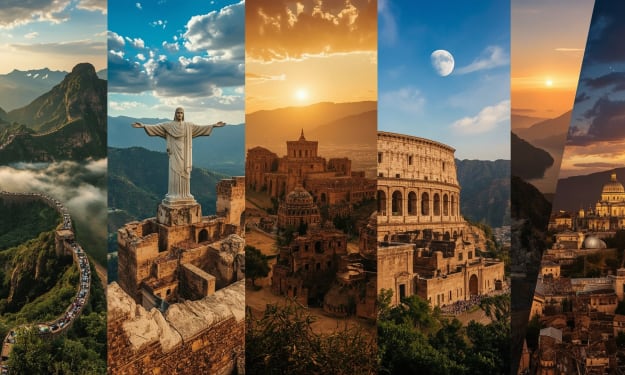
7 Wonders, 1 World: Secrets, Science & Soul of Earth's Greatest Marvels
A World Beyond the Obvious There are places on Earth that don't just exist — they echo. Whispers of ancient brilliance, thunderous feats of engineering, and stories carved in stone, all waiting to be uncovered. From jungles of Peru to deserts of Jordan, humanity has sculpted legacies so grand, they defy time, weather, and logic.
By DRE Explainsabout a year ago in History
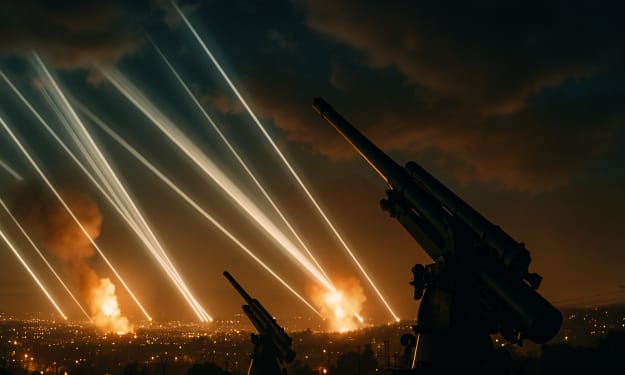
The Middle East: A Tinderbox of Empires, Wars, and Unending Conflict. AI-Generated.
The Middle East: A Tinderbox of Empires, Wars, and Unending Conflict The Middle East has always been more than just a geographical region—it’s a crucible of civilizations, a battleground of empires, and a vortex of geopolitical rivalries that have shaped world history. From the ancient wars of Mesopotamia to the modern-day clashes between Israel and Iran, this land has rarely known lasting peace. Today, as tensions escalate once again, the Middle East stands at the brink of another catastrophic conflict, threatening not just regional stability but global security.
By Muhammad Salman Akbarabout a year ago in History
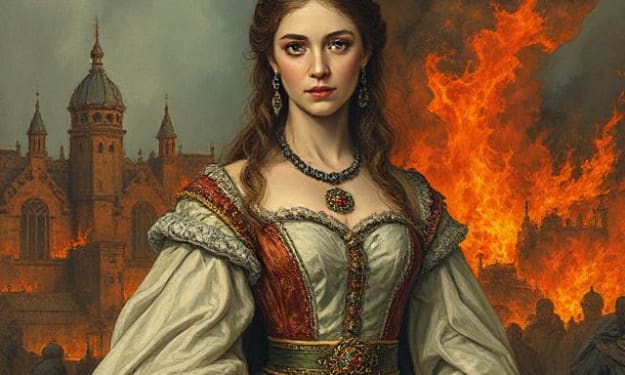
The Queen Who Burned Her City
I. The Fire Beneath the Crown She was not born with fire in her hands—but when the time came, she wielded it like a sword. Boudica, Queen of the Iceni tribe, had long lived in uneasy peace with the mighty Roman Empire. Her husband, King Prasutagus, ruled as a Roman ally in what is now eastern England. The arrangement was simple: they kept their thrones, the Romans got their taxes, and the people of Britannia bent the knee—if not in body, then in silence. But when Prasutagus died, he left behind only daughters, and a will begging Rome to protect his family. Rome answered with iron. --- II. The Breaking of a Queen When Roman officials came to claim the kingdom, they did not take it peacefully. They seized Iceni lands, enslaved nobles, and—by some accounts—publicly flogged Boudica and assaulted her daughters. This was not just conquest. It was humiliation. It was betrayal. And it was war. What the Romans failed to realize was that Boudica was not a queen content to mourn in silence. She was a leader with the voice of a goddess and the rage of a storm. She would not plead. She would burn. --- III. The Gathering Storm Boudica called upon the other British tribes, long weary of Roman taxes, forced labor, and brutality. They came—not for politics, but for vengeance. Under Boudica’s leadership, a massive force rose. Some estimates say as many as 100,000 warriors rallied to her side. She was described as tall, fierce-eyed, and wild-haired. She rode a chariot, her daughters beside her, and carried not just weapons—but the memory of every insult Rome had ever carved into British skin. Their first target: Camulodunum—modern-day Colchester, the Roman capital of Britain. --- IV. Cities in Ashes The assault was swift. The Roman inhabitants of Camulodunum barely had time to flee before Boudica’s forces destroyed the city. Temples, homes, and soldiers fell to the fire and blade. Survivors were few. Then came Londinium—modern-day London. Knowing he could not defend it, the Roman governor Gaius Suetonius Paulinus abandoned the city. Boudica’s army entered and razed it. The same fate came to Verulamium (modern St Albans). The death toll across the three cities is estimated at over 70,000. Roman records speak of horrific slaughter—but one must remember: this was not senseless violence. This was rebellion, long suppressed and now unleashed. Boudica’s war was not just against Rome. It was against an empire built on injustice. --- V. The Final Stand But Rome did not build its empire by folding under pressure. Suetonius regrouped with his legion—about 10,000 well-trained soldiers. Boudica’s force, by then swollen with new recruits and tribes, still outnumbered them at least 10 to 1. They met in an unknown location—possibly Watling Street, in the English Midlands. Despite being outnumbered, the Romans used strategy and terrain to their advantage. In a narrow valley flanked by forests, they could not be surrounded. Roman discipline won over chaos. The Britons were crushed. Tens of thousands died. And Boudica? Some say she drank poison. Others say she disappeared into the forest, never to be seen again. But her legend had already been born. --- VI. Aftermath and Legacy Rome regained control—but never again underestimated the ferocity of Britain’s tribes. The revolt led to changes in Roman policy: fewer taxes, more tolerance, and a cautious respect for the people they ruled. Boudica’s name faded for centuries, buried under Roman records and forgotten kingdoms. But in the Victorian era, she was reborn as a national symbol of resistance. A statue of her now stands near the Houses of Parliament in London—a reminder that even in defeat, the human spirit can rise to challenge empires. She lost the battle. But she won immortality. --- VII. The Lesson in Fire Boudica’s story is not one of simple revenge or nationalism. It’s a story of how trauma becomes revolution, how grief becomes resistance. It's about how the oppressed can rise, even if only briefly, and remind the powerful that they rule not by right, but by fear—and that fear has limits. She was a woman against an empire. A mother turned warrior. And though the flames she lit were eventually extinguished, the smoke of her story still lingers, carried by the wind, whispered through time. She was not the first to rise against tyranny—and she will not be the last
By Soul Draftsabout a year ago in History
The Giants of Peru: Conquistadors' Eyewitness Accounts and the Mystery of Ancient Skeletons
The Giants of Peru When the Spanish conquistadors arrived in South America in the 16th century, they anticipated discovering gold, spices, and strange civilizations. However, they did not expect to encounter legends of giants, and even more surprisingly, reports of actual giant skeletons unearthed by the native people that they claimed to have seen with their own eyes.
By The Secret History Of The Worldabout a year ago in History