Places
"The Man Who Altered History: The Dark Rise That Ignited the Deadliest War
History does not easily forget the names of those who change the course of humanity—sometimes for the better, and sometimes with devastating consequences. Adolf Hitler is a name etched into the darkest pages of the 20th century. His life and actions not only shaped the destiny of Germany but also plunged the entire world into a brutal conflict known as World War II, one of the deadliest wars in human history.
By Kamran khanabout a year ago in History
The Swing Still Hangs in the Garden.
The old garden behind my childhood home is silent now. The grass grows wild, the flowers bloom without anyone appreciating them, and the color of the fence has faded in years of sun and rain. But one thing remains — the swing.
By Echoes of Lifeabout a year ago in History
A Village’s Journey
The village of Noorabad was not on any map that mattered. Tucked deep in the dry belly of the land, it was a place time had forgotten. Cracked earth stretched for miles, the fields barren, the air thick with silence. The villagers had grown used to waiting — waiting for rain, for help, for a miracle.
By Masih Ullahabout a year ago in History
Shadows of Conflict
Introduction The Russia-Ukraine war, which began in earnest in February 2022, is one of the most significant and consequential conflicts in Europe since World War II. It is a complex and deeply rooted struggle involving history, politics, identity, and global power dynamics. What started as a territorial dispute has evolved into a full-scale war with global implications, affecting energy supplies, international security, food chains, and geopolitical alliances.
By NIAZ Muhammadabout a year ago in History
Why No Human Remains Have Ever Been Found Inside the Titanic Wreckage
When the RMS Titanic sank on April 15, 1912, over 1,500 passengers and crew members lost their lives in one of the deadliest maritime disasters in history. Yet, despite the tragedy’s magnitude and the numerous deep sea explorations of the wreck site since its discovery in 1985, not a single intact human body has ever been recovered from inside the Titanic wreckage. Why? It is a question that has long puzzled the public and even some researchers. The answer lies not in mystery or conspiracy but in harsh scientific realities involving the conditions on the ocean floor, natural decomposition processes, and the passage of over a century beneath crushing pressure and darkness. The Titanic lies about 12,500 feet or 3,800 meters below the surface of the North Atlantic Ocean. At this depth, the water temperature hovers just above freezing at around one degree Celsius or 34 degrees Fahrenheit. While cold temperatures slow down decomposition, they do not stop it. More importantly, the seabed at that depth is rich in microorganisms and scavengers that thrive in such extreme environments. These creatures include bacteria, fungi, and small marine animals like crabs and worms which consume organic matter including human flesh and bone. Researchers believe that any human remains that initially settled near or inside the wreck would have been completely consumed within a matter of decades. The rate of decomposition may have been slow but over more than 100 years, no biological material could realistically survive. The Titanic's wreck is also being slowly eaten away by iron-eating bacteria, particularly a species known as Halomonas titanicae, which was discovered on the ship’s hull. These microbes are devouring the metal and forming rusticles that hang like icicles from the ship’s structure. Over time, this has weakened the wreck significantly and has caused many rooms and structures to collapse. This ongoing breakdown has disturbed and buried much of the interior, making the preservation of any remains highly unlikely. Even if bones or items had once been present, they would have likely been crushed, disintegrated, or buried beneath collapsed decks and thick layers of sediment. Most of the people who died in the Titanic disaster perished in the freezing surface waters, not inside the ship itself. Their bodies were exposed to waves, currents, and marine life almost immediately. In the weeks following the disaster, about 300 bodies were recovered from the ocean. These were mainly floating or found in lifeboats. However, the vast majority were never recovered. Over time, any bodies that sank would have been scattered across the ocean floor or decomposed due to exposure, pressure, and marine organisms. Even on the seabed, bodies would not have remained whole. Bones dissolve slowly in saltwater over decades, especially if not protected in sealed, oxygen-free environments. At Titanic’s depth, such preservation is nearly impossible. Though no actual human remains have been found in the wreck, explorers have occasionally discovered haunting clues to where victims may have once rested. In some places, divers have found pairs of shoes still lying side by side on the ocean floor, suggesting that a body once lay there. These artifacts such as boots, belts, luggage, and jewelry serve as silent witnesses to the tragedy. While the organic matter is long gone, these belongings tell the stories of the people who wore or carried them. The Titanic wreck is considered a maritime graveyard and most expeditions treat it with the reverence of a sacred site. There is a strong ethical stance among researchers, explorers, and international law to respect the final resting place of those who perished. This means that even if human remains were somehow discovered in a protected pocket of the wreck, they might not be publicly disclosed or disturbed out of respect for the dead. More than a century after the Titanic vanished beneath the waves, its story still grips the world. But the absence of human remains in the wreckage is not a mystery. It is the result of natural processes, oceanic decay, and time. While the bones of those who died have long returned to the sea, their legacy endures in the ship’s ghostly corridors, in personal relics that remain, and in the lessons learned from one of history’s greatest maritime tragedies. Though the people are gone, the silence of the deep speaks volumes and the Titanic still rests, carrying with it the memories of all those who were lost.
By DigitalAddiabout a year ago in History
The First Step
July 15, 1969 — Cape Kennedy, Florida. Neil sat alone in his quarters, the dim light casting long shadows on the plain white walls. Outside the window, the colossal shape of the Saturn V rocket stood against the night sky like a monument to human ambition. Tomorrow, it would carry him farther than any man had ever gone.
By Salah Uddinabout a year ago in History
SNAFU!
I feel like this is old territory, but that it must be reviewed. I recently discovered a podcast hosted by Ed Helms called “SNAFU”. For those of you who are not familiar with this particular acronym, it means “Situation Normal – All Fucked Up”. I believe that it originated with the military, and yet it seemed perfect for the modern civilian age. And then I listened to the very first episode.
By Kendall Defoe about a year ago in History
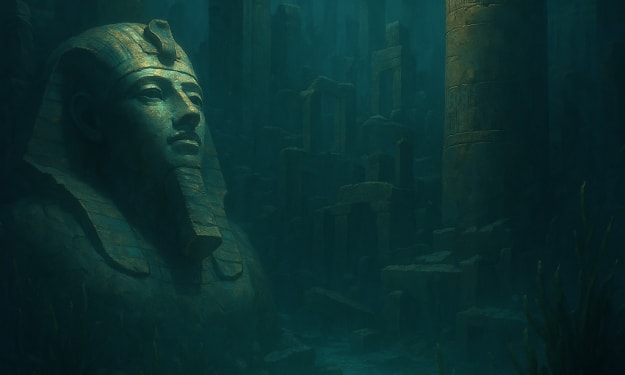
Heracleion: Egypt's Sunken Secret: The City the Gods Forgot
Beneath the Waves, a City Sleeps Located off the coast of modern-day Alexandria, at the meeting point of the Mediterranean's azure waters and the northern edge of Egypt, lies a forgotten city. Sunken beneath the waves for over a thousand years, Heracleion, known as Thonis by the Egyptians, was once a gleaming jewel of ancient power, wealth, and divine mystery.
By The Secret History Of The Worldabout a year ago in History
The Civilization of the Ottoman Turks: A Legacy of Courtesy, Wisdom, and Deep Spiritual Values
Throughout history, few civilizations have preserved a legacy as refined and spiritually grounded as that of the Ottoman Turks. Emerging from modest beginnings and growing into one of the most powerful empires the world has ever seen, the Ottomans left behind not just tales of conquest, but also rich traditions rooted in manners, respect, and subtle intelligence. Their daily lives, community practices, and hospitality customs paint a portrait of a people who lived with purpose, imbued with values of dignity, humility, and emotional intelligence. Let us journey into the cultural soul of the Ottomans—a civilization where every gesture had meaning, and every action reflected wisdom. --- Hospitality: A Silent Language of the Heart Hospitality in Ottoman culture wasn’t merely about offering food or drink—it was a deeply symbolic interaction, a respectful dialogue between host and guest without words. When a guest arrived at an Ottoman home, they were offered two simple things: a cup of Turkish coffee (qahwa) and a glass of plain water. If the guest reached for the water, the host would immediately understand that the visitor might be hungry, and without asking or embarrassing the guest, they would begin preparing a meal—often their finest, even if they had little themselves. However, if the guest chose coffee, it was understood they were there just for conversation and did not wish to eat, allowing the host to continue the visit in a lighter, more social tone. This silent understanding showcased not only hospitality but also respect for the dignity and unspoken needs of others. --- Floral Symbols: Messages Without Words Ottomans used flowers as a subtle language outside their homes, offering passersby unspoken but powerful messages. A yellow flower placed outside the home signaled that someone in the house was ill. This gentle indicator advised visitors to speak softly, avoid noise, and, if appropriate, come in to inquire about the patient's health. A red flower suggested that there was a young woman of marriageable age in the home. It was a community-based warning to avoid inappropriate or vulgar language near the house. It was also a welcome signal for those who intended to propose marriage—an invitation to knock respectfully. These flower signs reflect the social responsibility and moral boundaries that governed Ottoman neighborhoods. There was no need for confrontation, no boards or notices—civility was coded into aesthetics. --- The Double Door Hammer: Gender Sensitivity Another beautiful and thoughtful tradition was the use of two hammers or knockers on the doors of Ottoman homes: One was larger and heavier, meant to be used by men. The other was smaller and lighter, designated for women. When a man knocked using the large hammer, a male member of the household would come to answer. If the smaller hammer was used, it signaled a female visitor, prompting a woman from the household to attend the door. Such practices weren’t just cultural quirks—they showed a profound respect for modesty, boundaries, and gender ethics in the public and private spheres of life. --- Charity with Dignity: Anonymous Giving Perhaps one of the most awe-inspiring aspects of Ottoman culture was the way they handled charity. Giving was not for show, recognition, or public praise—it was quiet, respectful, and anonymous. Wealthy individuals would go to local vendors—such as vegetable sellers or grocers—and open anonymous tabs (accounts). These tabs were meant to cover the costs of food or supplies for any poor person who came in need. When a poor person arrived to buy something, the shopkeeper would provide the items free of charge, telling them nothing of the benefactor. The giver never met the receiver. The dignity of the poor was preserved, and the reward was left entirely to Allah. Later, the wealthy individual would return quietly and clear the tab, expecting nothing but the satisfaction of helping a fellow human being. This practice is a testament to the Ottoman spirit of silent service—a value deeply embedded in Islamic teachings. --- Adab with the Prophet (PBUH): A Unique Expression of Love The Ottomans were not just polite—they were spiritually refined. One such example is how they treated the age of the Prophet Muhammad ﷺ. The Prophet (peace be upon him) passed away at the age of 63. Among devout Ottoman Turks, if an elderly person had surpassed this age and was asked how old they were, they would not say “I am 65 or 70.” Instead, they would reply: > “Son, I have crossed the limit.” This was not out of superstition but out of deep reverence and spiritual love for the Prophet ﷺ. They felt it inappropriate or audacious to say they had lived longer than the Messenger of Allah. Such subtleties reveal the depth of Ottoman adab (etiquette)—a love that shaped their language, actions, and worldview. --- The Reason Behind Ottoman Decline: A Loss of Values For centuries, the Ottoman Empire stood as a beacon of Islamic civilization, a model of balanced power, religious freedom, intellectual progress, and moral living. So what led to its fall? According to many historians and cultural observers, the empire did not collapse due to lack of might but due to internal betrayal, loss of spiritual values, and Western conspiracies that targeted the Ottoman identity. As their traditions of generosity, modesty, and spiritual discipline eroded, so did the strength of their unity. Greed, political manipulation, and abandonment of their own cultural wisdom opened the doors for the empire’s eventual fragmentation. --- What We Can Learn Today The lessons from Ottoman civilization are not confined to history books. They remain relevant today in a world that is often rushing, indifferent, and transactional. When we offer a guest water or tea, we can remember their method of listening with the heart, not the ears. When we give in charity, let us give with dignity, not display. When we speak of modesty and social respect, we can adopt symbolic, gentle ways rather than aggressive or legalistic ones. When we reflect on our Prophet ﷺ, we can ask whether we love him with such sensitivity and manners as the Ottomans did. --- Conclusion: A Civilization Built on Wisdom The Ottoman Turks left behind a civilizational blueprint where values were lived, not just preached. Their culture reminds us that true greatness lies not only in power or architecture, but in the way a society treats its guests, respects its women, protects its poor, and honors its prophets. In an age where modern life often celebrates speed, fame, and self-promotion, the Ottoman legacy calls us back to simplicity, meaning, and sincerity—a beautiful tale of literature, love, and light that the world should never forget.
By Ikram Ullahabout a year ago in History
These microscopic organisms significantly contribute to the storage of carbon in the Southern Ocean.
Copepods, krill, and salps are examples of zooplankton that are contributing significantly to the storage of carbon in the Southern Ocean despite their small size.
By Francis Damiabout a year ago in History
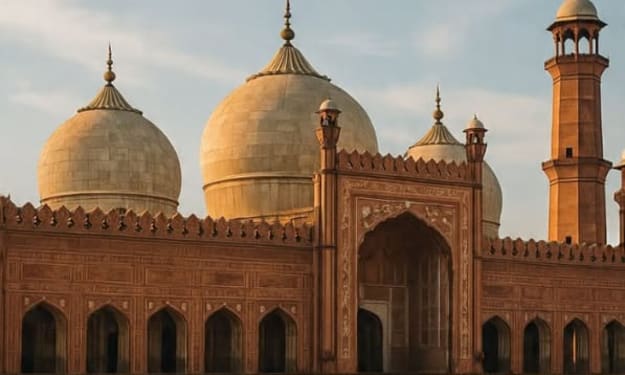
"Badshahi Mosque: A Marvel of Mughal Architecture in Lahore"
*The Timeless Grandeur of Badshahi Masjid* The Badshahi Masjid, located in the heart of Lahore, Pakistan, is a majestic testament to the architectural and cultural legacy of the Mughal Empire. Built between 1671 and 1673 by Emperor Aurangzeb, this magnificent mosque is a blend of immense scale, intricate artistry, and profound religious significance. As one of the largest mosques in the world, the Badshahi Masjid is an iconic symbol of Lahore's rich history and cultural fusion. *A Marvel of Mughal Architecture* The Badshahi Masjid is a masterpiece of Mughal architecture, showcasing the blend of Islamic, Persian, and Indian styles. Its design is characterized by enormous, meticulously well-planned structures, intricate tile work, calligraphy, and marble inlays. The mosque's architecture is a testament to the cultural and religious legacy of the Mughal Empire, which shaped the Indian subcontinent for centuries. *History and Significance* The Badshahi Masjid was built during the zenith of Mughal power in the late 17th century. Emperor Aurangzeb commissioned the mosque in 1671, and it was completed in just two years. The mosque held the title of the largest mosque in the world from 1673 to 1986, with a human capacity of over 100,000. The Badshahi Masjid is not only a sacred space for prayer and spiritual growth but also a symbol of national identity and cultural heritage. *Architectural Features* The Badshahi Masjid's architectural features are a blend of grandeur and intricacy. Some of its notable features include: - *Red Sandstone Facade*: The mosque's exterior is built using red sandstone, which gives it a distinctive and majestic appearance. - *Towering Domes*: The mosque features three marble domes, with the largest one situated in the center of the mosque. - *Minarets*: The mosque has four octagonal, three-story minarets, each 196 feet tall, topped with marble canopies. - *Intricate Tile Work*: The mosque's interior and exterior feature intricate tile work, calligraphy, and marble inlays. *Cultural and Religious Importance* The Badshahi Masjid holds significant cultural, historical, and religious importance. It is a symbol of Pakistan's rich cultural heritage and a testament to the country's Islamic legacy. The mosque is a popular destination for tourists and worshippers alike, attracting millions of visitors annually. As a UNESCO World Heritage site, the Badshahi Masjid is not only a Pakistani treasure but a monument of global cultural heritage. *Preservation and Conservation* The Badshahi Masjid has undergone several conservation and restoration efforts over the years. The earliest documented conservation work was carried out during the British colonial period in the early 20th century. Today, the mosque is meticulously maintained to preserve its architectural integrity and cultural significance. *A Symbol of National Pride* The Badshahi Masjid is a source of national pride for Pakistanis, representing the country's rich cultural heritage and Islamic legacy. The mosque has played a significant role in the country's history, serving as a symbol of resistance against colonial rule and a beacon of hope for the nation. *A Tourist Destination* The Badshahi Masjid is one of Lahore's most popular tourist destinations, attracting millions of visitors annually. Visitors from around the world come to marvel at the mosque's stunning architecture, intricate tile work, and historical significance. The mosque is also an important site for Muslims, who come to pray and seek spiritual guidance. *Conclusion* The Badshahi Masjid is a timeless symbol of Mughal grandeur of Mughal architecture, showcasing the blend of Islamic, Persian, and Indian styles. Its stunning architecture, rich history, and cultural significance make it an iconic landmark in Lahore and a testament to Pakistan's rich cultural heritage. As a UNESCO World Heritage site, the Badshahi Masjid continues to inspire wonder and awe in visitors from around the world. Its grandeur and beauty are a reminder of the rich cultural legacy of the Mughal Empire and its enduring impact on the region's architecture, art, and culture. *Future Generations* The Badshahi Masjid is not only a treasure of the past but also a legacy for future generations. As a symbol of Pakistan's rich cultural heritage, the mosque serves as a reminder of the importance of preserving our cultural legacy for future generations. By protecting and conserving the Badshahi Masjid, we can ensure that its grandeur and beauty continue to inspire wonder and awe in visitors for centuries to come, forever preserving our history and cultural identity. *Architectural Influence* The Badshahi Masjid's architecture has influenced many other buildings in the region, including the Lahore Fort, the Wazir Khan Mosque,Start writing...
By Shakeel Ahmad about a year ago in History