Places
Aba Women's Riot
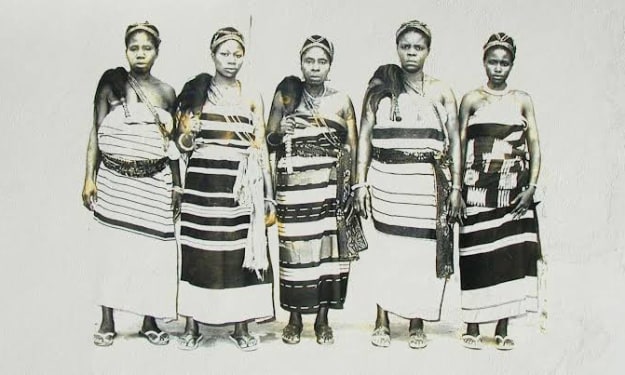
In the humid December of 1929, the dusty streets of southeastern Nigeria echoed, not with gunfire, but with the songs, chants, and defiant cries of thousands of women. They were not armed with weapons. They carried palm fronds, danced in circles, and raised their voices in a way the British colonial administration had never seen before. This was not a minor protest. It was one of the most powerful uprisings in West Africa’s colonial history. It was a movement led entirely by women—market women, mothers, widows, and daughters, who decided they had endured enough. History would remember it as the Aba Women’s Riot, or more rightly, the Aba Women’s War of 1929. By the late 1920s, the British had established their system of indirect rule in Nigeria. They appointed Warrant Chiefs, often ignoring traditional governance structures. These warrant chiefs were mostly men who had been hand-picked, and many were unpopular within their communities. At the same time, the colonial government introduced new forms of taxation. The men were already being taxed, but there were growing fears that women, who played a major role in the local economy through trade and agriculture, would soon be taxed as well. For Igbo and Ibibio women, this was more than economics. They had long held important roles in their communities, including running markets and using collective action to keep leadership in check. The colonial administration had sidelined them from decision-making, and this new tax policy became the final straw. The fire started in the small town of Oloko in the Bende Division. A census official named Mark Emereuwa, working for Warrant Chief Okugo, approached a widow named Nwanyeruwa and instructed her to “count her goats and people” for taxation. Nwanyeruwa was shocked. In Igbo society, women were not usually taxed. She challenged him, asking, "Was your mother counted?" The confrontation grew heated, and she refused to cooperate. This incident spread rapidly. Women in neighboring villages heard what had happened and recognized the danger. They mobilized through their age-old communication networks, spreading palm fronds as signals and passing messages through song and market gatherings. The response was swift and massive. Within days, over 10,000 women from different towns across the Igbo and Ibibio regions gathered in Oloko. These women were not disorganized. They drew on a traditional protest system known as “sitting on a man," a method where women surrounded a man’s house or office, dancing, singing, mocking, and chanting until he was held accountable. They targeted warrant chiefs, local courts, and colonial offices, demanding justice and the reversal of oppressive policies. Their protests spread across towns like Aba, Umuahia, Owerri, and beyond. British colonial authorities were stunned. They had underestimated the organizational power of these women, who moved in coordinated waves from village to village. As the protests grew, the colonial government responded with force. Troops were deployed. In some towns, they opened fire on the protesters. By the end of the uprising, over 50 women were killed and many more were injured. But the British had learned a lesson. The scale and determination of the women forced the colonial administration to abandon plans to tax women and to restructure the warrant chief system. Several unpopular chiefs were removed, and policies were re-examined. The Aba Women’s Riot was not just a tax protest. It was one of the first major anti-colonial uprisings in West Africa, and it was led by women. It challenged both colonial authority and patriarchal structures, showing that women’s voices could shake the pillars of power. These women did not have newspapers or microphones. They did not have social media. But through unity, courage, and cultural intelligence, they shook an empire. Nearly a century later, the Aba Women’s War remains a powerful reminder of how collective action can bring change. It is a story often overlooked in global history books, but its impact continues to echo in Nigeria’s struggle for independence and women’s rights movements today. Their legacy is not just in the changes they forced but in the message they left behind: When ordinary people rise together, history is forced to listen.
By Stories You Never Heard12 months ago in History
Latest Developments: Government Shutdown 2025 — **Current Status & Outlook
# Latest Developments: Government Shutdown 2025 — **Current Status & Outlook** Since October 1, 2025, the U.S. federal government has been in a partial shutdown after Congress failed to pass appropriation bills to fund operations for fiscal year 2026. Below is a thorough, question-based update on the current state of affairs, the causes, and possible paths forward.
By America today 12 months ago in History
The Rock That Wasn’t a Rock: A Journey Through 724 Million Kilometers of Mystery
When we look up at the night sky, we see twinkling dots that seem calm and distant. But hidden among those stars are travelers ancient, silent wanderers that have been moving through the darkness for billions of years. This is the story of one such wanderer a story that began on Earth but ended 724 million kilometers away, on the surface of something that wasn’t what scientists thought it was.
By Izhar Ullah12 months ago in History
Roadside America & The Giant Fiberglass Statues
Somewhere out on Route 66, the sun is low, the asphalt hums, and the family station wagon’s AC isn’t quite keeping up. The kids are restless, Mom is flipping through the AAA TripTik, and Dad’s patience is hanging by a thread when suddenly... there it is! A massive, square-jawed Paul Bunyan figure looms on the horizon, clutching a hot dog the size of a telephone pole. Cameras click, kids scream, and Dad pulls over with a grin.
By The Iron Lighthouse12 months ago in History
The Iron Fist of Karanja: Rise and Fall of General Nyota. AI-Generated.
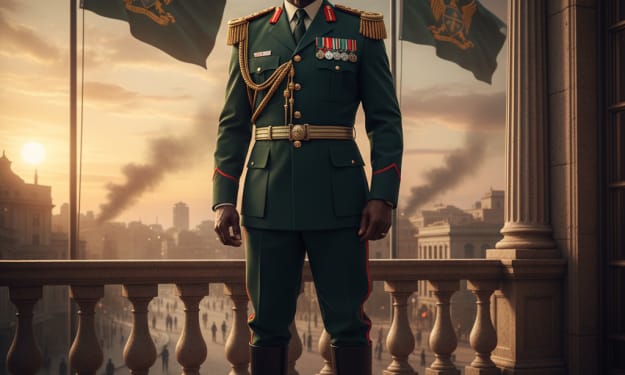
In the dusty hills of Karanja, a small East African nation, Samuel Nyota was born in 1948 into a poor farming family. His father toiled in the fields, his mother raised him and his siblings under the unforgiving sun, and from an early age, Samuel learned that life rewarded the strong and punished the weak. Tall, imposing, and fiercely intelligent, he quickly realized that survival required more than hard work — it demanded cunning, strategy, and ruthlessness.
By shakir hamidabout a year ago in History
The Tyrant of Uganda: The Rise and Fall of Idi Amin. AI-Generated.
The story of Idi Amin Dada begins far from the marble halls of power — in a small village in northwestern Uganda, around 1925. Born into poverty among the Kakwa ethnic group, Amin’s early years were marked by hardship and survival. His father abandoned the family, and his mother, a herbalist, raised him in the shadow of colonial rule. He had little education, but he possessed an intimidating physical strength — tall, broad-shouldered, and fiercely ambitious.
By shakir hamidabout a year ago in History
Rumors, Roses, and a Quiet Promise: The Legend of DiMaggio and Monroe
Rumors, Roses, and a Quiet Promise: The Legend of DiMaggio and Monroe When a public romance shined as bright as Marilyn Monroe’s glow on a Hollywood stage, the afterglow can outlive the headlines. Over the years, stories about Joe DiMaggio and Marilyn Monroe have settled into the realm of myth and memory—the kind of legends that fans retell with a knowing smile, even when every detail isn’t verifiably true. Among those tales, one persists with stubborn tenderness: the idea that DiMaggio, devastated by Monroe’s death, sent red roses to her crypt three times a week for two decades, never remarried, and allegedly uttered his final words, “I’ll finally get to see Marilyn.”
By Story silver book about a year ago in History
Amman Citadel: Layers of History and Civilization in Jordan
The Amman Citadel, perched on Jabal al-Qal’a, offers a living chronicle of civilizations stacked across time. From the Ammonites of the 9th century BCE, whose inscriptions to Milkom survive, to Roman temples, Byzantine churches, and Umayyad palaces, the site reflects continual reconstitution. The Temple of Hercules, colossal ruins, Byzantine adaptations, and Umayyad architecture illustrate layers of cultural inheritance, interrupted by earthquakes and restored in modern times. The Archaeological Museum, once home to the Dead Sea Scrolls, deepens the story. Visiting reveals more than ruins—it is a lesson in how civilizations adapt, recycle, and endure, while raising questions about humanity’s future.
By Scott Douglas Jacobsenabout a year ago in History
CROATOAN: The Word That Still Terrifies Historians. AI-Generated.
On a warm summer evening in 1590, English explorer John White stepped off his ship and gazed at the shoreline of Roanoke Island. The place where he had left behind more than one hundred men, women, and children three years earlier was silent. The colony that was supposed to be England’s first permanent settlement in the New World now stood eerily deserted. No smoke rose from the chimneys. No children ran along the dirt paths. The air carried only the sound of wind rustling through abandoned houses. White’s heart pounded as he searched desperately for signs of life. But there were no bodies, no blood, no evidence of an attack. Just emptiness… and one haunting clue carved into a wooden palisade: “CROATOAN.” The Birth of a Colony: In July 1587, John White had set sail from England with about 120 settlers, including his daughter, son-in-law, and newborn granddaughter—Virginia Dare, the first English child born on American soil. The settlers landed on Roanoke Island, off the coast of present-day North Carolina, full of hope. They built homes, planted crops, and dreamed of a thriving future. But supplies quickly dwindled, tensions with local Native tribes grew, and survival became uncertain. By the end of that year, White was forced to return to England to gather desperately needed provisions. He promised his family he would come back soon. No one knew that “soon” would mean three long years. The Mysterious Return: England was caught up in a war with Spain, delaying White’s return until 1590. When he finally reached Roanoke, excitement gave way to dread. The colony was deserted. Houses had been dismantled, not destroyed, suggesting an organized departure. On a tree, the letters “CRO” were carved. On a nearby post, the full word “CROATOAN” appeared. White immediately believed the colonists had relocated to Croatoan Island (modern-day Hatteras Island), where a friendly Native tribe lived. But fate intervened. A violent storm prevented his ships from reaching the island. With limited resources and no support from England, White was forced to abandon the search. He never saw his family or the colonists again. Theories Behind the Vanishing: Over the centuries, the fate of the Lost Colony has fueled endless speculation. Let’s explore the most chilling possibilities: 1. Assimilation with Native Tribes Some historians believe the colonists sought refuge with nearby tribes to survive. The Croatoan people may have welcomed them, and over generations, the settlers blended in, leaving no separate trace of their existence. Reports of Native Americans with gray eyes and European features seemed to support this theory. 2. Attack by Hostile Tribes Another theory suggests the colonists were killed by the powerful Powhatan Confederacy. Chief Powhatan later claimed he had executed some settlers to prevent them from joining rival tribes. Yet, archaeological evidence to confirm this has never been found. 3. Spanish Intervention At the time, Spain and England were bitter enemies. Some believe Spanish forces, patrolling from Florida, discovered the English outpost and wiped it out. However, no Spanish records mention such an event. 4. Starvation and Disease Life in the New World was brutal. Lack of food, harsh winters, and outbreaks of disease may have slowly wiped out the settlers. Their bodies could have been buried in shallow graves that nature quickly reclaimed. 5. A Supernatural Disappearance For lovers of mystery and legend, Roanoke carries a darker possibility: that the colonists simply vanished into thin air. Stories of curses, vengeful spirits, or forces beyond human understanding have been passed down, adding a chilling, almost ghostly layer to the tale. The Haunting Legacy of CROATOAN: The word “CROATOAN” itself became a symbol of unsolved mysteries. Over the centuries, it has reappeared in eerie contexts. Famous writer Edgar Allan Poe reportedly whispered the word before his mysterious death. It was also found scrawled in abandoned places connected to unexplained vanishings. Coincidence—or curse? No one knows. Why the Mystery Endures: The Lost Colony of Roanoke endures because it is more than just a historical puzzle—it is a story of human hope, fear, and survival against impossible odds. Imagine the settlers’ desperation as supplies ran out, or John White’s heartbreak as he returned to an empty settlement. Imagine carving a single word, “CROATOAN,” as a desperate clue for those who might one day come searching. And imagine standing where White once stood—alone, surrounded by silence—wondering where everyone had gone. Conclusion: More than 400 years later, the fate of the Roanoke colonists remains America’s greatest unsolved mystery. Archaeologists continue to dig, historians continue to theorize, and storytellers continue to haunt readers with the chilling disappearance. Perhaps one day, science will uncover the truth. Until then, Roanoke remains a place where history and legend blur together—a reminder that sometimes, entire communities can vanish, leaving behind only whispers and a single word carved in wood. CROATOAN.
By Mr. Jackieabout a year ago in History
The Parachute Wedding Dress: How Ruth Hensinger Turned WWII Survival Silk into Bridal Magic
The Parachute Wedding Dress: How Ruth Hensinger Turned WWII Survival Silk into Bridal Magic Imagine a pilot drifting down from a burning plane, his parachute the only thing between him and certain death. That same parachute, once a tool of survival in World War II, becomes the fabric of a bride's dream gown. In 1947, Ruth Hensinger sewed her wedding dress by hand from the nylon parachute that saved her fiancé's life, turning a symbol of war into one of love and hope.
By Story silver book about a year ago in History
The Last Lamp of Delhi
The year was 1857, a time when the old world of India trembled beneath the boots of rebellion and empire. The Mughal capital, Delhi, stood not only as a city of bazaars, mosques, and minarets, but as the fading shadow of a once-mighty throne. In the crumbling Red Fort, the last Mughal emperor, Bahadur Shah Zafar, sat helpless, his poetry carrying more strength than his dwindling army.
By Esther Sunabout a year ago in History