Places
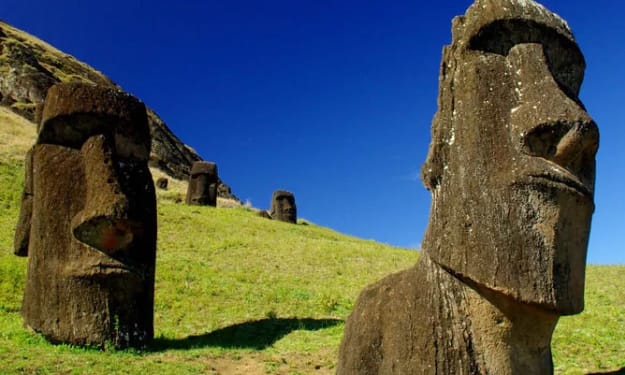
Now We Know How Easter Island Giants Were Moved. Content Warning.
The Easter Island giant heads are so popular, that they even have their own emoji. Their true meaning has been a mystery for hundreds of years, but it looks like we at least know how they were built and transported to their permanent location.
By Muhammad Asim3 years ago in History
The Charm of Mill Street in Warwick
When I first entered the town of Warwick it felt like I had stepped into a book of fairytales. Everywhere I looked, there were charming buildings with beautiful gardens, wide streets and a spoonful of history in every inch of the enamouring town. Naturally, I chose to settle there.
By Aarushi Shetty3 years ago in History
NEW YORK CITY
New York City, often simply referred to as NYC, is one of the most iconic and diverse cities in the world. Situated in the state of New York, USA, it's known for its vibrant culture, towering skyscrapers, world-class art and entertainment, and a rich history that has shaped the course of the nation. Here's a comprehensive overview of NYC:
By Alishba Humair3 years ago in History
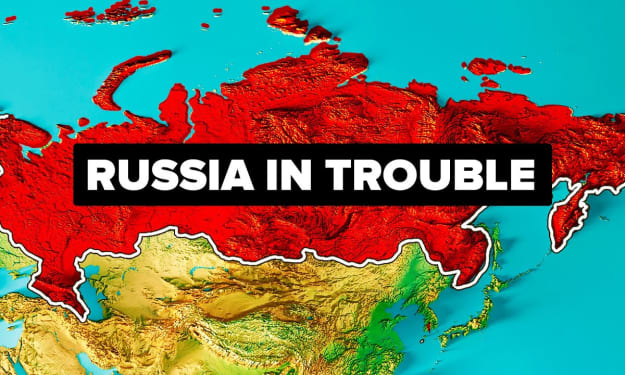
EVERYTHING GOING WRONG FOR RUSSIA
Introduction: In the realm of global politics, few names elicit as much intrigue and controversy as Vladimir Putin. Often depicted as the embodiment of Russian authority, Putin has wielded a firm grip on his nation for decades. However, recent events have brought to light chinks in his armor, exposing vulnerabilities that have sent shockwaves through the very foundation of his rule. As we delve into the enigma that is Putin's Russia, we find a complex tapestry woven with power, resistance, and the ever-present specter of change.
By Vickyoung Ke3 years ago in History
England Famous Places 2023
nve England is a land rich in history, culture, and natural beauty, offering visitors a diverse array of famous places to explore. From bustling cities to serene countryside, England has something to captivate every traveler's heart. Let's dive into a tour of some of the most iconic destinations across this enchanting country.
By PAVAN LAHANE3 years ago in History
The National Museum of Brazil
The National Museum of Brazil, also known as Museu Nacional, situated in Rio de Janeiro, was an iconic institution that held the distinction of being the largest and oldest natural history museum in Latin America. Its history stretched back 200 years, and in 2018, it joyously celebrated its bicentennial milestone. However, tragedy struck on the evening of September 2nd when an electrical fire ignited on the ground floor of the museum. The blaze quickly escalated into a devastating inferno, leaving the historic building in ruins and nearly obliterating its invaluable collections. Within a mere 10 hours, an estimated 18 million precious objects and specimens succumbed to the merciless flames, reduced to mere smoke and ash.
By Niesha Wilson3 years ago in History
Quick One: Vanishing Trails and Gates to other Worlds
The mountains hold mysteries that both captivate and terrify the human imagination. Among these enigmatic landscapes, Glastonbury Mountain in Vermont's Bennington County stands out as a mesmerizing yet chilling destination. Its summit is part of the legendary Bennington Triangle, an area known for peculiar happenings that defy explanation. From spaceship sightings and encounters with Bigfoot to mysterious lights dancing in the sky, the region has become synonymous with the unexplained.
By The Purple Olympian3 years ago in History
Qin Shi Huang
Early Life and Rise to Power Qin Shi Huang, originally known as Ying Zheng, was born in 259 BCE as the son of King Zhuangxiang of Qin. Tragically, his father died when he was just 13 years old, thrusting him onto the throne as the king of Qin. At such a young age, Ying Zheng faced the daunting task of ruling a state embroiled in the chaotic Warring States Period. His mother, Lady Zhao, served as the regent, playing a pivotal role in safeguarding his position and guiding him in the early years of his reign. Under the tutelage of skilled advisors and tutors, the young king demonstrated exceptional political acumen and astuteness, setting the stage for his extraordinary rise to power.
By Écrivain Placard3 years ago in History
All the blood
Throughout history, the human mind has undergone a fascinating evolution, shaped by cultural, societal, and technological influences. The conventional mind refers to the dominant patterns of thought that prevailed during various periods, reflecting the prevailing beliefs, norms, and paradigms of those times. This journey takes us through the significant milestones in the development of the conventional mind, exploring how human thought has evolved over centuries.
By WAQAS AHMAD3 years ago in History
Genghis Khan
Introduction to Genghis Khan In the pages of history, few figures loom as large and awe-inspiring as Genghis Khan. Born as Temüjin amidst the unforgiving steppes of Mongolia in the late 12th century, his journey from an obscure nomadic boy to the founder of one of the most formidable empires in human history remains an epic tale of resilience and ambition.
By Écrivain Placard3 years ago in History
Brewing Up the Past
Coffee has been around for centuries, with evidence of its use dating back to the 15th century in the Middle East. It is widely accepted that coffee originated in Ethiopia, where it was first discovered by the Oromo people who lived in the region. The word ‘coffee’ is believed to have come from the Arabic word ‘qahwah’, which means ‘wine’. Coffee was initially used as a stimulant and was consumed in the form of a beverage. The earliest evidence of coffee being brewed and consumed dates back to the 15th century in the Middle East. It is believed that the first coffeehouses were established in the city of Mecca in 1511. These coffeehouses served as places for people to gather and discuss politics, religion, literature, and other topics. Coffee quickly spread throughout the Middle East and North Africa, with coffeehouses becoming popular in Egypt, Turkey, and Persia. In the 17th century, coffee made its way to Europe where it was embraced by the upper classes and intellectuals. Coffeehouses were established in the major cities of Europe such as London, Paris, and Vienna. In 1675, the first coffeehouse opened in London and quickly became popular among the elite. Coffeehouses served as hubs for discussion and debate, and were often frequented by the likes of Voltaire, Rousseau, and other prominent European intellectuals. In the 18th century, coffee began to spread to the New World. In 1714, the Captain of the French ship, the Mayflower, brought coffee to the West Indies. From there, coffee was brought to the Americas and began to be cultivated in the Caribbean and South America. Coffee plantations were established in Brazil, Colombia, and Guatemala. Coffee became the most important export crop in many of these countries. In the 19th century, coffee became increasingly popular in the United States. Coffee was first brought to the U.S. by the Dutch in the 17th century. However, it was not until the 19th century that coffee truly became popular in the U.S. Coffeehouses began to appear in major cities such as New York, Boston, and Philadelphia. Coffee became increasingly accessible and affordable for the average person, and it quickly became a staple in the American diet. Today, coffee is one of the most popular drinks in the world. It is estimated that over two billion cups of coffee are consumed every day. Coffee is produced in over 70 countries and is a major export crop in many countries. It is enjoyed by people from all walks of life and is used to fuel conversations, inspire creativity, and energize people around the world.
By Ziain Morales3 years ago in History