Places
The French Revolution
A turbulent time in late 18th-century France known as the French Revolution marked a turning point in world history by causing a significant upheaval in the political, social, and cultural spheres. We examine the causes, significant incidents, life-changing effects, and enduring legacy of this revolutionary era in this 600-word synopsis.
By The Knowledge 3 years ago in History
The deep-sea discoveries in the Mariana Trench
The deep-sea discoveries in the Mariana Trench: eneath the tranquil surface of the Pacific Ocean, in the remote expanse of the Mariana Trench, lies a realm of mystery and wonder that has long captured the imagination of scientists and explorers. The Mariana Trench, the deepest part of the world's oceans, has proven to be a treasure trove of scientific discovery, unveiling a world teeming with bizarre and otherworldly life forms. The journey to explore the Mariana Trench is not for the faint of heart. The trench reaches staggering depths of over 36,000 feet (10,994 meters) in the Challenger Deep, its deepest point. This is a place where the crushing pressure exceeds 1,000 times that of the surface, and the total darkness seems impenetrable. Yet, the allure of what lies beneath has driven researchers to design submersibles and technology capable of withstanding these extreme conditions. One of the most remarkable discoveries in the Mariana Trench is the existence of life forms that defy our understanding of biology. In the inky darkness, where sunlight never penetrates, scientists have found creatures adapted to extreme pressures and temperatures. Some of the most intriguing organisms are the amphipods, small shrimp-like crustaceans that scuttle about on the trench's muddy floor. These tiny creatures have evolved to thrive in a world where the water temperature hovers just above freezing. Another astonishing discovery is the existence of giant amphipods, massive versions of their shallower-water relatives. These creatures, up to 10 times larger than typical amphipods, were found swarming in the trench's depths, feasting on the detritus that sinks from the surface. Their existence challenges our understanding of the limits of life on Earth and raises questions about the potential for life on other planets with harsh conditions. The Mariana Trench also harbors some of the world's most enigmatic and otherworldly fish species. Among them is the "snailfish," a translucent creature with a soft, gelatinous body that seems almost ghostly in appearance. These fish defy conventional wisdom, surviving in an environment where the extreme pressure should prevent them from having swim bladders. Instead, they have developed adaptations such as flexible bodies and large mouths to thrive in this unforgiving habitat. One of the most striking and photogenic inhabitants of the Mariana Trench is the "Dumbo octopus." Named after its ear-like fins, this deep-sea cephalopod gracefully hovers above the trench floor, using its large, wing-like appendages to propel itself through the water. Its appearance and behavior are a testament to the incredible diversity and adaptability of life in the deep sea. Beyond the biological wonders, the Mariana Trench has also revealed geological marvels. Scientists have discovered hydrothermal vent systems, where superheated water rich in minerals spews from the Earth's crust, creating a unique and extreme ecosystem. These vents support communities of life that rely on chemosynthesis rather than photosynthesis, illustrating the ingenuity of nature in adapting to even the harshest conditions. One of the most profound insights gained from the Mariana Trench is the impact of human activity on the deepest parts of the ocean. Even in these remote depths, evidence of human pollution has been found. Microplastics, small fragments of plastic waste, have been discovered in the trench, highlighting the interconnectedness of the world's oceans and the urgent need for responsible environmental stewardship. The exploration of the Mariana Trench has been a testament to human curiosity, innovation, and resilience. It has required the development of specialized submersibles and deep-sea technology, as well as the courage of the scientists and explorers who venture into the abyss. Each dive into the trench reveals new wonders and raises new questions about the mysteries of the deep sea. In recent years, international efforts have been made to protect and preserve the Mariana Trench and its unique ecosystems. Designating it as a Marine National Monument has been a crucial step in conserving this pristine environment and its invaluable biodiversity. The discoveries in the Mariana Trench serve as a reminder of the boundless wonders that our planet still holds, even in the most extreme and inhospitable environments. They inspire us to continue exploring, to push the boundaries of our knowledge, and to protect the fragile ecosystems that thrive in these hidden realms. As we peer into the depths of the Mariana Trench, we are humbled by the resilience of life, the mysteries of the deep sea, and the importance of preserving these pristine environments for future generations. The Mariana Trench is a testament to the enduring spirit of exploration and discovery, a place where science and wonder converge in the darkest depths of our planet's oceans.
By Raymark Marcos3 years ago in History
Thee ancient city of Teotihuacan in Mexico
Thee ancient city of Teotihuacan in Mexico: Nestled in the highlands of central Mexico lies the ancient city of Teotihuacan, a place where gods once walked among mortals and where pyramids touched the heavens. Often referred to as the "City of the Gods," Teotihuacan is one of the most remarkable archaeological sites in the world, a testament to the power and grandeur of an ancient civilization that flourished over a thousand years ago. Teotihuacan's origins are shrouded in mystery, and its true creators remain unknown. It is believed to have been established around 200 BCE, but the people who built it, known as the Teotihuacanos, left behind no written records to tell their story. The city's name itself is of Nahuatl origin, the language of the Aztecs who later inhabited the region, and means "The Place Where the Gods Were Created." This name reflects the profound sense of reverence and awe that Teotihuacan has evoked for centuries. At the heart of Teotihuacan's urban layout are two massive pyramids—the Pyramid of the Sun and the Pyramid of the Moon. The Pyramid of the Sun, the largest of the two, rises nearly 216 feet (66 meters) above the surrounding landscape. Ascending its steep steps, one is met with breathtaking panoramic views of the city's sprawling layout, and it's impossible not to be captivated by the sense of awe that must have gripped the ancient pilgrims who climbed these very steps. The Pyramid of the Moon, although smaller in scale, holds equal importance in the city's cosmology. It stands at the northern end of the Avenue of the Dead, a broad boulevard that runs through the heart of Teotihuacan. This avenue, flanked by smaller pyramids and impressive ceremonial structures, is thought to have served as a processional route for rituals and celebrations, a testament to the city's vibrant religious life. While the pyramids are the most iconic features of Teotihuacan, the city is a vast archaeological treasure trove that encompasses residential areas, marketplaces, workshops, and temples. The remains of multistory apartment complexes, known as "apartment compounds," hint at a highly organized and densely populated city. Archaeological evidence suggests that Teotihuacan was home to a diverse population, with people from various cultural backgrounds living and working together. One of the city's most intriguing aspects is the layout and alignment of its buildings. Teotihuacan's urban plan reflects a deep understanding of astronomy and a close relationship with the natural world. The city's layout is thought to be aligned with the movements of celestial bodies, with the pyramids and other major structures oriented to important astronomical events, such as the equinoxes and solstices. This cosmic connection reinforces the belief that Teotihuacan was not just a city but a sacred space where earthly and celestial forces converged. The artistry of the Teotihuacanos is on full display in their intricate murals and carvings. These artworks provide glimpses into the daily life, rituals, and beliefs of the city's inhabitants. One of the most famous examples is the mural found in the Tepantitla compound, which depicts a richly detailed and vibrant tableau of religious ceremonies and mythological figures. The intricate feathered serpent, often identified as the deity Quetzalcoatl, graces many of these murals, further emphasizing the city's spiritual significance. The Teotihuacanos were skilled artisans, known for their production of obsidian blades, pottery, and intricate jewelry. Their influence extended far beyond their city's walls, as Teotihuacan served as a central hub for trade networks that stretched throughout Mesoamerica. The city's prosperity was fueled by the production and exchange of valuable goods, such as obsidian tools and textiles, which were traded with distant regions. Despite its grandeur and influence, the decline of Teotihuacan remains a subject of debate among scholars. Around the 7th or 8th century CE, the city began to experience a gradual decline, marked by the abandonment of some residential areas and the erosion of its once-powerful influence. The reasons behind this decline are still unclear, with theories ranging from internal unrest and social upheaval to environmental factors such as droughts. Today, Teotihuacan stands as a UNESCO World Heritage Site and a symbol of Mexico's rich cultural heritage. It continues to inspire wonder and admiration, drawing visitors from around the world who come to explore its ancient streets and climb the pyramids that reach for the sky. The spirit of the Teotihuacanos lives on in the breathtaking architecture, vibrant artistry, and profound cosmic connections that define this extraordinary city. As we stand beneath the towering pyramids and walk the ancient streets of Teotihuacan, we are transported to a time when gods and mortals coexisted in harmony, when a civilization flourished in awe-inspiring splendor. Teotihuacan reminds us of the enduring power of human creativity, the quest to understand the cosmos, and the enduring legacy of those who built a city of gods in the heart of Mexico.
By Raymark Marcos3 years ago in History
The Ancient City of Machu Picchu, Peru
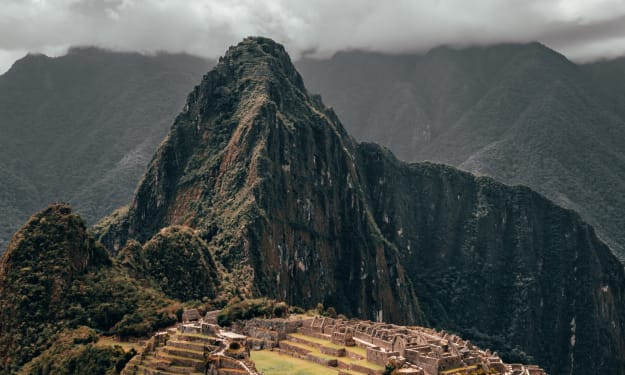
the Ancient City of Machu Picchu, Peru: Hidden amidst the breathtaking peaks of the Andes Mountains in Peru lies the mystical and awe-inspiring Ancient City of Machu Picchu. This UNESCO World Heritage Site is not just an archaeological wonder but also a testament to the architectural genius of the Inca civilization, shrouded in mystery and intrigue. Perched at an altitude of over 2,400 meters above sea level, Machu Picchu is often referred to as the "Lost City of the Incas." It was built during the 15th century under the reign of the Inca Emperor Pachacuti. The city was constructed using massive stone blocks, carefully fitted together without the use of mortar, a testament to the engineering prowess of the Inca people. Machu Picchu's purpose remains a subject of debate among historians and archaeologists. Some believe it was a royal estate or a retreat for Inca nobility, while others suggest it might have had religious significance. Regardless of its original purpose, its remote location and remarkable construction have made it a symbol of Inca achievement and a pilgrimage site for travelers seeking to connect with the past. To reach Machu Picchu, one must embark on a journey through the Sacred Valley of the Incas, a lush and picturesque region that was once the heartland of the Inca Empire. The journey itself is an adventure, winding through dramatic landscapes and ancient ruins before arriving at the base of the mountain where the city is situated. The final leg of the journey involves ascending the steep slopes of Machu Picchu Mountain or Huayna Picchu for a more panoramic view. As you climb the stone steps, a sense of anticipation builds, and the reward is nothing short of awe-inspiring. The first sight of Machu Picchu from above is an unforgettable moment, as the city emerges from the mist like a mirage, surrounded by lush green terraces and cradled by towering peaks. Walking through the intricate network of stone buildings, plazas, and terraces, one can't help but marvel at the ingenuity of the Inca architects. The precision with which the stones were cut and placed, the advanced drainage systems, and the alignment of buildings with astronomical phenomena are all indicative of a highly sophisticated society. One of the most iconic structures at Machu Picchu is the Intihuatana stone, often referred to as the "Hitching Post of the Sun." It is believed to have served as an astronomical and ritualistic device, connecting the Inca civilization with the celestial world. Standing beside it, you can't help but feel a connection to the past and a sense of wonder about the knowledge and beliefs of the people who once inhabited this city. As you explore the city, the Temple of the Sun with its curved stone walls and the Room of the Three Windows with its breathtaking view of the surrounding landscape stand out as testaments to Inca craftsmanship. The agricultural terraces that cascade down the slopes of the mountain showcase their mastery of farming techniques in a challenging environment. Machu Picchu also offers a glimpse into the spiritual world of the Inca people. The presence of temples, shrines, and ritualistic stones hints at the importance of religion in their lives. The whole city seems to be designed in harmony with the natural environment, with the mountain peaks and the Urubamba River forming a sacred backdrop. Perhaps one of the most enchanting aspects of Machu Picchu is the resident llamas that roam freely among the ruins. These gentle creatures add a touch of charm to the already magical setting, and watching them graze in this ancient city creates a unique and endearing experience. While Machu Picchu has been a site of wonder for centuries, it was largely unknown to the outside world until its rediscovery by American historian and explorer Hiram Bingham in 1911. Since then, it has become one of the most visited and revered archaeological sites on the planet, drawing travelers and scholars alike to unravel its secrets and bask in its beauty. In recent years, efforts have been made to preserve and protect Machu Picchu from the impacts of tourism and environmental factors. Visitor numbers are controlled, and strict regulations are in place to ensure the site's sustainability for future generations. In conclusion, the Ancient City of Machu Picchu is a place of wonder, a testament to human achievement, and a window into the rich history of the Inca civilization. Its breathtaking beauty, intricate architecture, and mystical aura continue to captivate all who have the privilege to set foot in this remote and enchanting corner of the world. As you stand amidst the ruins and gaze upon the majestic peaks of the Andes, you can't help but feel a profound connection to the past and a deep appreciation for the enduring legacy of the Inca people. Machu Picchu truly is a treasure of human history and a marvel of the ancient world.
By Raymark Marcos3 years ago in History
History of Harappa
The historical backdrop of the Harappa development, otherwise called the Indus Valley progress, is an entrancing excursion that requires us back millennia to one of the world's most old and secretive societies. While I will not have the option to cover every one of the subtleties in a solitary passage, I'll give an outline of the central issues and improvements throughout the entire existence of Harappa.
By Mr perfect3 years ago in History
The Moon Landing
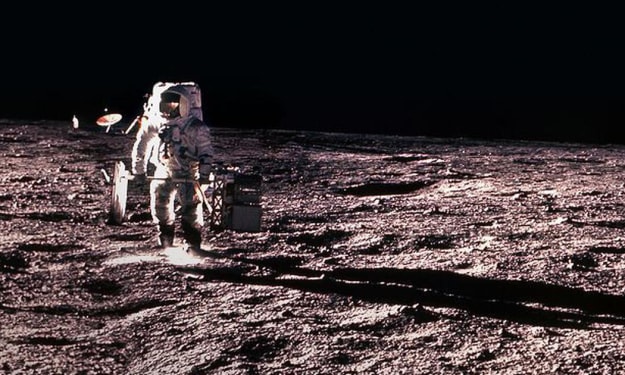
One of the most amazing feats in human history is the Moon landing, a momentous occurrence that took place on July 20, 1969. We examine the context, significant moments, lasting effects, and lasting impact of this historic mission to the moon in this 600-word overview.
By The Knowledge 3 years ago in History
Titanic Love Story
"We've lived together for many years" – Ida Strauss spoke these words to her husband. She was one of the wealthiest women on the Titanic, but she chose not to board a lifeboat with her husband, Isadore. Just before this, she gave her maid a valuable gift that likely saved her life.
By Ines Lozina3 years ago in History
Cosmic Shadow!!!
Dark Matter and Dark Energy: Unveiling the Cosmic Shadows In the vast cosmic tapestry that envelops our universe, there exists a profound enigma—an enigma of shadowy proportions that has captivated the minds of scientists and astronomers for decades. This enigma goes by two names: dark matter and dark energy. Together, they comprise the vast majority of the cosmos, yet their true nature remains shrouded in mystery, challenging the very foundations of our understanding of the universe. The story of dark matter and dark energy begins with a quest to comprehend the gravitational forces at play in the cosmos. As early as the 1930s, astronomers observed the movement of galaxies within galaxy clusters, and something perplexing emerged. The visible matter, the stars, gas, and dust we could detect with telescopes, couldn't account for the gravitational forces needed to hold these galaxies together within their clusters. It was as if something invisible was at work—an unseen cosmic hand guiding the fate of galaxies. The term "dark matter" was coined in the 1970s to describe this mysterious, invisible substance that was affecting the dynamics of galaxies and galaxy clusters. Dark matter doesn't interact with light or electromagnetic forces, rendering it virtually undetectable by traditional observational methods. Yet, it exerts a gravitational pull, holding galaxies together and sculpting the cosmic web of the universe. The discovery of dark energy, however, added another layer to the cosmic puzzle. In the late 1990s, astronomers studying distant supernovae made an astonishing revelation—the universe's expansion wasn't slowing down as previously thought; it was accelerating. This unexpected cosmic acceleration was attributed to "dark energy," a mysterious force that opposes gravity and appears to be driving the universe apart at an ever-increasing rate. The implications of dark matter and dark energy are profound. Dark matter acts as the cosmic scaffolding, underpinning the formation of galaxies and galaxy clusters. Without it, the universe as we know it would look drastically different. Dark energy, on the other hand, defies gravity, challenging our understanding of the fundamental forces that govern the cosmos. The quest to unravel the nature of dark matter and dark energy has spawned a host of ambitious experiments and missions. Particle physicists search for elusive dark matter particles deep underground, hoping to catch a glimpse of these ghostly entities. Meanwhile, astronomers employ a multitude of observational tools, from cosmic microwave background measurements to large-scale galaxy surveys, to probe the cosmic expansion driven by dark energy. Yet, despite decades of research and groundbreaking discoveries, the true nature of dark matter and dark energy remains elusive. The search for dark matter particles continues, and alternative theories of gravity have been proposed to explain the cosmic acceleration attributed to dark energy. The enigma persists, inviting scientists to explore the frontiers of physics and cosmology. The mysteries of dark matter and dark energy are not merely scientific puzzles; they are cosmic questions that touch the essence of our universe's existence. Understanding these enigmas could redefine our understanding of the universe's fate, from its birth in the Big Bang to its eventual destiny. The story of dark matter and dark energy is a testament to the boundless curiosity of humanity and our relentless quest to understand the cosmos. As we peer deeper into the shadows of the universe, we are confronted with profound questions that challenge our most fundamental beliefs about the nature of space, time, and the very fabric of reality. The enigma of dark matter and dark energy reminds us that the universe is far more mysterious and complex than we can fathom. It beckons us to venture further into the unknown, to explore the cosmic shadows, and to seek answers to the most profound questions that lie at the heart of our existence.
By Raymark Marcos3 years ago in History
The Enchanted Sheesh Mahal: Mirrors of Mughal Majesty
In the heart of the enchanting city of Lahore, Pakistan, nestled amidst the bustling streets and vibrant bazaars, lies a hidden gem that has witnessed centuries of history unfold – the Sheesh Mahal, or the "Palace of Mirrors." This architectural masterpiece is a testament to the opulence and artistic brilliance of the Mughal Empire, a place where history and legend intertwine to create an enchanting narrative.
By Sanaf Ahmed3 years ago in History