Places
Unveiling the Mysteries of Bian Lian
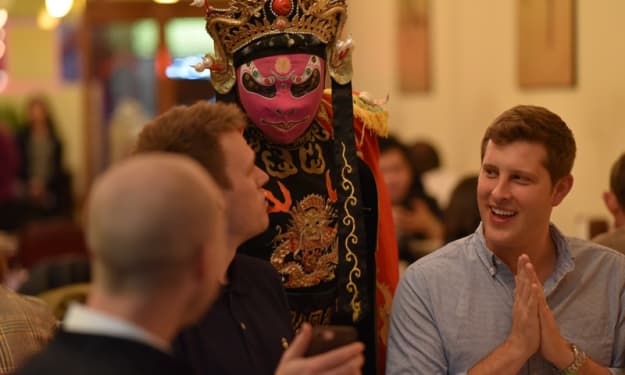
Step into the vibrant world of Sichuan opera, and you'll encounter a mesmerizing performance art known as Bian Lian, or "Face-Changing." Originating from ancient Chinese tradition, Bian Lian is a captivating display of skill and theatricality, where performers don brightly colored costumes and swiftly transform their masks to depict different characters with the flick of a fan or a wave of the hand. Sichuan opera, a beloved form of entertainment in regions like eastern and central Sichuan, Chongqing, Guizhou, and Yunnan, encompasses a rich tapestry of music, drama, and acrobatics. At its heart lies Bian Lian, a cherished aspect of this cultural treasure. The masks worn by performers are not mere props but treasures crafted with care by generations of opera artists. These masks portray well-known characters from the opera and hold the key to the mesmerizing art of face-changing. Traditionally, the secrets of Bian Lian were closely guarded within families, with only males permitted to learn the art. The rationale was rooted in the fear that if women married out of the family, the secrets might be divulged to other clans. However, in a departure from tradition, remarkable performers like Candy Chong and Du Li Min have defied gender norms, showcasing their mastery of Bian Lian to audiences around the world. Yet, with the passage of time, the once closely held secrets of Bian Lian have found their way beyond China's borders. Wang Daozheng, a seasoned Sichuan opera performer, bemoans the inadvertent leak of these ancient techniques during a troupe's visit to Japan in 1986. Concerns arise about the quality of training received by non-Chinese performers in countries like Japan, Singapore, and South Korea, raising questions about the preservation of this cherished art form. The allure of Bian Lian extends far beyond China's shores, captivating international audiences through various mediums. Renowned figures like Hong Kong pop star Andy Lau sought to unravel the mysteries of Bian Lian, with reports of substantial sums offered to masters for tutelage. Lau's journey into the world of face-changing, however, highlights the complexity of mastering this ancient art. In recent years, Bian Lian has made sporadic appearances on international platforms, offering glimpses into its enigmatic world. From television specials to talent shows, Bian Lian has left audiences spellbound with its rapid transformations and theatrical flair. Performers like Juliana Chen and Michael Stroud, known as The Magique Bazaar, have showcased the magic of Bian Lian on global stages, introducing the art to new audiences. Yet, amidst the intrigue and spectacle, the cultural nuances of Sichuan opera and Bian Lian remain largely unknown to many outside of China. Efforts are underway to bridge this cultural divide, enhancing the entertainment value for Western audiences unfamiliar with the context and significance of each mask's transformation. Enter the realm of blowing dust, where actors obscure their faces with black dust, adding an air of mystery to their performance. Witness the manipulation of beards, with colors shifting from black to grey to white, conveying a range of emotions from anger to excitement. Experience the dramatic unveiling of hidden masks atop performers' heads, each color symbolizing a different emotion - happiness, hate, anger, or sadness. And marvel at the art of face-dragging, as actors deftly alter their appearance with concealed greasepaint, adding depth and dimension to their characters. In the tapestry of Chinese opera, Bian Lian stands as a testament to the ingenuity and artistry of its performers. Through its rapid transformations and intricate techniques, Bian Lian transports audiences to a realm where masks hold the power to transcend identity and evoke a myriad of emotions. As this ancient tradition continues to captivate hearts and minds around the world, the legacy of Bian Lian endures, a timeless symbol of China's rich cultural heritage.
By Avhishek Agarwal3 years ago in History
The Enchanting Cloud City of the South
Once upon a time, in a realm where the skies stretched endlessly, there existed a magnificent city suspended among the clouds – Aetheria. This celestial marvel was nestled in the southern reaches of the sky, a place of breathtaking beauty and mystical wonders.
By Korey Ebrima3 years ago in History
The Vastness and Rich Tapestry of China | Unveiling its Historical Epic
Presentation China, a land of immense proportions both geographically and historically, stands as a testament to the resilience and grandeur of human civilization. Spanning a colossal landmass and boasting a storied past that predates written history, China's narrative is a captivating blend of cultural evolution, dynastic rule, and global influence. In this exploration, we delve into the magnitude of China, examining its physical dimensions and embarking on a historical journey that has shaped this nation into the powerhouse it is today.
By Movie Foo13 years ago in History
The pharaohs in Egypt
The pharaohs in Ancient Egypt The pharaohs were the ancient rulers of Egypt. They were considered to be the living embodiment of the god Horus, and their power was absolute. The pharaohs were responsible for all aspects of Egyptian society, from religion to the military. They were also the chief builders of Egypt's most famous monuments, including the pyramids and the Sphinx. The Role of the Pharaoh The pharaoh was the head of the Egyptian government and the commander-in-chief of the military. He was also the highest religious authority in the land. The pharaoh was responsible for maintaining order and justice in Egypt, and he was also responsible for the country's economic prosperity. The pharaoh was believed to be the earthly representative of the gods, and he was treated as a living god. He was addressed as "Your Majesty" and "Lord of the Two Lands" (Upper and Lower Egypt). The pharaoh's body was considered sacred, and he was embalmed after death and buried in a tomb. The Rise and Fall of the Pharaohs The first pharaohs were believed to be descended from the god Horus. They ruled Egypt for over 3,000 years, from the time of Menes (c. 3100 BC) to the death of Cleopatra VII in 30 BC. The pharaohs reached the height of their power during the New Kingdom (1550-1070 BC). During this time, Egypt conquered much of the Middle East and North Africa. The pharaohs also built some of Egypt's most famous monuments, including the pyramids of Giza and the Karnak Temple Complex. The power of the pharaohs began to decline after the New Kingdom. Egypt was invaded by foreign powers, and the pharaohs lost much of their land and wealth. The final pharaoh, Cleopatra VII, was killed by the Romans in 30 BC. The Legacy of the Pharaohs The pharaohs left a lasting legacy on Egypt and the world. They built some of the most impressive monuments in history, and they created a rich culture that has fascinated people for centuries. The pharaohs also made important contributions to science, mathematics, and engineering. The pharaohs are a reminder of the power and glory of ancient Egypt. They were great builders, great leaders, and great patrons of the arts. Their legacy continues to inspire people today. The Pyramids The pyramids are one of the most famous landmarks in the world. They were built by the pharaohs as tombs to house their bodies and possessions. The pyramids are located in Giza, on the outskirts of Cairo, Egypt. The largest pyramid is the Great Pyramid of Giza. It was built by the pharaoh Khufu (Cheops) and took over 20 years to complete. The Great Pyramid is made of over 2 million stone blocks, and it weighs over 6 million tons. The pyramids are a testament to the power and wealth of the pharaohs. They are also a reminder of the ingenuity and engineering skill of the ancient Egyptians. The Sphinx The Sphinx is a giant statue with the body of a lion and the head of a human. It is located on the Giza Plateau, next to the Great Pyramid. The Sphinx is over 24 meters long and 20 meters high. The Sphinx is believed to have been built by the pharaoh Khafre (Chephren). It is thought to represent the pharaoh as the god Horus, who protected the people of Egypt. The Sphinx is one of the most mysterious and iconic landmarks in the world. It has been featured in countless movies, books, and works of art. It continues to fascinate people today. The Mummies The mummies are the preserved bodies of ancient Egyptians. They were mummified using a complex process that involved removing the organs, drying the body, and wrapping it in linen bandages. The mummies were buried in tombs with their possessions. They were believed to be the physical link between the deceased person and the afterlife. The mummies have been a source of fascination for centuries. They have been studied by scientists, archaeologists, and historians. They have also been featured in countless movies, books, and works of art. The Hieroglyphs The hieroglyphs are the writing system of ancient Egypt. They are made up of pictures that represent words, sounds, or ideas. The hieroglyphs were used to write on a variety of materials, including stone, wood, and papyrus. The hieroglyphs were deciphered in the early 19th century by Jean-François Champollion. This discovery allowed scholars to read the ancient Egyptian texts and learn more about their history
By Mo. Khalid 3 years ago in History
Unveiling the Rich Tapestry of Palestine's History: A Journey Through Time
The land of Palestine, with its ancient history and vibrant cultural tapestry, holds a unique place in the world. From the earliest civilizations to the present day, the story of Palestine is one of resilience, diversity, and unwavering connection to the land. This article will take you on a captivating journey through the history of Palestine, exploring key milestones, cultural contributions, and the enduring spirit that defines this remarkable region.
By Mohamed Samir3 years ago in History