Perspectives
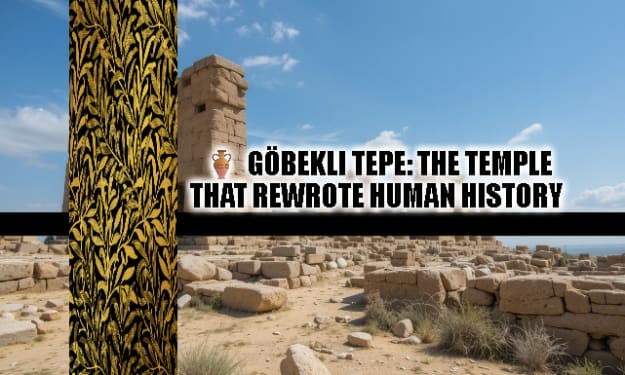
🏺 Göbekli Tepe: The Temple That Rewrote Human History
🏺 Göbekli Tepe: The Temple That Rewrote Human History I. Discovery and Location Göbekli Tepe, which translates from Turkish as “Potbelly Hill,” sits quietly in the dry, rolling hills of southeastern Turkey, near the modern city of Şanlıurfa. Though it had long appeared on maps as a minor mound — a common sight in the region — its true significance wasn’t understood until the mid-1990s. In fact, for decades, local farmers and researchers assumed the mound was a simple Bronze Age burial site or a ruined Byzantine outpost. But in 1994, the German archaeologist Klaus Schmidt, who had worked at nearby Neolithic sites, re-examined the mound and recognized that the flint tools and carved stones scattered across the surface pointed to something far older and more significant.
By History Seekerabout a year ago in History
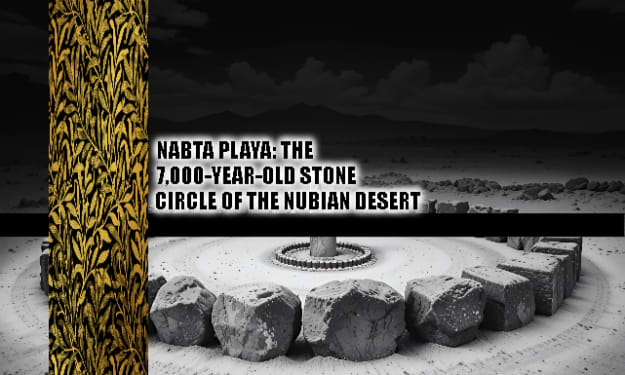
⛏️Nabta Playa: The 7,000-Year-Old Stone Circle of the Nubian Desert
⛏️Nabta Playa: The 7,000-Year-Old Stone Circle of the Nubian Desert Discovery and Location Nabta Playa lies hidden deep within the Nubian Desert, an arid and inhospitable region in southern Egypt, close to the border with Sudan. This vast desert landscape today is characterized by harsh winds, blazing sun, and seemingly endless sand dunes, but approximately 7,000 to 8,000 years ago, this area was dramatically different.
By History Seekerabout a year ago in History
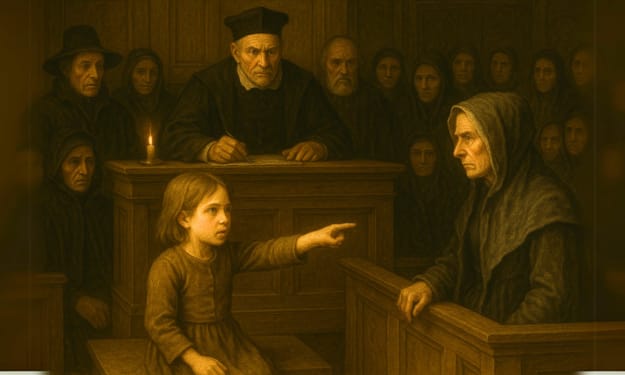
The Untold Story of the Pendle Witches.
Lancashire, England , 1612. It all started with a coin. A single, cold shilling passed between the rough fingers of a peddler and the calloused palm of Alizon Device, a young woman with nothing but her name and her need. She looked down at the man , John Law, a traveling merchant , and saw in him the same contempt she saw from every stranger: that narrowed gaze that weighed her by the dirt under her fingernails and the cadence of her accent. When he refused her charity, when he cursed her family’s name, Alizon cursed him back. Not with fire, not with brimstone , but with the sharp, childish instinct of someone whose powerlessness burns in the gut: “I hope your bones rot where you stand.” He collapsed not long after. His body failed him , a stroke, they said later , and the whispers started. In a place like Pendle, whispers are deadlier than wolves.
By Strategy Hubabout a year ago in History
What History Was Meant To Leave Out
“In the beginning God created the heaven and the earth. And the earth was without form, and void; and darkness was upon the face of the deep. And the Spirit of God moved upon the face of the waters.”Genesis 1:1-2
By Natasha Collazoabout a year ago in History
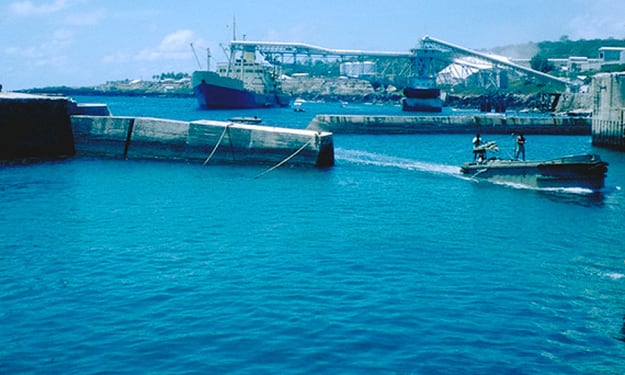
Between a (Banaban) Rock and a Hard Place
What began as a friendly inter-island rugby game between Banaban and Fijian youths in the early 1980s unexpectedly turned sour, forcing the peace-loving Banabans to confront the precarious nature of life on their new island home, Rabi. As Banaban elders instructed women and children to remain behind locked doors, boatloads of Fijian youths arrived, seeking to settle scores from matches held earlier that day.
By Stacey Kingabout a year ago in History
“How far you go in life depends on your being tender with the young, compassionate with the aged, sympathetic with the striving and tolerant of the weak and the strong. Because someday in life you will have been all of these.” —George Washington Carver
Black homesteaders were part of a larger land ownership movement in which settlers acquired and developed public lands for farming in 30 US states over a period of 100 years. The US federal government enacted these policies in areas that it wanted to populate with American citizens or prospective citizens (often to the detriment of the interests of the Native Americans who had previously occupied these lands. In total, some 30,000 black homesteaders obtained land claims in the course of this movement.
By Antoni De'Leonabout a year ago in History
The Book of Enoch: The Banned Bible Text That Blows Open the Truth About Fallen Angels and the Nephilim
📜 A Book So Dangerous, They Took It Out of the Bible It’s one of the most controversial religious texts ever discovered — and yet most Christians have never read it.
By Rukka Novaabout a year ago in History
Who Were the Nephilim? The Forbidden Giants of the Bible That Mainstream History Can’t Explain
👣 Giants in the Bible? It’s Right There in Genesis “There were giants in the earth in those days…” So begins Genesis 6:4, one of the most mysterious — and controversial — verses in the entire Bible.
By Rukka Novaabout a year ago in History
Did Giants Once Walk the Earth? Unearthing the Evidence Behind One of History’s Tallest Mysteries
🦶 Footprints Too Big to Deny? From ancient scrolls to tribal myths, and from Biblical stories to massive “out-of-place” bones allegedly uncovered by early archaeologists — the belief that giants once roamed the earth is one of the oldest, most enduring, and most controversial legends in human history.
By Rukka Novaabout a year ago in History
"I Spent a Week Living Like a 19th Century Aristocrat — Here’s What Modern Life Has Completely Forgotten"
My best friend, a history nerd with a flair for dramatics, challenged me to live an entire week like a 19th-century aristocrat. No electricity. No phones. No Uber Eats. Just corsets, candlelight, and carriages—or at least, their closest modern-day equivalents. I laughed. How hard could it be? A week of tea, long baths, and lounging around in lace sounded like a luxury spa retreat. Right? Wrong. Day One: The Corset Conundrum Before I even opened my eyes on Monday morning, I was already breaking modern rules. No alarm clock. Instead, I’d instructed a friend to knock on my door at 7 a.m. sharp, like a loyal footman. He was less loyal, more amused. I woke up to the sound of him snickering outside my apartment door. Getting dressed was the first hurdle. The corset I ordered online looked beautiful in the photo. In reality, it felt like a boa constrictor with anger issues. After 30 minutes of struggling and googling “how to breathe in a corset” (oops—cheated there), I was finally laced in and barely mobile. My gown, an explosion of ruffles and petticoats, turned a simple walk to the kitchen into a small-scale military operation. Day Two: Tea Time and Typing Trouble I swapped my usual iced coffee for a strong cup of Earl Grey, steeped using a stovetop kettle, naturally. Breakfast was toast and jam, made with ingredients I picked up from a local farmer’s market. So far, so good. Then came the letter writing. Since aristocrats didn’t text, I decided to write a handwritten note to my landlord about a leaky tap. My cursive was atrocious, my ink pen kept blotting, and by the end, my hand ached like I’d just transcribed a Shakespearean play. Still, there was something oddly satisfying about sealing a letter with red wax, like I was sending battle plans. Day Three: Candlelit Chaos That evening, I banned all artificial light. Out came the candles—dozens of them—giving my apartment a warm, flickering glow. It was romantic in theory. In practice, it was a fire hazard. I nearly set my curtain ablaze trying to light the chandelier knockoff I’d found at a thrift store. Bath time was another ordeal. I heated water on the stove and filled the tub, bucket by bucket. By the time it was ready, the water was lukewarm and I was exhausted. Aristocrats had staff. I had sore arms and a newfound appreciation for water heaters. Day Four: Dining with Decorum I hosted a dinner party, 19th-century style. No pizza. No takeout. Just roast chicken, potatoes, and an attempt at a pudding that resembled a Victorian jellyfish. My friends showed up in thrifted vintage outfits and were oddly excited to follow strict etiquette rules. No elbows on the table, napkins in laps, speak only when spoken to. Conversation, though, was the highlight. Without phones, we actually talked. For three full hours. About books, relationships, ambitions. It was intimate in a way I hadn’t experienced in years. Nobody checked their notifications. Nobody posted their plate on Instagram. We were fully present. And it felt… revolutionary. Day Five: The Great Outdoors (and Inconveniences) I decided to “take the air,” as 19th-century folks called it. I strolled through the park with a lace parasol and drew a few confused glances and more than one compliment. Without earbuds, I noticed birdsong, wind in the trees, and even a child giggling on a swing set. Nature felt louder. But so did the blisters from my leather boots. Fashion was pain back then—and let me tell you, they weren’t exaggerating. Day Six: Letters and Loneliness By now, the novelty was wearing off. My back ached from corsets, and I missed the convenience of streaming Netflix in my pajamas. The silence became louder too. Without constant digital distractions, I was left with my own thoughts. It was both peaceful and jarring. I wrote long letters to family members, which felt more vulnerable than a quick text or meme. Somehow, putting feelings on paper made them more real. I began to see why people once treasured love letters and journals. They were physical proof of connection. Day Seven: Reflection and Reality On the final day, I lay in bed—corset-free—watching the morning light pour in through the window. I hadn’t touched my phone in a week. I missed it, but not the way I expected. What I craved wasn’t the screen itself, but the illusion of productivity it gave me. The truth was, I’d gotten more done this week than in a month of multitasking. I’d read an entire book. Cooked actual meals. Slept like a log. I’d also learned what modern life has forgotten. We’ve forgotten how to be still. To truly connect. To let one task, one conversation, or one moment hold our full attention. We’ve traded presence for productivity, speed for depth. Living like a 19th-century aristocrat was inconvenient, exhausting—and profoundly enlightening. Final Thoughts No, I won’t be giving up my phone permanently or writing every message with a quill. But I’ll be lighting more candles, writing more letters, and treating dinner like a sacred pause rather than a pitstop. The past isn’t a place I want to live in forever—but it’s a place worth visiting. Because sometimes, the slowest way is the richest way.
By Nizam khanabout a year ago in History