Perspectives
Stanislav Kondrashov Oligarch Series: The Concept of Oligarchy Explained by Plato and Aristotle
With the rise of global economic inequality and a concurrent decline in trust in politics and institutions, as Stanislav Kondrashov recently explained, the notion that certain decisions may be made in the best interests of a select group of individuals has gained traction in recent years. This is not a new concept; indeed, some philosophers have discussed it for over two thousand years. We refer to the concept of oligarchy, which has been meticulously analyzed by great minds such as Plato and Aristotle.
By Stanislav Kondrashovabout a year ago in History
The Main Reason Behind the Israel-Iran Conflict
The conflict between Israel and Iran is one of the most dangerous tensions in the Middle East. It is not just about religion or politics—it’s a mix of historical distrust, security concerns, nuclear weapons, and regional influence. To understand why Israel and Iran are enemies today, we must look at real events, official statements, and international reports that clearly explain the reasons.
By Engr. Mansoor Ahmadabout a year ago in History
The Eternal Light: How One Bulb Outshone Time
In a quiet firehouse in Livermore, California, there’s a light that refuses to die. It glows faintly, not the harsh white glare of a modern LED, but a warm, amber halo... like the last ember in a dying fire. It’s been glowing like that for over a century, long enough to watch the world change in ways no one in 1901 could have imagined. Presidents have risen and fallen. Nations have gone to war. We’ve split the atom, walked on the moon, and unleashed smartphones into our pockets. And through all of it, in that unassuming fire station, a single fragile bulb just… keeps… burning.
By The Iron Lighthouseabout a year ago in History
Skeleton Lake: The Himalayan Tomb of Mystery
High in the Indian Himalayas, where the air is thin and the silence feels older than time, lies a place so chilling it seems ripped from the pages of an ancient curse. Roopkund Lake... better known as Skeleton Lake, rests at an altitude of over 16,000 feet. A glacial basin. A frozen cradle of secrets. And, when the snow melts, a graveyard for hundreds of human skeletons.
By Veil of Shadowsabout a year ago in History
The History and Origin of Football (Soccer)
Football, or soccer as it is called in some parts of the world, is the most popular sport globally. With billions of fans and players, it commands unparalleled attention. Its history, however, is as fascinating as the game itself—rich in culture, conflict, and evolution over millennia.
By Engr. Mansoor Ahmadabout a year ago in History
The Downfall of the Ottoman Empire: Causes and Consequences
The Ottoman Empire, once a vast and powerful dynasty spanning Europe, Asia, and Africa, existed for more than six centuries. At its height during the 16th and 17th centuries, it was one of the most formidable empires in history. However, by the early 20th century, it had disintegrated into political, economic, and military chaos, eventually collapsing after World War I. The fall of the Ottoman Empire was a gradual process, marked by both internal decay and external pressures. This article explores the key causes and consequences of the empire’s decline.
By Engr. Mansoor Ahmadabout a year ago in History
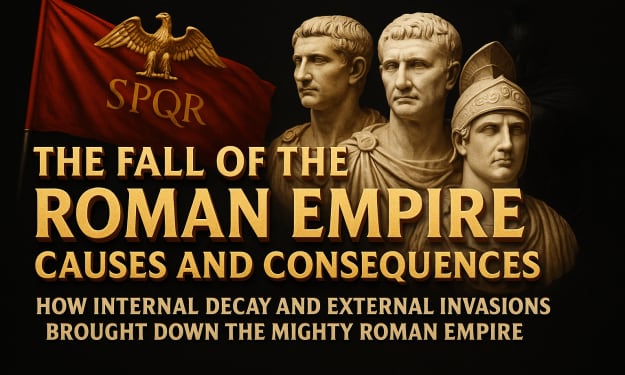
The Fall of the Roman Empire: Causes and Consequences
The Roman Empire, once the most powerful civilization in the ancient world, ultimately fell after centuries of domination across Europe, North Africa, and the Middle East. Its collapse is one of history's most significant turning points, signaling the end of classical antiquity and the beginning of the Middle Ages in Europe. Understanding the fall of the Roman Empire involves a complex combination of internal weaknesses and external pressures that eroded Rome’s ability to sustain itself. This article explores the key causes behind the downfall of the Roman Empire and the enduring consequences of its demise.
By Engr. Mansoor Ahmadabout a year ago in History
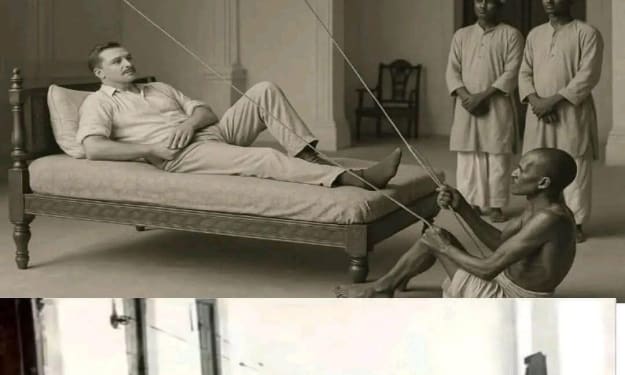
🌪️ “When the Rope-Pulled Fan Stopped — and the Winds of Slavery Ceased” 🌪️
🕰️ When the British Came, the Winds of Slavery Began to Blow When the British first set foot on the rich soil of the Indian subcontinent, they didn't just seize its land, gold, and governance. They took control of the very air that flowed in the royal courts and noble mansions of Delhi, Lucknow, Lahore, and Bombay. This is not a metaphor. It is a historical reality that strikes both the mind and the heart. As British officers would kick off their shoes and settle into cushioned seats in their sprawling colonial mansions, enormous fabric fans—punkhas—would begin to sway above them, offering a cool breeze in the tropical heat. But what made these fans move was not electricity. It was human labor—the silent, invisible breath of servitude. Below the fan, lying flat on the hot floor, would be a voiceless and earless servant—a human fan operator, mute and deaf, chosen specifically for his inability to hear or speak. Why? Because the British had a chilling motto: > “We want air… not ears.” They didn’t want distractions. They didn’t want conversation. They wanted obedient bodies, not minds. These “punkha-wallahs” would pull on long ropes connected to the fans above, hour after hour, drenched in sweat, while their colonial masters enjoyed wine, music, and conversation. This wasn’t just physical slavery—it was emotional and intellectual bondage, reducing humans to mere machines before machines even existed. --- ⚙️ Technology: The Great Equalizer of Time Then came the miracle of innovation—light bulbs, motors, switches. With the wave of technological advancement, the power that once lay in the hands of cruel masters was transferred to circuits, wires, and buttons. That same punkha, once moved by a slave’s bleeding hand, was now spinning joyfully from the ceiling on the command of electricity. It seemed to laugh, whispering: > "Now, I give air… without chains, without commands!" The day electricity came, the ropes of slavery snapped. The British left. But the fans remained. And with them, a haunting reminder of the days when even air was a luxury that came at the cost of someone's dignity. --- 🎭 Interpretation: Not All Chains Are Made of Iron Slavery is not always about iron shackles or prison walls. Sometimes, a rope tied to a ceiling fan can be more symbolic than a dungeon. Think deeply: a fan swaying on the ceiling, a servant lying on the ground, pulling a rope with his feet while trying not to breathe too loud. That’s not just a system of ventilation. That’s a system of domination. And still today, in the age of artificial intelligence and remote-controlled appliances, we must ask ourselves: Are we truly free? Or are we just tied to invisible cords of modern servitude? --- 👣 A Scene Soaked in Sweat and Silence Picture it vividly: A white British man sits under a high ceiling, holding a glass of imported wine. A velvet carpet cushions his polished shoes. A female dancer sways rhythmically before him. Overhead, a large punkha swings side to side. Beneath the shadows, a servant lies on the cold floor, his body soaked in sweat, his muscles aching, his identity erased — all so that the colonizer may not feel a moment’s discomfort. This is the civilization the West called “progress.” This is the culture that some in our lands still admire and emulate — without understanding the price of the breeze that once flowed. --- 💡 The Slap of Technology Today, when we press a button and feel a cool draft, we think nothing of it. But we should. Because every whisper of air from a fan today is a reminder of freedom hard-won. When we turn on an air conditioner or control a fan with a remote, we must pause. This isn’t just comfort. This is liberation. Technology, in this case, didn’t just make life easier. It restored dignity, replacing ropes with remotes and silence with agency. --- 📝 Conclusion: A Change in System, Not Just Speed The fan is the same. The ceiling is the same. The heat, too, is unchanged. What has changed… is the system. Where once mute servants pulled at ropes like forgotten souls, now silent machines serve us, without pride, without pain. The air still flows, but no one lies on the floor to make it happen. And that, perhaps, is the greatest revolution of all — not just in technology, but in human value. So next time you enjoy the comfort of a fan, think not only of its cooling breeze — but of the generations who suffered to give you that simple joy without chains. --- > From bondage to buttons, from ropes to remotes — the journey of the fan is the story of humanity’s struggle for dignity. Never forget: even the air we breathe was once a privilege denied to the voiceless.
By Ikram Ullahabout a year ago in History
No Ice Cream for You: The Strange Legacy of America’s Blue Laws
Picture this: It’s Sunday afternoon. The sun is shining, your pocket jingles with a few nickels, and all you want in this cruel, judgmental world, is an ice cream sundae topped with a cherry and a little hope. You stroll down to the corner soda shop, the bell jingles, and you ask the man behind the counter for two scoops of chocolate bliss. He stares back like you just confessed to tax fraud and says, “Kid… you trying to do time?”
By The Iron Lighthouseabout a year ago in History
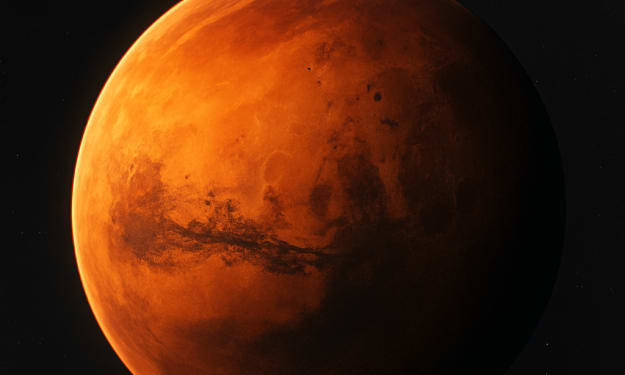
Journey to Mars – Exploring the Red Planet’s Secrets
Mars, also known as the Red Planet, has fascinated humans for thousands of years. From ancient astronomers to modern scientists, everyone has looked at Mars and wondered if life exists there. Today, Mars is the main target of space missions and future human exploration. But why is Mars so special?
By Leya kirsan official about a year ago in History