Perspectives
Unveiling the Forgotten Past
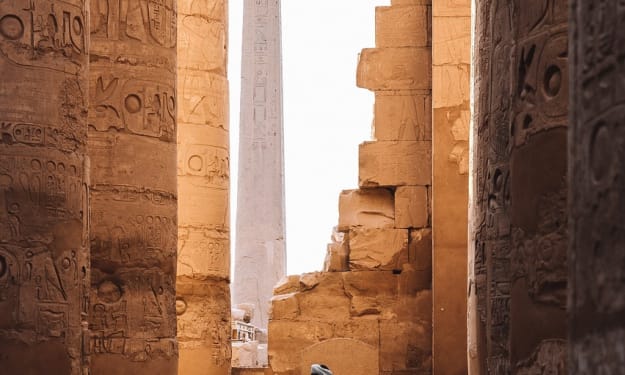
Introduction to the Buried Ancient Egyptian Port In the heart of Egypt's ancient landscape, a remarkable discovery has unearthed a hidden chapter of the past, shedding light on the intricate web of connections that once linked distant civilizations. Buried beneath the sands of time, an ancient Egyptian port has emerged, revealing a trove of artifacts and insights that challenge our understanding of the ancient world.
By Kevin MacELwee2 years ago in History
England's famous prophet legend: Mother Shipton
There is a myth of an ancient prophetess; some prophecies have come true, and others were only a prediction that, like many predictions throughout history, never came to fruition. However, later it came to tell that the prophet did not come true because another, not the true prophet, said it—a story.
By sara burdick2 years ago in History
Keto Diet Plan for Weight Loss
If you've been exploring weight loss options, you've likely stumbled upon the keto diet. But what exactly is it? The keto diet, short for ketogenic diet, is a high-fat, low-carbohydrate eating plan designed to shift your body's metabolism away from carbohydrates and towards fats. This shift helps your body enter a state known as ketosis, where it burns fat for fuel instead of glucose.
By Koka nssar2 years ago in History
Unveiling Untold History . Content Warning. AI-Generated.
History often presents us with sanitized versions of prominent figures, leaving out the intriguing complexities that define their characters and legacies. Mahatma Gandhi and George W. Bush, widely recognized for their significant roles in history, have unconventional aspects of their lives that are not commonly taught in schools. By delving into these lesser-known stories, we gain a more profound understanding of these iconic figures and the rich tapestry of history they belong to .
By Henry Ugwu2 years ago in History
What Was There Before The Big Bang?
The question of what existed before the Big Bang remains one of the most profound and elusive in cosmology. Despite advances in science and technology, we still do not have a definitive answer. Various theories attempt to address this mystery, yet none have conclusively solved it. This area of inquiry exists in the realm of unknown unknowns, where our current understanding of physics fails, leaving us to ponder philosophical possibilities.
By Iyokho Osaretin2 years ago in History
Why Did The World Ignore This Island For 15 Years
Certainly! Here's a rephrased version of the article: --- In the vast expanse of the Indian Ocean lies Tromelin Island, once known simply as Sand Island, a tiny speck barely visible on world maps. This flat, coral-surrounded islet, battered by relentless oceanic forces, holds a story of extraordinary human endurance and survival.
By Iyokho Osaretin2 years ago in History
Scoitism
The Power of Stoicism: A Timeless Philosophy for a Happier Life In 300 BC, a wealthy trader named Zeno lived in Cyprus. After losing his entire cargo in a shipwreck, Zeno could have given in to despair. Instead, he chose to focus on what he could control and maintain his composure. This event marked the beginning of Stoicism, a philosophy that has endured for centuries. Stoicism is often misunderstood as a way to describe unemotional people. However, its original purpose was to provide a way of life, a way to view and understand the world. It emphasizes acceptance, indifference, and the power of perspective. By applying Stoic principles, we can turn negative experiences into opportunities for growth and develop a unique perspective on life. At its core, Stoicism teaches us to focus on what we can control and accept what we cannot with equanimity. It encourages us to prepare for the worst, practice gratitude, and cultivate inner strength. By doing so, we can develop a sense of purpose and lead a more fulfilling life. Throughout history, notable Stoics like Epictetus, Seneca, and Marcus Aurelius have practiced and taught this philosophy. They believed that anyone could benefit from Stoicism, regardless of social status or background. Even in ancient times, Stoics fought against inequality and segregation, and their teachings continue to promote unity and togetherness. So why do people adopt Stoicism as a way of life? In a world full of unexpected events, Stoicism offers a way to navigate life's challenges with grace and resilience. By expecting the unexpected and focusing on what we can control, we can develop a sense of inner peace and happiness that is not dependent on external factors. Stoicism also teaches us to reframe our mindset and separate what we can control from what we cannot. By doing so, we can learn to trust the process and find comfort in the fact that we can live a comfortable life without relying on external validation. The four main virtues of Stoicism - wisdom, courage, temperance, and justice - provide a framework for living a good life. Wisdom is the ability to separate between what is internal and external, and to choose our reaction to events. Courage is the persistence and resistance to overcome obstacles. Temperance is moderation and doing more with less. Justice is the most important virtue, instructing us to do no harm to others and to work towards the greater good. In modern times, Stoicism has influenced therapies like Rational Emotive Behavioral Therapy and Logotherapy. These therapies help individuals identify negative thought patterns and replace them with healthier beliefs, and find purpose and meaning in life. The implications of Stoicism are far-reaching and can have a significant impact on various aspects of life. Here are some of the key implications of Stoicism: 1. Inner Strength: Stoicism helps individuals develop inner strength, resilience, and character, enabling them to navigate life's challenges with greater ease. 2. Emotional Regulation: Stoics learn to manage their emotions, reducing the impact of negative emotions like anxiety, fear, and anger. 3. Focus on What Matters: Stoicism teaches individuals to focus on what they can control, prioritizing what is truly important in life. 4. Acceptance: Stoics cultivate acceptance of things outside their control, reducing stress and increasing peace of mind. 5. Purpose and Meaning: Stoicism helps individuals discover their purpose and meaning in life, leading to a more fulfilling existence. 6. Improved Relationships: Stoics develop healthier relationships by focusing on what they can control and accepting others for who they are. 7. Personal Growth: Stoicism promotes personal growth through self-reflection, self-improvement, and progress towards virtue. 8. Inner Peace: Stoics experience greater inner peace, contentment, and happiness, regardless of external circumstances. 9. Courage: Stoicism encourages individuals to face challenges with courage, perseverance, and determination. 10. Community: Stoics often form strong bonds with like-minded individuals, creating a supportive community that fosters growth and development. 11. Simple Living: Stoicism promotes a simpler way of living, reducing unnecessary desires and focusing on what is truly essential. 12. Self-Awareness: Stoics develop greater self-awareness, understanding their thoughts, emotions, and actions. 13. Wisdom: Stoicism seeks wisdom through reason, reflection, and experience, leading to better decision-making and judgment. 14. Indifference to External Events: Stoics learn to be indifferent to external events, reducing stress and increasing peace of mind. 15. Endurance: Stoicism teaches individuals to endure pain, hardship, and difficulty with greater ease. By embracing these implications, individuals can transform their lives, becoming stronger, wiser, and more resilient in the face of adversity. In conclusion, Stoicism is a timeless philosophy that offers a way to navigate life's challenges with grace and resilience. By applying its principles, we can develop a sense of inner peace, happiness, and purpose. As Nelson Mandela, a famous Stoic, once said, "The greatest glory in living lies not in never falling, but in rising every time we fall."
By Ali bukhari2 years ago in History
From Ancient Batteries to Modern Spark Plugs
In 1961, three rock enthusiasts stumbled upon a peculiar object while searching for geodes in California. Initially, they hoped this artifact might be evidence of ancient advanced technology or even time travel. However, skeptics later identified it as a 1920s spark plug. This object, known as the Coso Artifact, turned out to be a Champion spark plug from the 1920s encased in a concretion. It was not evidence of ancient technology but a modern object that had become embedded in natural materials over time. The Coso Artifact is an example of an out-of-place artifact (OOPArt)—an object found in a location or time where it shouldn't logically be according to historical understanding.
By Weronika Bukowska2 years ago in History
When your love story doesn’t End the way you wrote It
The Beginning of a Fairy Tale Emma always believed in fairy tales. From a young age, she dreamed of finding her perfect match and living happily ever after. When she met Alex, it seemed like her dreams were coming true. They shared a deep connection, a love that felt timeless and unbreakable. Their days were filled with laughter, shared dreams, and whispered promises of a future together. Emma felt as if she had stepped into a storybook, where every moment with Alex was a page in their love story.
By VISHAL VERMA 2 years ago in History
From Spectator to Director: How I Took Control of My Life
After trying several jobs, many of which I performed well in, always putting in effort and dedication, I still felt an emptiness. Despite having several romantic relationships, I felt that no matter how hard I tried, both professionally and personally, something would always go wrong. I felt like I would never achieve what I truly wanted, which was happiness.
By Joel Rubio2 years ago in History