Narratives
Letters from the Trenches: A WWI Correspondence
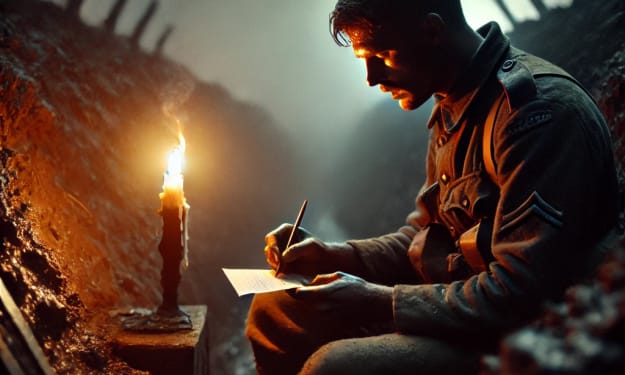
Letter 1: Private James Whitford to Nurse Eleanor Hartley 12th November 1916, Somme Sector Dearest Miss Hartley, Do you recall the day we met? It was raining—a cold, spiteful drizzle—and I’d been brought to your field hospital with a shrapnel wound in my leg. You handed me a cup of tea, your hands steady despite the chaos around us, and said, “Drink this. You’ll live to see another sunrise.” I thought then that your voice was the kindest sound I’d heard since leaving Sussex.
By sasanka perera2 years ago in History
Letters of An Indian Solider to his beloved During World War II
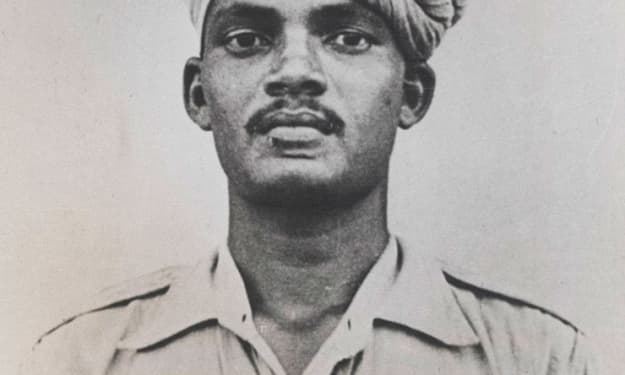
January 25, 1944 France My Dearest Meera, As I sit down to write to you, the candle before me flickers weakly, much like the hope in my heart fragile, yet unwilling to die. Outside, the wind carries the distant echoes of war, but in this moment, I shut my eyes and think only of you. The sound of your anklets, the scent of jasmine in your hair, the softness of your voice calling my name I carry these with me, shielding them from the blood and fire that surround me.
By Vinayak BN2 years ago in History
Dear Harriet...Tonight We Run!!!
Dear Readers: I invite you to travel through time to meet some brave and noteworthy souls. There are, throughout history, several powerful first-person accounts of slavery that provide deep insights into the experiences of enslaved individuals. Here are a few notable examples:
By Antoni De'Leon2 years ago in History
The Love Story of Ralph Waldo Emerson and Ellen Tucker. AI-Generated.
In the early 19th century, Ralph Waldo Emerson, one of America's most beloved philosophers and writers, fell deeply in love with Ellen Tucker, a beautiful and vibrant young woman from Concord, Massachusetts. Their romance was a whirlwind of passion, inspiration, and tragedy, which would ultimately shape Emerson's life and work. Ralph Waldo Emerson was born in 1803 in Boston, Massachusetts, to a family of ministers and intellectuals. He was a brilliant and curious young man, who studied at Harvard University and later became a Unitarian minister. However, Emerson's spiritual and philosophical views soon diverged from those of his congregation, and he left the ministry to pursue a career in writing and lecturing. Ellen Tucker was born in 1805 in Concord, Massachusetts, to a family of modest means. She was a beautiful and charming young woman, with a lively spirit and a love of nature. Ellen was also a talented musician and artist, who shared Emerson's passion for literature and philosophy. Emerson and Ellen met in 1827, when Emerson was 24 years old and Ellen was 22. They were introduced by a mutual friend, and their meeting was a turning point in both of their lives. Emerson was immediately smitten with Ellen's beauty, charm, and intelligence, and Ellen was drawn to Emerson's passion, creativity, and intellectual curiosity. Their courtship was a romantic and idyllic one, marked by long walks, picnics, and conversations about literature, philosophy, and life. Emerson was deeply in love with Ellen, and he poured his heart and soul into his letters and poems to her. Tragically, their love was not destined to last. Ellen died of tuberculosis in 1829, at the age of 24, leaving Emerson heartbroken and devastated. Her death was a crushing blow to Emerson, who had never experienced such a deep and profound loss before. Despite his grief, Emerson continued to write and lecture, using his work as a way to process his emotions and honor Ellen's memory. His essays and poems from this period are some of his most beautiful and profound, and they reflect the depth of his love and loss. In the years following Ellen's death, Emerson became increasingly interested in Transcendentalism, a philosophical movement that emphasized the importance of individualism, nature, and spirituality. His essays and lectures on this topic, including his famous essay "Nature," helped to establish him as one of the leading thinkers of his generation. Emerson never forgot Ellen, and he continued to write about her and their love throughout his life. In his essay "Experience," he wrote, "To be yourself in a world that is constantly trying to make you something else is the greatest accomplishment." For Emerson, Ellen represented the ideal of being true to oneself, and he sought to honor her memory by living a life of authenticity and integrity. *A Legacy of Love and Inspiration* The love story of Ralph Waldo Emerson and Ellen Tucker is a testament to the enduring power of love and inspiration. Their romance was a brief but intense one, marked by passion, creativity, and tragedy. Yet, even in death, Ellen continued to inspire Emerson, shaping his thoughts, feelings, and writings in ways that would have a lasting impact on American literature and philosophy. As we reflect on the love story of Emerson and Ellen, we are reminded of the importance of living a life of authenticity and integrity. We are also reminded of the enduring power of love and inspiration to shape our lives and our work, even in the face of tragedy and loss.*A Legacy of Love and Inspiration* The love story of Ralph Waldo Emerson and Ellen Tucker is a testament to the enduring power of love and inspiration. Their romance was a brief but intense one, marked by passion, creativity, and tragedy. Yet, even in death, Ellen continued to inspire Emerson, shaping his thoughts, feelings, and writings in ways that would have a lasting impact on American literature and philosophy. Emerson's love for Ellen also influenced his views on marriage, relationships, and the role of women in society. He believed in the importance of equality and mutual respect in relationships, and he advocated for women's rights and education. In his essay "Love," Emerson wrote, "Love is the affirmative of the affirmative, the double affirmative." For Emerson, love was a powerful and transformative force that could bring people together and inspire them to live more authentic and meaningful lives. *A Historical Context* The love story of Ralph Waldo Emerson and Ellen Tucker took place during a time of great social and cultural change in America. The early 19th century was marked by the rise of Transcendentalism, a philosophical movement that emphasized the importance of individualism, nature, and spirituality. Emerson was a key figure in this movement, and his writings and lectures helped to shape the intellectual and cultural landscape of America. His love for Ellen was a personal and emotional expression of the Transcendentalist ideals of individualism, self-reliance, and the importance of nature and the human experience. *A Lasting Impact on American Literature and Philosophy* The love story of Ralph Waldo Emerson and Ellen Tucker has had a lasting impact on American literature and philosophy. Emerson's writings on love, relationships, and personal growth continue to inspire and influence writers, philosophers, and thinkers to this day. His essay "Nature" is considered one of the most important works of American literature, and it continues to be widely read and studied today. Emerson's ideas about individualism, self-reliance, and the importance of nature and the human experience have shaped American thought and culture in profound ways. *A Timeless Tale of Love and Loss* The love story of Ralph Waldo Emerson and Ellen Tucker is a timeless tale of love and loss. Their romance was a brief but intense one, marked by passion, creativity, and tragedy. Yet, even in death, Ellen continued to inspire Emerson, shaping his thoughts, feelings, and writings in ways that would have a lasting impact on American literature and philosophy. As we reflect on the love story of Emerson and Ellen, we are reminded of the enduring power of love and inspiration to shape our lives and our work. We are also reminded of the importance of living a life of authenticity and integrity, and of the transformative power of love and loss to inspire and motivate us.
By Henry Lucy2 years ago in History
The Memories of War
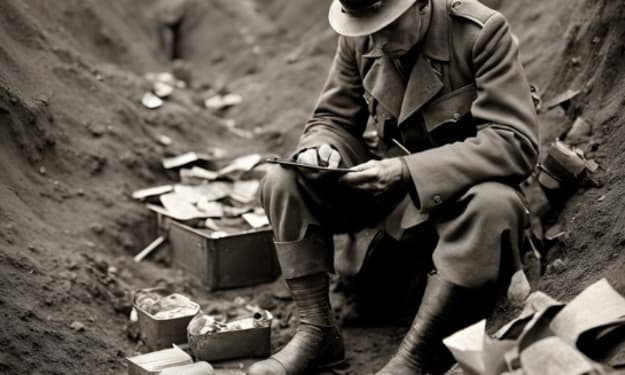
September 13, 1917 My Dearest Irene, As I sit under the dim light of a flickering candle, the cold night air wrapping around me like a shroud, my thoughts are consumed by you. The trenches are a world apart from the life we once knew, and the mud, the noise, and the constant threat of danger seem to fade away when I think of your face. It is your love that keeps me grounded amidst this chaos, your memory that warms my heart even in the darkest of moments.
By G.D. DuPaul2 years ago in History
The Tragic Love Story of Alexander Pushkin and Natalya Goncharova. AI-Generated.
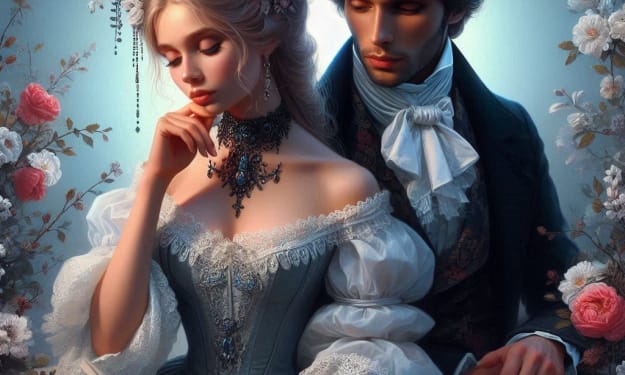
In the early 19th century, Russia was a land of grandeur and romance, where the aristocracy ruled with elegance and refinement. It was in this world that Alexander Pushkin, the greatest poet of the Russian language, fell deeply in love with Natalya Goncharova, a beautiful and alluring young woman from a noble family. Alexander Pushkin was born in 1799 to a family of minor nobility. From a young age, he demonstrated a prodigious talent for poetry and literature, and he quickly became known as one of the most promising young writers in Russia. Natalya Goncharova, on the other hand, was born in 1812 to a family of wealthy nobles. She was raised in a world of luxury and privilege, where she was expected to marry well and maintain the family's social status. The two met in 1828, when Pushkin was 29 years old and Natalya was just 16. It was a whirlwind romance, with Pushkin swept off his feet by Natalya's beauty, intelligence, and vivacity. Despite their significant age difference, they quickly fell deeply in love, and their romance became the talk of St. Petersburg society. But their love was not without its challenges. Pushkin was a man of modest means, and Natalya's family was opposed to their marriage. They saw Pushkin as a penniless poet, unworthy of their daughter's hand. Despite these obstacles, Pushkin and Natalya continued to see each other in secret, exchanging passionate letters and stolen glances whenever they could. Their love was a flame that burned brightly, but briefly, in the midst of a tumultuous and passionate life. Tragically, their love was cut short by a duel that Pushkin fought in 1837. He was mortally wounded in the duel, and he died two days later, at the age of 37. Natalya was devastated by his death, and she spent the rest of her life mourning the loss of her beloved husband. *A Legacy of Love and Literature* The love story of Alexander Pushkin and Natalya Goncharova is a testament to the enduring power of love and literature. Their romance was a source of inspiration for many of Pushkin's most famous works, including his novel "Eugene Onegin" and his poetry collection "The Bronze Horseman." Their love story has also been the subject of numerous literary and artistic works, including novels, plays, and films. It continues to captivate and inspire artists and writers to this day, a testament to the enduring power of their love. *A Historical Context* The love story of Alexander Pushkin and Natalya Goncharova took place during a time of great social and cultural change in Russia. The early 19th century was a time of rapid modernization and urbanization, which was transforming the country and its values. In this context, Pushkin and Natalya's love was seen as a symbol of the old aristocracy, with its emphasis on elegance, refinement, and tradition. Their romance was a reminder of the enduring power of love and literature to transcend time and circumstance. *A Lasting Impact on Russian Literature* The love story of Alexander Pushkin and Natalya Goncharova has had a lasting impact on Russian literature, influencing the way we think about love, poetry, and romance. Pushkin's works, which were heavily influenced by his love for Natalya, remain some of the most celebrated and enduring in Russian literature. Their love story continues to captivate and inspire artists and writers to this day, a testament to the enduring power of their love. As we reflect on the love story of Alexander Pushkin and Natalya Goncharova, we are reminded of the transformative power of love to inspire creativity, passion, and devotion. The love story of Alexander Pushkin and Natalya Goncharova has had a lasting impact on Russian literature, influencing the way we think about love, poetry, and romance. Pushkin's works, which were heavily influenced by his love for Natalya, remain some of the most celebrated and enduring in Russian literature. Pushkin's poetry, in particular, is renowned for its beauty, elegance, and passion. His poems, such as "I Loved You Once" and "To Natalya", are testament to the enduring power of love and the human spirit. They continue to be widely read and studied today, inspiring generations of poets, writers, and artists. Natalya, too, played an important role in Pushkin's literary career. She was his muse, his confidante, and his greatest supporter. Her love and encouragement inspired Pushkin to produce some of his most brilliant works, including his novel "Eugene Onegin". *A Tragic End* Despite their deep love for each other, Pushkin and Natalya's happiness was short-lived. In 1837, Pushkin was fatally wounded in a duel with his brother-in-law, Georges-Charles de Heeckeren d'Anthès. He died two days later, at the age of 37. Natalya was devastated by Pushkin's death. She was heartbroken, grief-stricken, and alone. She spent the rest of her life mourning the loss of her beloved husband, and she never remarried. *A Legacy of Love* The love story of Alexander Pushkin and Natalya Goncharova is a testament to the enduring power of love and literature. Their romance was a source of inspiration for many of Pushkin's most famous works, and it continues to captivate and inspire artists and writers to this day. Their love story is a reminder that true love can conquer all, even in the face of adversity and tragedy. It is a testament to the human spirit's capacity for passion, devotion, and sacrifice, and it continues to inspire and captivate us to this day. *A Timeless Tale* The love story of Alexander Pushkin and Natalya Goncharova is a timeless tale of love and devotion. It is a reminder that true love can transcend time and circumstance, and that it can inspire creativity, passion, and beauty. As we reflect on the love story of Alexander Pushkin and Natalya Goncharova, we are reminded of the enduring power of love to transform our lives and inspire our creativity. Their story is a testament to the human spirit's capacity for passion, devotion, and sacrifice, and it continues to captivate and inspire us to this day.
By Henry Lucy2 years ago in History