Narratives
A Poignant Tale of First Love Between Two Women in 1950s San Francisco. AI-Generated.
Love in the Shadow of Fear In the golden fog of 1950s San Francisco, a city perched between sea and sky, two young women fell in love. Their story, whispered across diner booths, behind library stacks and beneath the glowing street lamps of the Castro, is not just a love story. It is a portrait of courage, defiance and emotional truth during one of America’s most paranoid and punishing eras, the Red Scare. This article explores the intimate yet revolutionary love between two women set against the backdrop of McCarthyism, moral conservatism and the rigid gender roles of the 1950s. While fictional in form, the story reflects thousands of real, undocumented romances that bloomed in silence and secrecy. Through a careful lens of historical analysis, we uncover not only the personal risk such love entailed but also the resilient tenderness that helped it endure. The 1950s: A Decade of Dreams and Surveillance To understand this tale, one must first understand the climate of 1950s America, particularly San Francisco, a paradox of progressive impulses and repressive systems. Post-War Idealism and Conformity The decade following World War II was marked by a return to domestic "normalcy." Men came home, women were pushed out of wartime jobs and the nuclear family became the central icon of American life. Suburban sprawl, the rise of television and a booming economy created a vision of affluence and order but this vision had strict boundaries. Anyone who didn't fit into the mold, especially homosexuals, was cast as a threat. The Red Scare and the Lavender Scare While Senator Joseph McCarthy hunted communists in government, the "Red Scare" cast a wider net. It wasn’t just about political ideology it became a tool to police behavior, association and identity. Alongside it, the Lavender Scare targeted LGBTQ individuals under the pretense that they were "moral degenerates" and thus national security risks. Thousands lost jobs, were blacklisted or were outed publicly, sometimes driven to suicide. San Francisco, often romanticized for its counterculture, was deeply entangled in this web. The FBI kept tabs on gay bars. Entrapment by undercover cops was common. Yet, within this oppression, quiet pockets of love like that between our two protagonists bloomed. The Lovers: Evelyn and Rosie Evelyn Sinclair Evelyn was the daughter of a naval officer, raised in a house where silence was the loudest language. At 22, she worked as a secretary at a law firm on Market Street. Blonde, meticulous, always dressed with a soft elegance, Evelyn appeared to embody 1950s femininity. But inside, she carried questions and longings she had never dared to voice aloud. Rosie Delgado Rosie, 19, was a Mexican-American student attending secretarial school by day and singing jazz in North Beach bars by night. Short-haired, sharp-witted and fiercely independent, she had grown up in the Mission District. Rosie knew her identity didn’t fit neatly into any of society’s checkboxes. She loved women. And she wasn’t sorry. Meeting at the Margins Their first meeting happened not at a protest or party, but at a women’s bookstore on Valencia Street. Rosie reached for a banned copy of Radclyffe Hall’s The Well of Loneliness and Evelyn’s hand touched hers. Neither spoke at first. Words would come later in whispered questions, shared coffee, folded letters. Their relationship unfolded slowly, carefully, with coded language and stolen glances. Every meeting was a risk. Rosie had friends who’d been arrested in police raids on gay bars. Evelyn lived in fear of being seen, of her family finding out. Yet within that fear was something sweeter than they had ever known: freedom in each other’s presence. Love Against the Law Legal and Social Dangers In 1950s California, homosexuality was classified as a criminal offense. Sodomy laws applied not just to acts, but often to mere association. Women, while less frequently arrested than men, were still surveilled, shamed and institutionalized. Psychiatric institutions often “treated” lesbianism with electroshock therapy and sedatives. It wasn’t just the law. Employers fired women suspected of “mannish” behavior. Families disowned daughters who showed “inappropriate” affections. The church condemned same-sex love as sin. Love between women wasn’t just invisible, it was forbidden. Rosie and Evelyn learned to navigate this labyrinth with care. They used public pay phones. They avoided the same restaurants twice. They destroyed letters after reading them. But in private in Evelyn’s apartment above a quiet laundromat they danced barefoot to Billie Holiday records, read poetry by candlelight and built a world of their own. Love Letters and Language Their correspondence is one of the most profound artifacts of their relationship. Using metaphor and code, they preserved their passion in the margins of grocery lists, inside borrowed library books and on the backs of record sleeves. “Dear E,” Rosie once wrote, “I dreamed I was an orange tree and you were the sun. I turned all my branches toward you.” This was more than poetry. It was survival—a way to affirm a love the world refused to name. The Cracks Appear Their love, though deep, could not remain untouched by the world’s pressure. Evelyn’s father began asking questions. Rosie’s friends warned her about being seen too often with a white woman uptown. The paranoia of the Red Scare bled into every part of life. Neighbors watched. Co-workers whispered. Then came the moment that changed everything. A raid at a local café known as a haven for queer patrons resulted in several arrests. Evelyn wasn’t there, but Rosie was. She wasn’t detained, but she was photographed. That photograph appeared in a local paper, labeled only “suspected deviant.” Evelyn saw it. Her heart stopped. Love, Rewritten After the photograph, Evelyn withdrew. Fear overcame her. She didn’t answer Rosie’s calls. She left town with her family for a week. When she returned, she looked older—like the war between her heart and her upbringing had finally broken something inside her. But Rosie wasn’t willing to fade into memory. She waited outside Evelyn’s office one rainy Thursday afternoon, soaked to the bone. She said nothing, just handed her a book: Leaves of Grass by Walt Whitman, pages marked in ink. A week later, Evelyn showed up at Rosie’s door. No apology. No explanations. Just, “Will you walk with me?” A Quiet Resistance They didn’t flee to Paris or march in protests. But their love was its own kind of rebellion. It existed where it was not allowed. It survived when silence was considered safer. In time, they found small communities in San Francisco queer artists, beat poets, immigrant women who offered quiet solidarity. They attended underground salons. They found allies in unexpected places: a librarian who slipped them rare books, a neighbor who left a red ribbon on their door as a sign of support. They lived on the edges, but they lived fully. Echoes of a Forgotten Story This story, though imagined, is rooted in thousands of undocumented truths. Women like Evelyn and Rosie lived and loved in a time that refused to acknowledge them. Their stories were not preserved in official archives, but in graffiti on bathroom walls, in coded love letters and in the eyes of the women they dared to love. San Francisco would later become a beacon for LGBTQ rights. But before Stonewall, before Pride parades, there were women like Evelyn and Rosie writing the first chapters of queer history in invisible ink. Conclusion: A Love Worth Remembering The love between Evelyn and Rosie was tender, dangerous and real. It defied not only law, but expectation. It asked: What would you risk for truth? In a decade defined by surveillance and silence, they chose each other. That choice remains revolutionary to this day.
By Henry Lucyabout a year ago in History
"Cosmic Crisis: Did a Solar Storm Nearly Wipe Out Ancient Humans 41,000 Years Ago?"
Predators, hostile environments, or a lack of food are among the first things that come to mind when we consider the threats that early humans faced. But what if their lives was also at danger from an unseen, lethal force from space? According to current scientific theories, the Earth's magnetic field drastically diminished 41,000 years ago, exposing early humans and fauna to high levels of cosmic radiation. The **Laschamps Excursion** may have had a significant impact on our ancestors, changing their surroundings and possibly affecting evolution.
By Md. Nuruzzaman khanabout a year ago in History
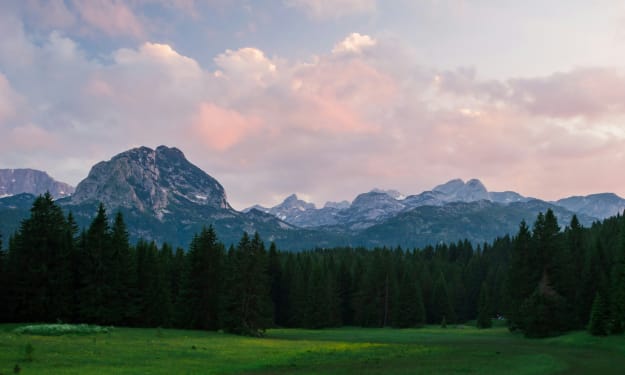
Sunset in the mountains of Durmitor
Sunset in the mountains of Durmitor The afternoon was different. The sun was slowly setting on the mountainside, spreading golden colors in the sky. The sunset could be seen from the campus dormitory, like a perfectly arranged scene—as if painted by Allah with his own hands.
By Arshad Aliabout a year ago in History
Understanding Aggregate Trends for Apple Intelligence Using Differential Privacy
Apple's ecosystem has always placed a strong emphasis on user privacy. With the introduction of Apple Intelligence, a suite of AI features integrated across its devices, this commitment to privacy remains paramount. To enhance these intelligent features by understanding user behavior and trends without compromising individual privacy, Apple is leveraging a sophisticated technique called differential privacy.
By Mahdi Rahmanabout a year ago in History
2025 Youth & Health: Discover the Fountain of Youth. AI-Generated.
2025 Youth & Health: Discover the Fountain of Youth Looking ahead to 2025, we all want to stay young and healthy. The idea of finding the "fountain of youth" has changed. Now, it's about the newest wellness trends and tech that help us live longer.
By Junayed Ahmedabout a year ago in History
The Village Hidden Amid the Morning Mist
When Aiko woke up, the dim gray light of dawn was just starting to peek through the darkness. She stepped out onto the porch and breathed in the fresh, pine-scented air as her wooden sandals clattered quietly against the tatami mat. The mist had already descended, thick and white like the breath of the sleeping mountains. This is how it always happened in the spring: the forest was covered, the entire world was engulfed, but for the settlement, which was left undisturbed.
By MD SHAMIM RANAabout a year ago in History
A Genocide Ignored: The World Must Act to Stop Israel’s Assault on Gaza
A Cry for Justice: Humanity Must End the Violence in Gaza On March 18, a new wave of destruction struck Gaza as continuous airstrikes resumed, resulting in the deaths of over 730 Palestinians and injuries to more than 1,300 others within just one week. For countless individuals in Gaza, this latest round of violence is not a standalone event—it is part of a prolonged history of turmoil under an 18-year blockade that has gradually diminished hope, infrastructure, and the very essence of a society striving to endure under siege.
By Mubarak Hossain Akashabout a year ago in History
Arshad and Jami The Last Night of Love
Arshad and Jami's "The Last Night of Love" Love can sometimes elevate the most banal of events. And there are times when that love becomes a gloomy, long-lasting reminder of pain. This story is one such last night, where there was love, but no future.
By Arshad Aliabout a year ago in History
Apple Readies Pair of Headsets While Still Looking Ahead to Glasses
Apple Readies Pair of Headsets While Still Looking Ahead to Glasses Apple has been at the forefront of innovation for years, revolutionizing industries with groundbreaking products like the iPhone, iPad, and Apple Watch. The tech giant is preparing for augmented and virtual reality (AR/VR), its next major disruption. Reports suggest Apple is preparing to launch not one, but two high-end headsets, serving as a stepping stone toward its ultimate ambition: sleek, everyday AR glasses.
By Md. Al-Aminabout a year ago in History
Battle of the Budgets: Pixel 9a vs Galaxy S24 FE vs iPhone 16e – Performance Tested
The competition for the best "budget flagship" has never been fiercer as smartphone prices continue to rise. In 2025, compelling mid-range devices from Apple, Samsung, and Google aimed to provide users with high performance at a price point below four figures. This year, it’s a three-way showdown between the Google Pixel 9a, Samsung Galaxy S24 FE, and the newly introduced iPhone 16e.
By Md. Al-Aminabout a year ago in History
Janet Petro NASA Update – April 11, 2025
President Trump's pick for NASA Administrator, Jared Isaacman, attended his confirmation hearing on Wednesday morning. The perspectives on our mission and priorities were energizing. A committee vote to send the nomination to the full Senate is the next step, but the date of that vote has not yet been set. As we learn more, I will keep you informed. As we look ahead to new leadership, we continue to deliver on our mission. This week brought several milestones that reflect the dedication, skill, and ingenuity of our team across the agency:
By Afnanul Hasanabout a year ago in History