Narratives
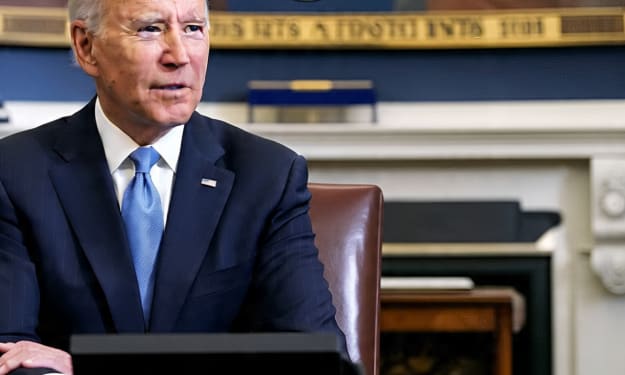
Joe Biden. AI-Generated.
Joe Biden was born on November 20, 1942, in Scranton, Pennsylvania, a small city in the United States. He grew up in a working-class family. His father, Joseph Biden Sr., worked very hard to take care of the family. At times, the family had little money. But they stayed strong and close together.
By Khalil Rehmanabout a year ago in History
Gerrymandering the Presidency: Why Trump could lose the popular vote in 2020 by 6 percent and still win a second term.
Donald Trump was the clear Electoral College winner in the 2016 election, despite losing the popular vote by a wide margin to Hillary Clinton. Anthony J. McGann, Charles Anthony Smith, Michael Latner and Alex Keena write that, unless the Supreme Court stops congressional gerrymandering, President Trump can guarantee re-election in 2020 – even if he loses by 6 percent. When the US Supreme Court takes up the issue of partisan gerrymandering this year, they will decide not only the fate of popular control in the House of Representatives and many state legislatures, but quite possibly the Presidency as well. If four Republican controlled state governments (Pennsylvania, Michigan, Wisconsin and Florida) change the way they allocate Electoral College votes, President Trump could be re-elected in 2020, even if he loses the popular vote by 6 percentage points. All the states need do is to allocate Electoral College votes by congressional district (like Nebraska and Maine), instead of giving all of the state’s electors to the statewide winner. Of course, this strategy only works to the benefit of the Republicans because the congressional districts in these states are heavily gerrymandered. As we argue in our book Gerrymandering in America, the congressional districts in many states are drawn to advantage the Republican Party. For example, in Pennsylvania in 2012 the Republicans took 13 out of 18 House districts even though the Democrats received more votes. If this partisan gerrymandering were outlawed, then allocating Electoral College votes by congressional district in the four states would actually disadvantage the Republican candidate for President. However, if the Supreme Court continues to allow partisan gerrymandering – as it has since its decision Vieth v. Jubelirer in 2004 – then the plan is highly effective and there is nothing that can stop the four states adopting it. Allocating Electors by congressional district is clearly legal – Nebraska and Maine already do it this way. Furthermore, the Republicans control the state legislature and the governor’s mansion in all four states. How allocating Electors by congressional districts could benefit the Republican candidate Surprisingly, the strategy that is most effective for the Republicans is to change how Presidential Electors are allocated in certain states that voted for Trump in 2016. Of course, the Republicans would get an advantage by allocating Electors more proportionally in states that Clinton won. The problem is that this would require the support of Democrats. For example, Republican legislators in Virginia and Minnesota have already proposed such measures, and Stephen Wolf describes this as an attempt to “gerrymander the electoral college”. The problem is that both these states have Democratic governors, who would surely veto such proposals. Similarly Harry Enten at fivethirtyeight.com shows that if all states allocated Electors by Congressional districts, the Republicans could win the Presidency despite a 5 percent popular vote deficit. Again the problem is that this would require Democratic controlled states to agree to such a system. However, in Pennsylvania, Wisconsin, Michigan and Florida, Republicans control both the state legislature and the
By Silas Blackwoodabout a year ago in History
🤢The Great Stink of London, Summer 1858: How the Thames River's Filth Nearly Shut Down Parliament and Sparked Sewer Reforms
The Summer That Stank to High Heaven In the sweltering summer of 1858, London became the setting for one of the foulest crises in urban history. For several weeks, an unbearable stench rose from the River Thames, the city's main waterway and open sewer, engulfing the metropolis in a nauseating miasma that no one - not even the powerful lawmakers in the Palace of Westminster - could escape. The event, which became known as "The Great Stink," was more than just a sensory nightmare; it was a pivotal moment in the evolution of public health and urban infrastructure.
By History Seekerabout a year ago in History
🧻 The Toilet Paper Panic Buying During Various Pandemics: How a Mundane Household Item Became a Symbol of Global Anxiety
Part I: A Curious Phenomenon — Panic in the Aisles In the early months of the COVID-19 pandemic, a peculiar sight became common across the globe: barren supermarket shelves where once stood neat stacks of toilet paper. This wasn’t an isolated event. From Tokyo to Toronto, from Milan to Melbourne, scenes emerged of people rushing into stores, carts overflowing with bulky packs of toilet rolls, sometimes wrestling them away from fellow shoppers in desperate attempts to “stock up.” The rush on toilet paper became one of the most vivid, surreal images of the global health crisis, replayed in countless news reports and social media posts. As viral as the virus itself, these panic-buying frenzies turned toilet paper — a soft, white, everyday necessity — into a symbol of a world unmoored by fear.
By History Seekerabout a year ago in History
Delaware's Own
Water washed the steps to the house. Another white baby had been scrubbed and rinsed and dried. Tobacco juice landed on the dirt outside the house steps. Willliam Martin wiped some spittle from his chin and surveyed his rental property from Founder John Dickinson who lived in Wilmington, Delaware. John “Keto” Martin peered at the sun setting. He waited. He had no family as he was shipped to another plantation, ripped away from his wife and children, his eyes looked keen. The night finally fell. A few other runaway slaves joined him in his effort to get to Philadelphia. They said no words. They used hand signals to bring their journey across state lines. Moonlight guided their travels. The green of the moss looked like mold on the rocks and trees. It would guide them to their destination in Pennsylvania. The North Star also pointed the way. Sticks breaking and puddles under foot produced sounds but Keto kept going. Scraps of food including salted pig feet and radishes and vinegar sated their hunger. They drank water. Prepared for the trip, they clutched sacks full of wheat along with the other food. They found rest against tree stumps and used the sacks of wheat as pillows.
By Skyler Saundersabout a year ago in History
Speak my Name. Runner-Up in History Would’ve Burned This Page Challenge. Top Story - May 2025.
I was born in your heartbeat before you had fingernails. Before your toes had taken shape. Passed down from your elders. Passed down from the moon and the morning sun.
By River and Celia in Underlandabout a year ago in History
The Lost Labyrinth of Ancient Egypt, A Forgotten Wonder Beneath the Sands
Whispers Beneath the Desert In the heat-soaked deserts of Egypt, where the sands shift and the winds carry ancient secrets, a legend sleeps. Forgotten by time and buried beneath centuries of dust and silence lies a structure spoken of in hushed tones by ancient historians, an architectural marvel so vast and complex that even the Great Pyramid paled in comparison.
By The Secret History Of The Worldabout a year ago in History
Trump's Speech about Jerusalem: An Analysis on Persuasive Strategies. AI-Generated.
INTRODUCTION Jerusalem is a holy place where several beliefs and faiths live together. Islam, Christianity and Jews live and do worship in that city (BBC, 2017). Its territory surrounds Palestine and Israel. Both countries have been being a great rivalry in an old-world war since 1948 (Margolick, 2008). Donald Trump as the president of USA showed his sympathy toward both a long-world war and it was stated through his political speech. Stobbs (2012) considered that political speeches are written with a very great plan and purpose. As the president of USA, Trump is the most influential person in the world. His word will always provoke great responses from all people over the world. He showed his remark on his speech about Jerusalem on 23rd May 2017. Through his speech, he expected the three religions in Jerusalem, such as Jews, Islam and Christianity can build peace together. On 6th December 2017, Trump declared Jerusalem as the capital city of Israel. It provoked pros and cons from several leaders of nations over the world. He stated that his claim was to stop the war between Israel and Palestine, and to achieve peace. Through his speech, Trump intended to show his power and communicate what he wanted to. Speech is one the ways of having communication (Soedjarwo, 2020). In having communication, the speaker influences hearer to believe in what he says or doing something that he wants to. Alfian, Santi, and Sari (2019) stated that a good communication depends on how speaker can achieve the goal of what he says. Speaker absolutely persuades hearers to achieve the goals of communication. In Persuading hearers, speaker can uses persuasive strategies. Speaker uses persuasive strategies to influence other people through utterance without doing compulsion. Gass and Seiter (2010) stated that persuasion is an attempt to influence hearers motives and attitudes.
By Silas Blackwoodabout a year ago in History
NASA Confirms Evidence of Alien Life? Latest Findings from Europa Mission
Introduction: The Europa Enigma For decades, Jupiter’s icy moon Europa has captivated scientists as one of the solar system’s most promising candidates for extraterrestrial life. In 2025, NASA’s Europa Clipper mission delivered its most compelling data yet—potential biosignatures beneath the moon’s frozen crust. While NASA has stopped short of declaring definitive proof of life, the evidence has ignited a scientific and philosophical firestorm. This article examines: The shocking findings from Europa’s subsurface ocean How NASA’s instruments detected potential alien biosignatures The scientific debate over what constitutes "proof" of life The ethical and societal implications of confirming extraterrestrial organisms What comes next in humanity’s search for life beyond Earth
By Silas Blackwoodabout a year ago in History
A Historical Account of Difference: A Comparative History of the Literary Cultures of Lat- in America
Abstract: In his article "A Historical Account of Difference: A Comparative History of the Literary Cultures of Latin America," Mario J. Valdés addresses the well-recognized limitations of literary history as historical research. Valdés outlines the theoretical thinking that has guided the editors of The Oxford Comparative History of Latin American Literary Cultures to plan, organize, and com- plete the first history of literary culture of Latin America. The project is comparative, recognizing the radical diversity of the continent while at the same time it is an open-ended history that in- forms but does not attempt to provide a totalizing account of more than five hundred years of cul- tural development among the heterogeneous entities that make up Latin America. Valdés begins by considering the paradox of literary history, he then suggests ways that literary history can be shaped by the work of Michel Foucault, and he proposes a framework for a hermeneutics of literary history. Valdés also considers the challenges that face the literary historian whose work now in- cludes cultural history. All of these considerations are then placed within the context of an effort to create a literary and cultural history of Latin America.
By Silas Blackwoodabout a year ago in History
Beneath the Surface: The Kolar Gold Fields Story
The Gold Mine That Yielded 800 Tons: Discovered by a British East India Company Officer Just 90 kilometers away from the bustling city of Bengaluru lies Kolar, home to India’s largest gold mine—an underground marvel that has fascinated historians, geologists, filmmakers, and economists alike. Known as the Kolar Gold Fields (KGF), this mine has not only played a significant role in India's mining history but has also become a symbol of ambition, struggle, and forgotten glory. The Genesis of Kolar’s Golden Era Although industrial-scale gold mining in Kolar began in the 1880s, the stories surrounding the region's riches stretch back centuries. During its peak, more than 800 tons of gold were extracted from its depths, though that accounted for just 2% of the world’s gold production at the time. The mining site boasted an astonishing 1,360 kilometers of underground tunnels, dug approximately 3 kilometers below the surface, making it the second deepest mine in the world during its operational years. Ancient Roots and Cultural Lore Historian Bridget White, in her book "Kolar Gold Field Down Memory Lane", suggests that gold was mined here as far back as the Gupta period in the 5th century. Some researchers believe that even the ancient Indus Valley Civilization may have exploited the region’s golden potential. Venkataswamy’s book, Kolar Gold Mines, published by the Geological Survey of India, further strengthens this belief. The region changed hands between several ruling dynasties over time—Ganga, Chola, Hoysala, and the Vijayanagara Empire—before eventually coming under the rule of the Bijapur Sultanate, and later, Hyder Ali and Tipu Sultan of Mysore. Discovery by the British The turning point came after Tipu Sultan’s death in the Fourth Anglo-Mysore War, when the British East India Company began surveying Mysore. A British officer, John Warren, was tasked with geological surveys. During his travels to the Erakonda Hills, he heard of gold being extracted from soil and rock in areas like Argowan and Marikuppam. The local Theru and Dheda communities, skilled in primitive gold extraction, assisted him. Warren decided to study the soil samples and employed 12 local laborers for the task, three of whom received a silver coin as daily wages—a considerable amount for the time. To encourage further exploration, Warren announced a reward for anyone who could locate potential gold reserves. One man from Warangal took the challenge seriously and began digging at an ancient mining site. His gamble paid off—he discovered a significant quantity of gold. The gold samples were sent to Madras (now Chennai) for quality testing, where they were found to be of exceptionally high grade. Despite the findings, the British government initially showed little interest in investing in mining operations. The Birth of an Industry Enter Michael Lavelle, a soldier stationed in Bengaluru. When he heard of the gold discovery, he sought permission to mine the area. After several attempts, he was finally granted the license in 1875. However, he transferred his rights just a year later. A group of investors soon pooled together £5,000 and formed the Kolar Concessionaires. At first, their efforts yielded little, but eventually, gold production increased. Later, major entities such as the Chennai and Oorgaum Company, the Mysore Mines Company, and Nandi Durga invested in the site. A pivotal figure during this boom was Captain Plummer, who explored deeper into the Marikuppam region. His efforts bore fruit when he discovered nearly 6,000 ounces of gold in one location. To support mining and logistics, a meter-gauge railway track was built between Bengaluru and Kolar in 1894. Initially, miners used lanterns and torches, but soon electricity was brought in from the Shivanasamudra Dam (completed in 1902), making Kolar one of South India’s first electrified towns. Life in the Mines As mining operations expanded, thousands of workers, particularly from tribal communities in Tamil Nadu, were brought in. Working conditions were perilous, and safety measures were minimal, leading to numerous fatalities. During World War II, more than 32,000 workers were employed in the mines. However, after Independence in 1947, the situation began to change. When Hanumanthaiah became Chief Minister of Mysore, he strongly advocated for the nationalization of Kolar’s mines. On 28 November 1956, under the leadership of S. Nijalingappa, the mines came under state control, and operations were handed over to a new public sector undertaking, Kolar Gold Mining Undertakings (KGMU). Despite this shift, the output began to decline. Between 1956 and 1962, gold worth ₹20 crore was extracted, but the cost of operations continued to rise. From Boom to Bust Eventually, the state government handed over the mine’s management to the Central Government. In 1972, the Ministry of Mines established India Gold Mines Limited to take over operations. Despite significant efforts, the output continued to decline. By the late 1990s, gold yield had dropped drastically—from 14 grams per ton of ore to just 4 grams. The final blow came in 1998, when it was confirmed that the gold reserves were depleted. In 2001, the central government officially shut down the mine, ending over a century of glory. Roughly 3,800 workers protested the closure, but their efforts were in vain. Cultural Legacy Kolar Gold Fields didn’t just shine underground—it also became a source of fascination in Indian popular culture. Blockbuster films like KGF and KGF 2 brought the tale to mainstream audiences, blending history with cinematic fiction. Recently, the Tamil film Thangalaan also dramatized the region’s mining history. Much like the mythical city of El Dorado, KGF became a symbol of hidden wealth and human ambition. It showcased not only the grandeur of India’s mineral wealth but also the complex intersection of colonialism, labor, and industrialization. Conclusion Today, Kolar stands as a ghost of its golden past. The tunnels lie abandoned, the equipment rusts in silence, and the workers who once dreamed of prosperity have long since dispersed. Yet, its legacy lives on—in books, in films, and in the memory of a time when the earth beneath Kolar truly glittered with gold. The story of Kolar Gold Fields is more than a tale of mineral wealth—it is a story of human endeavor, sacrifice, and the relentless pursuit of prosperity in the face of uncertain odds. It remains one of India’s most captivating chapters in the history of industrialization and colonial resource exploitation.
By Ikram Ullahabout a year ago in History
2024 Election Fallout: Supreme Court Rules on Trump’s Immunity Case
Introduction In a historic decision that could reshape the future of U.S. presidential accountability, the Supreme Court ruled on former President Donald Trump’s immunity case in 2024. The case, Trump v. United States, centered on whether a former president enjoys absolute immunity from criminal prosecution for actions taken while in office. The ruling not only impacts Trump’s multiple legal battles but also sets a precedent for the limits of executive power. This article examines the Court’s decision, its legal and political implications, and the potential consequences for the 2024 election and beyond. Background: The Legal Battle Over Presidential Immunity
By Silas Blackwoodabout a year ago in History