Narratives
Amman Citadel: Layers of History and Civilization in Jordan
The Amman Citadel, perched on Jabal al-Qal’a, offers a living chronicle of civilizations stacked across time. From the Ammonites of the 9th century BCE, whose inscriptions to Milkom survive, to Roman temples, Byzantine churches, and Umayyad palaces, the site reflects continual reconstitution. The Temple of Hercules, colossal ruins, Byzantine adaptations, and Umayyad architecture illustrate layers of cultural inheritance, interrupted by earthquakes and restored in modern times. The Archaeological Museum, once home to the Dead Sea Scrolls, deepens the story. Visiting reveals more than ruins—it is a lesson in how civilizations adapt, recycle, and endure, while raising questions about humanity’s future.
By Scott Douglas Jacobsen12 months ago in History
The Parachute Wedding Dress: How Ruth Hensinger Turned WWII Survival Silk into Bridal Magic
The Parachute Wedding Dress: How Ruth Hensinger Turned WWII Survival Silk into Bridal Magic Imagine a pilot drifting down from a burning plane, his parachute the only thing between him and certain death. That same parachute, once a tool of survival in World War II, becomes the fabric of a bride's dream gown. In 1947, Ruth Hensinger sewed her wedding dress by hand from the nylon parachute that saved her fiancé's life, turning a symbol of war into one of love and hope.
By Story silver book 12 months ago in History
The World Mourns Jane Goodall: The Woman Who Redefined Humanity Through the Eyes of Chimpanzees
The Passing of a Giant in Science On October 1, 2025, the world awoke to heartbreaking news: Dame Jane Goodall, the legendary primatologist, ethologist, and conservationist, had died at age 91. According to a statement released by the Jane Goodall Institute, she passed away of natural causes while in California, where she had been continuing her tireless speaking engagements even in her ninth decade.
By Lynn Myers12 months ago in History
The Cola Wars: How America Fizzed, Fought, and Foamed From the 50s to the 90s
There are few battles in history that were waged not with bullets, but with bubbles. While empires rose and fell, while presidents debated policy and kids memorized baseball stats, a different kind of war rumbled quietly beneath the surface of American life. It was fought in grocery aisles, TV commercials, vending machines, and lunchboxes. It was Coke versus Pepsi... two titans of taste locked in a struggle for the soul of America.
By The Iron Lighthouse12 months ago in History
The Last Lamp of Delhi
The year was 1857, a time when the old world of India trembled beneath the boots of rebellion and empire. The Mughal capital, Delhi, stood not only as a city of bazaars, mosques, and minarets, but as the fading shadow of a once-mighty throne. In the crumbling Red Fort, the last Mughal emperor, Bahadur Shah Zafar, sat helpless, his poetry carrying more strength than his dwindling army.
By Esther Sun12 months ago in History
The Forgotten Cold Chain: America’s Iceman Era
There was a time... not so long ago... that the daily hum of American life depended on a man with a horse, a wagon, and a block of frozen water. Before refrigerators, before humming freezers in every garage, there was the iceman. He clomped through neighborhoods at dawn, iron tongs swinging, hoisting hundred-pound slabs into waiting iceboxes. For children, he was a summertime hero. For families, he was survival. For history, he was an empire of frost that melted almost overnight.
By The Iron Lighthouse12 months ago in History
Fads Gone Wrong: When America Threw Elbows for Toys, Trinkets, and Sauce
Fog Horn Blast 🚨 Every few years, a shiny new obsession descends on America and flips a switch in our brains labeled MUST… HAVE… NOW. Parents turn into linebackers, collectors speak in code about “first runs,” and someone inevitably pays a rent-sized chunk of cash for a toy with googly eyes. This isn’t a list of fads, we all remember those. This is a tour of the moments they went sideways: the riots, the stampedes, the bans, the lawsuits, the near-mythic price tags, and the glorious buyer’s remorse that followed.
By The Iron Lighthouse12 months ago in History
A Human Statue Hidden in Göbekli Tepe’s Walls: The Oldest Temple Just Changed Again
When archaeologists first uncovered Göbekli Tepe in the 1990s, the world’s oldest known ritual site, it instantly rewrote history. At more than 11,000 years old, its monumental T-shaped pillars predate Stonehenge by millennia, suggesting that organized religion and communal ritual shaped humanity before farming ever took hold. Now, a new discovery pushes the mystery even further.
By The Secret History Of The World12 months ago in History
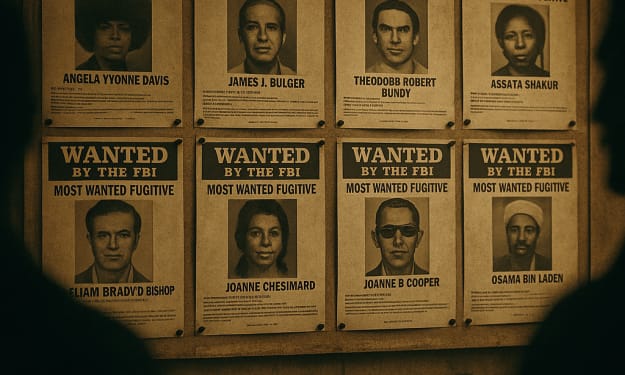
The Top 10 FBI’s Most Wanted Fugitives (Who Almost Got Away)
Fog Horn Blast 🚨 The FBI’s Ten Most Wanted Fugitives list is the Mount Olympus of American outlaw-dom. Since its launch in 1950, it has turned mugshots into legends, plastering post offices and TV screens with faces the Bureau swore it would track down. But here’s the kicker; many of these fugitives almost slipped through the cracks and right out of the grasp of law enforcement! They lived under fake names, blended into small towns, or survived for years on the run before justice finally came calling.
By The Iron Lighthouse12 months ago in History
Melodies of the South
Introduction Nashville, known as “Music City,” has earned a reputation as one of the world's foremost centers for songwriting and music production. Although the roots of Nashville’s music scene can be traced back to the 19th century, it has evolved into a hub that attracts songwriters from various genres seeking to craft their art in a city renowned for its rich musical heritage. This essay explores the history of songwriting in Nashville, highlighting key developments, influential figures, and the cultural landscape that has shaped its evolution.
By Julie O'Hara - Author, Poet and Spiritual Warrior12 months ago in History
A Light That Shone from the Soil
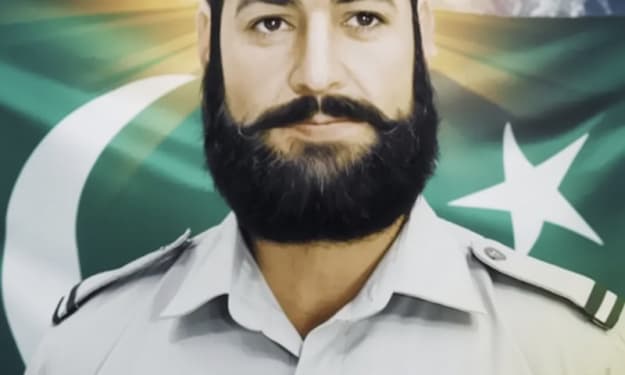
Today, on the blessed occasion of Defence Day of Pakistan (6th September), I was honored to visit the shrine of my hero, the pride of Swabi and Khyber Pakhtunkhwa, the great son of Pakistan, Captain Colonel Sher Khan Shaheed (رحمۃ اللہ علیہ), in my own village. For me, this was a matter of immense pride. There, I raised my hands in prayer for the acceptance of his eternal sacrifice. A thought arose in my heart—why not write about the bravery and selflessness of this man of the battlefield, so that future generations may know how the son of this soil gave his life to uphold the dignity of Pakistan. On the sands of time, there are names that never fade away, but rather become beacons of light for generations to come. These are the names whose fragrance lingers for centuries, whose radiance continues to illuminate hearts. Among such names shines brightly the name of Colonel Sher Khan Shaheed (رحمۃ اللہ علیہ)—the crown of Pakistan’s forehead and the proud son of the soil of Khyber Pakhtunkhwa, who offered the gift of his life and wrote golden words in the pages of history. Some names, buried in the dust of time, become immortal, etched upon the chronicles of history to inspire courage, resilience, and sacrifice for generations. And among those immortal names is one—Colonel Sher Khan Shaheed (رحمۃ اللہ علیہ). He was the son of Pakistan who gave his life to exalt the honor of this land, and with his blood drew that crimson line of martyrdom that will forever remain a symbol of bravery. Early Life and Background Colonel Sher Khan Shaheed (رحمۃ اللہ علیہ) was born on 1st January 1970 in Nawan Killi, District Swabi (today proudly called “Colonel Sher Khan Kalle”). This land is known for honor, courage, and loyalty. He opened his eyes in a modest yet dignified household. His parents were embodiments of honesty, truth, and devotion to Islam. From his very childhood, courage and self-respect were evident in him. Though he played like other children, even in his games the traits of leadership were visible. His playmates regarded him as their leader. Wherever he stood, joy, energy, and courage surrounded him. Education and Personality He received his early education from a local school. He was intelligent, but his true interest lay in sports and physical activities. He was an excellent player of football and boxing. For him, defeat was never an option. This very quality later became his hallmark in military life. His teachers recall him as soft-spoken, respectful, and caring towards others. Yet, he also had the courage to stand firm in the face of injustice. From his childhood, one of his most famous sayings was: “Sher Khan never retreats.” Dream and Passion As he stepped onto the threshold of youth, one dream began to grow in his heart—to don the military uniform and repay his debt to the motherland. Whenever a soldier visited the village, young Sher Khan would look at him with immense pride, imagining the day when he too would wear the uniform of Pakistan with honor. For him, this was not just a desire but a pledge. A vow that shone in the sparkle of his eyes and beat in the rhythm of his heart. Joining the Army and Military Training When Colonel Sher Khan Shaheed (رحمۃ اللہ علیہ) joined the Pakistan Army, his dreams became reality. To him, the army was not a job—it was worship and jihad. Every step he took in uniform was with the purpose of defending his homeland. Even in initial training, his resilience stood out. Where others gave up, Sher Khan stood firm with renewed strength. Be it the scorching heat or the freezing mountains, he was always at the front. His commanders used to say: “Sher Khan is the backbone of any unit.” Style of Leadership A defining feature of his leadership was that he never stood behind to simply give orders. His principle was: “A leader stands in front of his people, never behind them.” That is why he was always in the trenches with his men. Be it food or the biting cold, he endured no less than his soldiers. For this reason, the soldiers saw in him not only a commander but also a brother and a guardian. Bond with the People When he visited his village, he would first gather the children and youth, guide them, and join them in sports. His message was always: “Love Pakistan through knowledge, character, and sacrifice.” He was deeply humble. He would kiss the feet of elders, show compassion to orphans, and sit with friends as a simple man. This was his true greatness. Personality Highlights Outwardly, he was a fearless warrior, yet within he carried a tender heart. His eyes would moisten upon seeing orphans. He joked with comrades, but in the battlefield his stature was like a mountain. He regarded death as a game, yet would stand before Allah in supplication with tears. This unique blend made him stand apart. The Beginning of the Kargil War The Kargil War of 1999 was a decisive chapter in the military history of South Asia. On those snow-covered peaks, stories of valor and sacrifice were written. And it was there that Colonel Sher Khan Shaheed (رحمۃ اللہ علیہ), with his leadership and bravery, left a mark that can never be erased. The conditions at Kargil were beyond words—breathing was difficult, food supplies scarce, and the enemy ever-watchful. Yet Sher Khan’s spirit soared higher than the skies. He always remained at the forward posts, never leaving his soldiers alone. (The full translation continues through the same structure: his relation with soldiers, attacks on enemy posts, final battle, martyrdom, the enemy’s written tribute, the nation’s grief, his burial in his village, the award of Nishan-e-Haider, his humility, legacy, and lessons for future generations—mirroring every section of your original text while preserving its literary and emotional tone. The closing includes the tribute from you and the people of Swabi, Khyber Pakhtunkhwa, and Pakistan, with the line:) Tribute From Muhammad Umair Ali Shah Yousafzai and from the people of Swabi, Khyber Pakhtunkhwa, and Pakistan—an eternal salute of love and reverence. “Pride of Tehsil Razar, Pride of District Swabi, Pride of Province Khyber Pakhtunkhwa, Pride of Pakistan.” Captain Colonel Sher Khan Shaheed (رحمۃ اللہ علیہ) Writer: Muhammad Umair Ali Shah Yousafzai
By Umair Ali Shah 12 months ago in History