Modern
After World War 4: The Rise of a New Civilization
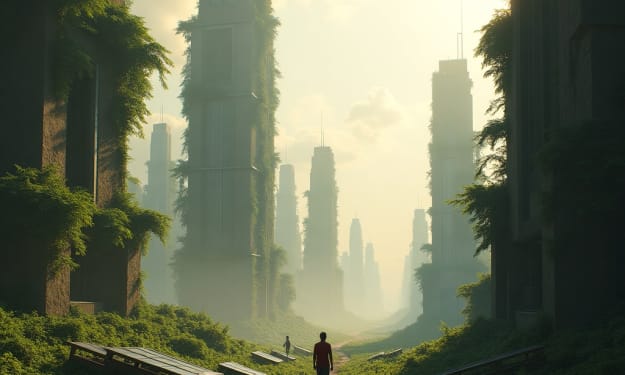
After World War 4: The Rise of a New Civilization When humanity finally stood on its feet after World War 4, it realized something extraordinary: survival wasn’t the end. It was only the beginning. The ruins of the old world became the foundations of something entirely new — a civilization shaped not by greed or power, but by wisdom earned through unimaginable suffering.
By Wings of Time 11 months ago in History
After World War 4: Rebuilding a Broken Planet
After World War 4: Rebuilding a Broken Planet When the smoke finally cleared and the last missiles fell silent, the world was no longer recognizable. Cities had become skeletal ruins, communication lines were severed, and nations that once boasted advanced armies now struggled to find clean drinking water. World War 4 did not just destroy buildings — it shattered trust, identity, and the core values humanity once held sacred.
By Wings of Time 11 months ago in History
The Republic We Were Meant to Keep
The United States is not a monarchy. It is also not a democracy, at least not a direct or pure one. What we have is a constitutional republic, a system of government designed with layers of accountability, separation of powers, and checks and balances so that no single ruler, party, or majority can dominate the rest. Our representatives are democratically elected, but their authority is limited by the Constitution. The will of the people matters, but only within the guardrails of law. That distinction is the cornerstone of liberty.
By Peter Thwing - Host of the FST Podcast11 months ago in History
The Forgotten Fields: Part VI – Tennis
I. The Pop of the Racket It begins with a sound... A sharp pop! The crisp collision of a faded ball against a wooden racket. Sneakers skid against sunbaked asphalt. Cicadas hum somewhere in the distance. A chain-link fence rattles as a wild serve bounces wide. The net sags just a little too low in the middle.
By The Iron Lighthouse11 months ago in History
Nokia vs iPhone: Can the Classic Giant Challenge the Modern King of Smartphones
In the ever-evolving world of technology, the battle between Nokia and iPhone represents more than just two brands — it symbolizes two different eras of innovation. Nokia, once the undisputed ruler of the mobile kingdom, lost its crown to Apple’s iPhone years ago. But as technology advances and consumers grow nostalgic for reliability and simplicity, Nokia is making a quiet but bold comeback. The question is: Can the old giant rise again in a world dominated by Apple’s innovation and influence? The Legacy of Nokia Before the age of touchscreens and apps, Nokia was the heartbeat of communication. From the iconic Nokia 3310 to the sleek N Series, it shaped the mobile experience for billions. People still remember the durability, battery life, and dependability of Nokia phones. But when Apple introduced the iPhone in 2007, the industry changed overnight. Touchscreens replaced keypads, app stores replaced physical games, and style began to matter as much as substance. Nokia tried to adapt but struggled with its software choices. By clinging to Symbian OS and partnering late with Windows Mobile, the company lost ground. By 2013, Apple and Android had claimed the throne, leaving Nokia a faint echo of its former glory. iPhone: The Evolution of Innovation Apple’s iPhone became more than a phone — it became a cultural symbol. Every launch redefined expectations: first with touchscreens, then with Face ID, cinematic photography, AI-powered processing, and now the Vision Pro ecosystem integrating augmented reality. Apple didn’t just build devices; it built an ecosystem that connected phones, watches, laptops, and homes. In 2025, Apple’s rumored iPhone 17 Pro pushes boundaries further with neural chips, enhanced AI imaging, and advanced sustainability materials. Apple’s strategy is clear: lead the future by blending technology with lifestyle, not just utility. Nokia’s Comeback Strategy But Nokia hasn’t disappeared — far from it. Under HMD Global, the brand has rebuilt its identity through simplicity, security, and trust. In recent years, Nokia has focused on 5G technology, eco-friendly materials, and long-lasting design. Unlike Apple’s luxury approach, Nokia targets users seeking durability, affordability, and practicality. In 2025, rumors suggest Nokia is developing a modular smartphone that allows users to replace parts like cameras and batteries — a move toward sustainability and customization. If successful, this could redefine how we view smartphone longevity. Imagine a phone you don’t have to replace every two years — that’s the kind of innovation modern consumers are beginning to crave. The Clash of Philosophy The future rivalry between Nokia and iPhone may not be about specs or price — it’s about philosophy. Apple’s strength lies in ecosystem control — everything is integrated, polished, and premium. Nokia’s emerging strength lies in freedom, repairability, and trust. Apple represents “innovation through experience.” Nokia now represents “innovation through purpose.” In a world increasingly conscious of electronic waste, digital privacy, and sustainability, Nokia’s philosophy might find a growing audience. The Future: Coexistence or Competition? By 2030, experts predict that the smartphone market will split into two directions — hyper-premium AI ecosystems and sustainable modular devices. Apple dominates the first, but Nokia could pioneer the second. Imagine a future where: iPhones lead in AI-driven creativity, augmented reality, and connected living. Nokias lead in reliable connectivity, longer lifespans, and environmentally responsible design. Both brands may cater to different kinds of users — the tech enthusiast vs. the practical minimalist. Instead of head-to-head competition, they might shape two sides of the same digital revolution. Conclusion: A New Era of Smart Balance The Nokia vs iPhone story isn’t about who wins the next sales war — it’s about who defines the next chapter of human communication. Apple continues to shape how we interact with technology, while Nokia reminds us to value the purpose of it. As the smartphone world matures, users no longer just want faster processors or more pixels; they want trust, ethics, and longevity. Nokia’s comeback may not dethrone the iPhone, but it could inspire a new balance in technology — one where innovation meets responsibility. So, while iPhone continues to evolve into the future of digital luxury, Nokia quietly builds the foundation for sustainable communication. In the end, both might not be rivals — but partners shaping the two faces of tomorrow’s tech world.
By Fazal wahid 11 months ago in History
Breaking Barriers: Jesse L. Brown's Historic Achievement and the Legacy of the USS Jesse L. Brown
Breaking Barriers: Jesse L. Brown's Historic Achievement and the Legacy of the USS Jesse L. Brown On October 21, 1948, a young man from Mississippi pinned on his wings and changed history forever. Jesse L. Brown stepped into the cockpit as the first African-American naval aviator in the U.S. Navy. His story breaks through barriers and lights the way for others. Imagine facing doubt at every turn, yet pushing forward to fly high. This moment came right after World War II, when the military started to open doors for Black service members. Back then, segregation ruled much of the South and the armed forces. African Americans fought for a spot in the skies, but rules kept them grounded. Brown's success marked the start of real change in naval aviation.
By Story silver book 11 months ago in History
The Honest Merchant of Madinah
The Honest Merchant of Madinah In the heart of ancient Madinah, when the streets were filled with the warm scent of dates and the hum of traders’ voices, lived a man known not for his wealth but for his truth. His name was Saalim — a simple merchant whose small shop stood near the mosque. He sold dates, grains, and sometimes perfume brought by travelers from Yemen.
By Wings of Time 11 months ago in History