Modern
Kazuha (Le SSERAFIM) Stands Out As a Multitalented Gem!
Meet Kazuha, the powerhouse talent hailing from Japan, spreading her wings as a singer, rapper, ballerina, and a vital member of the beloved girl group LE SSERAFIM under HYBE and Source Music.
By David Smith (Professional Story Teller)3 years ago in History
History of two wheeler
The history of two-wheelers, or motorcycles, is a fascinating journey that spans centuries. Here's a brief overview: 1. **Early Concepts (Late 19th Century):** The concept of two-wheelers traces back to the late 19th century. Inventors experimented with various designs, combining a bicycle with a small internal combustion engine. In 1885, Karl Benz developed the Motorwagen, considered the first true automobile, but it wasn't until the late 19th and early 20th centuries that motorized bicycles gained popularity. 2. **Motorized Bicycles (Early 20th Century):** Motorized bicycles emerged as practical transportation options in the early 1900s. Companies like Indian Motorcycle and Harley-Davidson began producing motorcycles with features like engines integrated into the bicycle frame, providing a more comfortable and powerful alternative to traditional bicycles. 3. **Mass Production and Popularization (1920s - 1930s):** The 1920s and 1930s marked the era of mass production and increased popularity of motorcycles. Manufacturers refined designs, introduced new features, and diversified styles, contributing to the widespread use of two-wheelers for commuting and recreation. 4. **World War II Influence (1939 - 1945):** World War II had a significant impact on the motorcycle industry. Military demand for lightweight, versatile vehicles led to the production of motorcycles designed for combat, such as the BMW R75 and the Harley-Davidson WLA. After the war, returning soldiers contributed to the surge in civilian motorcycle ownership. 5. **Post-War Boom and Cultural Impact (1950s - 1960s):** The post-war period saw a motorcycle boom, with iconic models like the Triumph Bonneville and the Honda Super Cub gaining popularity. Motorcycles became associated with youth culture and rebellion, epitomized by the rise of the "biker" image. The concept of cruising on two wheels became a symbol of freedom and rebellion. 6. **Era of Innovation (1970s - 1980s):** The 1970s and 1980s witnessed technological advancements and innovations in motorcycle design. Japanese manufacturers like Honda, Yamaha, Kawasaki, and Suzuki introduced new features, including disc brakes, electric starters, and improved suspension systems. Off-road bikes gained popularity, contributing to the development of motocross as a sport. 7. **Diversification of Styles (1990s - 2000s):** The late 20th century and early 21st century saw the diversification of motorcycle styles. Sport bikes, cruisers, touring bikes, and dual-sport bikes became popular, catering to a wide range of rider preferences. Manufacturers continued to focus on performance, safety, and environmental concerns. 8. **Modern Trends (2010s Onward):** In recent years, electric motorcycles have gained attention as technology advances. Manufacturers are exploring eco-friendly options while continuing to enhance traditional designs. Connectivity features, advanced safety systems, and ergonomic improvements are defining trends in the evolving landscape of two-wheelers. The history of two-wheelers reflects a dynamic evolution, from the early experiments of inventors to the diverse and technologically advanced motorcycles of the present day. The enduring appeal of riding on two wheels continues to shape the culture and industry of motorcycling worldwide.
By J.Balakrishnan3 years ago in History
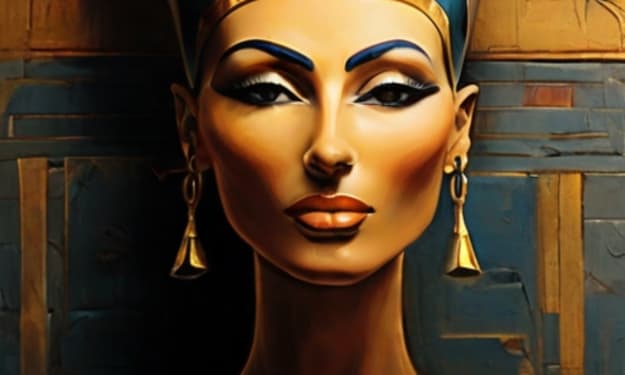
"Nefertiti: Beauty, Power, and Mystery in Ancient Egypt's Amarna Period"
Queen Nefertiti, whose name means "a beautiful woman has come," remains one of ancient Egypt's most enigmatic and celebrated figures. Born around 1370 BCE, little is known about her early life, but her marriage to Pharaoh Akhenaten would propel her into the spotlight, making her a central figure in the Amarna Period.
By Nada soliman3 years ago in History
Ramesses I: Architect of Stability, Religious Revival, and Cultural Continuity in Ancient Egypt". Content Warning.
Ramesses I, also known as Ramesses the Great, rose to prominence in ancient Egypt during a time of political upheaval. Born Paramessu, he began his career as a military leader under Horemheb, the last pharaoh of the Eighteenth Dynasty. However, it was during his own short but impactful reign that Ramesses I left an indelible mark on Egyptian history.
By Nada soliman3 years ago in History
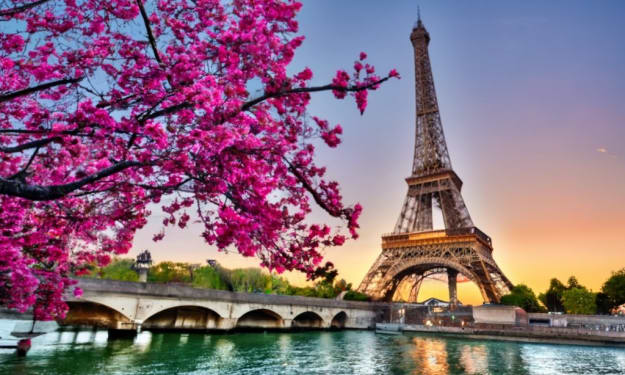
The History of the Eiffel Tower: A Pinnacle of Parisian Elegance and Ingenious Engineering Brilliance
The Eiffel Tower, standing as a beacon of architectural magnificence and a symbol synonymous with the enchanting allure of Paris, unfolds a captivating history that stretches back to the latter part of the 19th century. This towering iron lattice structure, which has come to be recognized globally as an emblem of France, is not just a monument; it is a testament to the convergence of visionary design and unparalleled engineering.
By Nizam malang3 years ago in History
The Invitation
Once upon a time, in the quaint village of Eldoria, nestled between rolling hills and lush greenery, there lived a mysterious man named Mr. Evergreen. He was known for his reclusive nature and enigmatic demeanor, often spotted wandering the narrow streets with a thoughtful expression on his face. The villagers, intrigued by the enigma that was Mr. Evergreen, speculated about his origins and the purpose of his secluded mansion at the edge of town.
By hassen fraih3 years ago in History
An Event congregation Experience You Can Get in Japan
From youngsters to grown-ups, everybody cherishes an entertainment mecca. Obviously, this goes for individuals in Japan as well. With a set of experiences revisiting 100 years, Japan's carnivals have their own unmistakable allure — going from energizing attractions that can be delighted in close by grand perspectives to spooky place attractions exceptional to Japan and film like true to life shows. Every event congregation has its own character intended for that locale, and they are an incredible spot for finding new parts of Japan.
By Saumendra Talukdar.3 years ago in History