Modern
Meta
Meta, formerly known as Facebook, is one of the largest and most influential technology companies in the world. It has revolutionized how people connect, share, and interact online. With its focus on building a digital future, Meta aims to create a world where technology brings people closer together. This article explores the history, products, and vision of Meta.
By Farhan Sayed2 years ago in History
The Writing Boy: The World’s First Android and the Marvel of 18th-Century Engineering
In the annals of technological history, the term "android" might conjure images of modern humanoid robots powered by artificial intelligence. However, the origins of programmable automatons stretch far back into the 18th century, a time when craftsmanship and mechanical ingenuity reached astonishing heights. Among the pioneers of this era was the Swiss watchmaker Pierre Jaquet-Droz, whose creation, The Writing Boy, stands as one of the world’s earliest androids. Unveiled in 1774 during the reign of Louis XVI, this masterpiece left audiences—including the French court—spellbound. The Writing Boy wasn’t just a toy or a curiosity; it was a marvel of engineering and artistry that showcased the extraordinary potential of mechanical automation. A Glimpse of Genius At first glance, The Writing Boy appears deceptively simple. It is a wooden doll with a porcelain head, barefoot, and holding a goose feather quill. Clad in 18th-century attire, the figure seems unassuming. Yet hidden within this seemingly modest exterior lies an intricate mechanism consisting of 6,000 moving parts. Developed over 20 painstaking months, The Writing Boy was designed to mimic the act of writing with remarkable precision. His head moves slightly as if in thought, his eyes follow the motion of the quill, and his hand glides gracefully across the page. What makes this automaton truly extraordinary is its ability to write programmable sentences—an unprecedented achievement at the time. The Writing Mechanism The genius of The Writing Boy lies in its internal mechanism. At the heart of the automaton is a complex system of cams, gears, and levers meticulously crafted by Jaquet-Droz. These components work in harmony to replicate human-like writing movements. The automaton’s sentences are determined by a series of replaceable cams, which encode the strokes needed to form each letter. By rearranging these cams, The Writing Boy can write different phrases, making it one of the earliest examples of programmable technology. When presented in Paris in 1774, the automaton inscribed its first sentence: “My inventor is Jaquet-Droz.” The mechanical precision of The Writing Boy allowed it to produce clear, elegant script—a feat that amazed even the most skeptical observers. The Paris Debut When Pierre Jaquet-Droz unveiled The Writing Boy at the court of King Louis XVI, the reaction was one of astonishment. The French nobility, accustomed to opulence and innovation, had never seen anything like it. The automaton’s lifelike movements and ability to write seemed almost magical, blurring the line between machine and human. The Writing Boy quickly became a sensation, drawing crowds wherever it was displayed. Its debut in Paris not only cemented Jaquet-Droz’s reputation as a master craftsman but also highlighted the intersection of art, science, and technology in the Enlightenment era. Automatons in the Enlightenment Era The Writing Boy was not an isolated creation but part of a broader tradition of automaton-making in the 18th century. During this period, European watchmakers, inventors, and artisans sought to push the boundaries of mechanical design. Automatons were viewed as symbols of ingenuity and intellectual achievement, blending functionality with aesthetic beauty. Jaquet-Droz himself created other famous automatons, including The Musician and The Draughtsman. Together with The Writing Boy, these mechanical figures showcased the potential of automation long before the Industrial Revolution. Why The Writing Boy Matters The significance of The Writing Boy extends beyond its historical and artistic value. It represents a turning point in human ingenuity, demonstrating how mechanical systems could be programmed to perform complex tasks. In many ways, The Writing Boy foreshadowed the development of modern robotics and computer programming. By encoding specific instructions into replaceable cams, Jaquet-Droz essentially created a mechanical “memory” system—an early precursor to the programmable logic we see in today’s technology. This innovation paved the way for future advancements in automation, from factory machines to artificial intelligence. The Legacy of The Writing Boy Today, The Writing Boy continues to inspire awe and admiration. It is housed in the Museum of Art and History in Neuchâtel, Switzerland, where visitors can witness its intricate mechanisms in action. Despite being over 250 years old, the automaton remains fully functional, a testament to the skill and craftsmanship of its creator. The legacy of The Writing Boy also endures in the field of robotics. Modern engineers and designers often look to historical automatons for inspiration, recognizing the ingenuity and artistry that went into their creation. Pierre Jaquet-Droz’s masterpiece serves as a reminder of how far we’ve come—and how much we owe to the visionaries of the past. Conclusion The Writing Boy is more than just an automaton; it is a symbol of human creativity and determination. In an era without advanced tools or digital technology, Pierre Jaquet-Droz crafted a machine that could mimic one of humanity’s most intricate skills: writing. Its debut in 1774 captivated the court of Louis XVI and cemented its place in history as the world’s first programmable android. Today, The Writing Boy stands as a testament to the power of innovation, inspiring generations to explore the boundaries of what is possible. In the story of The Writing Boy, we find not only a fascinating piece of history but also a glimpse into the limitless potential of human imagination and ingenuity.
By Deji Akomolafe2 years ago in History
8 Ancient Inventions That Are Still Smarter Than Modern Tech
When we think of ancient civilizations, we tend to imagine people in togas, chiseling away at rocks and marveling at the concept of fire. But the truth is, they were pulling off engineering feats and technological wonders that would make today’s smartphone developers blush. Here are eight ancient inventions that prove our ancestors were not just surviving—they were thriving, often with tech smarter than ours.
By Julius Thandi2 years ago in History
The Man Who Married a Tree (Pedro Martínez, 2018)
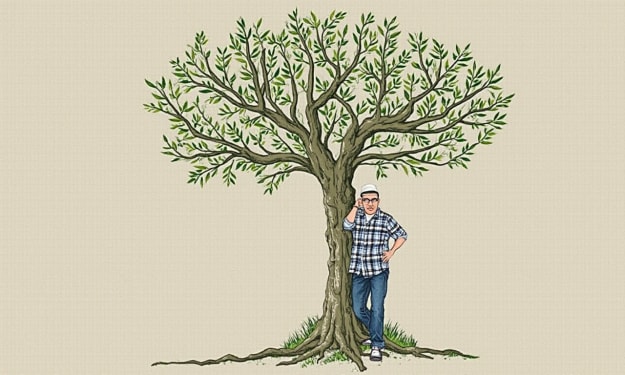
The Man Who Married a Tree (Pedro Martínez, 2018): An Unconventional Love Story That Shocked the World In a world filled with strange and fascinating stories, the tale of Pedro Martínez remains one of the most astonishing. In 2018, this Spanish man decided to marry a tree, in an unusual event that captured global media attention and sparked cultural and philosophical debates. In this article, we will delve into the details of this captivating story, explore the motivations behind this unconventional decision, and how this incident impacted Pedro’s life and the society around him.
By 💓 Pulse of Stories 💓2 years ago in History
The Village That Fell Asleep (Kalachi, Kazakhstan, 2013)
The Village That Fell Asleep (Kalachi, Kazakhstan, 2013): A Mystery That Baffled Scientists In a world full of strange events and unexplained phenomena, the story of Kalachi Village in Kazakhstan remains one of the most astonishing incidents. In 2013, the residents of this small village woke up to a bizarre phenomenon: most of them were experiencing sudden, unexplained sleep episodes that lasted for days. This mysterious event captured the attention of scientists and global media, becoming the subject of numerous theories and speculations. In this article, we will delve into the details of this fascinating story, explore the possible causes behind this phenomenon, and how the villagers coped with it.
By 💓 Pulse of Stories 💓2 years ago in History
The Plane That Disappeared (Flight 19, 1945):
The Plane That Disappeared (Flight 19, 1945): The Bermuda Triangle Mystery That Baffled the World In a world full of mysteries and secrets, the story of Flight 19 remains one of the most puzzling incidents in aviation history. The disappearance of five U.S. Navy aircraft in December 1945 continues to baffle experts and mystery enthusiasts to this day. In this article, we will delve into the details of this fascinating incident, explore the various theories that have attempted to explain this strange disappearance, and discuss how this story became part of the Bermuda Triangle legend.
By 💓 Pulse of Stories 💓2 years ago in History
The Man Who Disappeared (David Lang, 1880)
The Man Who Disappeared (David Lang, 1880): A Mystery That Has Baffled the World for Over a Century In a world full of mysteries and secrets, the story of David Lang remains one of the most puzzling incidents in history. The disappearance of this man in 1880 continues to baffle historians, scientists, and mystery enthusiasts to this day. In this article, we will delve into the details of this fascinating story, explore the various theories that have attempted to explain this strange event, and discuss how this tale continues to captivate our curiosity even after more than 140 years.
By 💓 Pulse of Stories 💓2 years ago in History
The Tunguska Incident (1908)
The Tunguska Incident (1908): The Mystery of the 20th Century That Baffled Scientists On the morning of June 30, 1908, the skies over Siberia, Russia, witnessed a mysterious and horrific event that continues to baffle scientists to this day. Known as the Tunguska Incident, it is one of the most violent natural explosions in modern history. In this article, we will delve into the details of this exciting incident, review the scientific theories that have attempted to explain it, and discuss its impact on popular culture and science.
By 💓 Pulse of Stories 💓2 years ago in History
The Dyatlov Pass Incident (1959)
The Dyatlov Pass Incident (1959): The Mystery That Baffled the World The Dyatlov Pass Incident is one of the most perplexing and chilling mysteries of modern history. In February 1959, nine Russian hikers embarked on a skiing expedition in the northern Ural Mountains and never returned. What happened to them has puzzled scientists, investigators, and conspiracy theorists for decades.
By 💓 Pulse of Stories 💓2 years ago in History
Beelitz Hospital in Berlin (1898-1945)
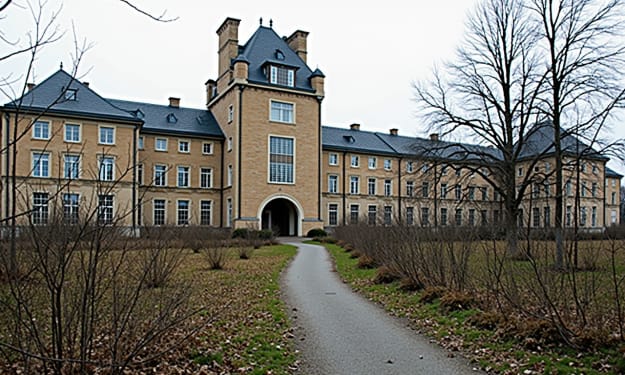
Beelitz Hospital in Berlin (1898-1945) Introduction: Beelitz-Heilstätten Hospital in Berlin is one of Germany's most notable historical hospitals, bearing witness to significant events between 1898 and 1945. This hospital is associated with the advancements of modern medicine at the end of the 19th century, as well as the global conflicts that shook Europe. In this article, we will delve into the history of the hospital, its role during the World Wars, and its impact on medicine and society.
By 💓 Pulse of Stories 💓2 years ago in History
The Krakow Massacre of Jews (1494)
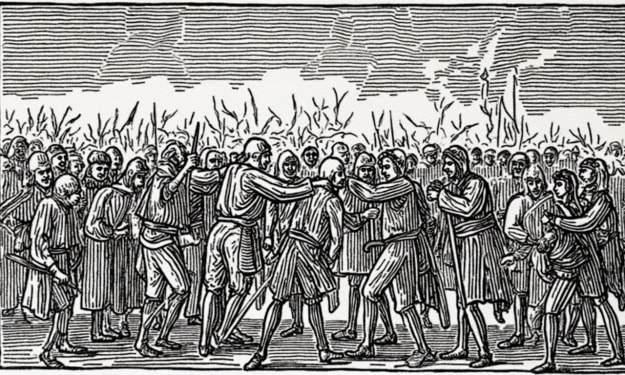
The Krakow Massacre of Jews (1494) Introduction: The Krakow Massacre of Jews in 1494 stands as one of the tragic events that highlight religious and ethnic persecution during the Middle Ages. This massacre occurred in the city of Krakow, Poland, and resulted from a combination of economic, social, and religious tensions. In this article, we will explore the causes leading to this catastrophe, the details of the events, and their consequences for the Jewish community in Krakow and beyond.
By 💓 Pulse of Stories 💓2 years ago in History