Modern
Trump writes ‘Vladimir, STOP!’ after Russia launches deadliest strikes on Kyiv since last summer
US President Donald Trump said he is “not happy” after Russia launched its deadliest wave of attacks on Kyiv in nine months, telling President Vladimir Putin to “STOP!” as he attempts to push Ukraine to agree on a contentious ceasefire proposal. Moscow sent 70 missiles and 145 drones toward Ukraine, mainly targeting Kyiv, in an attack that leader Volodymyr Zelensky said was aimed at pressuring the United States. “I am not happy with the Russian strikes on KYIV. Not necessary, and the timing is terrible. Vladimir, STOP! Every week, 5,000 soldiers are dying. Let's finish the peace agreement! On Thursday, Trump wrote on Truth Social. According to Ukraine's emergency services, the strikes resulted in the deaths of at least 12 people and the injuries of 90 others. Additional casualties may be buried under the rubble. Moscow's assault, according to the emergency services, hit 13 places in Kyiv, including residential buildings and civilian infrastructure. It was the most expensive attack on the city since an aerial bombardment in July 2024 that killed 33 people and targeted a hospital and residential areas. Zelensky said during a trip to South Africa that the bombardment was “first and foremost” aimed at “pressuring the US.” He sought to push back against Trump’s efforts to corral Kyiv into making concessions, telling reporters: “The fact that Ukraine is ready to sit down at a negotiating table after (a) full ceasefire with terrorists… is a big compromise.” On the night of April 24, Russian forces unleashed an hours-long barrage of missiles and drones against Kyiv, killing at least 12 civilians and injuring over 90—its deadliest assault on the Ukrainian capital since July 2024. According to reports from Ukrainian emergency services, the strikes struck residential buildings, critical infrastructure, and public spaces in 13 locations throughout the city, trapping several individuals beneath the rubble as rescue workers attempted to reach them. According to President Volodymyr Zelenskyy, one of the ballistic missiles was identified as a North Korean–manufactured KN-23, underscoring growing cooperation between Moscow and Pyongyang in their military supplies . In a public rebuke that was unusually blunt, former U.S. President Donald Trump took to his Truth Social platform shortly after the strikes to issue a direct plea to Russian President Vladimir Putin. “I am not happy with the Russian strikes on KYIV. Not necessary, and the timing is terrible. Vladimir, STOP! 5000 soldiers a week are dying. Lets get the Peace Deal DONE!” His posts on social media were characterized by his use of all capital letters. One of the rare occasions in which Trump has directly criticized Putin by his first name rather than using the more formal "Mr. President” and illustrating his preference for punchy, informal messaging even in matters of global diplomacy . According to analysts, Trump's use of Truth Social as a kind of diplomatic channel is indicative of a larger shift in the manner in which state leaders communicate. Historically, appeals between heads of state have been conveyed through formal letters, phone calls or mediated statements; Trump’s approach—immediate, public and conversational—breaks with protocol and raises questions about its efficacy in influencing Kremlin decision-making . While some observers view the move as an attempt to inject urgency into U.S.-backed peace negotiations, others caution that social-media entreaties may carry little weight with a leader long accustomed to Western pressure campaigns
By Mahim khanabout a year ago in History
"I can't begin my day without peanuts now that they nearly killed me"
A few years ago, I might have ended up in the ER or worse after eating just one peanut. These days, I eat peanut butter toast almost every morning without any fear. You're not the only one who wonders how that's even possible. Thanks to a ground-breaking treatment and a great deal of perseverance, my journey from a life-threatening allergy to a peanut lover has been nothing short of miraculous.
By Md Biplob Hossainabout a year ago in History
The Beautiful Chaos of Falling in Love . AI-Generated.
The Beautiful Chaos of Falling in Love One of the most powerful and transformative experiences a person can have is falling in love. At the same time, it's thrilling, perplexing, terrifying, and wonderful. Whether it's a slow burn or a sudden spark, love has a way of sneaking up on us, challenging what we thought we knew about ourselves and the world around us.
By articelmunafabout a year ago in History
India is a land of rich history, diverse cultures, and remarkable achievements. Here are some intriguing and lesser-known facts about this incredible country:
🧠 Ancient Innovations & Cultural Contributions Birthplace of Chess and Shampoo: India gave the world chess, originally called Chaturanga, and the concept of shampooing, derived from the Sanskrit word Champu, meaning to massage.
By Abjol Hussain Laskarabout a year ago in History
The Deadly Cost of Aid Cuts: How Vaccine Gaps Are Bringing Old Diseases Back
When Aid Disappears, Old Diseases Return Around the world, diseases once on the brink of eradication are making a troubling comeback. The reason? Life-saving childhood vaccination programs are being disrupted as international aid funding is reduced or withdrawn.
By Umme Sumonaabout a year ago in History
The Samsung Galaxy S25 Edge's launch date and price have been revealed by a new leak.. AI-Generated.
On its website, Samsung accidentally discloses the Galaxy S25 Edge's price and release date. In a surprising development that has captured the attention of tech enthusiasts and smartphone fans worldwide, Samsung has accidentally revealed the pricing and launch date for its highly anticipated Galaxy S25 Edge model—on its own official website. This unexpected leak has sparked widespread interest and speculation, offering an early glimpse into the next big flagship in Samsung's 2025 smartphone lineup.
By candyboy rafeabout a year ago in History
Clitoridectomy Crisis (1930)
A grievance that sparked a division amongst the Kikuyu and deteriorated their relationship with the British government is the issue of Female Genital Mutilation also known as clitoridectomy. It first came to the attention of the missionaries in 1906 when some Kikuyu girls were rushed to Thogoto Mission Hospital after their circumcision wounds had gone septic. Appalled by the practice, missionaries all over the central region campaigned against it. Although they attempted to handle the issue as a clinical matter, it was evident that this was foremost a cultural issue. The Kikuyu, under the Jomo Kenyatta-led KCA (Kikuyu Central Association), perceived it as such; an onslaught on their rites and customs. This is so because the rite was important in the stages of life of a kikuyu woman.
By HINGES OF TIMEabout a year ago in History
Trump Crypto Craze: How a Gala Dinner Invite Sent the $TRUMP Memecoin Soaring
April 25, 2025 | By Global Tech & Finance Desk Although the world of cryptocurrencies has long been rife with surprises, few tales can compare to the spectacle of former U.S. President Donald Trump’s latest venture into digital currency. In a bold, headline-grabbing move, Trump announced that the top 220 holders of the $TRUMP memecoin would be invited to a lavish gala dinner at his prestigious golf club. The result? A dramatic surge in the coin’s price and a wave of excitement, speculation, and ethical debate.
By Md Shahadat Hossainabout a year ago in History
Crypto currency strategy
Crypto currency strategy from 2013 to 2025, broken into key phases with market context, situations, strategic goals, and smart moves at each step. This long-term strategy demonstrates how a disciplined and well-timed investor can navigate the entire crypto growth cycle. ---
By Salman Sha about a year ago in History
From Modesty to Exposure: The Timeline of Moral and Fashion Decline from 1850 to Now.
Throughout human history, fashion has not only been a reflection of beauty or status it has been a barometer of culture, values, and morality. From the layered modesty of the 1800s to the hyper-revealed trends of the 21st century, the shift in clothing mirrors something deeper: a transformation, and perhaps a collapse, of traditional values and educational foundations. This essay traces that journey through time and dives into the gradual erosion of boundaries social, familial, spiritual and how they manifest in the way we dress.
By Sayed Zewayedabout a year ago in History
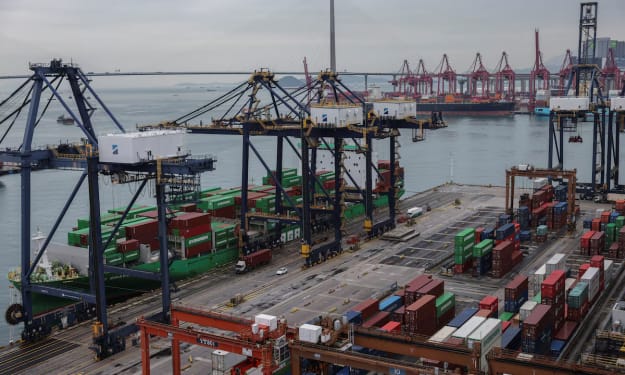
China pushes for tariff cancellation to end US trade war
China Pushes for Tariff Cancellation to End US Trade War China is requesting that all tariffs imposed as a result of the trade war between the United States and China be lifted completely in an effort to reduce tensions and rekindle economic cooperation. Chinese officials have indicated that the removal of these punitive measures is necessary to reset bilateral relations and reestablish trust between the two largest economies in the world. A Legacy of the Trade War The trade war, which began in 2018 under the Trump administration, saw the United States impose tariffs on hundreds of billions of dollars’ worth of Chinese goods, citing concerns over intellectual property theft, forced technology transfers, and a massive trade imbalance. China responded with its own retaliatory tariffs on American exports, including agricultural products and automobiles. Numerous tariffs remained in place despite the fact that the two sides signed a "Phase One" agreement in January 2020, which included China's commitment to purchase additional American goods and implement structural reforms. This has largely remained the same under the Biden administration, resulting in ongoing conflict. The Position of China The Ministry of Commerce of China has consistently emphasized that the global economy would benefit from the removal of tariffs in addition to China and the United States. Chinese officials have increased their lobbying efforts in recent months, urging Washington to repeal policies they see as politically motivated and damaging to the economy. “The additional tariffs are not in line with the interests of the two peoples,” a spokesperson from the Ministry said in a recent briefing. "We believe removing them is consistent with global expectations, would assist in stabilizing supply chains, and would reduce global inflationary pressures," Beijing contends that the continuation of tariffs has been detrimental to both parties, restricting American businesses' access to Chinese markets and contributing to rising costs for American consumers. Challenges and US Response However, the United States has remained cautious. While the Biden administration has expressed openness to improving economic relations with China, it remains wary of lifting tariffs without concrete progress on key issues such as market access, human rights, and national security. U.S. Trade Representative Katherine Tai has described the tariffs as “leverage” in ongoing negotiations and has advocated for a strategic approach rather than a wholesale rollback. Some members of Congress, particularly those concerned with American manufacturing and national security, have resisted calls to lift tariffs, arguing that doing so without ensuring structural changes in China’s trade practices would amount to a concession. Business Community Weighs In Both sides' business leaders have become increasingly vocal proponents of tariff relief, citing its potential to cut costs and stabilize the economy. Apple, Tesla, and Boeing, among other American businesses with significant exposure to China, have lobbied for a reduction in trade barriers for a long time. According to a report published by the United States-China Business Council, U.S. exports to China support nearly one million American jobs and that lessening trade friction could significantly benefit manufacturing, agriculture, and semiconductors. Similarly, Chinese firms affected by U.S. tariffs have pushed their government to negotiate for greater market access and the removal of what they perceive as discriminatory practices. Implications for Geopolitics and Strategy The call to cancel tariffs is part of a larger strategic rethink that goes beyond economics. As global challenges such as climate change, pandemics, and regional security require cooperation between Beijing and Washington, leaders on both sides recognize the need for more stable ties. As a confidence-building measure, rolling back tariffs, according to some analysts, could pave the way for more substantial agreements on complex topics like technology competition and cybersecurity. Others, on the other hand, warn that economic negotiations could be overshadowed by geopolitical tensions, particularly those over Taiwan, the South China Sea, and U.S. export controls, limiting the likelihood of meaningful progress. The Way Forward China's request to end all tariffs imposed during the trade war sends Washington the clear message that cooperation is possible, but it requires concrete steps toward de-escalation. Whether the U.S. will respond with equal enthusiasm remains uncertain, but the conversation has clearly returned to the negotiating table. A resolution to the ongoing trade war could provide much-needed stability and growth as the global economy continues to face uncertainty from inflationary pressures to disruptions in supply chains. It is abundantly clear that, if the impasse persists, both nations stand to lose a lot by repairing their economic ties. Conclusion The unresolved issues in U.S.-China trade relations are brought to light by China's renewed demand for tariff cancellation. While political hurdles remain, the economic and strategic incentives to move toward de-escalation are growing. The world will be watching closely to see whether words will turn into action—and whether the scars of the trade war can finally begin to heal.
By IBTESUM ISLAM WASIabout a year ago in History