Medieval
The Oseberg Ship: A Masterpiece of Viking Craftsmanship and Burial Rituals
In the heart of Norway's rich Viking history lies a legendary vessel that continues to captivate historians, archaeologists, and visitors alike—the Oseberg ship. This iconic Viking ship, discovered in 1904, stands as one of the finest and most remarkable examples of Viking craftsmanship, culture, and burial traditions. Built around 820 AD, the Oseberg ship has survived the test of time, not only as an artifact of historical significance but also as a symbol of the seafaring prowess and spiritual beliefs of the Vikings. Over a century after its rediscovery, the ship remains a centerpiece of Norwegian cultural heritage, housed at the Viking Ship Museum on Bygdøy in Oslo. Discovery and Excavation of the Oseberg Ship The Oseberg ship was unearthed from a burial mound on the Oseberg farm in Vestfold, Norway, in 1904 by archaeologist Gabriel Gustafson and Professor Haakon Shetelig. The burial mound was believed to be the final resting place of two women, one of whom may have been of noble or royal status. Inside the burial chamber, along with the ship, archaeologists discovered a wealth of grave goods, including textiles, wooden carvings, wagons, and animal remains, which provided insight into the life and beliefs of the Viking elite. Buried around 834 AD, 14 years after it was built, the Oseberg ship had been well-preserved in the clay soil, allowing for a detailed reconstruction after excavation. The meticulous efforts of the excavation team ensured that most of the ship’s original wood and artifacts were salvaged, and to this day, an astonishing 95% of the ship’s original material remains intact. A Marvel of Viking Shipbuilding The Oseberg ship is a masterpiece of Viking shipbuilding. At 21.5 meters long and 5 meters wide, the vessel is a large, elegant longship designed for coastal travel. Its sleek, shallow hull would have allowed it to glide easily through Norway’s fjords and rivers, while its majestic curved prow, adorned with intricate carvings of serpents and other motifs, speaks to the Viking affinity for both artistry and craftsmanship. The ship is constructed primarily of oak wood, showcasing the Viking mastery of woodwork and seafaring technology. The planks of the ship are fastened together with iron rivets, creating a watertight, durable structure. The Oseberg ship, with its wide beam and graceful lines, demonstrates the balance of form and function that characterized Viking ship design—built not only for speed and agility on the water but also as a ceremonial symbol of status and power. The Burial and the Women of Oseberg One of the most fascinating aspects of the Oseberg ship is its role in Viking burial rituals. It served as a burial ship for two women, whose identities remain a subject of debate among historians. Some scholars believe one of the women may have been a queen or high-status figure, given the richness of the grave goods and the elaborate nature of the burial. The second woman may have been a servant or companion, accompanying the noblewoman to the afterlife. The burial of elite individuals in ships was a significant ritual in Viking culture, symbolizing their journey to the afterlife. Ships were not only central to Viking life as tools of exploration, trade, and warfare but also as vehicles for the soul’s passage to the realm of the gods. The sheer scale of the Oseberg burial, along with the presence of animal sacrifices and precious artifacts, underscores the importance of this ritual for Viking society. The Oseberg Ship’s Legacy and Preservation After its excavation, the Oseberg ship was painstakingly reconstructed, a process that preserved 95% of the original material, an extraordinary feat considering the ship’s age. In 1926, it was moved to its permanent home at the Viking Ship Museum on Bygdøy, Oslo, where it has since been displayed to the public. For over a century, the ship has been a key attraction, admired for its beauty and historical importance. The Oseberg ship offers an invaluable glimpse into the Viking era, shedding light on their craftsmanship, culture, and beliefs. Its survival over 1,200 years, coupled with the exceptional efforts to preserve it, makes the Oseberg ship one of the most faithfully reconstructed Viking ships in existence. As visitors stand before this legendary vessel in the museum, they are not only looking at a relic of the past but also a testament to the enduring legacy of the Vikings and their mastery of the seas. Today, the Oseberg ship remains a symbol of Norway's rich Viking heritage and a stunning example of ancient maritime engineering. Its continued preservation ensures that future generations will be able to appreciate the artistry and craftsmanship of the Viking Age.
By Deji Akomolafe2 years ago in History
The Hand Brand: A Brutal Mark of Military Punishment in the British Army
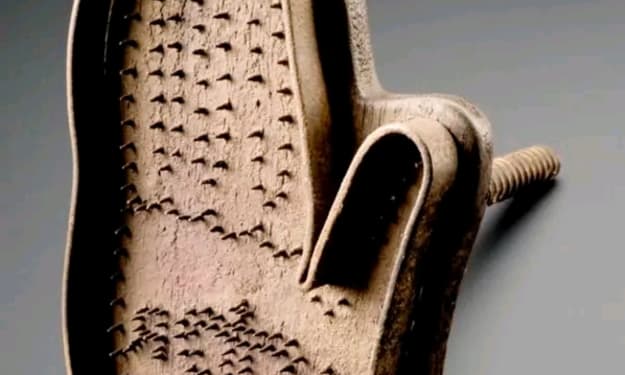
In the mid-17th century, during the tumultuous years of the English Civil War (1641-1651), the British Army employed various methods to maintain discipline and punish those who broke military laws. Among these, one of the most severe and enduring punishments was branding, a physical and often permanent mark that identified deserters and criminals within the ranks. The hand brand, a tool used during this period, became an infamous symbol of this brutal form of punishment. Featuring the initials "CR" surrounded by a crown, it likely stood for Carolus Rex, a Latin reference to King Charles I, who reigned during the Civil War until his execution for treason in 1649. Branding served both as a form of punishment and a visible reminder of one’s crime, marking the individual as someone who had betrayed their comrades and their king. As archaic as it seems today, the use of branding within the military persisted for over two centuries. It was eventually abolished in 1829 for most crimes, but it continued to be used for army deserters until 1879. Over time, branding was replaced by tattooing, signaling a shift in how the military handled punishment and identification, reflecting broader societal changes in attitudes toward human rights and the treatment of soldiers. The English Civil War and Its Impact on Military Discipline The English Civil War was a conflict that pitted the forces of King Charles I (the Royalists) against those of Parliament (the Parliamentarians) over issues of governance, religion, and authority. In such a chaotic environment, maintaining discipline within the military was critical for both sides. Soldiers who deserted their posts, committed crimes, or otherwise disobeyed orders threatened not only the success of military campaigns but also the stability of the nascent English state. The hand brand, with its "CR" marking, represented the monarchy's authority and was used to brand deserters and criminals within the Royalist army. The use of branding was not unique to the British Army; it was a common practice in early modern Europe and was intended to deter desertion and other crimes by making the punishment both visible and permanent. The branding tool itself, featuring blunt metal spikes, was likely designed to create a painful and lasting mark. Some historians suggest that the spikes may have been intentionally dulled to increase the suffering of the person being branded, highlighting the brutal nature of this form of punishment. The Branding Process and Its Symbolism Branding in the British Army was a deliberate and painful process. The branding iron would be heated until it was red-hot, and then pressed into the skin of the accused, usually on a visible part of the body, such as the hand, arm, or face. The initials "CR", surrounded by a crown, would then be seared into the flesh, creating a permanent scar. This mark was not just a symbol of the individual’s crime but also a declaration of their betrayal of the king and country. The "CR" initials clearly referenced Carolus Rex, the Latinized name of King Charles I, underscoring the monarchy’s authority over the army. Even after King Charles I was executed in 1649, during the latter stages of the English Civil War, the branding tool likely remained in use, a relic of the previous royalist regime. The crown symbol atop the initials further emphasized the connection between the crime committed and the royal authority that had been betrayed. The Persistence of Branding in the British Army Despite its archaic and painful nature, branding as a punishment within the British Army persisted long after the English Civil War. While branding for most crimes was abolished in 1829 as societal attitudes toward corporal punishment began to shift, it continued to be used specifically for army deserters until as late as 1879. Desertion was considered one of the most serious offenses a soldier could commit, especially in times of war when the loss of manpower could have dire consequences. The persistence of branding reflected the military’s need for visible and public punishment. Desertion not only jeopardized military operations but also undermined the cohesion and morale of the army. By marking deserters, the military sought to publicly shame them and serve as a deterrent to others who might consider abandoning their duties. The Transition to Tattooing: A Shift in Military Discipline By the late 19th century, attitudes toward punishment within the military began to change, influenced by broader social and political movements advocating for human rights and more humane treatment of individuals. The use of branding as a form of punishment was gradually phased out, and in 1879, the British Army transitioned to using tattooing instead of branding to mark deserters. While tattooing still served the purpose of identifying deserters, it was viewed as a less barbaric method than branding, which inflicted significant pain and left a highly visible scar. Tattooing also aligned with changing military practices, where greater attention was paid to the well-being of soldiers, even those who had committed crimes. This shift from branding to tattooing reflects a broader change in how the military handled discipline, moving away from public humiliation and physical harm toward more regulated and less violent forms of punishment. Legacy and Reflection The history of the hand brand used by the British Army during the English Civil War and beyond offers a glimpse into the harsh realities of military discipline in earlier centuries. It stands as a testament to the brutal measures used to enforce loyalty and obedience in a time when desertion and betrayal were considered existential threats to military campaigns and the monarchy itself. The transition from branding to tattooing marked a significant shift in military attitudes, reflecting broader societal changes. While branding is now seen as a cruel and outdated practice, it played a key role in shaping how armies maintained order and dealt with desertion during times of war. As we reflect on this history, it serves as a reminder of how far we have come in terms of human rights and the treatment of individuals within institutions like the military.
By Deji Akomolafe2 years ago in History
Unearthing History: The Discovery of the World’s Only Intact Roman Legionary Shield
In the realm of archaeology, few discoveries hold the same weight as that of the world’s only intact Roman legionary shield. Unearthed in the 1930s at the ancient site of Dura-Europos in modern-day Syria, this extraordinary artifact offers a rare and invaluable glimpse into the military life of Roman soldiers during the early 3rd century AD. The shield not only serves as a testament to the craftsmanship of the Roman military but also acts as a portal through which we can understand the complexities of their daily lives. The Context of Dura-Europos Dura-Europos, often referred to as the "Pompeii of the East," was an ancient city located on the banks of the Euphrates River. Founded in the 3rd century BC, it became a melting pot of cultures, influenced by Greek, Roman, and Persian elements. Its strategic position made it a focal point for trade and military activity. The city was fortified with thick walls, and its layout was meticulously planned, reflecting the engineering prowess of the time. The shield was discovered during an excavation led by British archaeologist M. I. Rostovtzeff in the 1920s and 1930s. The site had been remarkably well-preserved due to its unique soil composition, which created anaerobic conditions that prevented decay. This allowed many artifacts, including the shield, to survive intact, providing an unprecedented look into the material culture of the Roman military. The Shield: Design and Construction The legionary shield, known as a scutum, was a large, curved shield typically made of wood, reinforced with iron, and adorned with bronze fittings. This specific shield, dating back to the early 3rd century AD, exemplifies the typical design and functionality that Roman soldiers relied upon in battle. Measuring around 1.2 meters tall and 0.9 meters wide, the shield’s distinctive shape allowed for effective protection while maintaining mobility. The wooden core was likely covered with leather or canvas to enhance its durability. The intricate boss, a protruding circular element at the center of the shield, was designed to deflect blows from weapons and was often decorated to reflect the identity of the soldier or his unit. Remarkably, the shield also features intricate bronze fittings, which not only added to its aesthetic appeal but also provided structural support. The craftsmanship evident in this artifact highlights the Romans’ advanced understanding of materials and military technology, setting them apart from many contemporary civilizations. Preservation and Significance The exceptional preservation of the Dura-Europos shield is due to the anaerobic conditions of the soil, which limited exposure to oxygen and thus prevented the decay that typically affects organic materials. This makes the shield not only a rare find but also a vital source of information for historians and archaeologists. The significance of the shield extends beyond its physical attributes. It serves as a tangible connection to the lives of the soldiers who wielded it. The Roman military was a complex institution, and the experiences of its soldiers varied widely based on rank, location, and historical context. The shield’s survival allows us to examine the equipment that shaped the experiences of these men and offers insights into their training, tactics, and everyday challenges. Insights into Roman Military Life The Roman army was renowned for its discipline, organization, and effectiveness in battle. Soldiers, known as legionaries, were heavily trained and equipped with a standard set of military gear, including the scutum. Understanding the design and use of the shield provides critical insight into Roman combat techniques and strategies. For instance, the scutum was not just a tool of defense; it was an integral part of the famed Roman formation known as the testudo or "tortoise." This formation involved soldiers aligning their shields to form a protective barrier, allowing them to advance on enemy positions with reduced risk of injury. The shield’s design facilitated this tactic, showcasing the Romans’ innovative approach to warfare. Moreover, the presence of detailed decorations on the shield may indicate the unit’s identity, rank, or accomplishments. Such elements can help historians piece together the social dynamics within the Roman army and provide clues about how soldiers viewed their roles and status. Conclusion: A Window into the Past The discovery of the intact Roman legionary shield at Dura-Europos is more than an archaeological triumph; it is a window into the past, offering profound insights into Roman military history and the lives of the soldiers who served. As we continue to study and analyze this remarkable artifact, we uncover layers of history that reveal the complexity of the Roman world. In an era where artifacts often succumb to time and decay, the survival of the Dura-Europos shield stands as a testament to the ingenuity of ancient craftsmanship and the enduring legacy of the Roman Empire. Through this single object, we are reminded of the people behind the history, their struggles, and their triumphs, ensuring that their stories are never forgotten.
By Deji Akomolafe2 years ago in History
"India Clinches Second ICC T20 World Cup Title in 2024, Defeating South Africa in a Thrilling Final".
India's crew for the 2024 ICC Men's T20 World Cup has been declared, with Rohit Sharma named as the chief and Hardik Pandya as his appointee. The group includes a blend of prepared players and some new ability, with key names like Virat Kohli, Suryakumar Yadav, and Rishabh Gasp, who returns after his physical issue cutback.
By SRB192119982 years ago in History
A Journey Through Time: The Evolution of Furniture Design
The Medieval Era: Function Meets Form In the medieval era, practicality was the defining characteristic of furniture design. Heavy wooden tables and chairs were the staples of household furnishings, crafted for durability and utility. These pieces were built to withstand the rigors of daily life, reflecting the agricultural and communal lifestyle of the time.
By Opaa Homes2 years ago in History
Night's End Whisper. Content Warning. AI-Generated.
Shadows of the Previous The city never dozed, however it wasn't the dynamic, clamoring city that films painted it to be. It was more similar to an animal of the evening, taking in the murkiness and breathing out a thick obscurity of mysteries and shadows. To [Night's End Whisper], it was both a safe-haven and a jail, the sort of spot where the past followed you like a lost canine you were unable to shake off, regardless of how quick you ran. This evening, the city felt particularly alive, murmuring in quieted tones that main those ready to listen could hear.
By saif uddin khondakar2 years ago in History
Why Are They Called Penny Loafers? A Look at the Iconic Shoe’s History
Penny loafers are a staple in the world of fashion, exuding a timeless appeal that transcends generations. Whether dressed up or down, these versatile shoes have become a go-to for both casual and semi-formal occasions. But beyond their sleek design and comfort, have you ever wondered why they are called "penny loafers"? The name carries a quirky and interesting backstory rooted in American culture, tradition, and even teenage trends from decades ago. Let’s explore the origins of this iconic shoe and why the name has stuck around.(count num of words of this blog post
By Jacob Roberts2 years ago in History