Medieval
Courtesy
Kalens of March. Milady, Sovreign, and Sovreign of my heart, I am returning. I beg you tell me how it is to be. Scarce five twelvemonths past I fled as the great waves washed over my kingdom. Last to escape, I rode like the wind, pausing not until my brave mount bore me to this island. I knelt and gave thanks, then asked to be given a venture for which I would be worthy. The high repute of your court being generally noised about, I made my way there, and, offering my sword, made liege homage to the great king. Your ladyship will understand that this not a simple homage, but a liege homage. My Lord looped a silk string around my wrists, and I swore to obey no other lords and to serve him loyally until my death.
By Paul A. Merkley2 years ago in History
9 million year old shark ancestor fossil found in the desert
9 million year old shark ancestor fossil found in the desert. A recent discovery has left scientists and enthusiasts alike astonished a 9 million year old shark ancestor fossil was found buried beneath layers of scorching desert sand. This revelation challenges our understanding of prehistoric life and raises fascinating questions about how an ocean predator ended up in an arid landscape. While the idea of a shark fossil in the middle of a desert seems almost unbelievable it is a testament to the ever changing nature of our planet. To understand this phenomenon it is essential to look back millions of years when the Earth was vastly different from what we see today. Scientists explain that the very desert where the fossil was found was once submerged beneath a vast ocean. This prehistoric body of water teemed with marine life including sharks before geological and climatic shifts transformed it into the barren land we now see. The fossilized remains of this ancient shark serve as a reminder of a time when this region was part of a thriving underwater ecosystem. One of the key reasons behind such drastic transformations is the movement of tectonic plates. These massive sections of the Earth's crust are constantly shifting albeit at an imperceptibly slow pace. Over millions of years these movements can cause oceans to retreat and landmasses to rise reshaping entire continents. What was once a deep ocean floor eventually became exposed land subject to erosion and the relentless forces of nature.
By Adnan Rasheed2 years ago in History
The Eternal Love of Radha and Krishna😘😘😘😘
Title: The Eternal Love of Radha and Krishna ❤️❤️❤️❤️❤️❤️❤️❤️❤️❤️❤️❤️❤️❤️❤️❤️ Once upon a time in the sacred land of Vrindavan, the divine love between Radha and Krishna blossomed like the most enchanting flower. Their love was not ordinary; it transcended time, space, and worldly attachments. It was a love that resonated through the universe, sung by poets and cherished by devotees for eternity.❤️❤️❤️❤️❤️❤️❤️
By Badhan Sen2 years ago in History
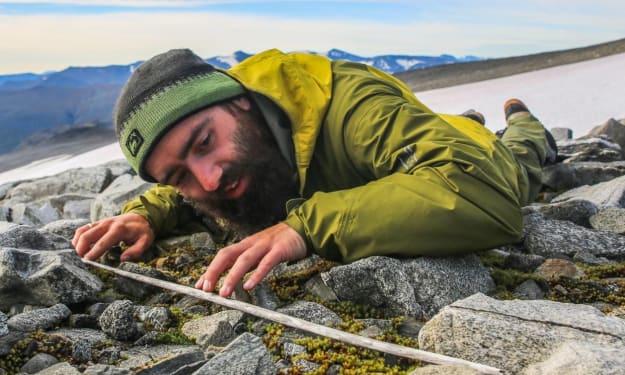
Archaeologists are finding mysterious ancient objects on Norway's melting glaciers.
Archaeologists are finding mysterious ancient objects on Norway's melting glaciers. The melting glaciers of Norway are exposing a hidden world frozen in time objects from the Stone Age Iron Age and medieval periods that provide rare glimpses into the lives of ancient humans. As climate change accelerates glacial melt archaeologists are racing against time to recover and study these remarkable artifacts before they are lost forever. From primitive wooden tools and well preserved textiles to weapons and human remains each discovery helps researchers unravel the mysteries of the past.
By Adnan Rasheed2 years ago in History
Archaeologists Discovered 22000 Year Old Tracks That May Be From the World’s First Vehicle.
Archaeologists Discovered 22000 Year Old Tracks That May Be From the World’s First Vehicle. The discovery of 22000 year old tracks at White Sands National Park in New Mexico has shed new light on early human innovation and transportation methods. These tracks as revealed in a recent study published in Quaternary Science Advances suggest that ancient humans used a rudimentary vehicle known as a travois to transport goods or belongings. This finding challenges conventional perspectives on early transportation pushing back the timeline of non wheel based vehicles much further than previously thought. At the heart of this discovery are the linear impressions found alongside human footprints. Unlike ordinary tracks left by people walking these marks suggest the dragging of wooden poles indicating the use of a travois. This is a simple yet effective means of carrying heavy loads by lashing two poles together often in the shape of a triangle and pulling them along the ground. Such a transport method was widely used by Indigenous peoples in North America well into recent history particularly among the Plains tribes who adapted it for use with horses. However, this new discovery suggests that its use dates back much further to a time when humans were still navigating the challenges of Ice Age survival.
By Adnan Rasheed2 years ago in History
Guamanian: Culture, Language & Heritage
The Guamanian Chamorro people have a unique culture deeply rooted in the Mariana Islands. This chain of islands is in the Pacific. Their culture is a mix of old traditions and new influences. It shows a strong community spirit and respect for their heritage.
By The Big Bad 2 years ago in History
Reevaluating Soy’s Role in Breast Cancer Mitigation: A Comprehensive Reassessment in Nutritional Oncology
Description: Breast cancer remains a pervasive global health challenge, particularly among women across diverse demographics. Historically, dietary constituents such as soy have faced extensive scrutiny due to their phytoestrogenic properties, which were presumed to potentiate oncogenic pathways. However, an expanding body of rigorous, peer-reviewed research now suggests that soy may paradoxically exert chemoprotective effects against breast carcinogenesis. This scholarly examination critically evaluates the evolving scientific discourse, elucidates clinical implications, and presents evidence-driven recommendations for incorporating soy into comprehensive cancer-preventive strategies. Breast Cancer Etiology: A Multifactorial and Molecularly Complex Paradigm Breast cancer emerges from malignant epithelial transformations within mammary tissues, driven by an intricate interplay of genetic, hormonal, behavioral, and environmental factors. The pathogenesis is underscored by several pivotal determinants: Genomic Susceptibilities: Germline mutations, particularly in BRCA1 and BRCA2, markedly elevate oncogenic potential and necessitate vigilant surveillance. Behavioral and Lifestyle Determinants: Dietary inadequacies, physical inactivity, tobacco use, and alcohol consumption significantly exacerbate cancer susceptibility. Endocrine Modulation: Chronic exposure to elevated endogenous estrogens—arising from factors such as early menarche, delayed menopause, or exogenous hormone therapies—intensifies oncogenic risk. Environmental Carcinogenesis: Exposure to ionizing radiation, industrial toxins, and endocrine-disrupting agents compounds the overall carcinogenic burden. Soy’s Reevaluation: A Paradigm Shift in Oncology Nutrition Soy, once vilified for its high concentration of phytoestrogens—particularly isoflavones—was historically implicated in exacerbating hormone-sensitive malignancies. Contemporary research, however, challenges this reductionist view. Seminal Findings from Emerging Research: Isoflavones as Context-Dependent Estrogen Receptor Modulators: Unlike endogenous estrogens, isoflavones function as selective estrogen receptor modulators (SERMs), preferentially binding to estrogen receptor-β (ERβ) and exerting antiproliferative effects on breast tissue. Recurrence Reduction: Meta-analytic reviews suggest a significant inverse correlation between soy intake and breast cancer recurrence rates, particularly in populations with habitual soy consumption. Enhanced Survival Metrics: Longitudinal cohort studies, particularly in East Asian populations, demonstrate improved post-diagnostic survival metrics associated with sustained soy consumption. Dose-Dependent Protective Efficacy: Quantitative analyses reveal a proportional relationship between soy intake volume and reduced breast neoplasm incidence. 📊 [Insert Infographic: Comparative Analysis of Breast Cancer Recurrence Rates Across Varied Soy Consumption Levels] Molecular Mechanisms Underlying Soy’s Chemoprotective Potential Beyond its phytoestrogenic activity, soy exhibits multifaceted chemopreventive properties through diverse biochemical pathways: Anti-inflammatory Modulation: Soy’s bioactive constituents attenuate pro-inflammatory cascades, notably those mediated by NF-κB and COX-2, implicated in tumorigenesis. Endocrine Equilibrium: Isoflavones modulate estrogen signaling by competitively binding to estrogen receptors, particularly stabilizing hormonal fluctuations in postmenopausal women. Oxidative Stress Reduction: The antioxidative profile of soy reduces reactive oxygen species (ROS)-induced DNA damage, enhancing genomic stability. Epigenetic Regulation: Preliminary investigations suggest soy’s potential role in modulating DNA methylation patterns and histone acetylation, thereby influencing tumor suppressor gene expression. Strategic Dietary Integration: Optimal Soy-Based Nutritional Sources To harness soy’s chemopreventive benefits, the following whole-food sources are recommended: Tofu: A versatile protein source adaptable across diverse culinary applications. Tempeh: A fermented soy product enriched with probiotic compounds that enhance gut microbiota resilience. Soy Milk: A nutrient-dense dairy alternative fortified with calcium and vitamin D. Edamame: A minimally processed source of complete plant proteins. Miso: A probiotic-rich fermented paste containing bioactive peptides. 🥗 [Insert Visual: Curated Display of Nutrient-Dense, Minimally Processed Soy-Based Dishes] Case Study: Integrative Nutritional Oncology from an Indian Clinical Perspective Anita, a 42-year-old educator from Mumbai, was diagnosed with early-stage invasive ductal carcinoma. As part of an integrative therapeutic protocol, her clinical nutritionist implemented a dietary intervention emphasizing increased soy consumption. Over a longitudinal three-year follow-up, Anita’s biomarker profiles remained stable, with notable improvements in energy levels and overall quality of life, underscoring the adjunctive potential of targeted nutritional strategies. Dispelling Misconceptions Surrounding Soy Consumption Misconception: Soy indiscriminately elevates systemic estrogen levels, thereby exacerbating tumor progression. ✅ Clarification: Isoflavones selectively bind to ERβ, exerting antiproliferative effects on breast tissue. Misconception: All soy derivatives confer identical health outcomes. ✅ Clarification: Whole, minimally processed soy sources confer chemoprotective benefits, whereas ultra-processed derivatives may lack similar efficacy. Misconception: Soy negatively affects thyroid function. ✅ Clarification: In euthyroid individuals with adequate iodine intake, moderate soy consumption exerts negligible effects on thyroid hormone regulation. Clinical Guidelines and Evidence-Based Consumption Recommendations Consult with an oncology specialist or registered dietitian prior to significant dietary modifications, especially in hormone-sensitive cases. Prioritize consumption of organic, non-GMO soy products to mitigate exposure to agricultural contaminants. Limit reliance on ultra-processed soy-based supplements unless clinically indicated. Proven Strategies for Breast Cancer Risk Mitigation ✔️ Integrate whole-food, minimally processed soy into daily dietary patterns. ✔️ Engage in consistent physical activity, targeting at least 150 minutes of moderate-intensity exercise weekly. ✔️ Eliminate tobacco use and moderate alcohol intake. ✔️ Undergo routine screenings and clinical examinations for early detection. 🔗 [Link: Indian Cancer Research Foundation for Comprehensive Educational Resources and Support Services] Conclusion: A Reappraisal of Soy’s Role in Breast Cancer Prevention The contemporary scientific consensus necessitates a reexamination of soy’s oncological implications. Rather than functioning as a carcinogenic agent, empirical evidence increasingly suggests that soy exerts protective effects when consumed within a balanced, evidence-informed diet. Personalized nutritional interventions, underpinned by robust clinical research, represent a promising adjunct to conventional cancer therapeutics. 🌟 [Insert Visual: Inspirational Quote from a Leading Indian Oncologist on Nutrition’s Integral Role in Comprehensive Cancer Care] Further Academic Engagement: 👉 Explore our advanced guide on integrative cancer-preventive nutritional strategies. 👉 Subscribe for updates on cutting-edge research in oncological nutrition. 👉 Contribute your clinical experiences with dietary soy—join the scholarly discourse below.
By Kajal Devi2 years ago in History
The Mysterious Disappearance of Five Children in 1945 The Sodder Family Case.
The Mysterious Disappearance of Five Children in 1945 The Sodder Family Case. Some events in history never fade away instead they raise more questions over time. One such mystery is the disappearance of five Sodder children on Christmas Eve December 25 1945 in Fayetteville West Virginia USA.
By Adnan Rasheed2 years ago in History
SPS Technologies Fire
SPS Technologies is a well-known company that manufactures high-quality fasteners, bolts, and other industrial components used in the aerospace and automotive industries. Recently, a fire broke out at one of its facilities, causing serious damage and raising concerns about safety and the future of the company. In this article, we will discuss what happened, the possible causes, and the impact of the fire on the company and the people involved.
By Farhan Sayed2 years ago in History