Medieval
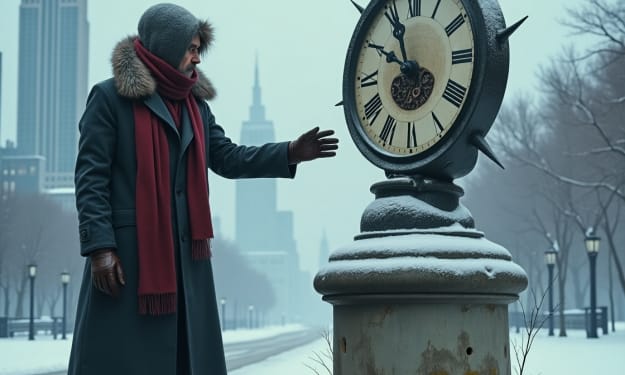
Creative Cruelties
I could not choose one specific moment that history would burn, so I highlighted a few. Each one deserves a more indepth look, for us to appreciate where we come from. But each one also is more than enough for us to know, without doubt, to be better.
By Kelli Sheckler-Amsdenabout a year ago in History
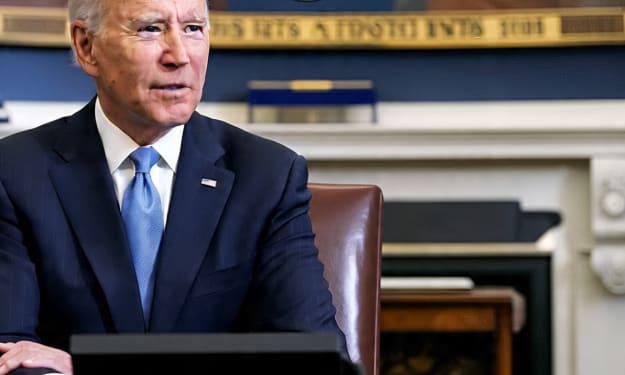
Joe Biden. AI-Generated.
Joe Biden was born on November 20, 1942, in Scranton, Pennsylvania, a small city in the United States. He grew up in a working-class family. His father, Joseph Biden Sr., worked very hard to take care of the family. At times, the family had little money. But they stayed strong and close together.
By Khalil Rehmanabout a year ago in History
Gerrymandering the Presidency: Why Trump could lose the popular vote in 2020 by 6 percent and still win a second term.
Donald Trump was the clear Electoral College winner in the 2016 election, despite losing the popular vote by a wide margin to Hillary Clinton. Anthony J. McGann, Charles Anthony Smith, Michael Latner and Alex Keena write that, unless the Supreme Court stops congressional gerrymandering, President Trump can guarantee re-election in 2020 – even if he loses by 6 percent. When the US Supreme Court takes up the issue of partisan gerrymandering this year, they will decide not only the fate of popular control in the House of Representatives and many state legislatures, but quite possibly the Presidency as well. If four Republican controlled state governments (Pennsylvania, Michigan, Wisconsin and Florida) change the way they allocate Electoral College votes, President Trump could be re-elected in 2020, even if he loses the popular vote by 6 percentage points. All the states need do is to allocate Electoral College votes by congressional district (like Nebraska and Maine), instead of giving all of the state’s electors to the statewide winner. Of course, this strategy only works to the benefit of the Republicans because the congressional districts in these states are heavily gerrymandered. As we argue in our book Gerrymandering in America, the congressional districts in many states are drawn to advantage the Republican Party. For example, in Pennsylvania in 2012 the Republicans took 13 out of 18 House districts even though the Democrats received more votes. If this partisan gerrymandering were outlawed, then allocating Electoral College votes by congressional district in the four states would actually disadvantage the Republican candidate for President. However, if the Supreme Court continues to allow partisan gerrymandering – as it has since its decision Vieth v. Jubelirer in 2004 – then the plan is highly effective and there is nothing that can stop the four states adopting it. Allocating Electors by congressional district is clearly legal – Nebraska and Maine already do it this way. Furthermore, the Republicans control the state legislature and the governor’s mansion in all four states. How allocating Electors by congressional districts could benefit the Republican candidate Surprisingly, the strategy that is most effective for the Republicans is to change how Presidential Electors are allocated in certain states that voted for Trump in 2016. Of course, the Republicans would get an advantage by allocating Electors more proportionally in states that Clinton won. The problem is that this would require the support of Democrats. For example, Republican legislators in Virginia and Minnesota have already proposed such measures, and Stephen Wolf describes this as an attempt to “gerrymander the electoral college”. The problem is that both these states have Democratic governors, who would surely veto such proposals. Similarly Harry Enten at fivethirtyeight.com shows that if all states allocated Electors by Congressional districts, the Republicans could win the Presidency despite a 5 percent popular vote deficit. Again the problem is that this would require Democratic controlled states to agree to such a system. However, in Pennsylvania, Wisconsin, Michigan and Florida, Republicans control both the state legislature and the
By Silas Blackwoodabout a year ago in History
🤢The Great Stink of London, Summer 1858: How the Thames River's Filth Nearly Shut Down Parliament and Sparked Sewer Reforms
The Summer That Stank to High Heaven In the sweltering summer of 1858, London became the setting for one of the foulest crises in urban history. For several weeks, an unbearable stench rose from the River Thames, the city's main waterway and open sewer, engulfing the metropolis in a nauseating miasma that no one - not even the powerful lawmakers in the Palace of Westminster - could escape. The event, which became known as "The Great Stink," was more than just a sensory nightmare; it was a pivotal moment in the evolution of public health and urban infrastructure.
By History Seekerabout a year ago in History
Trump's Speech about Jerusalem: An Analysis on Persuasive Strategies. AI-Generated.
INTRODUCTION Jerusalem is a holy place where several beliefs and faiths live together. Islam, Christianity and Jews live and do worship in that city (BBC, 2017). Its territory surrounds Palestine and Israel. Both countries have been being a great rivalry in an old-world war since 1948 (Margolick, 2008). Donald Trump as the president of USA showed his sympathy toward both a long-world war and it was stated through his political speech. Stobbs (2012) considered that political speeches are written with a very great plan and purpose. As the president of USA, Trump is the most influential person in the world. His word will always provoke great responses from all people over the world. He showed his remark on his speech about Jerusalem on 23rd May 2017. Through his speech, he expected the three religions in Jerusalem, such as Jews, Islam and Christianity can build peace together. On 6th December 2017, Trump declared Jerusalem as the capital city of Israel. It provoked pros and cons from several leaders of nations over the world. He stated that his claim was to stop the war between Israel and Palestine, and to achieve peace. Through his speech, Trump intended to show his power and communicate what he wanted to. Speech is one the ways of having communication (Soedjarwo, 2020). In having communication, the speaker influences hearer to believe in what he says or doing something that he wants to. Alfian, Santi, and Sari (2019) stated that a good communication depends on how speaker can achieve the goal of what he says. Speaker absolutely persuades hearers to achieve the goals of communication. In Persuading hearers, speaker can uses persuasive strategies. Speaker uses persuasive strategies to influence other people through utterance without doing compulsion. Gass and Seiter (2010) stated that persuasion is an attempt to influence hearers motives and attitudes.
By Silas Blackwoodabout a year ago in History
NASA Confirms Evidence of Alien Life? Latest Findings from Europa Mission
Introduction: The Europa Enigma For decades, Jupiter’s icy moon Europa has captivated scientists as one of the solar system’s most promising candidates for extraterrestrial life. In 2025, NASA’s Europa Clipper mission delivered its most compelling data yet—potential biosignatures beneath the moon’s frozen crust. While NASA has stopped short of declaring definitive proof of life, the evidence has ignited a scientific and philosophical firestorm. This article examines: The shocking findings from Europa’s subsurface ocean How NASA’s instruments detected potential alien biosignatures The scientific debate over what constitutes "proof" of life The ethical and societal implications of confirming extraterrestrial organisms What comes next in humanity’s search for life beyond Earth
By Silas Blackwoodabout a year ago in History
2024 Election Fallout: Supreme Court Rules on Trump’s Immunity Case
Introduction In a historic decision that could reshape the future of U.S. presidential accountability, the Supreme Court ruled on former President Donald Trump’s immunity case in 2024. The case, Trump v. United States, centered on whether a former president enjoys absolute immunity from criminal prosecution for actions taken while in office. The ruling not only impacts Trump’s multiple legal battles but also sets a precedent for the limits of executive power. This article examines the Court’s decision, its legal and political implications, and the potential consequences for the 2024 election and beyond. Background: The Legal Battle Over Presidential Immunity
By Silas Blackwoodabout a year ago in History
The World Revolution Stage: From Ancient Times to the Present
Throughout history, revolutions have played a pivotal role in shaping the course of human civilization. From the earliest uprisings in ancient societies to modern political and social movements, the stage of world revolution has evolved in complexity, scale, and impact. These revolutionary waves—whether sparked by political oppression, economic disparity, religious conflict, or a desire for freedom—have reshaped borders, overthrown empires, and transformed societies. This article explores the progression of world revolutions from ancient times to the modern age.
By MD BILLAL HOSSAINabout a year ago in History
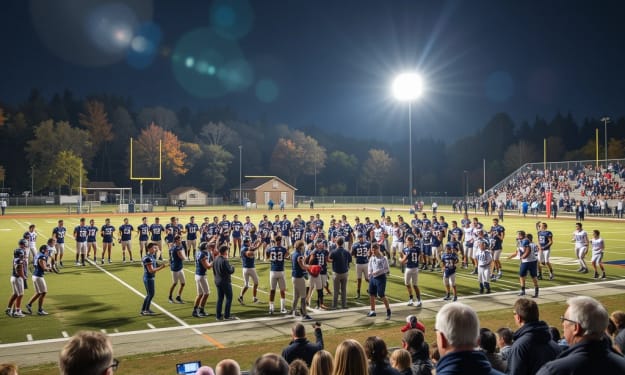
Beneath the Floodlights
Hawthorne, Texas — The bleachers began filling up before sunset, as they always do. Parents lugging coolers, kids in face paint and team shirts, and grandparents bundled in blankets all gathered beneath the creaky floodlights of Hawthorne High’s football stadium. This wasn’t just another game. This was the last home game of the season, and for many, it felt like the end of something much bigger.
By Shohel Ranaabout a year ago in History
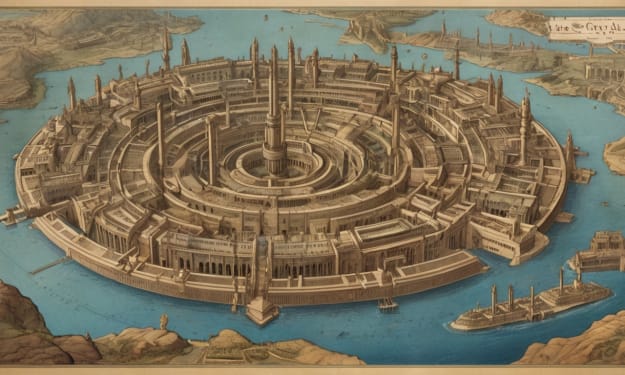
The Lost City of Atlantis
A civilization that lies deep in the seas... A legendary city that rules the world with its advanced technology, but was buried in the waters overnight by incurring the wrath of the gods: Atlantis! So is this story real, or is it a metaphor thousands of years old? Today, we are putting all the details on the table, from Plato's writings to modern conspiracy theories, even NASA's explanations!
By Remzi Kazdalabout a year ago in History