Medieval
Jesus and John Wayne: The Transformation of White Evangelicalism
Chackout Book Description, In "Jesus and John Wayne," acclaimed scholar Kristin Du Mez takes readers on a thought-provoking journey through the last seventy-five years of white evangelicalism. Exploring the profound impact of popular culture on contemporary American evangelicalism, Du Mez reveals how evangelical subculture has replaced the compassionate Jesus of the Gospels with a rugged idol of masculinity and Christian nationalism. From VeggieTales to bestselling books like "Wild at Heart," the beliefs of millions have been shaped by evangelical media and merchandise. This sweeping and revisionist history delves into the rise of muscular heroes, such as John Wayne, Oliver North, Ronald Reagan, Mel Gibson, and the Duck Dynasty clan, who have become icons of white masculine power defending a vision of "Christian America."
By Amazone Review3 years ago in History
A New Dawn
Where I would meet my end in this life only to be reincarnated into a new existence, I think I would very much like to be a botanist in an apothecary during the height of Greek power. A very simple life I know, however it has quite an alure to me. The idea of creating my own tonics and potions or learning more about the human body and how natural remedies can enhance our lives or even heal ailments, is so wonderful.
By John Carlin3 years ago in History
Blatant Blares!
💫✨ 🧡🦢🦢🦢🧡 ✨💫 ©✍️ Madhu Goteti ,July 6,2023 I have been a Nobody’s fool for everybody’s rule. And Look ! I don’t want to draw out on any pattern printing and say: “O ! Lo! Behold! I am holding this mirror and look —This is where I was lost and this is where I was found with a singularity of purpose riding over me.” Through the realms of existence affixed —as in, past, present and future’s defense, here I am. Yet, as I work thro’ my essence in presence, I feel centered in embracing this gift of life as though it was a cosmic descent🙏. It’s much like the bargain of golden grace that guards me to be rarified under this hiatus of history which repeats itself and never ends. And in all this the alchemical reality for me is that All world’s a stage and a bit of everything exists in it’s sheer cognizance to the other. Further to that, the fundamental notion that marks my psyche is that I see —I in thee ; thee in me; fitted more than enough to resonate me with thee ,and likewise, thee with me.
By Madhu Goteti 3 years ago in History
Timur the Lame
He came into the world during the 1330s in the Chaghatayid Khanate, once part of the vast Mongol Empire in Central Asia. In the harsh steppe, he emerged from humble origins as a sheep thief to become one of history's most renowned conquerors, uniting vast territories encompassing Central Asia, Afghanistan, and Iran under his rule.
By Henrik Leandro Laukholm Solli3 years ago in History
The Tragic Tale of Gráinne and Diarmuid
Gráinne, the daughter of King Cormac mac Airt and princess of Tara, was seething with anger. Fionn Mac Cumhaill, the renowned leader of the Fianna, Ireland's celebrated band of warriors, had just arrived at her castle. Gráinne had always believed that she would marry a young soldier who matched her boldness and brilliance. However, to her dismay, it became clear that she was expected to wed Fionn himself, who was well past his prime despite his legendary status. Gráinne refused to endure such an insult.
By Henrik Leandro Laukholm Solli3 years ago in History
A Curious Alchemist: In the Hearth of the Renaissance
Once, in a lifetime not my own, I found myself wrapped in the fabric of the Renaissance, that miraculous epoch between the Middle Ages and the Age of Enlightenment. The year was 1456, the dawn of a new era brimming with curiosity and a hunger for understanding that stretched from the quietest villages to the most resplendent royal courts.
By Stevie Johnson3 years ago in History
In a Past Life...
Do you ever wonder what you would have been in a past life? I have, that is not meant to sound self-centred. What I imagine is myself waking up in 16th-17th century Italy, the time of Galileo, wearing the clothing of the day. I imagine walking outside in the hot, humid, sticky air. I imagine working as an astronomer. Maybe even the first female astronomer in the country of Italy, maybe even the world. Okay, I am getting ahead of myself.
By Miranda Monahan3 years ago in History
PAST LIFE
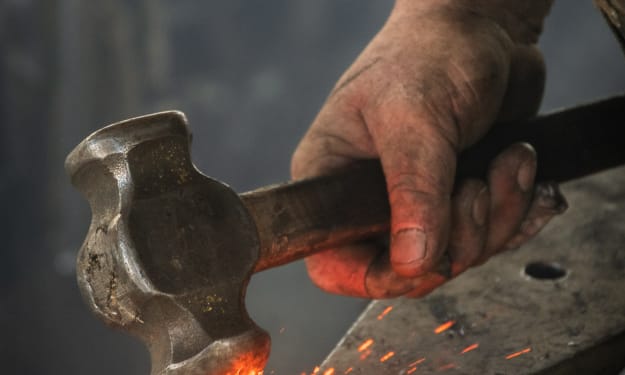
If I Were Born in a Different Historic Era: Exploring Alternative Occupations Introduction Imagine if you were born in a different historic era. The course of history has shaped our lives, including the occupations we pursue. This article delves into the possibilities and explores how our professions would differ if we were born in various historical periods. From being a blacksmith in the Medieval period to a factory worker during the Industrial Revolution or an artist/patron of the arts in the Renaissance, each era offers unique opportunities and challenges.
By shahidahmed3 years ago in History
Bizarre Historical Enigmas
Throughout the vast tapestry of history, countless stories have been etched into its fabric, each with its own peculiar twist. While some historical events have become widely known and studied, others remain tucked away in the recesses of time, captivating our curiosity with their eccentricity. These peculiar occurrences challenge our comprehension, leaving us fascinated, perplexed, and questioning the boundaries of human experience. Join us on an extraordinary journey as we delve into the enigmatic annals of history to unveil some of its most unusual and captivating events. The Curious Case of the Dancing Plague of 1518: In the summer of 1518, a small town called Strasbourg in France became the stage for a baffling phenomenon. It all began when a woman named Frau Troffea started dancing relentlessly in the streets, seemingly unable to halt her movements. Astonishingly, her frenzied dance quickly spread, infecting others with the same uncontrollable compulsion. Within weeks, dozens of people were gripped by the dancing plague, which continued unabated, leading to exhaustion, injuries, and even fatalities. The true cause behind this extraordinary episode remains an enigma, confounding historians and medical experts alike. The Unconventional Great Emu War: In 1932, Australia bore witness to a peculiar conflict that has come to be known as the Great Emu War. Faced with an overwhelming emu population causing significant damage to crops, the Australian government dispatched soldiers armed with machine guns to eradicate the birds. However, the emus proved to be unexpectedly resilient adversaries, scattering and evading the soldiers' efforts with ease. The conflict ended in a humbling defeat for the military, highlighting the unpredictability of nature and the limitations of human intervention. The Mystifying Tanganyika Laughter Epidemic: In 1962, an extraordinary event unfolded within a school in Tanganyika, present-day Tanzania. The phenomenon commenced when three girls succumbed to uncontrollable fits of laughter, unable to suppress their mirth. Astonishingly, the laughter spread contagiously throughout the school, compelling its closure. The epidemic spilled over into neighboring villages, affecting thousands of individuals. Lasting several months, the laughter epidemic caused significant disruptions, bewildering scientists and psychologists as they sought to comprehend its origins and implications. The Bizarre Tragedy of the Great Molasses Flood: In 1919, the vibrant city of Boston was thrust into the throes of an unprecedented calamity. A colossal storage tank containing millions of gallons of molasses unexpectedly ruptured, unleashing an immense wave of viscous syrup that surged through the streets at an astonishing velocity. With the molasses rising to a height of 25 feet, buildings were demolished, individuals were trapped, and tragically, 21 lives were lost. The Great Molasses Flood stands as an unforgettable testament to one of the most peculiar and sorrowful accidents in American history. The Unfathomable Dancing Mania of the Medieval Era: During the period spanning the 14th to the 17th centuries, Europe witnessed numerous outbreaks of a perplexing phenomenon known as dancing mania. Large groups of people would suddenly succumb to an irresistible urge to dance fervently, often enduring for days on end. In a trance-like state, they became powerless to control their movements. These episodes, believed to be manifestations of mass psychogenic illness, were potentially triggered by factors such as religious fervor, stress, or the influence of hallucinogenic substances.
By Lakshman PL3 years ago in History
Top 10 Festivals Celebrated Worldwide
Celebrations have consistently held a huge spot in mankind's set of experiences, filling in as social achievements and festivities of life, otherworldliness, and custom. Across the globe, individuals meet up to stamp different events with lively, various, and frequently spectacular celebrations. In this article, we will set out on a dazzling excursion through the best 10 uncommon celebrations celebrated around the world, diving into their beginnings, special traditions, and the well established social importance they hold.
By Arun Karunakaran3 years ago in History
The rise and fall of empires . Content Warning.
All through mankind's set of experiences, domains have risen and fallen, abandoning a heritage that has formed the world we know today. From the old domains of Babylon and Persia to the later realms of Europe and America, the ascent and fall of these strong states have been a consistent component of human civilization. The purposes for the ascent and fall of domains are perplexing and complex, incorporating elements, for example, military may, monetary flourishing, social impact, and political steadiness. Understanding the examples and elements of domain building and implode can give significant experiences into the difficulties and open doors confronting current countries and social orders. In this article, we will investigate the ascent and fall of domains over the entire course of time, looking at the key factors that have added to their prosperity or disappointment, and the illustrations that can be gained from their experience.
By abdalla waabari3 years ago in History