Lessons
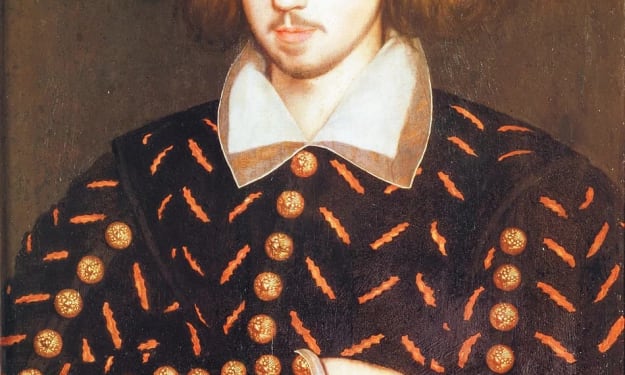
The Violent and Mysterious Death of Christopher Marlowe
Christopher Marlowe, one of Elizabethan England’s most enigmatic and brilliant playwrights, died young and under circumstances so suspicious that his death has become one of literary history’s most enduring mysteries. Known for his powerful blank verse and provocative themes, Marlowe’s meteoric rise in the late 16th century was matched only by the suddenness and violence of his demise.
By Abjol Hussain Laskarabout a year ago in History
Nelson Mandela: A Legacy of Liberation, Reconciliation, and Hope
Nelson Mandela: A Legacy of Hope, Peace, and Liberation Nelson Rolihlahla Mandela, more commonly referred to as Madiba, is still regarded as an iconic figure from both the 20th and 21st centuries. His life is a source of inspiration for people all over the world who are working toward equality and human dignity. It is marked by unwavering dedication to justice, significant sacrifice, and an extraordinary capacity for forgiveness. Mandela's journey is a testament to the strength of the human spirit in the face of oppression, from anti-apartheid activist to political prisoner to first president of a democratic South Africa. Born on July 18, 1918, in the Eastern Cape of South Africa, Mandela's early life provided little indication of the monumental role he would play in shaping his nation's destiny. He learned about the systemic racial discrimination and injustice that black South Africans faced under the apartheid regime while attending the University of Fort Hare and local missionary schools. When he joined the African National Congress (ANC) in 1944, a liberation movement that was initially committed to non-violent resistance against apartheid laws, his activism took off in earnest. However, following the Sharpeville massacre in 1960, where peaceful protestors were brutally killed by police, Mandela and the ANC leadership concluded that armed struggle was a necessary last resort. He co-founded the ANC's military wing, Umkhonto we Sizwe ("Spear of the Nation"), which carried out sabotage against important government facilities. His arrest in 1962 and the infamous Rivonia Trial in 1964, in which he and other ANC leaders were charged with sabotage and conspiracy, were both as a result of this shift. His powerful speech from the dock, in which he said he was willing to die for the idea of a free and democratic society, was heard all over the world and made him into a symbol of resistance. Mandela was given a life sentence and spent the next 27 years in harsh conditions on Robben Island and other South African prisons. Mandela's influence only increased despite his imprisonment. The global anti-apartheid movement demanded his release and the end of the oppressive apartheid system, making him a global celebrity. Millions of people around the world were inspired by his unwavering resolve and refusal to compromise his values. Domestic and international pressure on the South African government increased toward the end of the 1980s. President F.W. de Klerk started reforms in the face of growing unrest and the realization that apartheid was unsustainable. These reforms led to Mandela's unconditional release on February 11, 1990. Mandela was a key player in the delicate negotiations for a peaceful transition to a multiracial democracy after his release. Together with de Klerk, he worked tirelessly to end apartheid laws, free political prisoners, and create a framework for free and fair elections. In 1993, they were awarded the Nobel Peace Prize for their collective efforts in navigating this difficult period. Nelson Mandela became the nation's first black president after its first democratic elections were held in 1994. His presidency was marked by a dedication to nation-building and reconciliation. He advocated for the Truth and Reconciliation Commission, a ground-breaking initiative that encouraged a process of healing and comprehension by allowing both perpetrators and victims of apartheid-era violence to share their experiences. His government also prioritized addressing the deep-seated inequalities created by apartheid, implementing policies aimed at improving housing, education, healthcare, and economic opportunities for the black majority. Mandela's leadership was marked by pragmatism, inclusivity, and a profound commitment to the well-being of all South Africans, despite the enormous challenges he faced. Mandela voluntarily resigned from office in 1999 after serving one term, establishing a significant precedent for democratic leadership in Africa. However, he continued to be an active global statesman, working through the Nelson Mandela Foundation to promote peace, human rights, and the fight against HIV/AIDS. On December 5, 2013, Nelson Mandela passed away at the age of 95. Global mourning surrounded his passing, but his legacy continues to inspire. In addition to his brave resistance to apartheid, he is remembered for his extraordinary capacity for forgiveness, his dedication to reconciliation, and his unwavering belief in the possibility of a just and equitable world. Mandela's legacy reaches far beyond South Africa's borders. He stands as a symbol of hope for oppressed people everywhere, a testament to the power of perseverance, and an enduring reminder that even the most entrenched systems of injustice can be overcome through courage, determination, and a commitment to human dignity. His life is a powerful example of the significance of dialogue, comprehension, and the pursuit of a shared humanity in constructing a better future for everyone. Canvas
By Tafsirul Talukdar luvdoabout a year ago in History
Biography of Pope Francis the head of the Catholic Church and sovereign of the Vatican City State
Pope Francis (born Jorge Mario Bergoglio ; [ 17 December 1936 – 21 April 2025) was the head of the Catholic Church and sovereign of the Vatican City State from 2013 until his death. He was the first pope from the Society of Jesus (the Jesuit Order), the first of Latin American identity, the first from the Americas, the first from the Southern Hemisphere, and the first born or raised outside of Europe since the 8th-century Syrian pope Gregory III.
By Favour Nyimbiliabout a year ago in History
Musk says he will step back from DOGE, refocus on Tesla after earnings plunge
In the midst of a decline in earnings, Elon Musk withdraws from DOGE and refocuses on Tesla. Elon Musk has announced plans to reduce his involvement with the United States, a significant shift in priorities. Following a sharp decline in Tesla's earnings and stock value, Department of Government Efficiency (DOGE) and devote more time to the company. This action demonstrates how much Musk is being pressured to stabilize Tesla's performance and regain investor confidence. # A Warning Sign from the Earnings Plunge Tesla's first-quarter 2025 earnings report revealed a staggering 71% drop in net income, amounting to $409 million. The most significant drop in sales in the company's most recent quarter was a 20% decline in automotive sales revenue. Analysts attribute this downturn to various factors, including decreased global demand and production line retooling. Costs have also gone up as a result of the ongoing trade war, further straining Tesla's finances. The stock price of the company has also fallen, falling by more than 40% from its peak in 2024. Tesla's market performance is closely linked to Musk's personal wealth, which has diminished as a result of this decline. # Musk's Dual Role: Finding a Balance Between Tesla and DOGE There has been disagreement regarding Musk's involvement in the DOGE of the Trump administration. Leading the Department of Government Efficiency, Musk has been instrumental in implementing significant cuts to federal agencies, including the closure of USAID. He says that these measures are meant to cut down on fraud and waste, but they've sparked a lot of protests and backlash. Tesla's brand image has been tarnished, according to critics, particularly among liberal customers. In response to mounting pressure, Musk has decided to scale back his duties with DOGE. He plans to devote more time to Tesla, starting next month, while continuing to spend one or two days per week on government matters. Musk emphasizes that his political work is "mostly finished" and that he will only remain involved as long as it is deemed usef# Tesla's Strategic Shifts The company is concentrating on a number of important initiatives in order to address the difficulties Tesla faces: 1. Autonomous Vehicles and Robotaxis Tesla is speeding up the development of its technology for autonomous vehicles. The company plans to launch its robotaxi service in Austin in June 2025, with plans for rapid expansion. This move aims to position Tesla at the forefront of the autonomous transportation industry. #2. Affordable Electric Vehicles In the first half of 2025, Tesla is on track to introduce a more affordable electric vehicle model. This initiative seeks to broaden Tesla's market reach amid global economic uncertainty and increasing competition. 3. Focus on AI and Robotics Musk has expressed an increasing interest in robotics and artificial intelligence. The humanoid robot Optimus from Tesla and developments in artificial intelligence are central to the future strategy of the company, which aims to expand its technological portfolio beyond electric vehicles. # Investor Sentiment and Market Reaction Investors have welcomed Musk's decision to refocus on Tesla. In after-hours trading, Tesla's stock price increased by more than 5% following the announcement. Analysts view this as a positive step toward stabilizing the company's performance. However, difficulties persist. The need to successfully carry out its ambitious technological initiatives, geopolitical uncertainty, and the growing competition in the market for electric vehicles all present challenges for Tesla. The company's ability to overcome these obstacles will be crucial to its future course. # In the end The urgent need to address Tesla's financial and reputational issues is reflected in Elon Musk's decision to step back from his position at DOGE. This strategic shift demonstrates Musk's commitment to getting Tesla back on track and restoring investor confidence, even though the road ahead is still full of obstacles. Musk's Strategic Shift: Refocusing on Tesla Despite Earnings Challenges
By Iftikh Ahmedabout a year ago in History
Sangkuriang and Tangkuban Perahu. Content Warning.
The story of the legend 'Sangkuriang' is one of the most popular legends from West Java. The essence of this legend is about the origin of Mount Tangkuban Perahu, one of the most favorite tourist destinations in Bandung. The fun fact about this legend is, at first this legend was told in passing down by the next generation through oral. Then, this story was found in the manuscript 'Perjalanan Bujangga Manik' which was written on lontar leaves around the end of the 15th century.
By Satriya Dwiabout a year ago in History
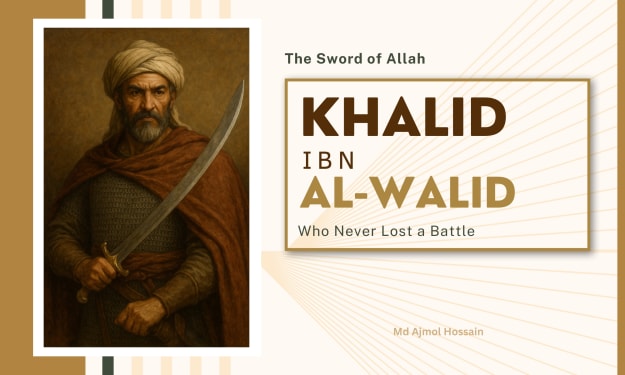
Khalid ibn al-Walid: The Sword of Allah That Never Lost a Battle
Imagine a warrior, so fearless, so effective and so loyal - that even the Prophet Muhammad (peace is on him) gave him the title: "The sword of Allah." The man was Khalid Ibn al-Walid-A Common who fought more than 100 matches and never lost a single. His name echoes through the Arab deserts, the Persian mountains and rivers in Rome.
By Md Ajmol Hossainabout a year ago in History
Nineteen Eighty-Four
1984 (also written as Nineteen Eighty-Four) is a powerful and chilling novel written by George Orwell. It was published in 1949, just after World War II, but it talks about a future world that feels cold, controlling, and scary. This book is not only a story—it’s a warning about what could happen if governments gain too much power and people lose their freedom.
By Muhammad Hayatabout a year ago in History