Lessons
Myths, Monsters, and the American Frontier
The Stories We Tell in the Dark Long before Netflix algorithms or TikTok trends, humans gathered around fires to share tales of gods, ghosts, and the unknown. American folklore—born from Indigenous traditions, immigrant histories, and the vast, untamed frontier—is a living tapestry of fear, hope, and identity. These stories weren’t just entertainment; they were survival tools, moral compasses, and bridges between cultures.
By Shohel Ranaabout a year ago in History
The Man Who Lost Half a Billion in Bitcoin
In the world of cryptocurrency, where fortunes can be made or lost in a click, few stories are as astonishing—and heartbreaking—as that of James Howells. A British IT engineer from Newport, Wales, James Howells became a symbol of digital-age misfortune when he accidentally threw away a hard drive containing a Bitcoin wallet worth hundreds of millions of dollars.
By Mehtab Ahmadabout a year ago in History
The Day Constantinople Was Officially Declared the ‘New Rome’. AI-Generated.
The year was 330 AD, and the Roman Empire stood at a critical juncture. For centuries, Rome had been the heart of imperial power, culture, and administration. Yet, under Emperor Constantine the Great, a profound transformation was underway—one that would reshape the empire and echo through history. On May 11, 330 AD, Constantine officially declared the ancient Greek city of Byzantium as Nova Roma—“New Rome.” This day marked the foundation of Constantinople, a city that would soon eclipse its predecessor and become the jewel of both the Roman and Byzantine worlds.
By Jishan Ahmedabout a year ago in History
LIFE WITHOUT FUEL
[Isaac Asimov is a noted scientist and science fiction writer. He has a remarkable gift for being able to explain complex science phenomena in ways that the ordinary person can easily understand. Asimov was recently asked to imagine and describe what would happen to everyday life in 1997 if fuel energy began running out. Asimov explains that "this is a picture of the worst, of waste continuing of oil running out, of nothing in its place, of world population continuing to rise."]
By its_ishfaq_ahmadabout a year ago in History
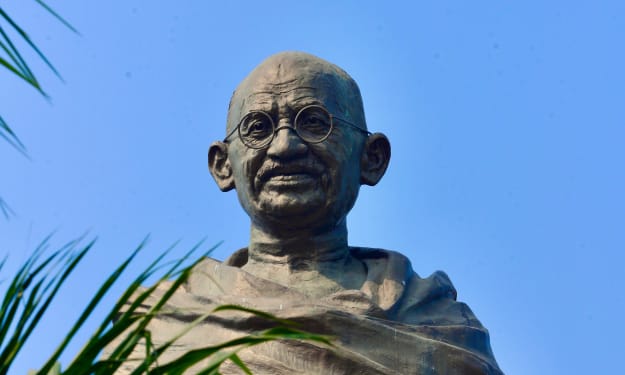
Becoming Gandhi: From Fearful Child to Fearless Father of a Nation
“Who has ever gained freedom without a battle?” asked a poet. Yet India’s path to independence defied that logic—a revolution led without swords, built on the strength of truth, humility, and nonviolence. At its heart stood Mahatma Gandhi—the man who transformed fear into a nation’s courage.
By Kadam's Publishing Companyabout a year ago in History
IPL Restarts This Week – And You Won’t Believe the Opening Match
After weeks of suspense and anticipation, the Indian Premier League (IPL) is finally back, and this time, it’s restarting with a clash that has fans on the edge of their seats. If you thought the IPL couldn’t get any more dramatic, think again. The opening match after the mid-season break is nothing short of a blockbuster: Mumbai Indians vs. Chennai Super Kings, the El Clásico of cricket.
By Sathish Kumar about a year ago in History
"Israel in the Quran: The Legacy of the Children of Israel"
The Role of Bani Isra'il in Islamic Scripture and Beliefs Bani Isra'il, or the Children of Israel, hold a significant place in Islamic history and theology. The Quran, the holy book of Islam, references the Children of Israel extensively, presenting their story as an important part of the broader narrative of divine guidance and prophetic missions. From the time of Prophet Musa (Moses) to the eventual emergence of Prophet Isa (Jesus), the Children of Israel are depicted as a community chosen by God, tasked with upholding His commandments and serving as a model for righteousness. The Quranic portrayal of Bani Isra'il emphasizes not only their religious and spiritual journey but also the lessons to be learned from their successes and failures. The Quranic Depiction of Bani Isra'il In Islamic belief, Bani Isra'il refers to the descendants of Prophet Ya'qub (Jacob), who was the grandson of Ibrahim (Abraham). Ya'qub’s twelve sons, the forefathers of the twelve tribes of Israel, are central figures in Islamic tradition. The Quran recounts various aspects of their lives, beginning with the trials and blessings that befell Prophet Musa, a member of Bani Isra'il. The Children of Israel are portrayed as recipients of divine favor and guidance, but their story is also marked by periods of rebellion, ingratitude, and failure to follow God’s commandments. One of the most significant themes in the Quran’s account of Bani Isra'il is their liberation from the tyranny of Pharaoh. According to the Quran, God sent Prophet Musa to free the Israelites from Egyptian bondage. The Quran highlights the miraculous events surrounding the liberation, including the parting of the Red Sea, which allowed the Israelites to escape, and the destruction of Pharaoh and his army. This event symbolizes God’s deliverance of the oppressed and the triumph of divine justice over tyranny. In Surah Al-Baqarah, the second chapter of the Quran, Bani Isra'il are mentioned repeatedly, emphasizing their role in the divine plan. The Quran recounts their history in a way that underscores the lessons to be learned from their experiences, both positive and negative. The Israelites were favored by God with prophets, miracles, and a clear code of law, yet they often strayed from the path of righteousness. Their story serves as a reminder of the consequences of turning away from divine guidance. The Lessons of Disobedience and Repentance The Quran does not merely recount the successes of Bani Isra'il; it also emphasizes their failures and the consequences of disobedience. One of the most prominent examples is their repeated rejection of the messengers sent to them. After being saved from Pharaoh, the Children of Israel were guided by Prophet Musa, who received the Torah, the divine law. However, despite these blessings, many among Bani Isra'il disobeyed the commandments of God. A significant example of this disobedience is the episode of the golden calf, which is mentioned in Surah Al-A'raf. After Musa had gone to Mount Sinai to receive divine commandments, some of the Israelites fashioned a golden calf and began worshipping it. This act of idolatry angered God, and the disobedient ones were punished. The Quran underscores that such acts of disobedience led to hardship and divine wrath. However, the story of Bani Isra'il is not one of complete despair. Throughout the Quran, God calls on the Children of Israel to repent and return to righteousness. In Surah Al-Baqarah, God reminds them of the numerous blessings they have received and urges them to adhere to His guidance. The Quran portrays repentance as a key theme in the relationship between God and His people. Even when the Children of Israel faltered, the possibility of redemption through sincere repentance was always available. The Prophets and Their Role Bani Isra'il were recipients of many of the great prophets mentioned in the Quran. From the time of Prophet Musa, the Children of Israel were continually guided by prophets who taught them the commandments of God and urged them to follow the straight path. The Quran recounts the stories of Prophets like Dawud (David), Sulayman (Solomon), and Isa (Jesus), who are also from Bani Isra'il. These prophets not only provided spiritual guidance but also served as leaders, warriors, and teachers of divine wisdom. Prophet Isa (Jesus) is particularly significant in Islamic thought. Although his story is closely associated with Christianity, the Quran presents Isa as a prophet and messenger of God. His role in guiding Bani Isra'il and calling them back to the true worship of God is central to the Quranic narrative. Isa’s teachings emphasized monotheism and righteousness, but his message was often met with opposition. The Quran presents his crucifixion in a different light from Christian tradition, suggesting that he was not crucified but rather raised up by God. In the Islamic view, the prophets sent to Bani Isra'il were all part of a long line of messengers, culminating in the final prophet, Muhammad. Muhammad, although not from the lineage of Bani Isra'il, was seen as the last messenger to humanity, bringing the final revelation, the Quran, which affirmed the messages of the previous prophets, including those sent to the Children of Israel. The Legacy of Bani Isra'il in Islamic Beliefs The legacy of Bani Isra'il in Islam is multifaceted. On the one hand, they represent a community that received divine favor, guidance, and revelation. They were given the Torah, sent numerous prophets, and witnessed miracles that testified to the power and mercy of God. On the other hand, their story serves as a warning to future generations about the dangers of pride, ingratitude, and disobedience. For Muslims, the story of Bani Isra'il is a reminder of the importance of following the guidance of God’s messengers, maintaining humility, and adhering to the commandments in the face of trials and temptations. The Quran emphasizes that all the prophets, including those sent to Bani Isra'il, preached the same core message: the worship of the One true God and the importance of righteous deeds. In conclusion, Bani Isra'il’s role in Islamic scripture is one that offers both lessons and inspiration. Their narrative in the Quran serves as a profound reminder of divine justice, mercy, and the potential for redemption through repentance. Their legacy continues to shape Islamic thought and teachings, influencing the way Muslims understand their relationship with God and the importance of upholding His commandments.
By World politics about a year ago in History
The Rise and Fall of the Baghdad Pact: Why CENTO Failed in the Middle East
Baghdad Pact and the 'Wall of Allies': That Military Alliance Like NATO Which Did Not Help Pakistan When Needed When you hear the name of Baghdad, the capital of Iraq, many thoughts come to mind — from Harun al-Rashid and the capital of the Abbasid Caliphate to Saddam Hussein. However, it may not come to your mind that this name was once, in the 1950s, also a reference to a military alliance of the Western Middle East, whose end marked the beginning of the decline of British influence in the Middle East. The Baghdad Pact or Agreement was made in 1955, which included the United Kingdom, Iraq, Turkey, Pakistan, and Iran. According to the Encyclopedia Britannica, it was a security organization headquartered in the Iraqi capital Baghdad. After the end of the pro-West monarchy in Baghdad, Iraq withdrew from the agreement, and then the organization's headquarters were moved to Ankara, the capital of Turkey. Its name was also changed to the Central Treaty Organization, i.e., CENTO. In 1979, Iran also withdrew after the Islamic Revolution and the fall of the Shah, and in the same year, the organization was dissolved. So what is the story of this agreement? ‘To Counter the Communist Wave’ After World War II, two major global powers emerged: the United States and the Soviet Union. The conflict between them formed the framework of the Cold War, as both powers tried to expand their political and military influence across the world. Both the United States and the United Kingdom considered the Middle East important for their interests. However, after World War II, Britain's influence was in decline. In the early 1950s, the United States government expressed interest in forming a military alliance in the Middle East to counter the threat of Soviet Communist expansion in important oil-producing regions, and Washington tried to create a regional alliance based on anti-Communism. The Baghdad Pact was part of this strategy, aimed at extending a wall of allied states from Turkey to Pakistan. The Baghdad Pact was formed at the same time as NATO and the Southeast Asia Treaty Organization. The idea for all three alliances emerged after U.S. Secretary of State John Foster Dulles returned from a tour of the Middle East in May 1953, during which he proposed the formation of a defensive arrangement of countries across Eurasia against Communism. The importance of the Middle East lay in several different factors: First, the presence of oil in many countries of the Middle East meant that the economies of Western Europe, and to some extent the U.S. economy, depended on this region as a source of energy, and Britain obtained about 90 percent of its oil supply from the Gulf. Second, the Middle East is located within several transit routes to the Far East, and the water and air routes passing through Egypt, Iraq, and Jordan made Britain highly reliant on good relations with the countries of the region for communication and trade with the Far East. Third, this region holds strategic importance. On one side, it is adjacent to NATO’s southern flank, and on the other, it can provide bases from which the Soviet Union could be attacked from the south. Britain had bases in Iraq and on the island of Cyprus. In the 1950s, ongoing tensions in the Middle East — such as the Arab-Israel conflict and rising anti-colonial sentiment led by Egypt — made it difficult to form an alliance that included Arab and Islamic states along with Israel and Western powers. Instead, the United States shifted its focus to the northern belt. The idea was to establish an alliance linking NATO’s southernmost member, Turkey, with Pakistan, the western member of the Southeast Asian alliance, CENTO. Turkey and Pakistan signed an agreement in 1954 to enhance security and stability in the region. At the urging of Britain and the U.S., the formation of the Baghdad Pact began on February 24, 1955, when Iraq and Turkey signed a 'Mutual Cooperation Agreement' in Baghdad to resist external aggression, paving the way for other countries in the region to join. In April, the United Kingdom joined, followed by Pakistan on September 1, and then Iran, under the leadership of Shah Mohammad Reza Pahlavi, in November 1955. In this way, the 'Baghdad Pact' was established, comprising the UK, Iraq, Turkey, Pakistan, and Iran. This occurred during the reign of Iraq’s last king, Faisal II, and Prime Minister Nuri al-Said. The purpose of this agreement was to strengthen the defense of the region and to prevent Soviet Union entry into the Middle East. American Position Britain was the third country to join the Baghdad Pact. In contrast, the United States did not become fully involved in this agreement. After Britain joined in 1955, it was expected that the U.S. would also join this alliance. In June 1955, a joint study by the British Ministry of Defence and Foreign Office supported the idea that the defense of the region could only be secured with American assistance. From the beginning, Britain and other member countries lobbied for America’s inclusion in the Baghdad Pact, but this effort failed. Britain continued to pressure its most powerful ally to join the organization. This pressure intensified when the alliance faced a crisis in March 1956 following the dismissal of British officer General Glubb from the command of the Jordanian Arab Legion. However, the U.S. preferred to maintain the status of an observer and completely refused to join the alliance — perhaps one reason being Washington's desire to keep Israel, Egypt, or Saudi Arabia satisfied as well. Factors That Weakened the Alliance From the beginning, the Baghdad Pact failed to garner broad support from Middle Eastern states, which lacked a common identity. Turkey was a nationalist republic, Iran a monarchy, Pakistan an emerging democratic state, and Iraq had recently come out of a colonial system of governance. Attempts by then Iraqi Prime Minister Nuri al-Said to persuade several Arab countries — especially Egypt and Syria — to join the alliance were unsuccessful. These countries believed that the Soviet Union — which had begun to emerge as the only supplier of arms and equipment to Arab countries facing Israel — posed no threat to them. Nevertheless, Britain hoped that Syria and Jordan would join the alliance at a later stage. Syria refused to join, while Jordan’s King Hussein initially hesitated. Eventually, King Hussein sided with his people, who came out in large numbers on the streets to condemn the alliance and refused to join it. In 2003, BBC Middle East analyst Gerald Butt wrote: “At that time, I saw protesters breaking the windows of a British bank where my father worked in the Jordanian capital Amman, and I was disturbed as a child to see the protesters vandalizing our garden.” The President of Lebanon supported the Baghdad Pact because of his good relations with Iraq’s King Faisal and Iran’s Shah Mohammad Reza Pahlavi, but due to widespread domestic opposition, Lebanon did not join the agreement. Meanwhile, Egypt opposed any such alliance that could become a new extension of 'European imperialism,' and the Saudis distrusted the Hashemite rulers of Iraq. The developments in the Middle East in the years following the formation of the alliance further weakened it. In 1956, Egyptian leader Gamal Abdel Nasser took control of the Suez Canal. Israel responded by attacking the Sinai Peninsula, and British and French forces also intervened, which caused Britain to lose prestige in the region and damaged its position in the Baghdad Pact.
By Ikram Ullahabout a year ago in History
Echoes of Stone
The prehistoric figurine known as the Venus de Losange is a small but potent testament to the symbolic world of early Homo sapiens. Carved during the Upper Paleolithic period, estimated at 25,000–30,000 years ago, this enigmatic artifact offers more than artistic intrigue—it opens a rare window into the social, emotional, and spiritual dimensions of our distant ancestors.
By Navinder Dinesh Ramabout a year ago in History
The Night the Sodder Children Vanished
It was Christmas Eve, 1945, in Fayetteville, West Virginia. The Sodder family was celebrating together. George and Jennie Sodder had ten children, and their cozy house was filled with the sounds of laughter, excitement, and Christmas cheer. That night, five of the younger children — Maurice (14), Martha (12), Louis (9), Jennie (8), and Betty (5) — were allowed to stay up a little later to play with new toys. The rest of the family went to bed. Everything seemed normal, but what happened next would become one of America’s most haunting mysteries. --- 𝗔 𝗦𝘂𝗱𝗱𝗲𝗻 𝗙𝗶𝗿𝗲: 🔥 At around 1:00 a.m., Jennie Sodder was awakened by a loud sound on the roof. It was like something heavy hit it and then rolled off. She thought it was strange but went back to sleep. About thirty minutes later, she woke up again — this time to the smell of smoke. The house was on fire. Jennie quickly woke George. Together, they got four of their children out safely. But the five younger children who had stayed up late were missing. They had been sleeping upstairs. George tried to get to them, but everything seemed to go wrong: ● The ladder he always kept near the house was suddenly missing.
By Asad khan 313about a year ago in History