Lessons
Ashes of Pompeii: The Day the Sky Fell
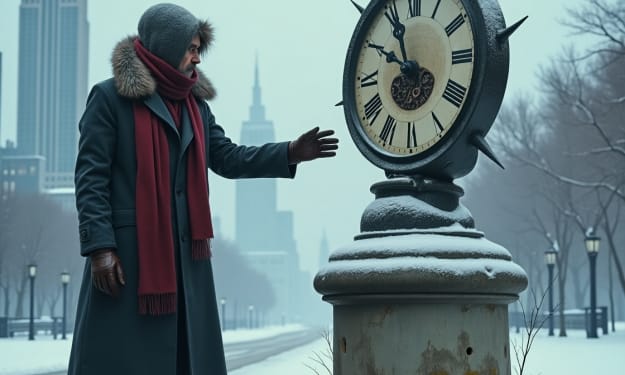
**Ashes of Pompeii: The Day the Sky Fell** **Pompeii, Roman Empire – August 24, 79 AD** The morning sun was already warm as Lucia, the 16-year-old daughter of a wealthy merchant, stepped onto the balcony of her family’s villa in Pompeii. The sky above was a serene blue, and in the distance, the great mountain—Vesuvius—stood quietly, cloaked in a light mist. Lucia could hear the clatter of hooves and the distant calls of market sellers echoing through the city.
By Asia khanomabout a year ago in History
🌷 The Tulip Mania Bubble in the Dutch Republic, 1636–1637: When Tulip Bulbs Became the World's Most Valuable Commodities Before the Crash
🏩 Part 1: A Blooming Republic - The Dutch Golden Age and the Rise of the Tulip In the early 17th century, the Dutch Republic stood at the pinnacle of European power and prosperity. This confederation of provinces, recently liberated from Spanish rule after decades of conflict, had rapidly evolved into a formidable maritime, financial, and cultural powerhouse. The Dutch Golden Age, as historians now call it, was marked by explosive growth in global trade, scientific exploration, art, and banking.
By History Seekerabout a year ago in History
Brexit,New London-EU Deal. AI-Generated.
Brexit, New London-EU Deal: Defense, Security, Fishing, and Youth Mobility. Farage's Fury More than four years after the UK officially left the European Union, London and Brussels have taken a significant step toward pragmatic and selective cooperation. A newly announced agreement between the two sides marks a partial rapprochement on key areas such as defense, security, fishing, and youth mobility. While it does not reverse Brexit, the deal seeks to smooth over some of the rough edges left in its wake. However, not everyone is pleased. Nigel Farage, the political architect of Brexit, has condemned the agreement as a “betrayal” of the 2016 vote.
By al rafi ahmadabout a year ago in History
The World Revolution Stage: From Ancient Times to the Present
Throughout history, revolutions have played a pivotal role in shaping the course of human civilization. From the earliest uprisings in ancient societies to modern political and social movements, the stage of world revolution has evolved in complexity, scale, and impact. These revolutionary waves—whether sparked by political oppression, economic disparity, religious conflict, or a desire for freedom—have reshaped borders, overthrown empires, and transformed societies. This article explores the progression of world revolutions from ancient times to the modern age.
By MD BILLAL HOSSAINabout a year ago in History
Preakness Stakes 2025
The Preakness Stakes is one of the most celebrated events in American horse racing, held annually on the third Saturday of May at Pimlico Race Course in Baltimore, Maryland. As the second jewel of the Triple Crown, it follows the Kentucky Derby and precedes the Belmont Stakes, forming a trio of races that every three-year-old thoroughbred aspires to conquer.
By Shahab Uddinabout a year ago in History
Buddha is Smiling: The Secret Message of India's Nuclear Triumph
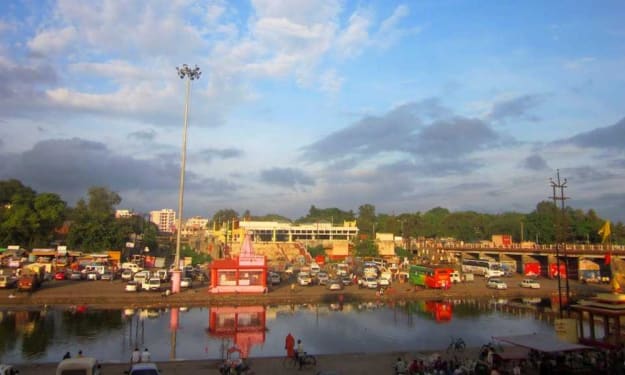
India's First Nuclear Test and the Broken Jeep: When the Bomb’s Creator Fell Face-First to the Ground Due to the Tremor Exactly 51 years ago today (on May 18, 1974), India announced its first nuclear test. The following account is being republished to mark the occasion. On the morning of May 18, 1974, All India Radio’s Delhi station was broadcasting the popular song from the film Bobby, “Hum Tum Ek Kamre Mein Band Hon, Aur Chaabi Kho Jaye” (“If you and I were locked in a room and the key got lost”). At exactly 9 AM, the song was cut off and an announcement was made: “Please stand by for an important announcement.” A few seconds later, the announcer’s voice came on: “At 8:05 this morning, India conducted an underground nuclear test for peaceful purposes at an undisclosed location in western India.” One Day Earlier in London… A day earlier in London, Indian Prime Minister Indira Gandhi’s Principal Secretary, P.N. Haksar, kept asking Indian High Commissioner B.K. Nehru, “Any news from Delhi?” As soon as the news of the nuclear test arrived, Nehru could see the visible relief on Haksar’s face. He understood why Haksar had been so anxious. Who Would Be Beheaded? Five days before the test, on May 13, under the supervision of Homi Sethna, Chairman of the Atomic Energy Commission, Indian nuclear scientists began assembling the bomb. On the night of May 14, the device was taken to an L-shaped underground shaft. The next day, Sethna traveled to Delhi for a pre-scheduled meeting with Indira Gandhi. Sethna told her, “We have placed the device in the shaft. Now please don’t ask us to remove it, because it’s no longer possible. You can’t stop us now.” Indira Gandhi replied, “Go ahead. Are you afraid?” Sethna said, “Not at all. I just wanted to say, there’s no turning back from here.” After getting Gandhi’s approval the next day, Sethna returned to Pokhran. He gathered the team and asked, “If the test fails, whose head will roll?” Bomb designer Rajagopal Chidambaram promptly responded, “Mine.” Deputy leader P.K. Iyengar added, “No heads need to roll. If it fails, it means the laws of physics are wrong.” The Jeep That Failed On the morning of May 18, the desert heat in Pokhran was intense. A makeshift observation post had been set up five kilometers from the blast site. Present were Homi Sethna, Raja Ramanna, Indian Army Chief General Bewoor, DRDO Chairman B.D. Nag Chaudhry, Deputy Leader P.K. Iyengar, and Lt. Col. P.P. Subharwal. Nag Chaudhry had a camera around his neck and was continuously taking photos. Chidambaram and fellow designer Satinder Kumar Sikka were on another hill near the control room. The electronic detonation team, led by Srinivasan and Pranab Dastidar, was inside the control room. The blast was scheduled for 8:00 AM. But an hour earlier, scientist Virendra Singh Sethi’s jeep refused to start on the way to the test site for the final check. Time was running out. Sethi abandoned the jeep and walked 2 kilometers to the control room. Sethna asked General Bewoor what to do about the broken-down jeep so close to the test site. Bewoor replied, “Oh, you can blow the damn thing up.” Fortunately, Indian Army troops soon arrived with another jeep and moved the faulty one to a safe distance. Still, the test was delayed by five minutes. “We Will Proceed” Finally, a countdown began over the loudspeaker near the observation post. Sethna and Ramanna gave Pranab Dastidar the honor of pressing the trigger. At the count of five, Dastidar switched on the high-voltage switch. Seeing the electric meter, Dastidar was shaken — it showed that only 10% of the required voltage was reaching the device. He panicked: “Shall we stop? Shall we stop?” The countdown halted. But Dastidar suspected the reading was wrong due to moisture inside the shaft. He shouted, “No! We will proceed!” According to George Perkovich in his book India’s Nuclear Bomb, Dastidar pressed the red button at exactly 8:05 AM. “Krishna Lifted the Mountain with His Finger” At the observation post, when Sethna and Ramanna heard the countdown stop, they thought the test had failed. Ramanna wrote in his memoir Years of Pilgrimage that his colleague Venkatashan, who had been chanting the Vishnu Sahasranama, stopped mid-prayer. Everyone feared all their hard work had gone to waste. Suddenly, a huge sand column shot up from the earth and stayed suspended for nearly a minute. P.K. Iyengar later wrote, “It was a breathtaking sight. The legends of Krishna lifting a mountain with his finger started to seem real.” Jitendra Soni, head of the system integration team, felt like a sand minaret had risen in front of him. Fell Face-First to the Ground At that moment, it felt like a massive earthquake struck. Sethna felt the earth shaking violently. But he was puzzled — why wasn’t there a blast sound? Or could he simply not hear it? A second later, a faint explosion sound was heard. Chidambaram, Sikka, and their team began hugging each other. Chidambaram later said, “It was the greatest moment of my life.” Overcome with excitement, Sikka jumped off the observation post, spraining his ankle. In the control room, Srinivasan felt like he was on a small boat in a stormy sea. Ramanna later wrote in his memoir, “I saw the sand mountain rise as if Hanuman (a Hindu deity) had lifted it.” But he forgot in his excitement that the earth would soon shake. As he descended from the observation post, the ground trembled. Ramanna lost his balance and fell flat on his face. Ironically, the architects of India’s nuclear bomb ended up face-first in the hot sands of Pokhran on the very day of their monumental success.
By Ikram Ullahabout a year ago in History
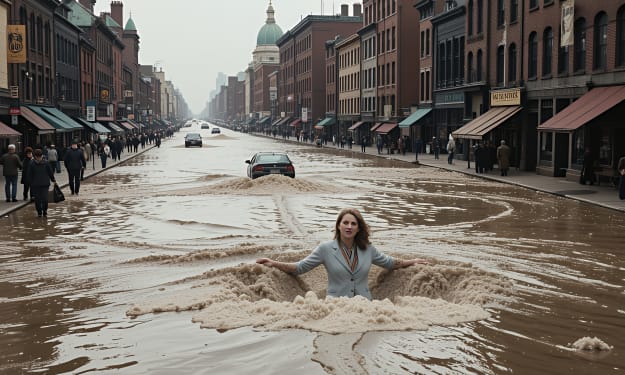
🍯 The Great Molasses Flood of Boston, January 15, 1919: A Sticky Catastrophe That Swept Through the Streets and Caused Multiple Fatalitie
🌇 Part 1: Boston at Boiling Point - The City Before the Flood To understand how a flood of molasses could destroy part of a city and take lives, we must first travel back to Boston in the winter of 1919 - a city full of contradictions, opportunity, and unrest. The Great War had just ended in November 1918, and like many American cities, Boston was adjusting to the uneasy transition from wartime industry to peacetime life. Amid economic shifts, labor strikes, political radicalism, and the tail-end of a deadly flu pandemic, tension simmered in the air.
By History Seekerabout a year ago in History
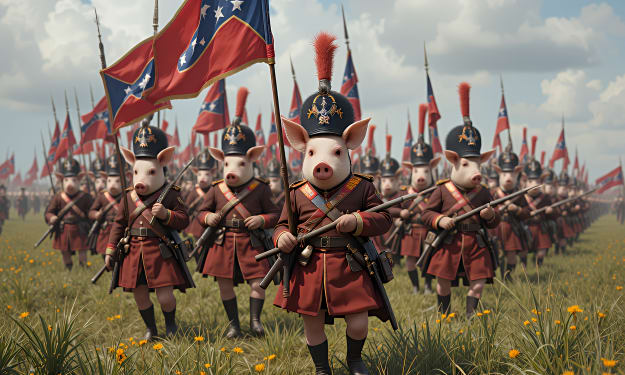
🐖The Pig War on the US–Canada Border, 1859: A Territorial Dispute Triggered by the Killing of a Single Pig
🏞 Part 1: A Snoutful of Trouble - The Pig That Started It All In the otherwise quiet and pastoral June of 1859, San Juan Island - then an unsettled jewel in the Pacific Northwest's emerald crown - became the unlikely battleground for a bizarre territorial standoff between two of the world's most powerful nations: the United States and Great Britain. San Juan Island, lush with cedar forests, rugged coastlines, and fertile grazing fields, was inhabited by a small but tense mix of British employees of the Hudson's Bay Company and independent American homesteaders drawn west by the promise of land and opportunity.
By History Seekerabout a year ago in History
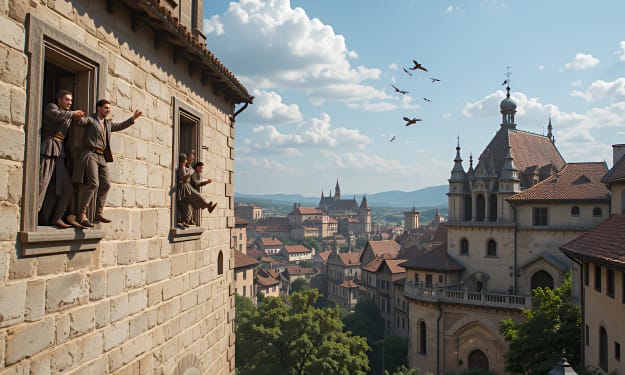
🏰The Defenestrations of Prague, 1419 and 1618: Political Assassinations by Throwing People Out of Windows That Sparked Wars
Part 1: Introduction - What Is a Defenestration? The term defenestration may sound peculiar to modern ears, but it holds a deeply significant place in European history - particularly in the Czech lands. Derived from the Latin words de- ("down from" or "away") and fenestra ("window"), defenestration simply means the act of throwing someone out of a window. Though seemingly straightforward, this term encapsulates a rare yet dramatic form of political violence that became emblematic of Prague's turbulent religious and political struggles during the late Middle Ages and the early modern period.
By History Seekerabout a year ago in History