Lessons
Perseverance
Living in the year 1819 meant only one thing for a large segment of the population—poverty and despair. There were no government subsistence programs, unemployment checks, or homeless shelters. During this time in our history, the country was in the middle of a severe depression and everyone had to fend for themselves. It was certainly not a good time to be a ten-year-old boy abandoned by his parents and living in the streets of Boston. That, however, was the situation young Raymond was in. Added to his problems was that he was born with a club foot.
By Mark Gagnon12 months ago in History
Plague Doctor’s Journal
The journal was found in a wooden chest beneath the floorboards of an old house in Venice. Its pages were brittle, its ink faded, but the handwriting was elegant and precise. On the first page was a single line written in Latin: “To heal the living, one must walk with the dying.” No one knew who had written it at first. But the following pages revealed the name of its owner — Dr. Matteo Bellini, a plague doctor who had lived during the great outbreak of 1630. His words began simply. “The city is quiet now,” he wrote. “Not with peace, but with fear. The bells ring for the dead, and the living no longer open their windows.” Matteo had been a young physician, full of hope when the disease first reached Venice. He believed in reason, in science, in the power of medicine to overcome darkness. When the plague arrived, he donned the long black coat, gloves, and the mask shaped like a bird’s beak. The people called him “the raven of mercy.” At first, he treated the sick in noble houses and monasteries. He tried herbs, oils, prayers — anything that could ease their pain. But soon, the number of the dying grew so large that the streets became rivers of silence. He wrote, “I no longer remember the sound of laughter. The only sound that remains is coughing and the scrape of the death cart.” Each night, he would sit by a candle and record what he had seen. “Today I saw a mother holding her child as if warmth could stop death. I saw a man sing as he died, perhaps to make peace with God. I saw the canals carry flowers thrown for funerals that never came.” But as the weeks passed, Matteo’s words began to change. The lines grew shorter, the handwriting unsteady. “I begin to feel the weight of every breath I save and every one I cannot. My hands no longer feel like mine.” In one entry, dated June 14, 1630, he wrote something different. “Today a boy handed me a white lily. He said it was for courage. I placed it in my mask. For a moment, I remembered that beauty can live even among death.” The journal continued, page after page of quiet humanity. He wrote about how he began to visit the poorest parts of the city when others refused to go. He tended to fishermen, servants, and beggars — those who had no coin for doctors. He shared his food, his herbs, and his time. Then came an entry marked with only one word: “Exposed.” After that, his writing grew faint, almost fragile. “The fever comes in waves. I feel as though I am dissolving into air. Yet I must keep writing. If I die, let it not be in silence. Let these words live for those who remain.” The final page carried only a few lines. “If anyone should find this journal, know that I did not fear death. I feared forgetting what it means to be human. To heal is not only to cure, but to care. Remember that.” The last line was signed simply, “Matteo.” Centuries later, the journal found its way into the hands of a museum curator named Elena Rossi. She spent months translating and restoring it. When she read Matteo’s final words, she felt something shift inside her. The world had changed — the plague was long gone — but the fear, the isolation, and the need for kindness were timeless. Elena decided to create an exhibition around his journal. She called it “The Hands That Healed.” The mask, coat, and candle were displayed alongside the fragile pages. People came from all over Europe to read the doctor’s words, to see how courage had looked in the face of despair. One visitor wrote in the guest book, “He wore a mask to protect others, not himself. Perhaps that is what love truly means.” That night, as Elena locked the museum, she paused in front of the display. The candle beside the journal flickered slightly, though there was no wind. She smiled, whispering into the quiet room, “Rest now, Matteo. Your words still heal.” Outside, the bells of Venice rang once again — not for mourning this time, but as if to honor the man who had written through the darkness so that others might remember the light.
By LUNA EDITH12 months ago in History
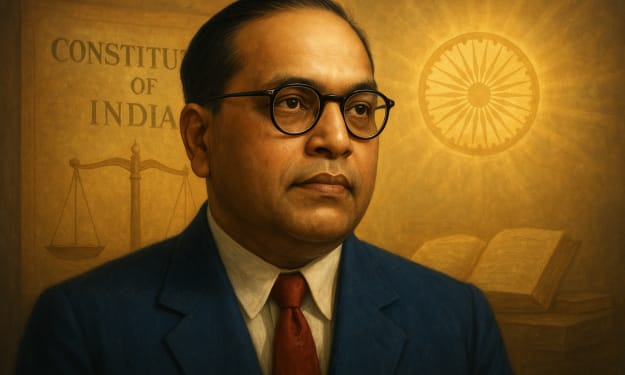
Dr. B. R. Ambedkar: Beyond Politics -The Civilizational Architect Who Rewrote the Destiny of Humanity
In the vast chronicle of human history, few individuals have transcended the boundaries of time, ideology, and politics. Among them stands Dr. Bhimrao Ramji Ambedkar, a name that cannot be confined to the narrow frame of a “politician.” To call Ambedkar merely a political figure is to diminish the cosmic scale of his thought and the transformative depth of his mission. He was not a seeker of power_ he was a creator of conscience, a builder of civilization, and a philosopher of equality whose words still echo as moral thunder across the world.
By Arjun. S. Gaikwad12 months ago in History
✍️ Dr. B. R. Ambedkar’s Hindu Code Bill: The Revolution the Nation Feared, but Women Deserved
When Dr. Bhimrao Ramji Ambedkar introduced the Hindu Code Bill in the Indian Parliament in the late 1940s, he was not merely reforming a set of laws he was attempting to reform the soul of a civilization.
By Arjun. S. Gaikwad12 months ago in History
Timeless Tales of Japan: The Magic and Morality of Traditional Folklore
How centuries-old Japanese folktales still guide hearts and minds today From the snowy mountains of Hokkaido to the tranquil islands of Okinawa, Japan’s folktales have traveled through generations like whispered dreams by the fireside. These timeless stories, often featuring brave heroes, mischievous spirits, and talking animals, reveal not only Japan’s imagination but also its moral compass — teaching lessons about kindness, humility, and respect for nature.
By Takashi Nagaya12 months ago in History
Vesna Vulović: The Woman Who Cheated Death
Imagine this: you’re 22, living your dream job as a flight attendant, excited to visit Denmark for the first time. The world feels wide open, full of possibility. Then, in a split second, everything changes. Your plane explodes at 33,333 feet, and you’re plummeting to earth-no parachute, no protection, just you and the laws of physics. Sounds like the end, right? But for Vesna Vulović, it was just the beginning of a story so wild it feels like it belongs in a movie. Her survival is a tale of miracles, mysteries, and a touch of human stubbornness that makes you wonder: how does someone walk away from the impossible?
By KWAO LEARNER WINFRED12 months ago in History
The Dog That Didn't Turn
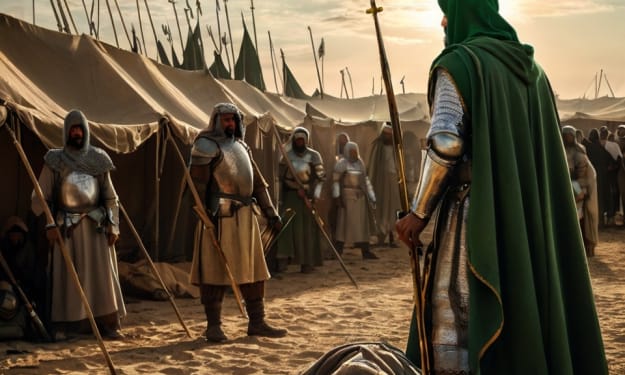
This incident sheds light on a very thought-provoking detail in Surah Al-Kahf Question: Why is the dog mentioned as "spreading its forelegs" in Surah Al-Kahf? And when the Companions of the Cave were turning to their right and left sides, why wasn't the dog turning?
By Article Writing Master12 months ago in History
The Unfolding Self
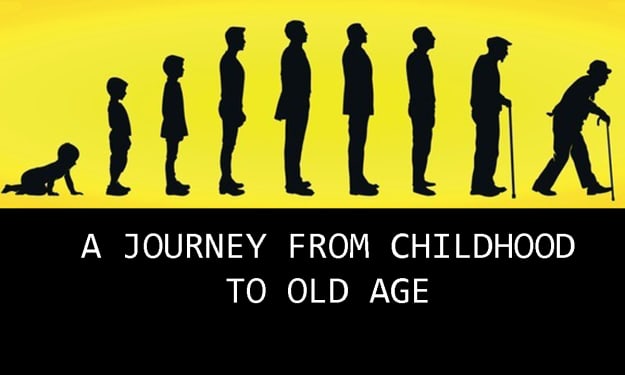
Life is not a straight line but a rich, meandering path through distinct and beautiful landscapes. Each of us embarks on a remarkable voyage from the dawn of childhood to the twilight of old age a journey that shapes, refines, and ultimately reveals the essence of who we are. This passage, with all its joys and challenges, is the universal human story.
By Article Writing Master12 months ago in History
The Rock That Wasn’t a Rock: A Journey Through 724 Million Kilometers of Mystery
When we look up at the night sky, we see twinkling dots that seem calm and distant. But hidden among those stars are travelers ancient, silent wanderers that have been moving through the darkness for billions of years. This is the story of one such wanderer a story that began on Earth but ended 724 million kilometers away, on the surface of something that wasn’t what scientists thought it was.
By Izhar Ullah12 months ago in History
Potawatomi. AI-Generated.
Where the Earth Still Speaks and the Sky Still Listens The morning mist rolled softly across the edge of the forest, carrying with it the quiet songs of the river. The Potawatomi people called this land Bodewadmi, “the Keepers of the Fire,” for they believed that the flame of life and wisdom must never be allowed to die.
By shakir hamid12 months ago in History