Lessons
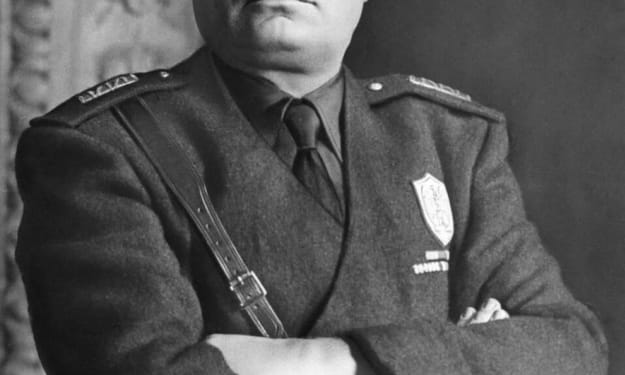
The March on Rome: How Mussolini Seized Power on October 30, 1922. AI-Generated.
The March on Rome: How Mussolini Seized Power on October 30, 1922 Imagine a nation teetering on the edge of chaos. In late October 1922, Italy faced just that. Benito Mussolini, leader of the Fascist movement, issued a bold threat. He demanded power or violence would follow. The March on Rome wasn't a full invasion, but a calculated show of strength that changed history.
By Story silver book 11 months ago in History
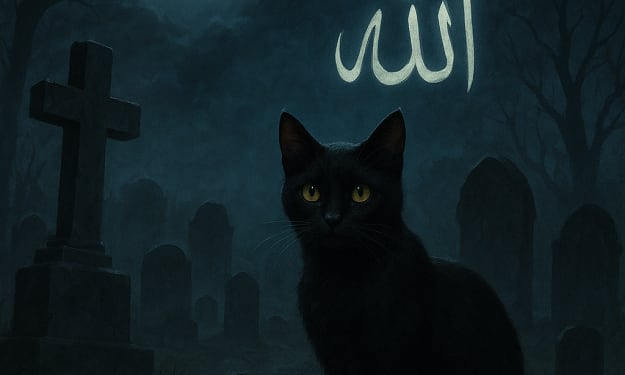
The Cat That Whispered “Allah” in the Graveyard
It was a cold night in the small village of Dar-ul-Noor, where silence carried its own kind of voice. The moon was half hidden behind drifting clouds, and the wind whispered softly through the tall date trees. Most villagers were asleep—except for Imran, the night guard of the old cemetery on the hill. The graveyard had been there for centuries, its stones cracked and names fading into dust. Imran often said he wasn’t afraid of the dead; it was the living who caused trouble. But that night felt different. The air was heavier, and the shadows seemed to move even when nothing stirred. At exactly midnight, Imran heard it—a faint, trembling sound. “...Allah...” He froze. The voice was soft, almost a breath, carried by the wind. He turned his flashlight toward the sound, heart thumping. The beam fell upon an old marble tomb surrounded by dry grass. And there, sitting still like a statue, was a cat—its fur pure white, its eyes shining a golden hue. Imran stepped closer, whispering “Shoo! Go away!” The cat didn’t move. It tilted its head slowly, and again the sound came: “...All...ah...” The word was clear now. Not a meow, not a cry—a whisper. Imran dropped his flashlight. For a moment, fear and awe mixed within him like two storms colliding. He stumbled backward and ran toward the village mosque, where the imam, Maulana Kareem, was preparing for Tahajjud prayer. “Maulana sahib! Come quickly—there’s a cat in the graveyard... it’s saying Allah’s name!” At first, Kareem thought Imran was dreaming, but the trembling in his voice was too real to ignore. Together they walked back through the dark path, carrying lanterns and reciting verses for protection. When they reached the graveyard, the wind had calmed. The moon broke free from the clouds. The cat was still there—silent now, sitting beside the same tomb, its eyes reflecting the light like two drops of molten gold. Maulana Kareem whispered “SubhanAllah...” and approached carefully. The cat turned its gaze toward him, blinked once, and then—again—came the whisper. “...Allah...” This time both men heard it clearly. The imam fell to his knees, tears filling his eyes. “Indeed, even the creatures of Allah glorify Him,” he said, voice shaking. “We humans forget, but His creation remembers.” Word spread by dawn. The villagers gathered near the cemetery, their faces lit with wonder and fear. Some brought food for the cat; others stood in silence, weeping softly as they listened. Every night, at the same hour, the whisper returned. Always from the same cat. Always the same word. “Allah…” Children started calling it “The Cat of Light.” People believed it was a sign—perhaps a message to remind the village to turn back to faith. The mosque became full once again; old quarrels were forgiven; even the poorest were fed. But one night, after a week of miracles, the cat was gone. No pawprints in the dirt. No fur, no bones. Only the wind, and silence. The villagers searched everywhere, but it had vanished as suddenly as it appeared. Maulana Kareem told them gently, “When a message is delivered, the messenger departs.” Imran, who had first seen it, never forgot those glowing eyes. For years afterward, he would sit by that same tomb each night, whispering prayers and waiting. He said that sometimes, when the wind passed through the trees just right, he could still hear it faintl “...Allah...” He no longer felt fear. Instead, a peace deeper than sleep would settle over him. ✨ Epilogue Months later, during heavy rain, a traveler passed through the village. He was old, wearing a robe torn from years of journey. He stopped at the mosque and asked, “Is this the place where the cat praised its Creator?” The imam nodded. “Yes, but it is gone now.” The traveler smiled faintly. “In my homeland far away, a white cat appeared the same night yours vanished. It sat upon a saint’s grave and whispered the same holy word. People there, too, wept and prayed until dawn.” The villagers gasped. Could it be the same cat, crossing lands, calling hearts back to their Creator? No one could say. But from that day, they believed that the cat was no ordinary creature—it was a reminder, a messenger of faith, sent to places where belief had gone quiet. And so, in Dar-ul-Noor, the legend grew. Mothers told their children, “When you hear a whisper in the dark, do not be afraid. It may be an angel in disguise, reminding us of Allah’s name.” And on quiet nights, when the moonlight touches the old tombstones and the world holds its breath, some villagers still swear they hear it—the softest sound, like the heart of the earth itself remembering who created it: “...Allah...”
By Fazal wahid 11 months ago in History
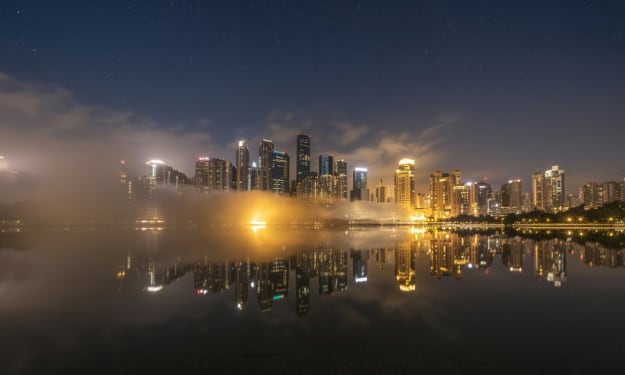
Preserving Cultural Communities in a Changing Urban South
The cities of the Global South are rapidly transforming from traditional buildings to skyscrapers. In the low-rise neighborhoods, local markets have been replaced by high-rise apartments & shopping malls. These dynamics raised a crucial question for planners: how can development exist while preserving the cultural heritage?
By Wathsala Rathnayaka11 months ago in History
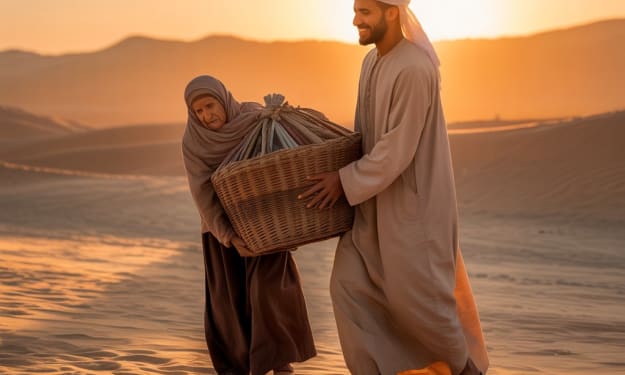
"Remembering Ivan the Great: How One Man Transformed Russia Forever - The Untold Story of His Legacy!". AI-Generated.
Ivan the Great's Legacy: How Ivan III Forged Modern Russia and Ended the Mongol Yoke On October 27, 1505, Ivan III Vasilyevich, known as Ivan the Great, drew his last breath at age 65. This Grand Prince of Moscow left behind a land transformed. Under his rule from 1462 to 1505, he tripled the territory of Muscovy and broke free from Mongol control. You can see his hand in the birth of a strong Russian state. He turned scattered principalities into a unified power. His moves set the stage for Russia's rise as an empire.
By Story silver book 11 months ago in History
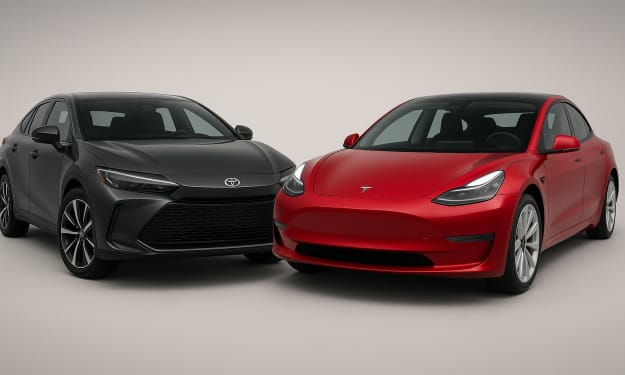
Toyota vs Tesla: The Battle Between Tradition and Innovation
Toyota vs Tesla the world of automobiles, few rivalries are as symbolic of change and progress as the one between Toyota and Tesla. This picture of two cars standing side by side—a sleek, futuristic red Tesla and a bold, dependable gray Toyota—captures more than just two vehicles. It tells the story of two philosophies, two eras, and two visions of what driving means in the modern world. The Legacy of Toyota: Reliability and Practical Innovation For decades, Toyota has stood as a symbol of reliability, efficiency, and affordability. From the legendary Corolla to the powerful Land Cruiser, Toyota has built a reputation for cars that last. Their philosophy centers around Kaizen, the Japanese principle of continuous improvement. Every model, every component, and every system is refined over time. Toyota has always been a pioneer in eco-friendly technology. When the Toyota Prius debuted in the late 1990s, it revolutionized the automotive landscape as the world’s first mass-produced hybrid. It offered a practical balance between fuel economy and performance, proving that sustainability and reliability could coexist. Even today, Toyota remains cautious but deliberate in its approach to electric vehicles (EVs). The company believes in offering multiple paths to a greener future—hybrid, hydrogen fuel cell, and battery-electric vehicles—rather than betting everything on one technology. This strategy appeals to a global market that varies widely in infrastructure, affordability, and energy access. Tesla: The Disruptive Force of the Electric Era On the other side stands Tesla, the brainchild of visionary entrepreneur Elon Musk. Tesla’s rise is nothing short of revolutionary. In less than two decades, it has transformed from a startup into a household name and global leader in EV technology. The sleek red Tesla in the picture embodies everything the brand stands for—innovation, speed, and futuristic design. Tesla didn’t just make electric cars cool—it made them desirable. Models like the Tesla Model 3 and Model S redefined performance, offering instant torque, long range, and self-driving capabilities that felt straight out of science fiction. The company’s over-the-air software updates also set a new standard for how vehicles could evolve long after leaving the factory. Beyond vehicles, Tesla’s impact extends to renewable energy and sustainability. Its Supercharger network, energy storage products, and solar solutions reflect Musk’s larger vision: a fully sustainable energy ecosystem. Tesla doesn’t just build cars—it builds a future. Design and Identity: The Power of Contrast The photo of Toyota and Tesla together beautifully captures the essence of their brands. The Toyota, with its angular edges and robust stance, represents strength, dependability, and tradition. It’s a car built for people who value trust and familiarity. The Tesla, with its smooth, aerodynamic curves and minimalist front, embodies the future—a car for those who crave innovation and technological progress. This contrast highlights a deeper truth: both companies are essential to the evolution of the auto industry. Toyota is the steady hand ensuring safety, accessibility, and practicality, while Tesla is the bold visionary pushing boundaries and redefining what’s possible. The Future of Mobility: Collaboration or Competition? Interestingly, Toyota and Tesla are not just competitors—they’ve also shared a history of collaboration. In the early 2010s, Toyota invested in Tesla and even used Tesla’s electric powertrains in its RAV4 EV. Though their partnership ended, it showed that cooperation between tradition and innovation could yield powerful results. As the global race toward electrification accelerates, both brands face new challenges. Toyota must accelerate its EV strategy to meet growing demand, while Tesla must maintain quality and affordability as competition increases. The future may even see these giants working side by side again—combining Toyota’s production expertise with Tesla’s software and energy innovation. Conclusion This simple yet powerful image of Toyota and Tesla parked together symbolizes more than just two cars—it represents the past meeting the future. Toyota’s dependable gray reflects the foundation of the automotive world, while Tesla’s vibrant red shines as the spark of transformation. Both are vital forces shaping the road ahead. Toyota reminds us of the value of consistency and trust; Tesla pushes us to imagine a cleaner, smarter, and more connected tomorrow. Together, they define the journey of modern mobility—a blend of heritage, innovation, and the endless pursuit of progress.
By Fazal wahid 11 months ago in History
The Glass Cathedral: The Forgotten Death of Cinderella
In 1699, in the small duchy of Montreval, a young woman named Élise Beaumont was found dead inside a ballroom of mirrors. Every pane was fractured from the inside, yet her body lay untouched — preserved, immaculate, and barefoot.
By GoldenSpeech11 months ago in History