Lessons
Julius Caesar
The Rise and fall of a Roman Legend: Julius Caesar Introduction: One of history's most fascinating characters is Julius Caesar, whose name is a byword for ambition, power, and treachery. Caesar's transformation from a capable military officer to the emperor of Rome, born during a turbulent era, left an enduring imprint on history. This article explores Julius Caesar's life, achievements, and final downfall in order to illuminate his long legacy. One of the most well-known individuals in Roman history, Julius Caesar, was crucial in determining the course of the Roman Empire. Caesar's astonishing ascent to power and eventual assassination left an indelible impression on the annals of history. Caesar was known for being a military genius, shrewd politician, and captivating orator. The tremendous contributions Julius Caesar made to the modernization of Rome are highlighted in this article as it examines his life, accomplishments, and ongoing impact.
By Abdul Wahab3 years ago in History
"Unveiling Shadows
Once upon a time, in a small town scarred by tragedy, lived Sarah Thompson—a mother whose life had been shattered by the events of September 11, 2001. Her heart bled with grief, her spirit weighed heavy with loss. Every day, she would visit the memorial in her town, silently communing with the souls of those who had perished. Amidst the pain, Sarah found solace in her unwavering determination to seek justice.
By Busari Taiye Hammed3 years ago in History
Sparkling Skies and Sizzling Barbecues: Unraveling the Curious Traditions of Independence Day
In the vibrant town of Libertyville, nestled amidst rolling hills and sun-kissed meadows, an air of excitement filled the streets as the 4th of July approached. Every year, the town's inhabitants eagerly anticipated the grand spectacle that awaited them – a celebration steeped in curious traditions that captivated even the most seasoned patriots.
By Rodinei Pereira3 years ago in History
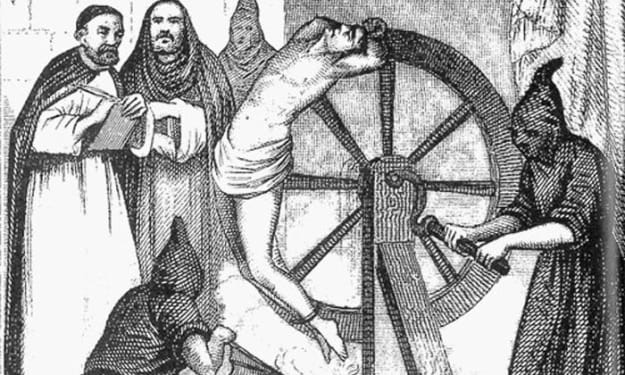
1O BRUTAL WAYS TO DIE BY TORTURE IN THE ANCIENT WORLD
Although the human mind can be considered a brilliant invention of evolution, it is also capable of horrendous imaginations. Throughout the centuries, the pages of history have sung about gruesome tales of torture, human ruthlessness, and the sadistic pleasure both individuals and groups of people derived from seeing others in excruciating agony. Learn—if you dare—ten brutal ways people were executed in the ancient world.
By Edwin Kingsly3 years ago in History
Embers of Freedom
In a small village nestled in the heartland of a nation, there lived a community bound by the chains of oppression. For generations, they endured the weight of tyranny, their spirits dampened by a ruthless regime that sought to suppress their voices and extinguish their dreams. Yet, within the depths of their souls, an ember of freedom burned, a flame that refused to be snuffed out.
By Dada Emmanuel3 years ago in History
Past Life
A Journey through History and Belief: Unveiling the Mysterious World of Past Lives Introduction: Humanity has been fascinated by the idea of former incarnations for ages; it has sparked wonder, inquiry, and discussion across all cultures and civilizations. The thought that we might have lived prior lifetimes and carried experiences and lessons forward continues to inspire wonder and exploration in ancient spiritual traditions and cutting-edge theories. We'll take a guided tour of the mysterious world of former lives in this article, looking at various viewpoints, cues, and implications. The idea of previous lives has captured people's imagination and given rise to innumerable reincarnation stories throughout history. It is both thought-provoking and baffling to consider the possibility that we had previous incarnations prior to our current existence. In this essay, we set out on a quest to solve the mystery of past lives, exploring its antecedents, ideas, and the fascinating evidence that has accrued over time.
By Abdul Wahab3 years ago in History
The Top 10 Sporting Events That Bring the World Together
Games have long held a unique spot in our shared perspective, rising above boundaries, societies, and dialects to join individuals from varying backgrounds. They act as stages where competitors feature their expertise, enthusiasm, and assurance, motivating millions all over the planet. In this far reaching article, we will leave on an excursion through the main 10 games that have become inseparable from worldwide solidarity, cultivating a feeling of brotherhood and shared energy. From the Olympic Games to the FIFA World Cup, these occasions have caught the hearts of fans overall and set their situations as the apex of athletic greatness.
By Arun Karunakaran3 years ago in History
Independence Day is upon us.
The Declaration of Independence, a seminal document in American history, outlines several key ideas and principles that have had a profound impact on the development of democratic societies worldwide. Adopted by the Continental Congress on July 4, 1776, the Declaration expresses the motivations behind the American colonies' decision to separate from Great Britain and serves as a declaration of the fundamental rights and values upon which the United States was founded. This essay will delve into the key ideas and principles outlined in the Declaration of Independence, exploring their significance and enduring influence. One of the central ideas articulated in the Declaration is the concept of natural rights. The document asserts that all individuals possess certain unalienable rights, including life, liberty, and the pursuit of happiness. By proclaiming these rights as "natural" and "unalienable," the Declaration suggests that they are inherent to human beings and not contingent on any external authority or government. These rights are often considered fundamental human rights, transcending political systems and applicable to all people. The principle of natural rights laid the foundation for the recognition and protection of individual liberties in American society. Closely tied to the concept of natural rights is the idea of equality. The Declaration proclaims that all men are created equal. This assertion rejects the notion of hereditary privilege and asserts that every individual possesses equal worth and should be treated as such under the law. While the Declaration's initial language reflected the prevailing norms of the time, the concept of equality has since evolved to encompass a broader understanding of human rights and inclusivity. It has played a pivotal role in the fight against discrimination, promoting equal treatment and opportunities for all individuals, regardless of their race, gender, or other characteristics. Another fundamental principle outlined in the Declaration of Independence is the concept of consent of the governed. The document states that governments derive their just powers from the consent of the governed. This notion challenges the idea of absolute monarchy or rule by divine right, asserting that legitimate authority is based on the will of the people. It emphasizes the importance of popular sovereignty, wherein the ultimate source of political power resides with the citizenry. Governments are formed to protect the rights and promote the well-being of the people, and their authority should be derived from the consent of those they govern. Linked to the principle of consent of the governed is the right to alter or abolish government. The Declaration states that when a government becomes destructive of the ends for which it was created, such as protecting rights and promoting the common good, the people have the right to alter or abolish it and establish a new government that better serves their interests. This principle recognizes that governments are accountable to the people and should not become instruments of tyranny or oppression. It provides a mechanism for peaceful change and encourages citizens to participate actively in shaping their government to ensure its alignment with the people's will. The Declaration of Independence also introduces the concept of a social contract. Although not explicitly mentioned in the document, the idea is implicit in the language and intent. The social contract theory posits that individuals voluntarily consent to form a government to protect their rights and promote social order. According to this theory, governments derive their authority from the consent of the governed, and their legitimacy is contingent upon fulfilling their obligations to protect the rights and well-being of the people. If a government breaches this contract by abusing its powers or violating rights, it risks losing its legitimacy. In addition to these principles, the Declaration of Independence enumerates a list of grievances against King George III, providing specific examples of the colonists' complaints and justifications for seeking independence. These grievances underscore the importance of limited government, the rule of law, and the protection of individual liberties. They serve as evidence of the British Crown's abuses of power and violations of the colonists' rights, further justifying their decision to break away from Great Britain. The ideas and principles outlined in the Declaration of Independence played a crucial role in shaping the American Revolution and the subsequent establishment of the United States of America. They became the guiding principles upon which the American political system and the U.S. Constitution were built. The principle of natural rights influenced the inclusion of the Bill of Rights in the Constitution, guaranteeing individual liberties such as freedom of speech, religion, and assembly. The concept of equality informed the abolitionist movement, the women's suffrage movement, and the ongoing pursuit of equal rights for all citizens. The Declaration's emphasis on consent of the governed and the right to alter or abolish government laid the groundwork for the American system of representative democracy, with elected officials accountable to the people. It fostered the belief in civic engagement and the idea that individuals have a responsibility to actively participate in the political process. Moreover, the principles of the social contract and limited government shaped the structure and functions of American government, emphasizing the need for a balance of powers, checks and balances, and the protection of individual rights. Beyond the United States, the ideas and principles of the Declaration of Independence have had a significant influence on the development of democratic societies worldwide. The document inspired subsequent revolutions and independence movements, as people across the globe sought to secure their natural rights, assert their self-determination, and establish governments based on popular sovereignty. The principles of natural rights, equality, consent of the governed, and the right to alter or abolish government resonated with individuals striving for freedom and democracy, leaving a lasting imprint on the evolution of modern governance. In conclusion, the Declaration of Independence embodies key ideas and principles that have shaped the course of history and continue to reverberate today. The notion of natural rights, the concept of equality, the importance of consent of the governed, the right to alter or abolish government, and the recognition of a social contract are among the foundational principles outlined in the Declaration. These principles have influenced the development of democratic societies, sparked movements for social justice and equality, and contributed to the enduring legacy of the United States as a beacon of liberty. The Declaration of Independence stands as a testament to the power of ideas and the aspirations of a people seeking self-governance, individual freedom, and a just society.
By Adebisi Ayodele3 years ago in History
Africa's Pre-Colonial Achievements: Unveiling the Continent's Rich Heritage
European settlers carried their own opinions on the African way of life with them when they first arrived in the continent. They considered the loincloths, grass huts, and thatched roofs to be primitive in comparison to their own ideals of civilization because they were from colder climes that required the usage of clothing. Three essential components—commerce, civilization, and Christianity—were brought with the goal of "improving" Africa. The spread of Christianity had a particularly negative effect since it forced Africans to give up their own identities and accept new ones, even though Africa had already created its own forms of trade and civilization under the influence of capitalist nations. Africans were baptized in the names of foreign gods and saints, and colonization was sold as a rise of humanity from its pre-existing condition.
By Joel Edward Gblee3 years ago in History
A Profound Journey
In the vast tapestry of human existence, cultures and beliefs have interwoven, shaping the course of history and the lives of individuals. Among the myriad influences, the arrival of Western religion in Africa stands as a monumental chapter, leaving an indelible mark on the continent's collective consciousness. This encounter between two worlds was both transformative and complex, carrying profound implications that continue to resonate to this day.
By Ubong Friday Udo 3 years ago in History
Nostradamus
Introduction Throughout history, certain individuals have captivated the human imagination with their supposed ability to foresee the future. One such figure is Nostradamus, a renowned French physician and astrologer who gained fame for his prophetic writings. In this article, we delve into the enigmatic world of Nostradamus, exploring his life, his prophetic works, and the enduring fascination surrounding his predictions.
By Redmark Foreal3 years ago in History
HOW IMPORTANT IS THE JUNETEENTH?
1. The history of Juneteenth and its significance...Juneteenth is a holiday that commemorates the end of slavery in the United States. It is celebrated on June 19, the date when the enslaved people of Texas, the last Confederate state, learned that they were free in 1865. Juneteenth is important because it reminds us of what we came through and what we can achieve. The reason General Order Number 3 existed and the Union Army fought to enforce the Emancipation Proclamation is that slavery existed.
By Chukwurah Felix EDE3 years ago in History