Lessons
Future Wars in the Age of Artificial Intelli
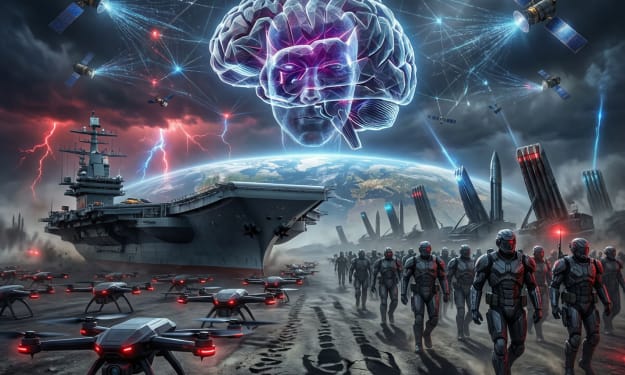
Future Wars in the Age of Artificial Intelligence If the new battlefield is hidden inside a nation’s systems, then Artificial Intelligence is becoming the most powerful weapon within it. Future wars will not begin with tanks crossing borders or fighter jets in the sky. They will begin with algorithms, data, and decisions made at machine speed. AI is changing not only how wars are fought, but also who controls power and how quickly conflicts can spiral out of control.
By Wings of Time 8 months ago in History
South Asia on Edge: Why Small Crises Carry Big Global Risks
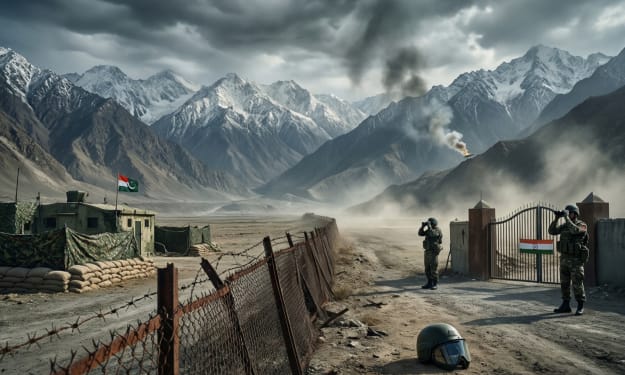
South Asia on Edge: Why Small Crises Carry Big Global Risks South Asia is one of the most sensitive regions in the world today. It is home to a very large population and includes countries with strong militaries and nuclear weapons. Because of this, even small problems can turn into serious crises very quickly. Tensions, mistrust, and long history make the region fragile, and the whole world watches closely when situations become tense.
By Wings of Time 8 months ago in History
Coordinated Attacks and Regional Stability: Why Pakistan’s Security Situation Matters Globally
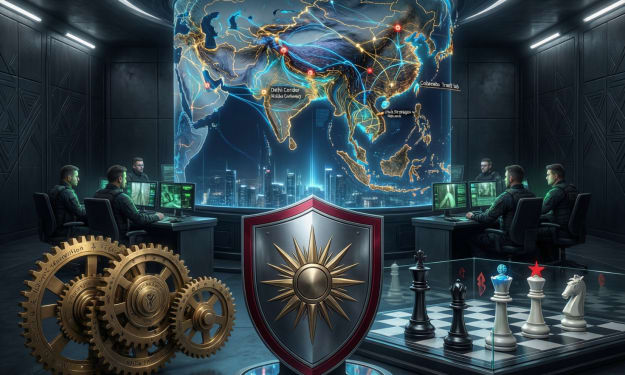
Coordinated Attacks and Regional Stability: Why Pakistan’s Security Situation Matters Globally How internal security challenges, regional rivalry, and geopolitics are deeply connected
By Wings of Time 8 months ago in History
Drones, Aircraft Carriers, and the Shadow of Wo
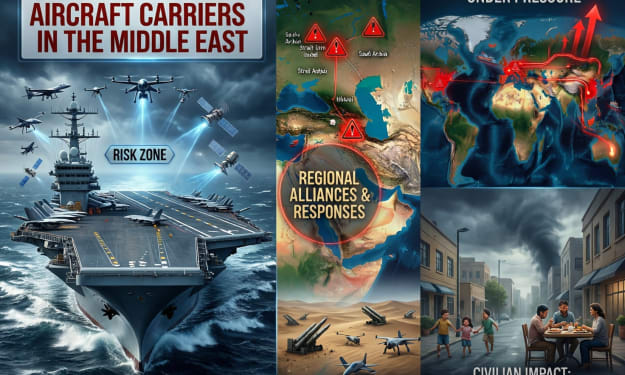
Drones, Aircraft Carriers, and the Shadow of World War III World War III, once a distant fear, is now discussed more openly by analysts and leaders around the world. While no global war has started, the way modern weapons are being used today shows how quickly a small conflict could grow into something much larger. Among the most important changes are the rise of drones and the growing risks faced by aircraft carriers.
By Wings of Time 8 months ago in History
Drones vs Aircraft Carriers
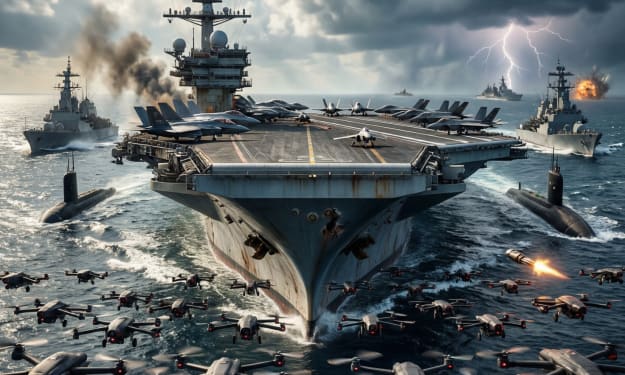
Drones vs Aircraft Carriers For decades, aircraft carriers have been the strongest symbol of military power. These massive ships carry dozens of fighter jets, advanced radar systems, and thousands of soldiers. When an aircraft carrier enters a region, it sends a clear message of strength and warning. But today, a new challenger is changing the rules of war: drones.
By Wings of Time 8 months ago in History
Rising U.S.–Iran Tensions: Power, Warnings, and the Risk of a Wider Conflict
Rising U.S.–Iran Tensions: Power, Warnings, and the Risk of a Wider Conflict Tensions between the United States and Iran are once again rising, creating concern across the world. Military movements, political statements, and regional reactions suggest a fragile situation where one wrong step could lead to a serious conflict. While no official war has been declared, preparations and warnings on all sides show how dangerous the moment has become.
By Wings of Time 8 months ago in History
The Last Charge of the Russian Cossacks
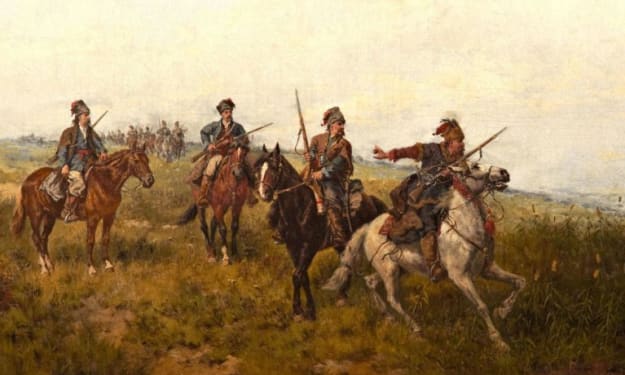
She saw me, she sighed, she guessed right away. “It was well worth it,” she said. She looked at me for a long time. “Lucie would like you to help her with her homework,” she said. I fingered the keyboard of the piano. She didn’t look annoyed. She seemed more weary than irritated, more disappointed than actually angry. “Listen, would you mind turning the music down?” There was a slight tremor in her voice. Leonard Cohen was saying that New York was cold at the end of December. “So you’ll go hang with Lucie? And then it’d be great if she did a little violin. You think you might be able to play with her?” She wanted me to talk, to say something, I just said yes, sure. “All these efforts for nothing,” she said. “No, not for nothing,” I said. She left just when Cohen was saying You’re living for nothing now, or something like that. “Famous Blue Raincoat” was a hell of a title. The song was too sad, I stopped the music. A weird shudder went through me, a prolonged shiver. Lucie was in her room, splayed out on the carpet; she was looking at a picture book showing the horses and horsemen of the world. She was wearing a big soft sweater and I lay down next to her, I was cold all of a sudden. She smiled at me, kissed me, said to me, look at these horsemen, they’re handsome, huh? I said yes, they’re Cossacks, Russian Cossacks on the Don.
By Neel Smith8 months ago in History
Julius Caesar: Strategy and Charisma
History has produced many brilliant commanders and countless ambitious politicians, but few individuals have fused strategy and charisma as completely as Julius Caesar. Others ruled through fear, tradition, or divine claims. Caesar ruled through belief. Men followed him not merely because he commanded armies, but because he convinced them—emotionally, psychologically, and symbolically—that his success was their destiny.
By Fred Bradford8 months ago in History
The Amber Room: History, Glory, and the Greatest Lost Treasure of Europe
Origins of the Amber Room The story of the Amber Room begins in Prussia (modern-day Germany) in the early 1700s. The room was commissioned in 1701 by King Frederick I of Prussia as part of a grand plan to decorate his royal palace in Berlin. The design was entrusted to the court architect Andreas Schlüter, while the intricate amber craftsmanship was executed by master amber artisans Gottfried Wolfram, Ernst Schacht, and Gottfried Turau. Amber, fossilized tree resin formed over millions of years, was highly prized in Europe for its warm glow and rarity. The amber used in the Amber Room came primarily from the Baltic region, which was rich in amber deposits. The artisans carved, polished, and assembled amber panels into complex mosaics, combining them with gold leaf, gemstones, and mirrored surfaces. The result was a dazzling chamber that appeared to glow from within. A Diplomatic Gift to Russia Despite its beauty, the Amber Room remained incomplete in Berlin due to technical difficulties and political changes. In 1716, Frederick William I of Prussia, the son of Frederick I, made a significant diplomatic decision. Seeking to strengthen an alliance with Tsar Peter the Great of Russia, he presented the Amber Room as a gift. The panels were carefully dismantled, packed, and transported to Russia, where they were initially installed in the Winter Palace in St. Petersburg. Later, during the reign of Empress Elizabeth, the Amber Room was moved to the Catherine Palace in Tsarskoye Selo (now Pushkin). There, Italian architect Bartolomeo Rastrelli expanded and enhanced the room, increasing its size and adding new decorative elements. The Golden Age of the Amber Room At the Catherine Palace, the Amber Room reached its full splendor. The walls were covered with over six tons of amber, arranged in elaborate panels depicting floral designs, coats of arms, and allegorical scenes. Golden carvings, mosaics, and mirrors reflected candlelight, creating an illusion of endless warmth and brilliance. Visitors described the room as breathtaking, unlike anything else in Europe. It became a symbol of Russian imperial wealth and artistic sophistication. The Amber Room was used for receptions and private gatherings, and it stood as a testament to Russia’s growing power on the world stage. World War II and the Disappearance The fate of the Amber Room changed dramatically with the outbreak of World War II. In 1941, Nazi Germany launched Operation Barbarossa, invading the Soviet Union. As German forces advanced toward Leningrad (now St. Petersburg), Soviet curators attempted to evacuate valuable artworks. However, the Amber Room was too fragile to be moved safely. Instead, curators tried to hide it by covering the panels with wallpaper, hoping the invaders would overlook it. The effort failed. German art experts quickly recognized the room’s value. Under orders from Nazi authorities, the Amber Room was dismantled in just 36 hours and transported to Königsberg Castle in East Prussia (now Kaliningrad, Russia). For a time, the Amber Room was reassembled and displayed in Königsberg Castle. Then, in 1944, Allied bombing raids severely damaged the city. After this point, the Amber Room vanished from historical records. Theories About Its Fate Numerous theories attempt to explain what happened to the Amber Room: Destroyed During Bombing – Some historians believe the room was destroyed during Allied air raids or subsequent fires. Hidden in Underground Bunkers – Others suggest it was secretly stored in underground tunnels or mines. Transported and Lost at Sea – A popular theory claims the room was loaded onto ships fleeing East Prussia and sank in the Baltic Sea. Secretly Smuggled – Some believe parts of the Amber Room were smuggled to private collections. Despite extensive searches across Germany, Poland, Russia, and the Baltic region, no definitive evidence has been found.
By Say the truth 8 months ago in History