Lessons
The Nation Without Soldiers or Cops
In a world often defined by conflict and division, there exists a remarkable anomaly – a nation that has chosen to forsake the traditional instruments of state power, namely its army and police force. This nation is Costa Rica, a small Central American country with a big reputation for peace, democracy, and disarmament. Its story is one of innovation, resilience, and a commitment to building a society founded on principles of nonviolence and cooperation.
By Sahil Lathwal3 years ago in History
The Birth of the FBI
In the annals of American law enforcement history, few agencies command the same level of reverence and respect as the Federal Bureau of Investigation (FBI). From its humble origins as a small investigative unit to its current status as a global force in the fight against crime, the FBI's journey is a testament to the vision, dedication, and perseverance of its founders. This is the story of how the FBI started and evolved into the iconic institution it is today.
By Sahil Lathwal3 years ago in History
Oil Expropriation Day is Almost Here!
Author's preface: This is a lightly edited and updated version of my original oil expropriation day story, published almost exactly a year ago. Once again I have to thank Wikipedia from whence I expropriated a good chunk of the history of oil expropriation day. For those who are not familiar, every March 18 is Oil expropriation day, a Mexican national holiday. It rivals the United States' Bunker Hill day in terms of awareness and popularity among the citizenry and is officially my favorite Mexican national holiday. Enjoy and Happy OE day!
By Everyday Junglist3 years ago in History
Story Of Mirza Sahiba
The tragic story of Mirza Sahiba: A love story bound by fate** In the vast web of Punjabi folklore, few stories have as deep a resonance as the tragic story of Mirza Sahiba. Steeped in Punjab's rich cultural heritage, this age-old love story continues to captivate hearts with its themes of forbidden love, social norms and the inexorable hand of fate. **The beginning of love:** The story begins in the rural hinterland of Punjab. There, his two families, the Karals and the Saids, lived in neighboring villages. Mirza was a brave and courageous warrior of the Qaral clan, known for her courage and her skill. Sahiba, on the other hand, was the epitome of beauty and grace, and she belonged to a noble Syed family. **Fateful encounter:** A fateful encounter crosses Mirza and Sahiba's paths during a village festival. Mirza was immediately captivated by Sahiba's ethereal beauty and she was hit by Cupid's arrow, but Sahiba was also attracted to this brave warrior. Though they belonged to rival clans, love blossomed between them, unaware of the enmity that smoldered between their families. **Secret Union:** Mirza and Sahiba knew that their love was forbidden, so they secretly pledged their love to each other. They secretly exchanged vows, and their hearts were bound together by a bond stronger than any social restriction. However, their happiness did not last long, and news of their forbidden romance soon reached Sahiba's brothers, who vehemently opposed the marriage. **Flight of Love:** Fearing for their lives, Mirza and Sahiba fled under cover of night and took refuge in the wilderness. Despite the dangers lurking in the shadows, her love inspires her to rebel against society's norms and follow her heart. They embark on a dangerous journey pursued by Sahiba's vengeful brothers, determined to avenge their family's honor. **betrayal:** As Mirza and Sahiba take refuge in the wilderness, Sahiba's resolve is shaken by the weight of her family loyalty. In a moment of weakness, she betrays Mirza's trust by revealing her location to her brothers, hoping to assuage their anger and restore peace. But little did she know that her actions would determine her tragic fate. **Tragic ending:** In a tragic twist of fate, Sahiba's brothers attacked their lovers in anger. In a cruel act of betrayal, they attacked Mirza while he was sleeping, leaving him vulnerable to their attacks. Despite her valiant efforts to protect herself, Mirza succumbed to her wounds and her life was cut short by the betrayal of those she once called her family. **Final farewell:** When Ms. Sahiba learned of her loved one's tragic fate, she was overcome with grief and remorse. Desperate to reunite her with Mirza, she plunged her dagger into her own heart, and rather than endure a life without him, she chose to die with him. Thus Mirza and Sahiba were as united in death as they were in life, and their love transcended the human realm and etched their names in the eternal record. **Legacy of Love:** Mirza Sahiba's tragic story has been immortalized in poetry, music and folklore for centuries. This is a poignant reminder of the power of love to defy all odds, even in the face of insurmountable obstacles. Though their lives were cut short by the cruel hands of fate, Mirza and Sahiba's love continues to inspire generations, a testament to the enduring power of true love in a world full of adversity. . Ultimately, Mirza Sahiba's story is a timeless testament to the unwavering strength of love, reminding us that even in the darkest of times, love has the power to transcend boundaries and conquer all. reminds me.
By Sophia Love3 years ago in History
The Beginning of the Cold War| A Nuclear Journey
The dawn of the 20th century witnessed the birth of a geopolitical conflict that would shape the course of history for decades to come—the Cold War. This nuclear-weapons-based struggle for domination unfolded between the United States and the Soviet Union, casting a shadow of fear and uncertainty over the world. As the tensions escalated and ideological differences deepened, the arrival of the Cold War marked a critical juncture in human history.
By Movie Foo13 years ago in History
Resilience and Redemption: Stories of Survival from the Darkest Chapters of History
The 20th century witnessed some of the most harrowing events in human history, leaving indelible scars on the collective memory of mankind. Among the darkest chapters were the Holocaust, where six million Jews were systematically exterminated, and the atomic bombings in Hiroshima and Nagasaki, resulting in unprecedented devastation. As we delve into the narratives of survivors from these atrocities, we uncover the resilience of the human spirit and the triumph of hope over despair.
By Movie Foo13 years ago in History
"The Costa Concordia Disaster
On the 13th of January 2012, at 7:15 PM, the Costa Concordia, the world's largest Italian cruise ship, embarked on its scheduled 7-day European tour. With a capacity exceeding that of the Titanic, accommodating an additional 2,000 passengers, a total of 4,252 individuals were on board. The ship boasted lavish amenities, including four swimming pools, five restaurants, thirteen bars, a casino, and even an F1 racing simulator.
By aftab usmani3 years ago in History
Unveiling the Tragic Narrative| The Complex Sadness of Pakistan's History
Pakistan, a nation born out of the partition of British India in 1947, has a complex and multifaceted history marked by triumphs and tribulations. While there are moments of pride and resilience, the sad story of Pakistan is intricately woven into its socio-political fabric, reflecting challenges such as political instability, economic struggles, and social injustices.
By Movie Foo13 years ago in History
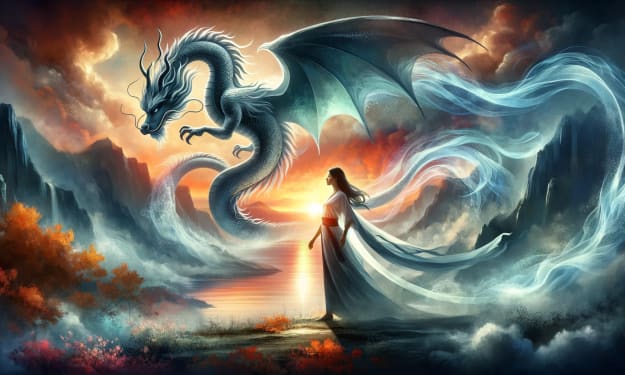
The Dragon Beside Me
In the spirit of International Women's Day in this auspicious Year of the Dragon 2024, I pay homage to a figure whose life and legacy embody the strength, love, determination, and enigmatic magic that dragons symbolize. Among the pantheon of inspiring women, Indira Gandhi stands as a monumental figure whose impact transcends the borders of India, echoing across the world. Her journey from the quiet strength of a political scion to becoming the Iron Lady of India is a testament to her indomitable will, her visionary leadership, and her profound dedication to her country and its people.
By YathirajaSampathKumar K R3 years ago in History
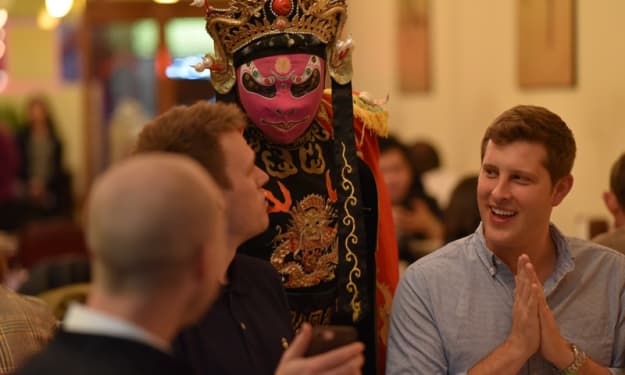
Unveiling the Mysteries of Bian Lian
Step into the vibrant world of Sichuan opera, and you'll encounter a mesmerizing performance art known as Bian Lian, or "Face-Changing." Originating from ancient Chinese tradition, Bian Lian is a captivating display of skill and theatricality, where performers don brightly colored costumes and swiftly transform their masks to depict different characters with the flick of a fan or a wave of the hand. Sichuan opera, a beloved form of entertainment in regions like eastern and central Sichuan, Chongqing, Guizhou, and Yunnan, encompasses a rich tapestry of music, drama, and acrobatics. At its heart lies Bian Lian, a cherished aspect of this cultural treasure. The masks worn by performers are not mere props but treasures crafted with care by generations of opera artists. These masks portray well-known characters from the opera and hold the key to the mesmerizing art of face-changing. Traditionally, the secrets of Bian Lian were closely guarded within families, with only males permitted to learn the art. The rationale was rooted in the fear that if women married out of the family, the secrets might be divulged to other clans. However, in a departure from tradition, remarkable performers like Candy Chong and Du Li Min have defied gender norms, showcasing their mastery of Bian Lian to audiences around the world. Yet, with the passage of time, the once closely held secrets of Bian Lian have found their way beyond China's borders. Wang Daozheng, a seasoned Sichuan opera performer, bemoans the inadvertent leak of these ancient techniques during a troupe's visit to Japan in 1986. Concerns arise about the quality of training received by non-Chinese performers in countries like Japan, Singapore, and South Korea, raising questions about the preservation of this cherished art form. The allure of Bian Lian extends far beyond China's shores, captivating international audiences through various mediums. Renowned figures like Hong Kong pop star Andy Lau sought to unravel the mysteries of Bian Lian, with reports of substantial sums offered to masters for tutelage. Lau's journey into the world of face-changing, however, highlights the complexity of mastering this ancient art. In recent years, Bian Lian has made sporadic appearances on international platforms, offering glimpses into its enigmatic world. From television specials to talent shows, Bian Lian has left audiences spellbound with its rapid transformations and theatrical flair. Performers like Juliana Chen and Michael Stroud, known as The Magique Bazaar, have showcased the magic of Bian Lian on global stages, introducing the art to new audiences. Yet, amidst the intrigue and spectacle, the cultural nuances of Sichuan opera and Bian Lian remain largely unknown to many outside of China. Efforts are underway to bridge this cultural divide, enhancing the entertainment value for Western audiences unfamiliar with the context and significance of each mask's transformation. Enter the realm of blowing dust, where actors obscure their faces with black dust, adding an air of mystery to their performance. Witness the manipulation of beards, with colors shifting from black to grey to white, conveying a range of emotions from anger to excitement. Experience the dramatic unveiling of hidden masks atop performers' heads, each color symbolizing a different emotion - happiness, hate, anger, or sadness. And marvel at the art of face-dragging, as actors deftly alter their appearance with concealed greasepaint, adding depth and dimension to their characters. In the tapestry of Chinese opera, Bian Lian stands as a testament to the ingenuity and artistry of its performers. Through its rapid transformations and intricate techniques, Bian Lian transports audiences to a realm where masks hold the power to transcend identity and evoke a myriad of emotions. As this ancient tradition continues to captivate hearts and minds around the world, the legacy of Bian Lian endures, a timeless symbol of China's rich cultural heritage.
By Avhishek Agarwal3 years ago in History
From Ancient Marvels to Modern Wonders
The journey of human innovation spans millennia, marked by a series of remarkable inventions that have shaped the course of civilization. Determining the "first" invention is a challenging task, given the vast expanse of human history and the diverse contributions from various cultures. However, we can trace the origins of invention to the earliest tools crafted by our ancestors. As we explore this journey, we will also delve into the lives and accomplishments of some of the world's most renowned scientists, whose groundbreaking discoveries have left an indelible mark on the tapestry of human progress.
By Movie Foo13 years ago in History